Crittenden Drive church.
Roy's BBQ.
Kentucky Colonel
YouTube Sports host 19 years
United States Presidental History researcher.
Military Veteran supporter
OTD in 1825, Daniel D. Tompkins (VP under Monroe, both terms) died from a lengthy illness at his home in Tompkinsville, Staten Island. Tompkins is the only VP to serve two-full terms in the 19th century; he is the only VP to be interred in NYC; and he has the shortest post-VP tenure at less than 100 days. Tompkins was a heavy drinker, turning to the bottle to escape the responsibilities and stress caused by his financial ruin. If one had to venture a guess for a cause of death, knowing he suffered from high stress and drank heavily: heart attack, stroke, cirrhosis, or a combination? Of course, it's entirely possible he died from something else.
The painting, done by John Eastman in the mid 1870s, shows two forts on Staten Island near The Narrows. The fort on the top of the bluff, Ft. Tompkins, is named after the Vice-President. The fort below: Ft. Wadsworth (formerly known as Ft. Richmond).
(For those familiar with the 1947 film Miracle on 34th St., Calhoun, not Tompkins as stated by Claus, was VP under John Q. Adams.)
America at 250
On June 11, 1776, the Second Continental Congress takes a pivotal step toward American independence by appointing the Committee of Five to draft the Declaration of Independence.
Chosen for the task:
• Thomas Jefferson (Virginia)
• John Adams (Massachusetts)
• Benjamin Franklin (Pennsylvania)
• Roger Sherman (Connecticut)
• Robert R. Livingston (New York)
Jefferson, praised for his eloquent pen, was urged by Adams to take the lead on the first draft. After revisions by Adams and Franklin, the committee presented its work to Congress on June 28, history was just days away…
On this day—June 11, 1776—the Continental Congress appointed the Committee of Five to draft a formal declaration of independence.
The committee consisted of Thomas Jefferson, John Adams, Benjamin Franklin, Roger Sherman, and Robert Livingston. Jefferson was tasked with writing the first draft. Their mission was to clearly explain to the world why the colonies were breaking away from Britain.
This appointment came just four days after Richard Henry Lee introduced his resolution for independence and set the stage for the adoption of the Declaration of Independence less than a month later.
America at 250
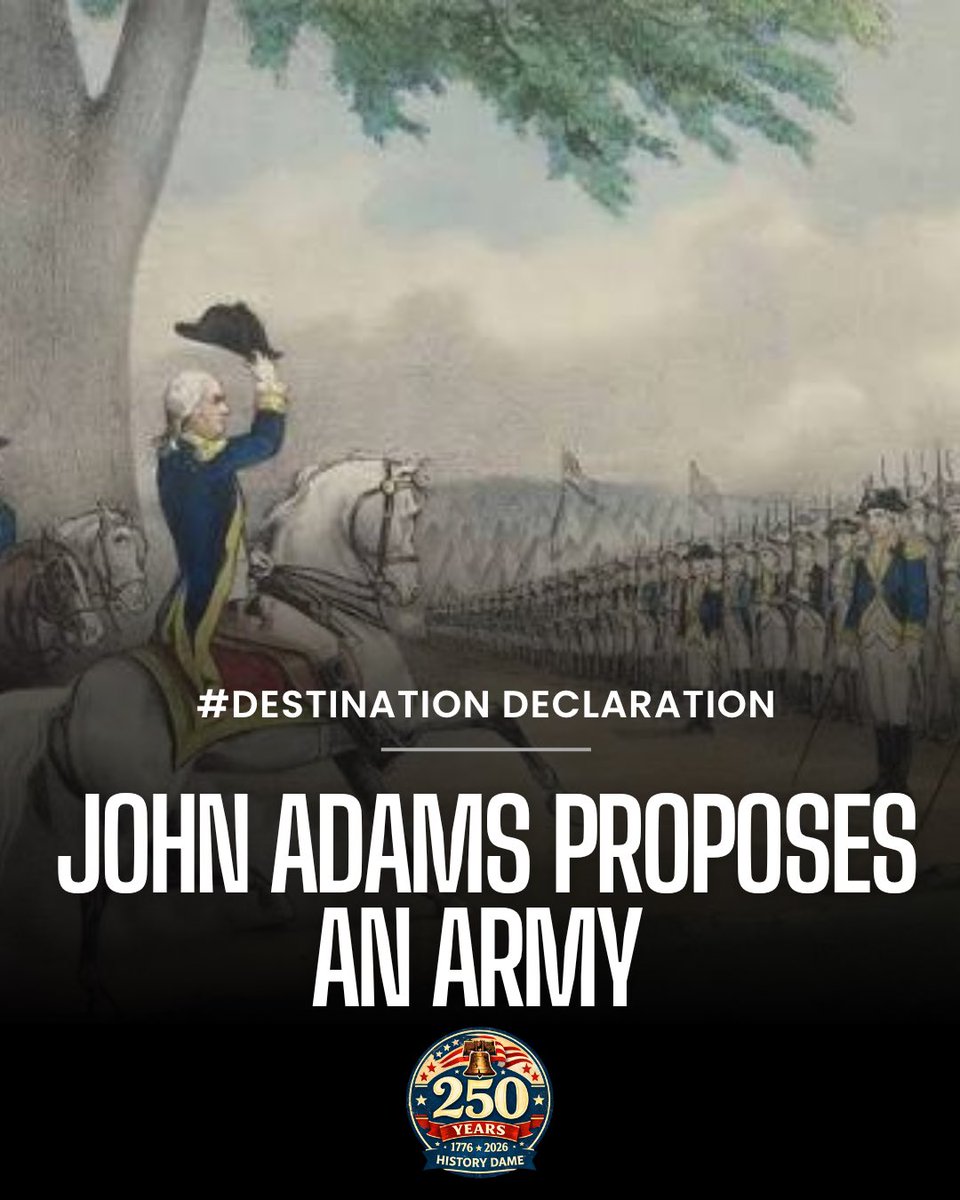
On this day in 1775, John Adams proposed turning those New England militiamen besieging Boston into a unified Continental Army and suggested a Virginian named George Washington to lead it.
Adams knew that for the fight against Britain to succeed, the colonies had to look (and fight) like one nation. A few days later, Washington accepted command, and the Continental Congress made it official.
Dwight Eisenhower’s 🇺🇸 father encouraged independence in his kids. An example of this is he granted them each land on the family property to grow whatever crop they wanted and sell it. Any money they made they could keep!
#POTUS 🌽
Trump walked into that Meet the Press ambush and did what he always does ... refused to play along with their rigged little game. Welker came in loaded with the usual biased framing, ready to hammer him on election integrity while pretending to be some neutral journalist. Trump looked right at her and said what everyone already knows: her network is fully aware the elections were rigged and they still ran 94 percent negative coverage against him anyway. Then he stood up and left when he was done talking.
That’s when the mask slipped. Welker started begging on live television like a desperate partisan who just watched her hit job fall apart. “Please stay, I traveled all the way to Wisconsin.” The same hostile media hack who spent the interview trying to trap him suddenly turned into a whiny child when he refused to sit there and take it.
Trump’s response was perfect: “Thank you, darling. Have a good day.” Then he walked out and left her sitting there exposed as the biased fraud she is.
This is the disgusting reality of legacy media bias in action. They set up these Sunday shows as partisan hit pieces, stack the questions, and act shocked when Trump treats their fake neutrality with the contempt it deserves.
They don’t want journalism. They want Trump to sit there and let them run their scripted attacks while they pretend it’s fair. The second he refuses to play their game, the bias comes pouring out ... the pleading, the entitlement, the pathetic attempt to guilt him into staying so she doesn’t look like the failure she is.
These people are not journalists. They are biased operatives running cover for the Democrats, and every time Trump exposes it by simply refusing to participate in their charade, they lose their minds.
Good. Let them keep crying about how unfair it is when someone finally stops pretending their rigged format means anything.
(article below)
Today in 1809 Thomas Paine died in New York City at the age of 72.
The author of Common Sense, the powerful 47 page pamphlet published in January 1776 that argued monarchy was absurd, independence was the only logical path, and that Americans must seize their destiny. His words convinced thousands of ordinary colonists to support revolution and helped transform scattered grievances into a unified fight for freedom.
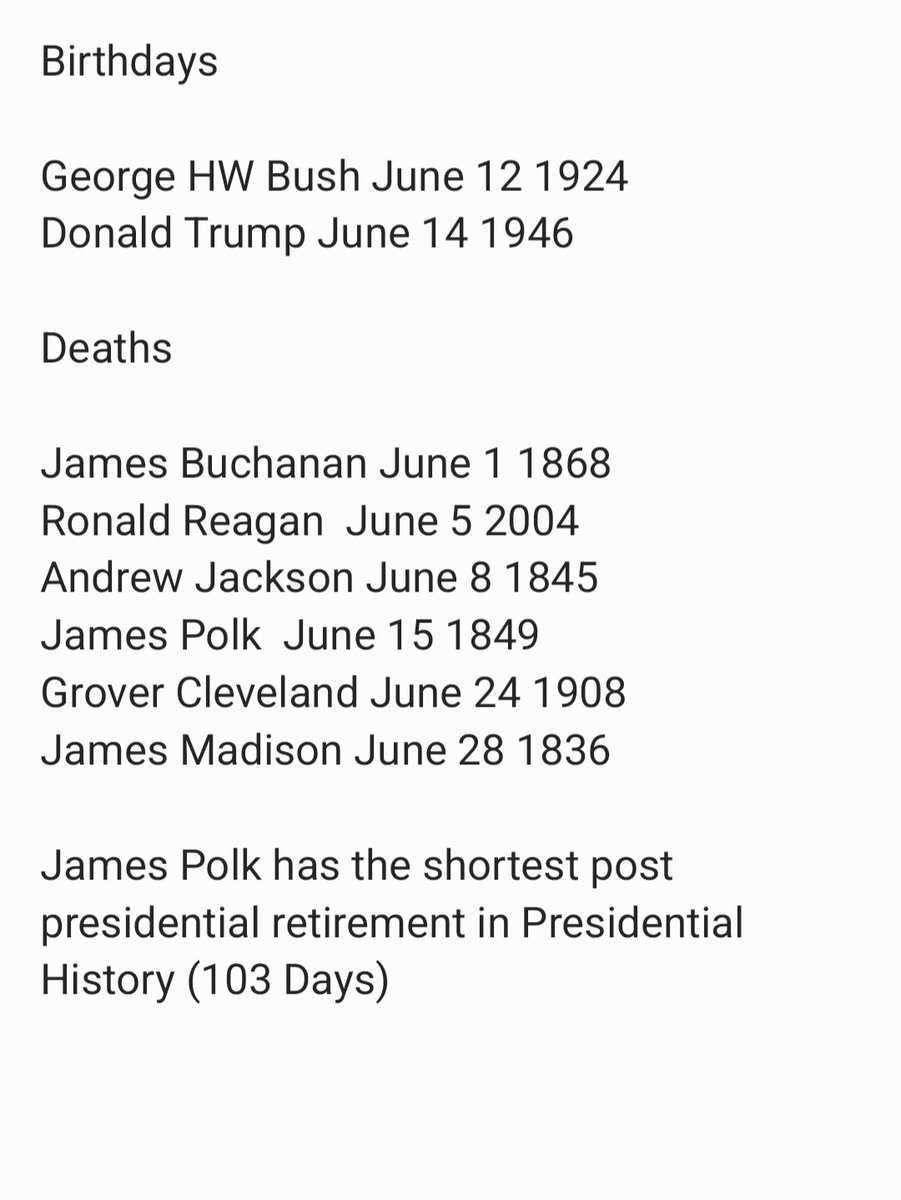
Late May 1845, Jackson', already in poor condition, was suffering from dropsy (edema) in his face, limbs, joints, and abdomen, and violent, painful bouts of diarrhea. To counter the swelling, bandages were applied where possible. Jackson mustered through the pain (managed by opiates), unafraid of the inevitable. Early June, a doctor came to the Hermitage and drained some of the fluid from Jackson's chest (called a thoracentesis in the present). The next day, additional doctors arrived, consulted, and agreed nothing more could be done for the ailing former President and general. Sunday, June 8, 1845, Jackson woke up, fully aware it was the Sabbath. He passed the morning and mid-day in good spirits, speaking with friends, family, slaves (they looked in from the bedroom windows), speaking eloquently on religion "with calmness, with strength, and, indeed, with animation.” At 5:30 PM, Jackson was resting in his four post bed. He spoke with his son, Andrew Jr., and asked “Where is my daughter and Marian? God will take care of you for me. I am my God’s. I belong to him. I go but a short time before you, and I want to meet you all, white and black, in heaven.” He then fell silent, his eye lids heavy, his breathing shallow and slow. At 6:00 PM, propped up on bed pillows, Jackson passed away.
(To this day I've not yet come across an illustration of his funeral. Perhaps I've missed it.)
250 years ago today, a man stood up in a room full of nervous delegates and said the words that made America inevitable.
Not Thomas Jefferson. Not George Washington. Not Benjamin Franklin.
A Virginia planter named Richard Henry Lee.
It was June 7, 1776. The war had already been going for over a year. Men were dying. Cities were burning. And yet the Continental Congress still had not officially declared independence from Britain.
That morning, Lee rose and read aloud a resolution he had been instructed to deliver by Virginia:
"That these United Colonies are, and of right ought to be, free and independent States, that they are absolved from all allegiance to the British Crown, and that all political connection between them and the State of Great Britain is, and ought to be, totally dissolved."
John Adams immediately seconded it.
The room erupted.
The debate that followed was so heated that Congress had to table the vote entirely. New York, New Jersey, Pennsylvania, Delaware, Maryland, and South Carolina were not ready. Their delegates had not been authorized to vote for independence. Some feared it was too soon. Some feared it was treason.
So Congress bought time. They postponed the vote for three weeks and quietly appointed a committee to draft a formal declaration, just in case the resolution passed.
That committee included Adams, Benjamin Franklin, Roger Sherman, Robert Livingston, and a soft-spoken 33-year-old Virginia lawyer known for his elegant writing.
Thomas Jefferson.
Jefferson wrote the Declaration. It was adopted July 4. The world celebrated.
And Richard Henry Lee, the man whose words started everything, whose resolution is the reason any of this happened?
He had already gone home to Virginia. He missed the signing entirely.
Jefferson is immortalized. Lee is a footnote.
History is funny that way.
"I would cut off my right hand to take back what I said [about being ready to leave the White House]. Don't ever talk to me about the burden of the Presidency. I loved every minute of it and will miss it."
- Theodore Roosevelt 🇺🇸
#POTUS
#OTD in 1910, Theodore Roosevelt stood in Oxford's Sheldonian Theatre and delivered the Romanes Lecture — the most prestigious annual address at the university and one of the most prestigious in the English-speaking world.
His subject was history.
Roosevelt called the lecture "Biological Analogies in History," and used it to argue that civilizations rise and fall by the same kinds of forces that govern the natural world: pressure, adaptation, succession, decay. He drew on a lifelong interest in natural history — the boy who kept a "Roosevelt Museum of Natural History" in his bedroom, the young man who hunted in the Badlands, the older man just emerged from a year-long expedition in East Africa with thousands of specimens for the Smithsonian.
He was not in office. He had been out of the White House for fifteen months. But he was, at that moment, possibly the most famous man in the world — fresh from the African bush, on a tour of European capitals, less than two weeks from his return to New York.
Oxford granted him an honorary doctorate, and the lecture was published immediately by Oxford University Press. It joined a small library of addresses Roosevelt delivered between his Sorbonne speech in April and his homecoming in June — some of the clearest statements he ever made about civic duty and the demands of citizenship.
#OTD #OnThisDay #TheodoreRoosevelt #Oxford #DareGreatly
Eighty-two years ago today, freedom stood on the edge of extinction, and Allied forces stormed into hell to help save the world.
We will never forget the courage, the sacrifice, and the blood spilled on that fateful day.
#OTD in 1944, a fifty-six-year-old brigadier general waded ashore at Utah Beach, walking with a cane.
He was the oldest man in the D-Day invasion, and the only general to land with the first wave at Utah Beach. He was Theodore Roosevelt Jr. — eldest son of the twenty-sixth president, a soldier who had been wounded and gassed in the trenches of the First World War a quarter-century earlier, and who had asked three times for permission to lead the assault before the Army said yes.
The currents at Utah Beach pushed the first landing craft about a mile off course. The men who came ashore looked up to find an unfamiliar shoreline and no clear plan. Roosevelt walked the beach, took his bearings against the landscape, and made a decision: they would attack from where they were. "We'll start the war from right here," he said.
Thirty-six days later, on July 12, 1944, Roosevelt died in his sleep of a heart attack in Normandy. He never made it home. His Medal of Honor was awarded posthumously — for the morning he steadied a beach full of men under fire, on terrain that was not the terrain he had been promised, and decided the war would go forward anyway.
He was the son of a man who once charged up Kettle Hill at the head of the Rough Riders. He died serving the country his father had served, in a war his father did not live to see.
#OTD #OnThisDay #DDay #TheodoreRooseveltJr #UtahBeach #MedalOfHonor #DareGreatly










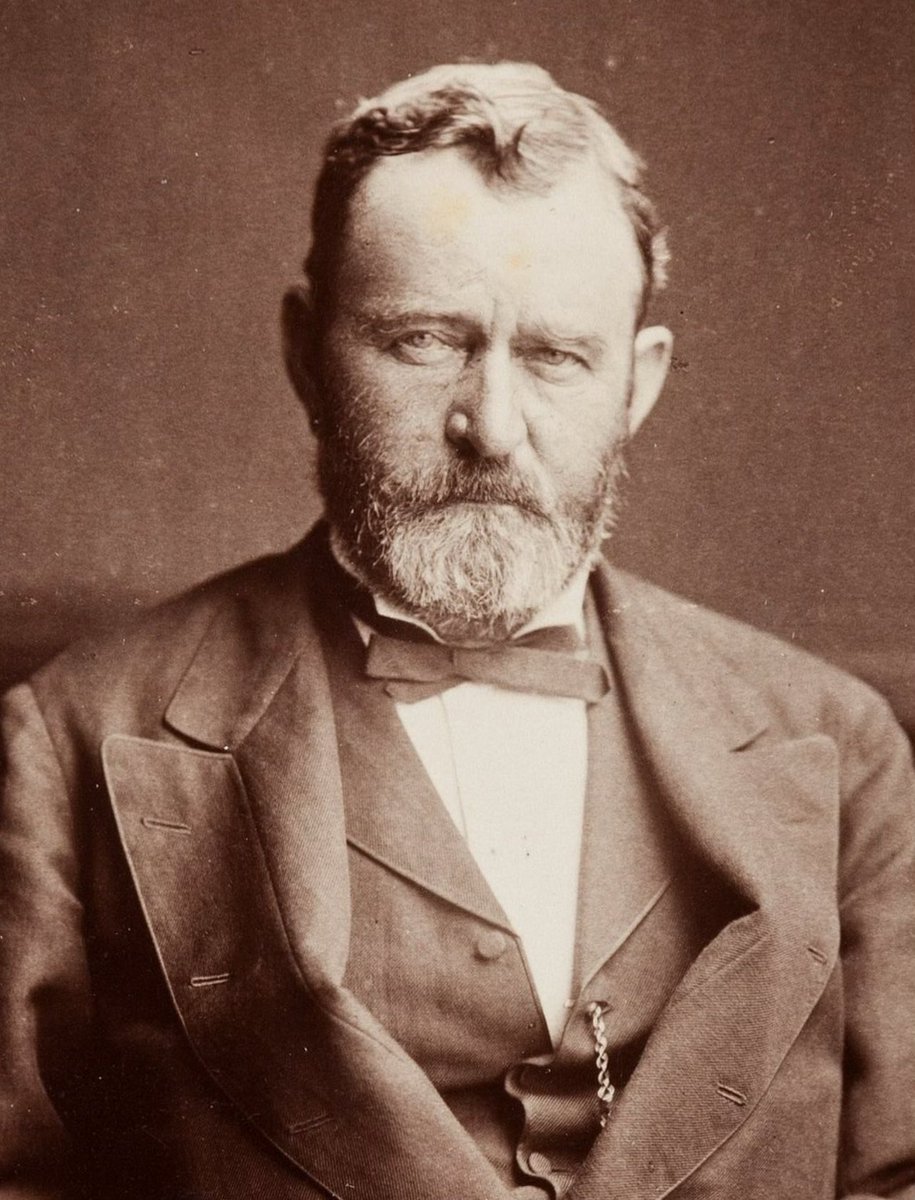


![PrezWisdom's tweet photo. "I would cut off my right hand to take back what I said [about being ready to leave the White House]. Don't ever talk to me about the burden of the Presidency. I loved every minute of it and will miss it."
- Theodore Roosevelt 🇺🇸
#POTUS https://t.co/kECkgRlXxx](https://pbs.twimg.com/media/HKODOaKXsAMy7Ii.jpg)