You're receiving your carbon tax rebate today.
Before celebrating, consider this: Canada's independent PBO, a neutral agent of Parliament, showed the average family will pay hundreds of dollars more in carbon taxes than they receive in rebates.
https://t.co/gald7h7OPP
"Will Canadian parents feel comfortable feeding their babies formula manufactured by a Chinese-owned plant in Kingston, Ontario? Only time will tell." https://t.co/bbBr2a5prV
"Customers are now being solicited to tip for an array of arbitrary services. This trend is insidiously conditioning people to perceive tipping as a wage subsidy, rather than a measure of service quality." https://t.co/rNDACLKLoa
The 'buck-a-beer' slogan is long gone.
After spending $1 billion to buy out Beer Stores, Ontario's foreign-owned beer cartel, all LCBO stores are now closed today, leaving Ontarians facing an unwelcome dry summer.
Great track record.
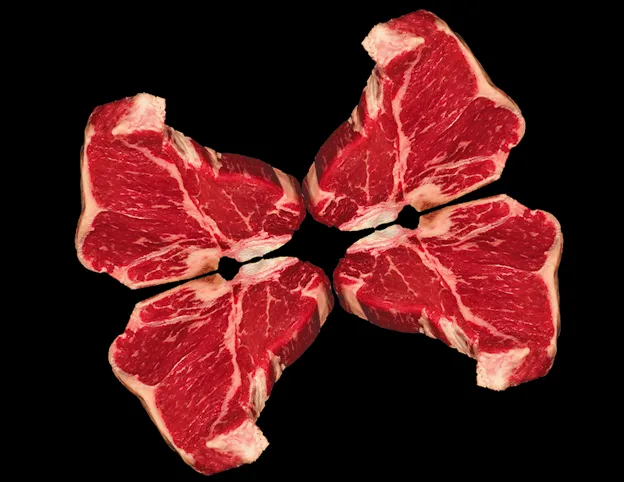
You'll Soon Be Eating Cloned Meat Without Knowing It
“As Health Canada prepares to permit the sale of products derived from animal cloning without mandatory labeling, consumers are poised to lose transparency regarding what they are consuming. The social and moral acceptability of this technology remains highly contentious, underscoring the need for enhanced communication and authentic consultation.”
Imagine savoring a steak from a cloned animal or sipping milk from a cloned cow. Thanks to investigative journalism by @ThomasGerbet of the @CBCNews, this impending reality has come to light, though many agricultural producer groups have not been directly consulted.
@GovCanHealth's recent round of consultations, conducted with minimal public awareness, suggests that these products may soon be available without consumers' knowledge, as there will be no mandatory labeling. The absence of such information on Health Canada's website only adds to the opacity surrounding "cloned products."
The consultation, which concluded on May 25th, focused on updating the "Policy on Foods Derived from Cloned Animals by Somatic Cell Nuclear Transfer and Their Progeny." This update proposes that cloned products be exempt from pre-market evaluation under Part B, Title 28 of the Food and Drug Regulations. In contrast, nations like the United States, Japan, and New Zealand...
But what precisely is animal cloning? The process aims to create a genetic replica of an animal by replacing the nucleus of an unfertilized egg with that of a somatic cell from the donor animal, forming an embryo. This embryo is then implanted into a surrogate mother's uterus, where it develops to term.
Artificial insemination, a well-established industry practice, involves collecting sperm from a male and artificially introducing it into a female's reproductive system to facilitate fertilization, preserving genetic variability. Cloning, however, produces genetically identical animals, eliminating this variability.
From a food safety perspective, cloned products do not pose a threat to human health. However, the social and moral acceptability of cloning remains in question. It is doubtful that consumers will unconditionally accept this technology, especially in the absence of labeling. For traditional producers, the integration of cloned products into the market could also taint consumer perceptions across entire categories, particularly meat and dairy.
This situation mirrors the backlash against genetically modified salmon, which faced immediate retail rejection despite being deemed safe. Irrespective of the safety profile, it is crucial to explain the technology and ensure consumers comprehend the rationale and necessity for such practices, both for their benefit and that of the industry.
For the industry, the imperative to amend regulations is less evident. Cloning is an expensive process, and the argument that reduced production costs will translate into lower retail prices for consumers is tenuous at best.
Without mandatory labeling, offering consumers a truly informed choice becomes problematic. We have witnessed similar issues with genetic engineering and GMOs. Health Canada appears poised to embrace technological advancements impacting our agri-food sector without adequately considering consumer rights and preferences.
Quite shameful.
Have to say that @CNN did a good job managing the debate.
Questions were reasonable and non-partisan. No favoritism was shown to either candidate.
This is what the public wants from the media.
Increasing the capital gains tax penalizes farmers, small and medium food businesses in Canada, and the next generation. It is completely disingenuous for Ottawa to attempt to convince Canadians that this only affects 40,000 people.
Shame on our government.
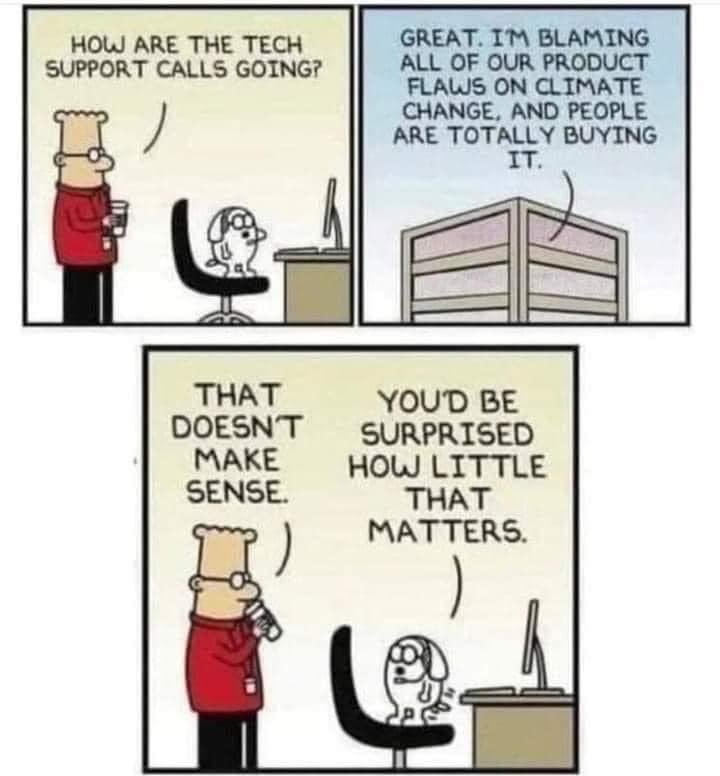
Repeating mistakes.
Heavily subsidizing and protecting a domestic industry like EVs can only punish domestic consumers while making the industry less competitive.
Look no further than Canadian dairy.
A government's guide to weaponizing science:
➡️Adopt environmental laws that are largely misunderstood.
➡️Create a "charity," safe from public audits, and give them $50 million to promote the government narrative, i.e. Canadian Climate Institute.
➡️Repeat as needed.
@elonmusk Two important principles of computer security:
- Any software that is possible to persuade, cajole, or gaslight should not be built into the operating system.
- Don't send all your data to Sam Altman.
Yikes! Apple has stepped in again to dictate what apps competing stores are allowed to carry. They arbitrarily decided PC emulators are banned, likely because it would open up a vast new competitive landscape where upstarts could gain a foothold. Super gross of Apple.
I'm 38.
When I was young I worshipped politics, went woke (broke) & believed in the myth of equality.
Then I discovered Thomas Sowell, and he changed my life forever.
12 lessons from America's most controversial & unknown philosopher: