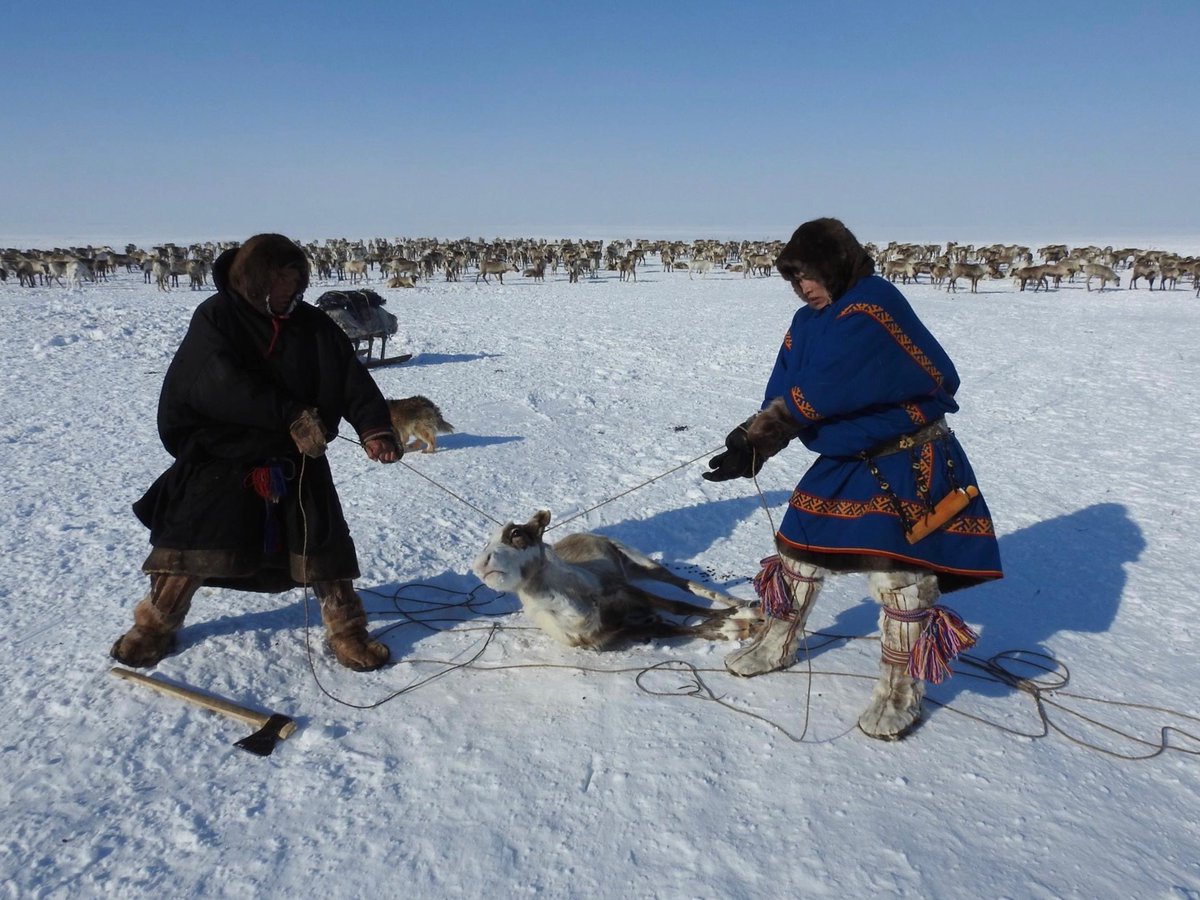
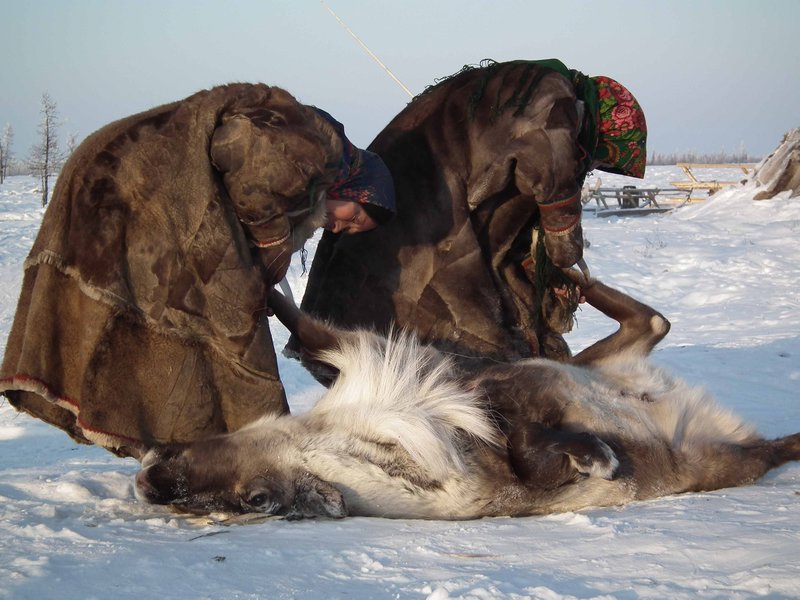
Nenets reindeer slaughter is an example of division of labour between men, who work with reindeer, and women, who take care of the home, food and clothing. It is the men that strangle the reindeer, but once dead and therefore just food and clothing, it is the women who butcher it
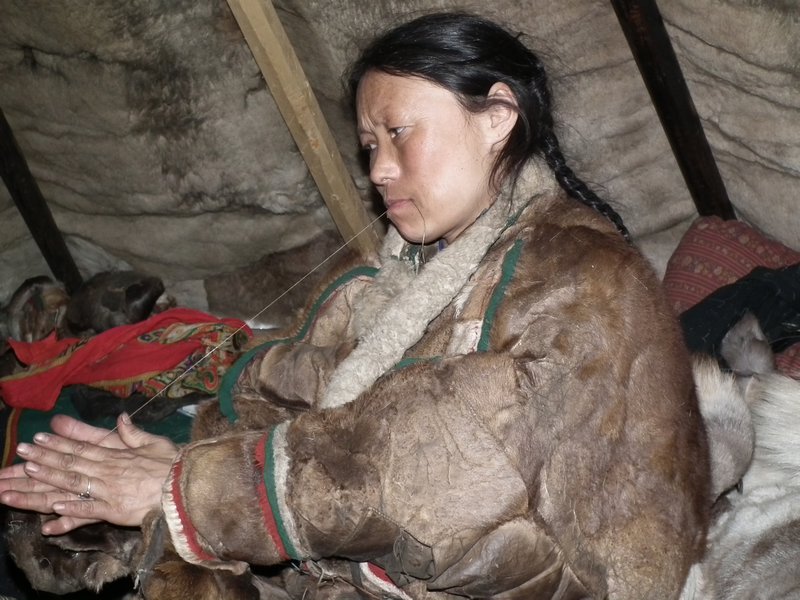
The chums (teepees) that the Nenets live in are made of 75 reindeer furs sewn together using reindeer tendon as thread. A fur coat is made of 8. When a reindeer is slaughtered, the tendons are dried and kept by a woman in her sewing bag, pictured below.
A few examples of toys the Nenets reindeer herders make for their children: Wendy chum (teepee), child-sized reindeer sledge and figures of people made of ducks' bills.
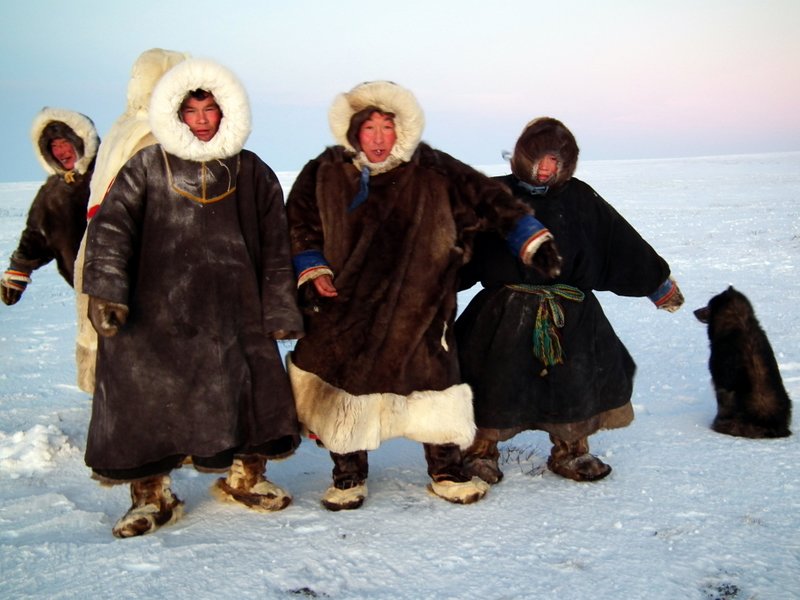
Nenets men wear two kinds of fur coats. One, the malitsa, has the hair on the inside. The man in the right of the photo is wearing a malitsa. The second, a gus, has the hairs on the outside and is worn on top of the malitsa. Everyone else in this photo is wearing a gus.
The Nenets have sacred reindeer, representing their gods, whose heads are often decorated with red ribbons. They are not slaughtered until they are too old to migrate. Then their blood is smeared on a similar-looking reindeer, which becomes the new sacred one.
The nomadic Nenets reindeer herders follow an ancient animistic-shamanistic religion. They keep various idols representing their gods in their chum (reindeer-fur teepee) and several more outdoors on their sacred reindeer sledge.
Summer is a great time to visit the nomadic Nenets reindeer herders. They migrate 2 - 3 times a week, often crossing rivers as pictured above. Every daw they drive thousands of reindeer right up to their chums (reindeer-fur teepees) to lasso fresh animals for their sledges.