He doesn’t have the luxury of normal democratic conditions like institutional fairness, media plurality, financial parity, and the rule of law that is applied equally.
I write ✍️
Still, @RahulGandhi has chosen to fight with what might seem the most inadequate of weapons: moral clarity, ideological consistency, and human empathy.
@Ram_Guha Ramchandra Guha, after terrible decision to support Modi in 2014, now, searches for another messiah. He risks repeating the error: demanding perfection from an opposition leader who is overcoming unfair limits, with hands tied, facing constant hardships and battling the elements. Guha fails to recognise these chains and fetters.
It takes tremendous courage to be democratic in the absence of democratic space. To stand up for an idea knowing fully well that there is huge personal cost to be paid for it.
Rahul Gandhi knows that he will be attacked and vilified. He knows his supporters will be attacked and vilified. But he still fights on. His approach can best be described in the words of Kabir, who understood about the nature of moral commitment in a hostile world:
कबीरा खड़ा बाज़ार में, मांगे सबकी खैर।
ना काहू से दोस्ती, ना काहू से बैर।।
कबीरा खड़ा बाज़ार में, लिए लुकाठी हाथ।
जो घर फूँके आपना, चले हमारे साथ।।
Dictatorial systems do not allow democratic functioning to proceed on level terms. If someone is standing firm within such a system, refusing to be broken or bought or diverted, there has to be a reason rooted in the quality of their leadership.
@INCIndia@kharge@RahulGandhi@thewire_in
https://t.co/wdsHrhJhWe
Long Post
CJP: The Safety Valve.
Reading various comments and reactions to the CJP over the last few weeks, from across the political spectrum, I have been baffled to discover that some of the most well-meaning commentators seem to have missed a rather simple but fundamental point. After more than a decade of BJP rule, any meaningful change in the functioning of the ruling dispensation and the institutions that operate under its influence can only come about if it is defeated electorally and removed from power. At this point, anything short of that remains manageable for the regime.
At the outset, therefore, I want to underline my position clearly: any desired transformation in the conduct of the government and the institutions it controls can only emerge through an electoral defeat of the ruling party. The vast resources at its disposal and the combination of political ruthlessness and religious hyper-nationalist fervour that sustains its support base make it exceptionally resilient to other forms of pressure.
It is also important to recognise that the notion that personal suffering or loss will eventually compel people to reconsider their political preferences has been repeatedly disproven. The avoidable tragedies associated with the COVID-19 pandemic, the Kumbh Mela, recurring train accidents, the demolition of homes and marketplaces through bulldozer actions, collapsing bridges and billboards, and countless other major and minor disasters have not significantly altered electoral behaviour. If the loss of a loved one has failed to produce such a shift, it is difficult to believe that lesser grievances will do so.
What is often overlooked in these discussions is that the BJP's political success over the past decade has not been confined to electoral victories only. Equally significant has been its success in reshaping the very terrain on which political contestation takes place. One of the most effective strategies employed by the ruling dispensation has been the gradual delegitimisation of politics itself. Through a sustained rhetorical campaign, the act of raising questions, demanding accountability, or criticising the government has increasingly been portrayed as "doing politics" in the pejorative sense of the term. As a result, politics has come to be associated not with democratic participation and public debate, but with opportunism, disruption, and bad faith.
The consequences of this shift have been profound. Public tragedies, administrative failures, and institutional shortcomings are increasingly insulated from political scrutiny through appeals not to "politicise" them. Any attempt to hold the government accountable is dismissed as an opportunistic effort to exploit suffering for political gain. Ironically, this insistence on keeping certain issues "above politics" is itself a deeply political act, for it determines which questions may be publicly debated and which must remain beyond scrutiny. The outcome is a political environment in which state failures are depoliticised while manufactured controversies and cultural anxieties are elevated to the centre of public discourse. This transformation has also altered the nature of protest movements. Increasingly, citizens feel compelled to insist that their protests are "non-political" or "above politics" in order to secure legitimacy and public sympathy.
It is no longer merely the ruling party or its supporters who argue that opposition parties should stay away from protests; citizens and protest organisers frequently make the same demand. During the anti-CAA movement and the farmers' protests, for instance, opposition leaders were often discouraged from visiting protest sites or addressing gatherings, out of concern that their presence would "politicise" the movement or allow them to derive electoral benefit from it. Similarly, protests against GST in Surat and several other issue-based mobilisations consciously sought to distance themselves from formal opposition politics in order to preserve an image of neutrality.
The result has been a steady shrinking of the public space available for oppositional politics. Unlike earlier moments of mass mobilisation, where civil society groups and opposition parties often worked in tandem, many contemporary protests consciously exclude political actors or discourage their participation. While such decisions may arise from understandable concerns, they also contribute to the broader marginalisation of opposition politics and weaken the capacity to translate public discontent into sustained political challenges. A protest that refuses politics may generate awareness and moral pressure, but it often struggles to convert that energy into institutional or electoral consequences.
While it remains to be seen how the CJP evolves, I fear that it may inadvertently reproduce many of the same tendencies. In its effort to maintain political independence and moral credibility, it may choose to distance itself from established political parties and opposition formations. In doing so, it risks severing itself from the very organisations that possess the ground-level networks, organisational capacity, and political reach necessary to translate the anger and frustration of the youth it claims to represent into meaningful electoral outcomes. Public discontent, however widespread, does not automatically become political change; it requires institutions capable of converting social energy into political power.
The second possible outcome is the well-trodden path of attempting to create a new political formation in the hope of offering an alternative to the existing regime. This, in my view, would be an even greater mistake. The experience of the anti-corruption movement and the subsequent emergence of the AAP should serve as a cautionary example. Whatever its original intentions, the creation of a new political outfit in the current conjuncture would likely do little more than fragment the anti-BJP political space further. Rather than weakening the ruling regime, it would add another layer to the already complex landscape of intra-opposition competition and contestation.
Having said that, it is difficult not to notice the relative ease with which this movement has been permitted to organise itself and occupy public space. Over the past few weeks, political organisations such as the NSUI and the IYC have been mobilising around many of the same issues; their protests have largely been met with the familiar repertoire of state repression that is water cannons, mass detentions, barricading, and, in some instances, violent lathi-charges. Similar responses have been witnessed in the recent workers' protests in Noida and in numerous other mobilisations that, in one way or another, posed a direct political challenge to the ruling regime or threatened its electoral support base.
Against this backdrop, the state's comparatively restrained response to the CJP protests appears noteworthy. Whether intentional or otherwise, the impression created is that the government has been willing to allow a controlled expression of public anger and frustration. This is not to question the sincerity of the protesters or the legitimacy of their grievances. Rather, it is to draw attention to the political consequences of a protest that remains detached from organised opposition politics.
One possible reading is that permitting such a movement to gather momentum serves as a mechanism through which public anger can be channelled, expressed, and eventually exhausted without being translated into a broader political change. In other words, the protest functions as a safety valve: citizens are allowed to vent their frustrations, but in a manner that remains disconnected from the electoral arena where political power is actually contested. The anger is real, the grievances are real, but the pathways through which that anger could be converted into electoral costs for the ruling party remain blocked.
Finally, the farmers' protest concluded just before the UP Assembly elections, following the government's decision to repeal the three farm laws. By that point, more than 700 farmers had reportedly lost their lives, thousands had endured months of hardship, and numerous protesters continued to face police cases. Given the scale of the mobilisation and the sacrifices involved, many political commentators argued that the movement would have significant electoral consequences for the BJP, particularly in western UP, one of the regions most deeply affected by the agitation.
The results, however, told a different story. Despite widespread expectations of an electoral backlash, the BJP largely retained its political dominance in the region and, in some constituencies, even increased its vote share. This outcome should caution us against assuming a straightforward relationship between public anger, successful protest movements, and electoral behaviour. The fact that a government is compelled to concede to a movement's demands does not necessarily translate into a corresponding shift in voting patterns.
This raises an important question in the context of the present movement. Suppose, and it remains a very large supposition, that sustained public pressure eventually compels the Education Minister to resign and the immediate objective of the agitation is achieved. What follows then? Will such a victory lead to a meaningful reassessment of political loyalties and electoral choices among those participating in or supporting the movement? Or will it instead reinforce the comforting but ultimately misleading belief that the government is responsive to public demands and capable of self-correction without any broader political consequences?
#cjp #cjp_protest
Pentagon raised threat of Israeli spying on US to HIGHEST level
The counterintelligence threat level was raised by the DIA after growing concerns that Israeli espionage had become more aggressive than usual.
https://t.co/JInAf3aURa
Modi will ultimately be removed, either electorally or through old age. That's secondary.
I don't know how many Indians share Guha's sentiments, but there's a consequential constituency in the nation whose primary objective is to see Rahul Gandhi as Prime Minister.
"No one hates Modi & BJP more than me but reality is anti-Modi folks ask me how Rahul Gandhi will handle a Gulf crisis, China attack or emergency? He doesn't qualify."
Deep down every Modi hater knows they can trust Modi but not Rahul Gandhi🗿
Excl: Ground reality vs official records: Census fieldwork is throwing up data that differ from govt records on open defecation free villages, use of cow dung cakes/kerosene/crop residue for cooking in urban areas despite LPG connection, no electricity. Enumerators asked to revisit and review the “data discrepancies”.I ✍️
https://t.co/1LaYwpiiED
For Germany, when arming a genocidal state is part of their "Historical responsibility", losing votes at the UN should be the least of their worries.
Nuremberg ain't necessarily a one-off thing.
The Modi Govt is clearly in panic mode and is under siege from within its ecosystem on the current economic situation.
According to a news flash by a TV channel that is plugged into the ruling establishment, the Modi Govt is planning to issue an ordinance amending the Income Tax Act to completely eliminate the 12.5% long-term capital gains tax on investments made by foreign portfolio investors (FPIs) in Indian government securities. This rate was fixed in the Union Budget of July 2024.
The real problem is that private corporate investment is very tepid within India. Those who can and must invest in India are either investing abroad or postponing investments at home. Corporate earnings are at record highs, but yet the rate of private corporate investment as a % of GDP has actually declined in a marked manner. Band-aid ordinances may provide headlines but are no substitute for addressing the structural causes of depressed rates of private corporate investment. These include stagnation in real wages, sharpening income and wealth inequalities, ever-increasing concentration of economic power in sector after sector, and an intimidatory atmosphere created by the misuse of investigative agencies. Allowing imports from China to keep growing has only added to domestic investment woes.
Exclusive: Rep. Marlin Stutzman (R-Indiana), a steadfast Israel ally, is introducing a resolution to end the $3.8 billion in annual aid Israel receives from the United States, and instead have the nation fund its own purchases of American weapons. https://t.co/FcKJcF91PI
Breaking News: The House voted to end the war in Iran, as four Republicans sided with Democrats in a striking rebuke to President Trump. https://t.co/Oeeox0iq9q
Name one country where:
- son of NSA is a UK citizen
- daughter of MEA is a US citizen
- children of most ministers spend more time abroad
and none of this matters to the average citizen because nationalism saar!!!
Indian Economic Policy is like the peeling of an onion - you peel a layer, and you cry; you peel another layer , and you cry some more. The attached BITs story reveals the power of the bureaucracy, and its complete lack of accountability and censorship of its actions - they are the onion.
https://t.co/9oyWAr3JfG
They are important actors of the non-transparent (by definition!) Deep State. Governments are censured by the people. Senior bureaucrats (IAS and IFS) enact policy that persists against national interest, that survives changes of government, that protects institutional actors over citizens and the economy — The Deep State in practice.
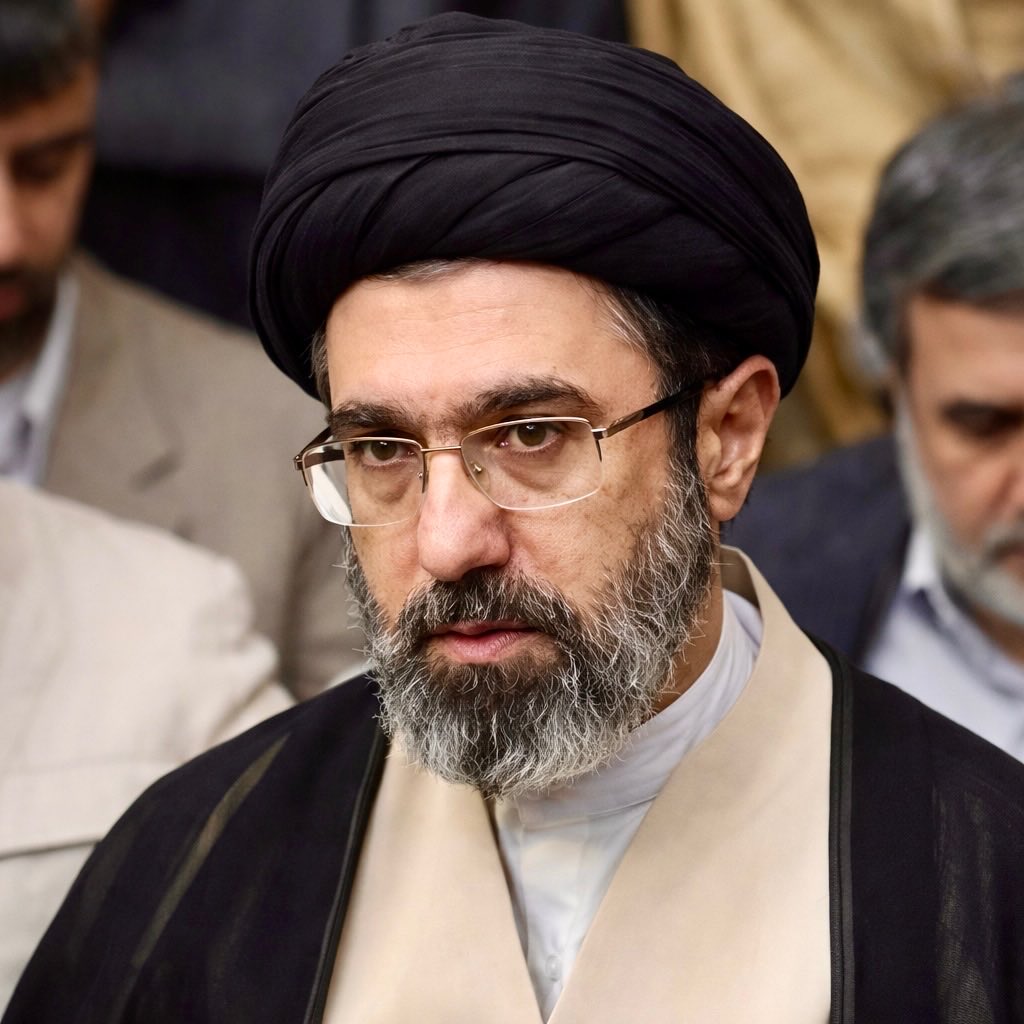
JUST IN: 🇺🇸🇮🇷 US Secretary of State Marco Rubio says there are indications that Mojtaba Khamenei is alive and becoming increasingly involved in decision-making.
Marco Rubio:
Iran would be like North Korea, but worse, if they got nuclear weapons.
They would destroy the State of Israel, and you wouldn't be able to do anything about it because they have a nuclear weapon.
India is entering that extremely dangerous zone where sons and daughters of several top policymakers, industrialists, civil servants, defence officials and politicians are settled in America, or are citizens of America.
How can they ever take on America when push comes to shove? They'll never ever push back, given direct family interests.
China sidelines all such officials as a principle. No compromise.
But here? They're leading the show.
BREAKING: Axios reports that Trump told Netanyahu in their latest phonecall, 'You’re f***ing crazy. You’d be in prison if it weren’t for me. I’m saving your ass. Everybody hates you now. Everybody hates Israel because of this.'