Pi Network is exploring how stablecoins can support additional utility across the Pi ecosystem while maintaining a distinct, complementary role to Pi.
Read the new blog in the Pi mining app to learn about:
- Pi’s approach to stablecoins
- How stablecoins may help expand participation within the ecosystem
- Why their implementation requires careful design
And how the OUSD partnership can fit into Pi’s broader stablecoin strategy.
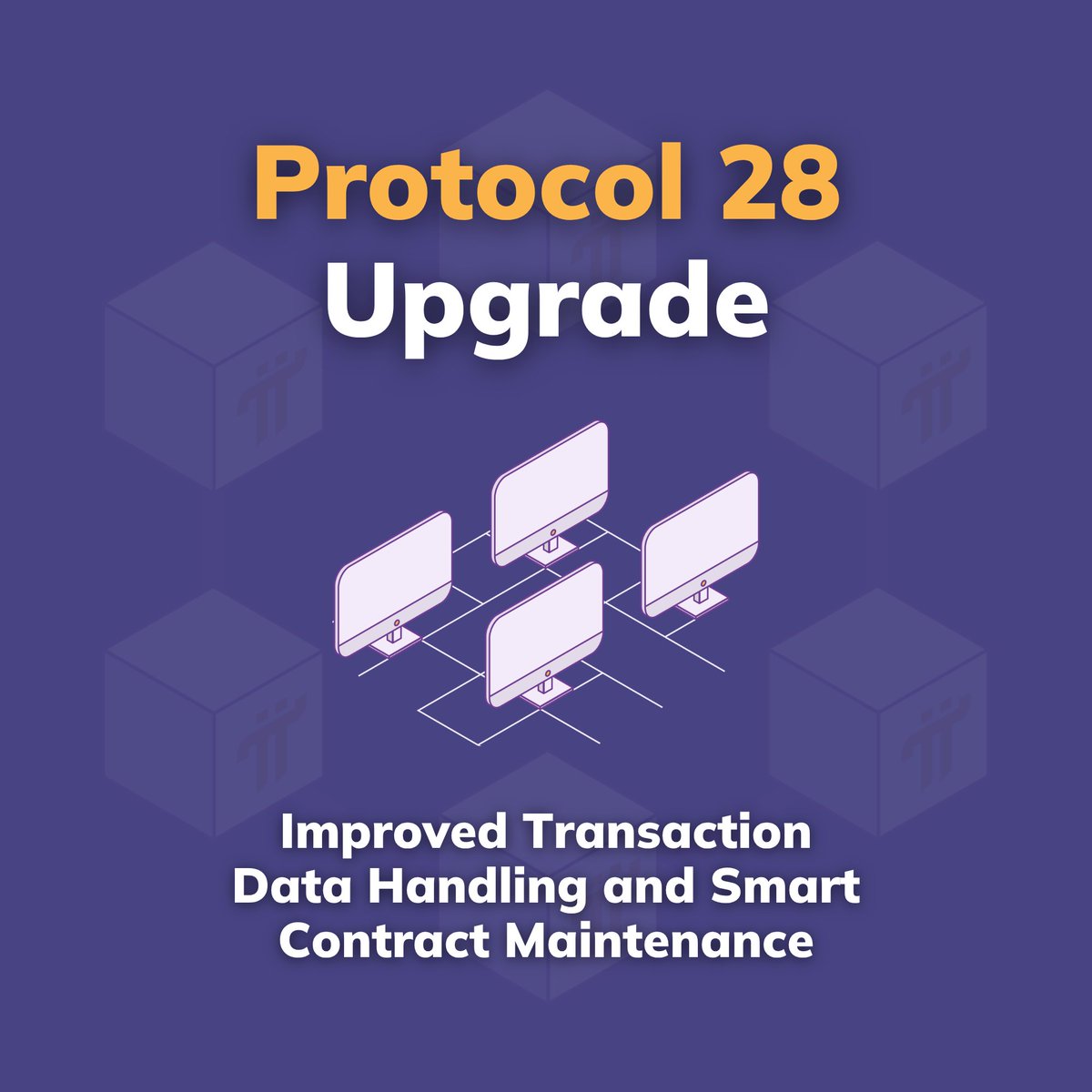
Following the successful completion of the Protocol 27 upgrade on Pi Mainnet, Pi Testnet has upgraded to Protocol 28.
Protocol 28 improves how the network handles delays in transaction data and enables developers to upgrade groups of smart contracts at once and change stored data more safely as their applications develop.
All Node operators must upgrade their nodes to Protocol 28 by October 13, 2026, in preparation for the Mainnet Protocol 28 network upgrade on October 16, 2026.
GIVEAWAY TIME!
🎁🍎- 2X Iphone DUO (256GB-1TB size)
It goes to two separate winners after 30 days! (October 16th)
All you have to do:
🔃 - Retweet this giveaway
👍&💭- Like and comment on the newest Packdraw video! (Check comments)
✅ - Follow @JuicyCS2
At 2,000 Likes on the video, we will giveaway the first iPhone Duo, at 3,000 Likes goes the second one!
SoloHost updates have been released alongside Pi Desktop version 0.6.3! This improves app discovery, reliability, and developer tools.
Pioneers can more easily discover actively used SoloHost apps. Reliability improvements and developer resources, such as AI agents compatibility, also support the building and troubleshooting of apps.
These updates further support SoloHost’s role in extending the utility of Pi Desktop and Nodes beyond blockchain infrastructure, giving Pioneers more ways to use their computers for self-hosted apps and developers more tools to build and bring apps into SoloHost.
Learn more in the Pi app!
Pi has introduced new capabilities for developers building on Pi! This includes local storage support, access to app-specific staking data, and file and video sharing.
Pi’s new developer documentation is also now released, providing a single destination for technical resources and a clearer path from getting started to building and launching an app on Pi.
Improving developer tools is important for Pi’s broader focus on utility because they directly affect the types of apps and services that developers can create for the community and beyond.
Learn more in the Pi app!
SoloHost gives Pioneers more ways to use their computers for local AI and easier access to other self-hosted applications, further extending the utility of Pi Desktop and Nodes beyond blockchain infrastructure.
OpenClaw and the Atlassian MCP Server show how SoloHost can support different types of self-hosted software for different user needs, from local AI agents to more specialized developer utilities.
Through SoloHost, people can benefit from AI while keeping more of their data and computation on their own devices and reducing reliance on third-party remote infrastructure.
Learn more
https://t.co/qyzzhDC1SB
In the Pi Launchpad model, projects issue tokens as tools to acquire users for their applications and integrate those tokens directly into product functionality, such as access, payments, rewards, and governance.
Instead of being taken by the issuing project, the proceeds of Pi from their token launch go to a liquidity pool with the ecosystem token, which bootstraps a healthy liquidity foundation from the start.
For the SLICE test launch on Testnet, this results in a liquidity pool containing SLICE and Test-Pi. In addition to matching individual buyers and sellers through a traditional decentralized order book on the Pi DEX, the pool uses an automated market maker algorithm to calculate swaps based on the amounts of both assets it currently holds.
Learn more about how the SLICE liquidity pool works.
https://t.co/BJEb5ijQcr
Pi Launchpad has completed the distribution of its second Testnet token, SLICE!
Explore the post-launch experience and see how liquidity pools work through the new price tracking feature!
The Launchpad app in Pi Browser shows individual allocation details, the launch and effective token prices, access to the SLICE liquidity pool, and a chart tracking changes in the SLICE price relative to Test-Pi.
Go to the Pi mining app to learn more about the SLICE launch and liquidity pool mechanics.
The Pi mining app side menu and app profile page have been redesigned!
As the first step of a broader mining app design refresh, this update makes important Pioneer info and ecosystem features easier to find, understand, and navigate. Tap the hamburger (☰) icon in the top left of the Pi mining app to check it out.
Since the mining app is a central part of the Pioneer experience and its interface has supported the Pi community’s growth to over 60 million engaged Pioneers, changes to its design and user experience must be introduced thoughtfully and iteratively to improve clarity, style and usability while maintaining core functionalities.
Go to the Pi mining app to learn more, and provide feedback on the new design and style!
On July 22, Pi is scheduled to upgrade to Protocol v25, which primarily focuses on improving network stability and reliability, and supports new capabilities for more efficient, privacy-preserving smart contracts.
Go to the Pi mining app to learn more!
The new App Planning Phase feature in Pi App Studio allows creators to develop their ideas with the help of AI before App Studio generates the app.
For example, App Studio may ask for more detail about the app’s:
- Main idea
- Goal
- Design
- User experience
This helps guide creators from an initial idea toward a more complete app concept in a more interactive and dynamic way.
Watch the video walkthrough to learn how the planning process works!
Pi App Studio has released two updates to help creators build more engaging and useful app experiences.
1. Backend support enables persistent user experiences for newly created App Studio apps: Apps can save and retrieve user-specific data across sessions, enabling experiences that continue even after users leave and return.
2. AI-assisted App Planning Phase: Creators can develop their ideas with the help of AI before App Studio generates the app. This helps guide creators from an initial idea toward a more complete app concept in a more interactive and dynamic way.
Go to the Pi mining app to learn more, and create new apps with these features today!
Pi App Studio backend support has been enabled!
Backend capabilities begin with persistent storage for newly created App Studio apps, allowing apps to save and retrieve user-specific data across sessions.
Creators can now build App Studio apps with user experiences that continue even after users leave and return.
For example:
- Game apps can remember a user’s high scores
- Productivity apps can remember a user’s to-do lists
- Note-taking apps can preserve notes automatically
Before, Pi App Studio apps were largely limited to frontend-only, single-session experiences, where app data such as preferences or progress would disappear if users left the app.
Adding backend support is a significant App Studio platform milestone because it expands what AI-created apps can practically do on Pi Network. Persistent storage is the first capability built on this foundation, enabling a broader range of useful, everyday applications.
Learn more and create apps with this new feature in Pi App Studio today!
https://t.co/UlKKz3ZcjG
SoloHost expands the utility of Pi Nodes beyond just blockchain validation.
Released in Beta on Pi2Day 2026, SoloHost on Pi Desktop gives Pioneers new ways to use their computers to run local apps, AI utilities, distributed computing, and other compute-based use cases.
Pioneers can also remotely engage with the corresponding app through mobile devices on Pi Browser.
SoloHost also lets developers build and list these local apps through an open, permissionless framework to reach the over 420,000 Pi Node operators who are already running Pi Desktop.
Local is key. With SoloHost streamlining access to local applications through Pi Desktop, people can benefit from AI while keeping their data on their own devices, not third-party remote servers.
This means:
- More privacy.
- More control.
- Less reliance on cloud services
Learn more at https://t.co/lMgJBEMbYj
Pi Sign-in allows supported third-party websites and apps to offer Pi accounts as a sign-in or sign-up option.
It helps provide the infrastructure that allows applications and services to recognize, connect, and serve users across and outside the ecosystem.
This means Pioneers can access supported services with their Pi account instead of creating a new account or password for every app.
Why would third-party services or websites want to integrate Pi Sign-in? Pi Sign-in creates a simpler way to connect them with Pi’s large user base and bring Pi users into their own product experiences. It also gives Pi more presence in third-party contexts while offering a way to tap into the additional benefits and resources of Pi Network, besides user traffic.
Learn more about the Pi2Day 2026 release at https://t.co/lMgJBEMbYj
PiVerify is a KYC identity verification service available to third-party companies, making Pi’s real-human verification capabilities available outside the Pi ecosystem.
With PiVerify, external platforms can verify their users, reduce fake or duplicate accounts, and support compliance-related identity workflows.
For businesses and platforms, the need is straightforward: many digital services need to know whether users are real people. Verified identities are needed for any meaningful transactions, especially in real-world economies.
PiVerify services are also paid for in Pi, which increases Pi utility.
By making this infrastructure available to third parties, the Pi2Day 2026 PiVerify release extends the utility of Pi’s verified identity technology and resources beyond Pi’s own apps and services.
Learn more at https://t.co/azUeoeGENF