Pi2Day (June 28) is approaching, and Pi’s vibe coder campaign will continue until that date! What exciting apps are you building ahead of Pi2Day?
Vibe coders (app creators using AI) can use Pi App Studio to easily convert their apps built through platforms such as Codex, Claude Code, Replit, Cursor, Lovable or other AI-assisted coding tools, into Pi Apps.
Pi can connect your AI-created apps with millions of engaged Pioneers, identity verification and Pi’s utility ecosystem.
Learn more and deploy vibe coded apps on Pi today!
https://t.co/x3mI1DqjfR
Pi Network has over 60 million Engaged Pioneers.
For developers, that creates an important opportunity: How do useful apps get discovered by these millions of people on Pi?
Ecosystem Directory Staking was built to help answer that.
It is a decentralized way for Pioneers and businesses to actively support and promote the ranking of Pi apps and utilities in the Ecosystem Interface. Staking through this feature increases an app’s exposure to the Pi community, helping boost visibility within the ecosystem.
This feature provides a self-service avenue for developers and creators to use Pi to tap into the attention resource of Pi Network to acquire users.
As AI makes app creation easier and easier, the challenge shifts from building products to getting them in front of people.
Ecosystem Directory Staking improves ecosystem discovery, making it easier for developers and creators to connect with users, and easier for users to discover new apps.
https://t.co/EpsNc81gOv
CiDi Games organically reached over 81,000 users across 160+ countries in less than a week after launching its beta in the Pi ecosystem.
That led to:
1.2M+ game sessions
21,000+ tournament participants
3.19M+ Pi staked by the community to support the platform.
What makes this important is not just the gaming activity itself.
It is what the launch demonstrates about building on Pi.
Apps built on Pi launch directly into a network with existing distribution, engagement, and infrastructure already in place.
As AI lowers the barrier to building apps, ecosystems with real users like Pi become increasingly valuable for developers.
Learn more about CiDi Games’ beta launch here
https://t.co/N75zsyH3Q0
The Pi Mainnet is upgrading to Protocol 24 – Deadline: June 2.
The Pi Mainnet has successfully upgraded to Protocol 23. All Mainnet nodes are required to complete this step before the deadline to remain connected to the network.
Details here: https://t.co/9VehO7hhj1
Big kudos to Mainnet Node operators for upgrading to v23.
Most major Nodes have now been upgraded, and the protocol is expected to move to v23 soon.
This was one of the most challenging upgrades to date, as it involved multiple subsystem upgrades and optimizations that required internal data reprocessing.
Protocol 22 -> 23, Ubuntu 20 -> 24, PostgreSQL 12 -> 16
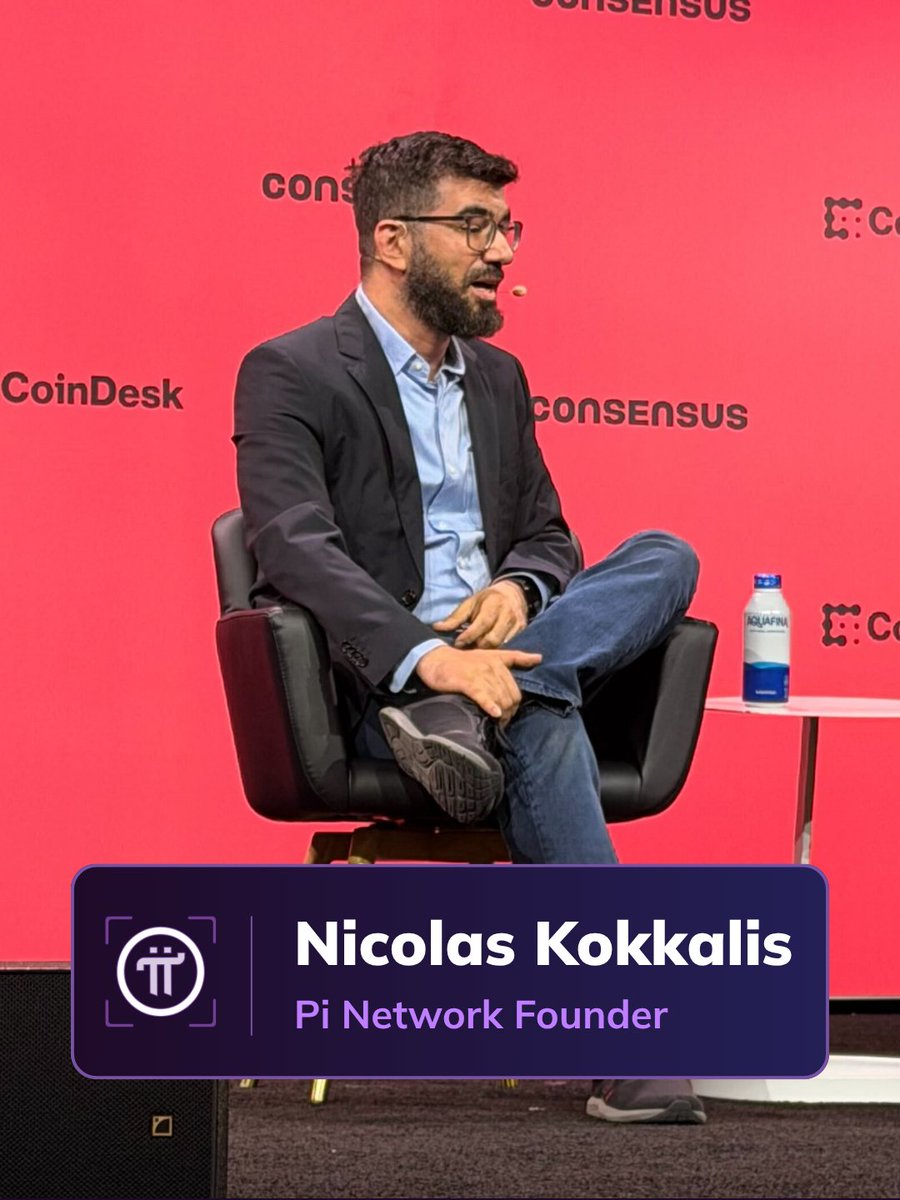
Watch Pi Founder Nicolas Kokkalis speak in the Consensus 2026 panel “How to Prove You’re Human in an AI World (Without Doxing Yourself)”.
The discussion focused on how digital trust and identity verification systems must evolve as AI makes it possible to generate bots, agents, and synthetic identities that closely resemble real human behavior at scale.
The panel explored a core question for the AI era: how systems can continue to verify real human participation without requiring unnecessary disclosure of personal information.
A key theme was that proof of humanity is context-dependent, with different systems requiring different levels of verification depending on use case and risk.
The importance of privacy-preserving design was also highlighted, ensuring verification can scale while remaining usable for real users.
As AI lowers the barrier to building and interacting online, the harder challenge may be connecting digital systems to real users, trusted participation, and meaningful utility.
Pi’s Layer 1 blockchain, identity verification, payments infrastructure, non-custodial wallets, smart contracts, and engaged global community are all part of Pi’s ongoing work to address that challenge.
Watch the full presentation now!
https://t.co/nFCz9nF7RR
For the first time, OKX has made Pi available to millions of people in the US through its platform, adding another access point to the Pi ecosystem for US users.
Pi continues to expand its global network of Pioneers and partners, and strengthen ecosystem participation, utility, and real user adoption across the world.
More users. More usage. Stronger network
Pi Founder Chengdiao Fan’s talk at Consensus 2026 was centred on a simple but important challenge:
The frequent misalignment between token design and real product innovation.
Her presentation, “Aligning Web3, AI, and Blockchain for Utility,” explored how tokens can be treated as tools that can support user acquisition, product engagement, and long-term utility.
One implementation of this approach is Pi Launchpad, Pi’s design for ecosystem tokens and launch mechanisms that aims to help products acquire real users who can engage, provide feedback, and use those tokens within actual product experiences.
As AI makes it easier to build applications, the limiting factor is no longer creation.
It is distribution and usage.
Pi’s approach combines blockchain infrastructure, innovative token and launch mechanisms, identity verification, and a large engaged network of real users to address that gap directly.
Enjoy the full talk & leave your thoughts on Pi’s approach to tokens and launch mechanisms!
https://t.co/YiYqcxo0jJ
Vibe coders and creators can now tap into Pi Network’s massive user base of over 60 million Engaged Pioneers by easily bringing their external AI-created apps to Pi’s real distribution network and utility ecosystem through Pi App Studio!
Creators, who may be technical developers or non-technical product people, can build apps using platforms such as Codex, Claude Code, Replit, Cursor, Lovable or other AI-assisted coding tools, and then use Pi App Studio to convert those apps into Pi Apps.
That changes the equation for creators.
AI can already help people generate apps quickly; the harder part is distribution and turning those apps into products people actually use.
Pi helps close that gap.
Instead of rebuilding infrastructure from scratch, creators can connect their apps to an existing ecosystem with users, payment capabilities, identity verification, decentralized human infrastructure and platform-level tools already in place.
This feature makes Idea → App → Users that much faster.
Because your ideas are too good not to be seen.
Try the Pi App Studio Now! If you’re a vibe coder or know someone building apps with AI who needs distribution, head to Pi App Studio today to convert AI-created apps into Pi Apps and access the Pi ecosystem’s users, infrastructure, and monetization opportunities.
As some Pioneers may have noticed, affiliate badges have recently been assigned to the Pi Founders’ official X accounts. This helps you identify their only real accounts!
For your safety, always verify information through the official Pi Safety Center and official Founder accounts listed below.
Official Pi Safety Center: https://t.co/r4rh8Vs30i
Official Founder X accounts:
• Nicolas Kokkalis — @nkokkalis
• Chengdiao Fan — @chengdiao
Please remain cautious of impersonators, unofficial accounts, and misleading links claiming to represent Pi.
Pi Founder Chengdiao Fan spoke today at Consensus 2026 Miami in her session, “Aligning Web3, AI, and Blockchain for Utility.”
Dr. Fan shared how Pi’s blockchain infrastructure, identity verification, and a globally engaged network can support utility-driven products and businesses in the AI era.
Her talk built on a central challenge in the broader crypto industry: the frequent misalignment between token design and real innovation. While tokens in the industry have often been used primarily as capital-raising tools or quick exits, Dr. Fan discussed Pi’s approach to treat tokens as tools that can support growth, engagement, and long-term utility.
Pi’s approach to ecosystem tokens and launch mechanisms focuses on tokens for user acquisition and integrating token design into the product innovation process. By using tokens to help products acquire real users who can engage, provide feedback, and use those tokens within actual product experiences, this approach connects token design more directly to utility and product development.
More broadly, Dr. Fan’s talk invited discussion on how blockchain can help shape AI-era business models, financial literacy, ownership, and socioeconomic participation. As AI lowers the barrier to building, the focus shifts toward something harder to replicate: real users, real participation, and trusted human input at scale.
Stay tuned for the full session video!
Pi Founder Nicolas Kokkalis spoke today at Consensus 2026 Miami on the panel, “How to Prove You’re Human in an AI World (Without Doxing Yourself).”
The discussion focused on one of the most urgent challenges in the AI era: how to maintain trust and verify real human identity as AI systems become capable of generating convincing bots, profiles, and interactions at scale.
Stay tuned for the full video!