Excited to see our new paper comes out @NatureNeuro! Please check out if you’re interested in how social influence is associated with the structure of social embedding in the human brain. Many thanks to my great PhD supervisor @lusha_zhu and collaborator @QingtianMi! (1/n)🧵
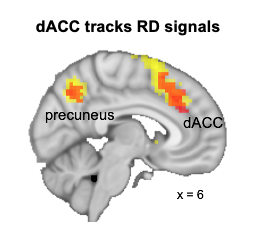
Combining a real-time distributed learning task with #fMRI shows people's learning from observing others’ decisions is biased toward well-connected individuals, with the dACC tracking connectedness
New from @YaominJ@lusha_zhu@PKU1898
https://t.co/rVc1kvStqU
As autonomous AI agents are deployed at scale, how can we ensure they cooperate with one another?
In our new paper, we find that selecting for group performance can effectively promote cooperation among LLM agents.
https://t.co/HNxIlrvT1s
📢 I am on the economic job market 🚀
My JMP "Algorithmic and Human Collusion" shows pricing algorithms can be more collusive than humans and explores their interaction.
Link: https://t.co/5l9TGIHYsZ
Other research: https://t.co/aoQ8d8VqBz
#EconTwitter#EconJM#JMP
New Paper: "Machine Culture"
https://t.co/OyQ9F08bvo
AI systems are increasingly integrated into the human cultural fabric. What can we learn from human cultural evolution to anticipate the impact of intelligent machines on culture (socially transmitted information)? [1/9]
As #AI personas make their way into #SocialMedia, have you ever wondered how they will create their own profile pictures? The Face Game is a research project @iyadrahwan that explores how #chatbots will choose to appear to humans. https://t.co/YqgrIdqWYY @mpib_berlin
Berlin-based friends! Join me in the opening of my first solo show “Faces of Machine”, featuring oil paintings of AI, including portraits of ChatGPT.
Date: Saturday, May 13
Time: 17:30-19:00
Venue: Send/Receive
Address: Rosa-Luxemburg-Straße 45, 10178 Berlin
Excited to see our new paper comes out @NatureNeuro! Please check out if you’re interested in how social influence is associated with the structure of social embedding in the human brain. Many thanks to my great PhD supervisor @lusha_zhu and collaborator @QingtianMi! (1/n)🧵
Combining a real-time distributed learning task with #fMRI shows people's learning from observing others’ decisions is biased toward well-connected individuals, with the dACC tracking connectedness
New from @YaominJ@lusha_zhu@PKU1898
https://t.co/rVc1kvStqU
Theoretically and empirically, this network-dependent algorithm of social learning (we named it "DeGroot learning") can give rise to collective maladaptation, including the propagation of misinformation and biased social consensus. (8/n)
Importantly, learning is location-dependent such that individuals are influenced more by an observation if the observee is better-connected and themselves are less-connected. dACC tracks the relative connectedness between the observee and observer at the time of observation. (7/n





![LevinBrinkmann's tweet photo. New Paper: "Machine Culture"
https://t.co/OyQ9F08bvo
AI systems are increasingly integrated into the human cultural fabric. What can we learn from human cultural evolution to anticipate the impact of intelligent machines on culture (socially transmitted information)? [1/9] https://t.co/Il6l3AI8zE](https://pbs.twimg.com/media/F_ZBFC6WoAMEr8D.png)