A thread on...
Russia-Ukraine tensions from a neutral perspective and explained in layman’s language.
Ukraine and Russia are both sovereign countries internationally recognized.
They are very close neighbors sharing boarder...
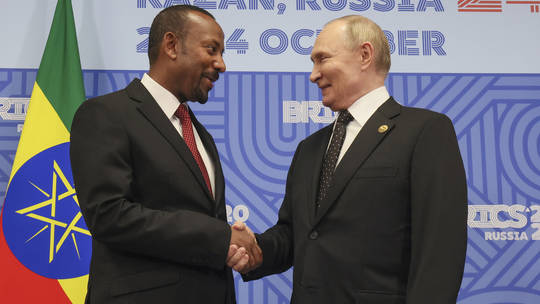
Ethiopian leader praises Putin for Russia’s economic resilience
Moscow continues to thrive despite the difficulties it faces, Abiy Ahmed has said
https://t.co/PsTOLqAnMR
@TerraAbdirizak@AbiyAhmedAli Abdirizak Relax,Ethiopia isn't a failed state like Somalia. It's a well-respected regional power and economic partner to many international powers like Iran and Israel...btw why would Ethiopia have 20,000 troops in Somalia safeguarding your internal security if FANO is a threat?
@ElephantsMusk just google the "largest ethnic group in Africa" and see how you made a fool of yourself... Somalis are not even in the top 5... Oromos alone will outnumber the entire Somali population.
BREAKING - Residents of Wajid, near the Somali-Ethiopian border, join the sentiment from Hudur, rallying in support of Ethiopia and clearly stating, 'We don't want Egypt.' #Somalia
Somali officials in the town of Huddur said they want the Ethiopian troops to continue to stay in their area despite Somali government effort to exclude Ethiopian troops from participating the new African Union mission.
Following a meeting with the local elders and community members, the regional officials including the District Commissioner of the town of Huddur in Bakool region, Omar Abdullahi Mohamud told VOA Horn of Africa Service that they have organized a meeting to express their support for the presence of Ethiopian troops.
“We organized the meeting after a lot of concern from the public in Huddur on what the solution would be if Ethiopian troops were to leave Huddur, so we were expressing that concern with loud voice to convey it to the [Somali] government,” he said in a phone interview.
Officials and some residents in Huddur also oppose the possible deployment of Egyptian forces in their area.
Egypt has not yet deployed troops in Somalia, but Somalia’s federal government wants Egypt to play a role new mission, the African Union Support and Stabilization Mission in Somalia (AUSSOM) that will operate in Somalia from January 2025. Somali officials said they will not allow Ethiopia to participate in AUSSOM unless it cancels the Memorandum of Understanding (MOU) Addis signed with Somaliland.
Officials in Huddur denied allegations on social media that Ethiopian troops in the town organised the meeting and urged the people to carry supporting continued presence of ENDF in Huddur area.
The interview with Huddur DC -> https://t.co/z5fJe4kCYf
@MuhammedBishaar That's why Farmajo wanted to bring these regions under the direct control of Mogadishu... They act like sovereign nations and make independent decisions with foreign powers ...they will always sabotage Villa Somalia(who are also stooges of Halane).
The Coming War Nobody Is Talking About
Trouble has horns to hold but not tails.This Somali proverb, suggesting that disaster can be prevented but not easily controlled, feels very apt for East Africa right now. Trouble has certainly arrived.
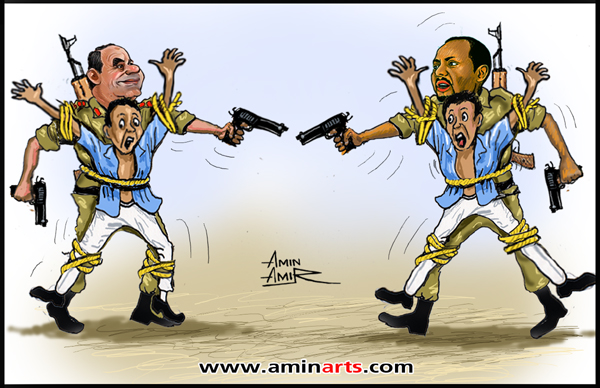
Thanks to Prime Minister Abiy Ahmed of Ethiopia’s expansionist ambitions and reckless designs, the Horn of Africa is on the cusp of a war that would imperil the region and rebound against the rest of the world.
It must be stopped before it’s too late.The catalyst for the conflict is Mr. Abiy’s obsession with making Ethiopia a coastal state. Last year, he declared that Ethiopia could not stay landlocked and must have access to the sea, either by negotiation or by force. Somalia, the weakest of the five coastal countries that border Ethiopia, was the obvious target.
On Jan. 1, Mr. Abiy duly signed a memorandum of understanding with the president of Somaliland, a self-declared breakaway republic in northwestern Somalia. In exchange for officially recognizing Somaliland, Ethiopia would gain a 12-mile naval base on the Gulf of Aden. Mr. Abiy would have his coast.
This was a clear violation of Somalia’s sovereignty and territorial integrity, recalling Ethiopia’s destructive history of meddling in the country. Somalia immediately rejected the memorandum and mounted a diplomatic offensive, explaining to regional states and international powers that Ethiopia was seeking control of Somali territory through illegal means.
The United Nations, the African Union, the United States and the European Union all backed Somalia’s position, emphasizing the necessity of respecting established boundaries and national sovereignty.
Yet despite international pressure, particularly from the Biden administration, Mr. Abiy has remained resolute. He seems to believe that now is the right moment to carry out his plan, as Somalia grapples with an extremist insurgency and the American government is distracted by elections and embroiled in conflicts in the Middle East and Europe.
A possible victory for Donald Trump, who Mr. Abiy apparently hopes will either support or be indifferent to his actions, is another boon.Tensions, bubbling away all year, have escalated in recent weeks.
In a display of power, Ethiopia sent its troops to Somalia twice in June, setting off complaints from Somalia to the United Nations Security Council. In July, a local militia in Somalia looted two truckloads of weapons and ammunition sent from Ethiopia, suggesting that arms have made their way into the country, too.
Somalia, for its part, threatened to expel Ethiopian troops from the African peacekeeping forces in the country and, in a bold move, approved a defense pact with Egypt in July — adding to one it signed earlier in the year with Turkey. Ankara has stepped in to mediate but has been unable to find a solution. With both sides at loggerheads, the region is sitting on a time bomb.War would be devastating. Involving rival and well-armed nations, ethnic communities, religious groups and international backers, conflict would bring bloodshed and disaster to both countries.
Somalia, slowly recovering from a devastating three-decade civil war, would scarcely be able to bear it. Ethiopia is already mired in multiple conflicts within its borders — in its Tigray, Amhara and Oromia regions — and is facing conflict on its Eritrean and Sudanese borders. Another front, stretching thousands of miles, could bring the country to collapse.
The region, already racked by the war in Sudan, would become even more unstable. Conflict could draw in Red Sea states such as Saudi Arabia, Egypt, Yemen, Sudan, Djibouti and Eritrea, all of which consider the body of water essential for their national security.
The United States, China and some European nations already have a military presence in the Red Sea; countries like Turkey, Iran, the United Arab Emirates and Russia have lately entered the fray.
The region could quickly become a dangerous battlefield for global and regional powers.For all its precariousness, East Africa is vital for international commerce and security.
The Gulf of Aden and the Red Sea connect Asia to Europe and the Americas, while the Horn serves as Asia’s gateway to the whole African continent.
By disrupting key maritime routes, war in the area would endanger global trade. Equally worrying, it would also revive Islamic extremist groups such as Al-Shabaab, which has already claimed to have recruited thousands of young Somalis to fight the Ethiopians.
An unstable East Africa poses a risk to the entire world.Time is short: Another effort at mediation failed this month.
To prevent the region from descending into catastrophic conflict, the world — led by the United States — must communicate to Mr. Abiy that his expansionist ambitions won’t be tolerated. Ethiopia, like any other landlocked state, should seek commercial access to the sea through cooperation and economic integration, not deals with secessionists.
Washington, which has invested greatly in the region, must also exert pressure on the leaders of East African countries to promote dialogue, as well as try to reconcile Somalia and https://t.co/wWddXnUM7K won’t be easy. But the Red Sea and the Gulf of Aden are too important to become another war zone, and East Africa is too fragile for reckless adventures.
The world must hold this trouble by the horns. Because once it takes off, there will be no tail to restrain it
By Afyare A. Elmi and Yusuf Hassan
👇👇👇👇👇👇👇👇👇👇👇👇👇👇👇
https://t.co/yKWgKIJFKQ
#Somalia #Ethiopia #Sudan #Yemen #Saudi_Arabia #war #horn_of_africa #Egypt
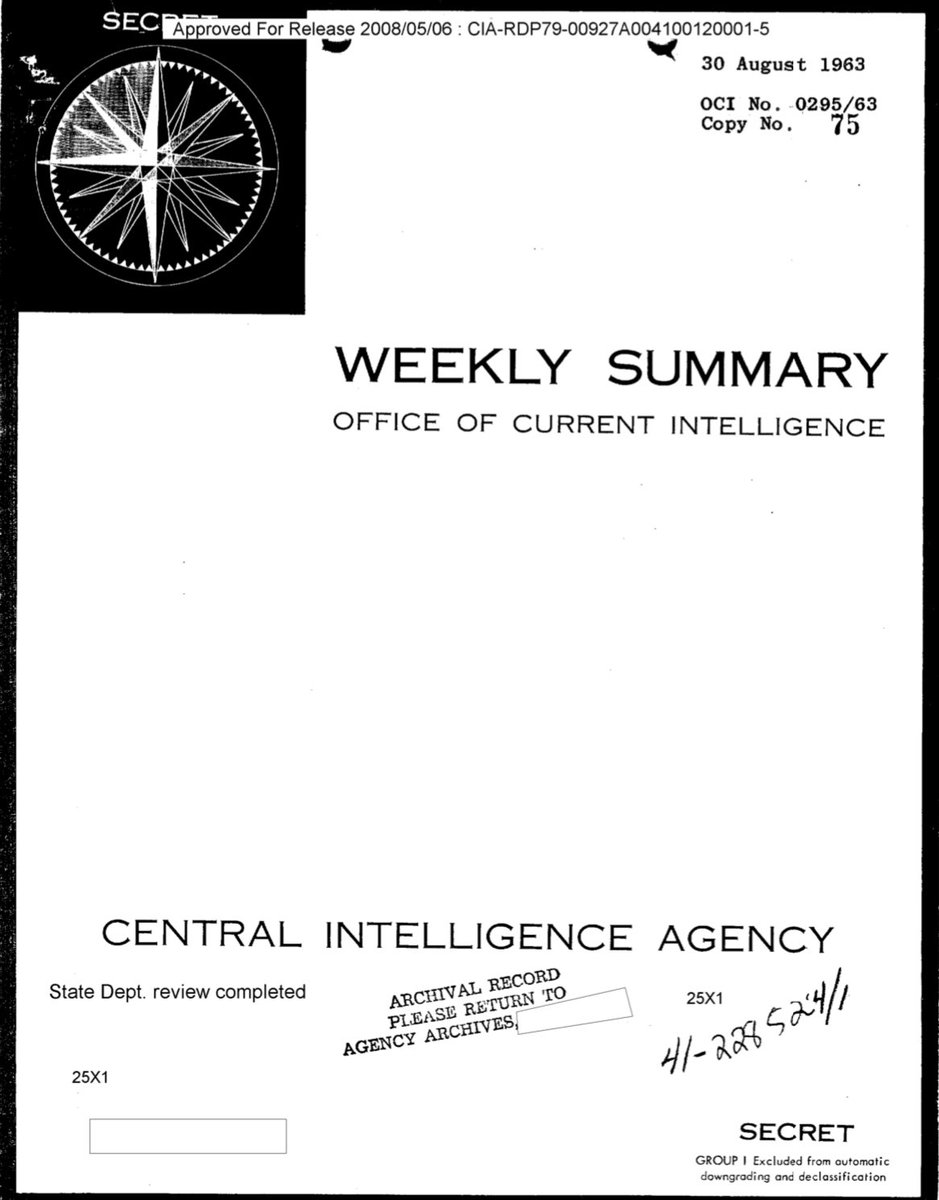
CIA DECLASSIFIED 🇺🇸📄: August 1963
An Ethiopian foreign minister told a British diplomat in 1963, that if Somalis continued their Greater Somalia ambitions, they would use northern Somalis as agents against the Somali government.
CIA write the following in 1963:
“𝘛𝘩𝘦 𝘉𝘳𝘪𝘵𝘪𝘴𝘩 𝘤𝘩𝘢𝘳𝘨é 𝘸𝘢𝘴 𝘵𝘰𝘭𝘥 𝘣𝘺 𝘵𝘩𝘦 𝘢𝘤𝘵𝘪𝘯𝘨 𝘧𝘰𝘳𝘦𝘪𝘨𝘯 𝘮𝘪𝘯𝘪𝘴𝘵𝘦𝘳 𝘵𝘩𝘢𝘵 𝘶𝘯𝘭𝘦𝘴𝘴 𝘚𝘰𝘮𝘢𝘭𝘪 𝘥𝘪𝘴𝘴𝘪𝘥𝘦𝘯𝘤𝘦 𝘴𝘵𝘰𝘱𝘱𝘦𝘥, 𝘌𝘵𝘩𝘪𝘰𝘱𝘪𝘢 𝘮𝘪𝘨𝘩𝘵 𝘶𝘴𝘦 𝘵𝘩𝘦 𝘭𝘢𝘳𝘨𝘦 𝘯𝘶𝘮𝘣𝘦𝘳 𝘰𝘧 𝘚𝘰𝘮𝘢𝘭𝘪 𝘳𝘦𝘧𝘶𝘨𝘦𝘦𝘴 𝘪𝘯 𝘌𝘵𝘩𝘪𝘰𝘱𝘪𝘢 𝘧𝘳𝘰𝘮 𝘵𝘩𝘦 𝘯𝘰𝘳𝘵𝘩𝘦𝘳���� 𝘳𝘦𝘨𝘪𝘰𝘯 𝘰𝘧 𝘚𝘰𝘮𝘢𝘭𝘪𝘢 𝘢𝘴 𝘢𝘨𝘦𝘯𝘵𝘴 𝘢𝘨𝘢𝘪𝘯𝘴𝘵 𝘔𝘰𝘨𝘢𝘥𝘪𝘴𝘤𝘪𝘰”