The latest MBRRACE-UK Saving Lives, Improving Mothers' Care report on the care of women who died during or up to a year after the end of pregnancy between 2021 and 2023 released today.
Read more: https://t.co/tvPecNUHHL
@marianfknight@npeu_oxford@oxford_ndph@Ox_wrh
Education: New treatments for migraine: CGRP monoclonal antibodies, gepants, and ditans
The treatment landscape for migraine has undergone rapid change as new classes of both acute and preventive treatments have been brought to market
@RebeccaCBurch
https://t.co/KBxJfmTkpy
Somewhat strange to hear @bbcnickrobinson haranguing an NHS Consultant for being on “over £100,000” and claiming to channel the feelings of ordinary people.
His salary in 2024 was between £345,000 - £349,000. For presenting radio programs. Which never saved anyone’s life?
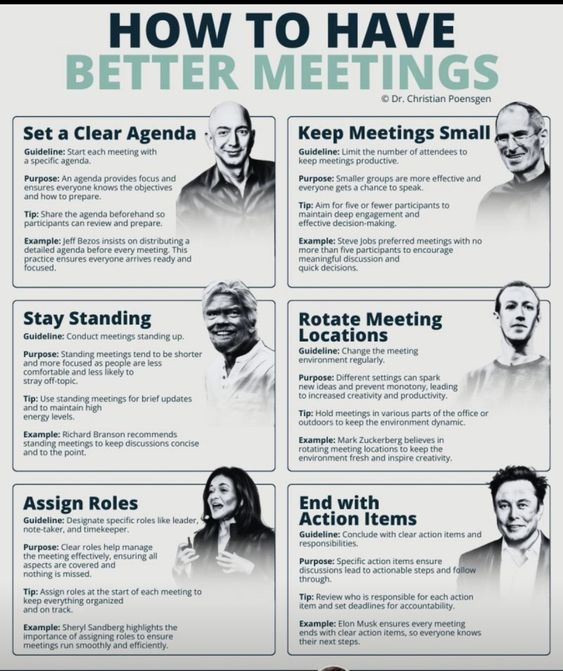
The little "chit chats" we have at the start of a meeting or Teams call (where we talk about our weekends, the weather, our pets or the traffic) are really important. Research shows that they actually work as a neural 'warm-up' for a deeper connection.
So the next time we get irritated by the small talk at the start of a meeting & push to start discussion on the topic at hand, we might remember that:
- small talk isn’t filler; it’s an entry point to foster group psychological safety.
- rapport isn’t a ‘nice to have’; it enables the trust needed for meaningful dialogue.
- alignment doesn’t begin with tasks; it begins with shared attention & mutual recognition.
Those first few minutes of “non-essential” chatter are doing critical work. They're building safety, alignment & a shared language that's the foundation for us to work more effectively together: https://t.co/N4N8rqFMhT. By Nick Wright. Fabulous graphic & signpost to this piece by @tashwillcocks
There are some fantastic (free) resources for change & great graphics in the Registered Nurses' Association of Ontario (@RNAO) "Leading Change Toolkit". I particularly like the content on the "social movement action framework", a people-led, grassroots approach to change that develops in response to an urgent shared concern or strongly desired change as well as a readiness for purposeful action by individuals, groups & organizations.
https://t.co/cZHg5h15Yh
One of the key graphics has been adapted by @TCI_ca: https://t.co/z8cKyTYVXZ. If we typically led more change this way (with & by people, rather than to or for people) we would make quicker progress.
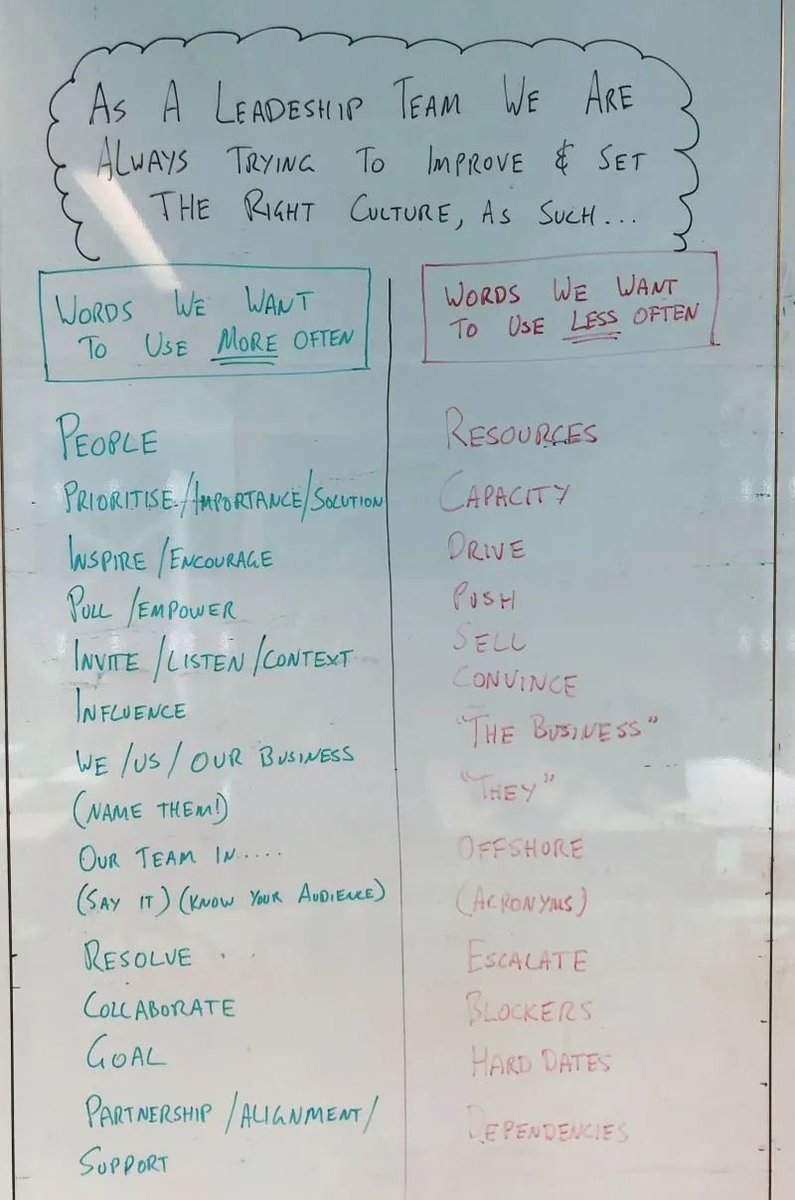
"Leadership is language". Words are powerful tools that energise or deflate, inspire or dishearten. When we talk about "resources" rather than "people", or use "they" rather than "we" or say someone is lazy or use "must" or "have to" or abbreviations excessively, we set the culture. There are some great examples of leadership teams identifying words they want to use more & less often & holding each other to account for it: https://t.co/46cl1VGwTF Via @ant_murphy@noelito
A new Analysis calls for greater use of tranexamic acid, an inexpensive generic drug that can improve surgical outcomes, avoid unnecessary blood transfusion, and conserve blood stocks, say the authors
https://t.co/I2AsfPBxWi
I have been asked for advice about improving organisational culture. My view? DON'T start by setting up a "culture change" programme or a direct "culture" intervention. Culture gets changed when people start doing real work differently. Culture change is a byproduct of wider improvements. See for instance: https://t.co/rwNoixl4GJ. Via @HBSWK
Making change happen across a system of different organisations & groups is different to managing change within a single organisation. @CollaborateCIC is a great source for approaches to system change. They use the term "system activist" rather than "system leader", as mobilising for change in a system doesn't always need formal power. They say that becoming a system activist requires a fundamental change in the way we think & feel about our work & our own role in it. They suggest seven shifts that system activists make:
1) From Organisations to Outcomes: They know that collaboration beyond the boundaries of their role/organisation is needed to improve outcomes.
2) From Management to Mobilisation: They recognise that they can't rely only on the formal authority of their role & need to build informal authority to influence & generate action by others.
3) From Me to We: They know that their perspective on the challenge & its possible solutions, is partial & limited.
4) From Expert to Explorer: They navigate through uncertainty & adopt a learning approach, guiding others through that.
5) From Delivery to Co-creation: They recognise that disagreement is inevitable & have the ability to harness it productively; they distribute power & put people with lived experience at the heart of decision-making.
6) From Expectations to Agency: They recognise that the patterns, rules & behaviours that have sustained the systems’ old ways of functioning may also need to change.
7) From Head to Heart: System activists recognise that they are a part of the system they are trying to change & they need to change as much as everyone else.
https://t.co/MCL0mcSPjj. Via @annarandle
Most transformation efforts fail. Major new research from @BainandCompany says only 12% of big change programmes produce lasting results. They identify six "good practices" for large scale change strategies that greatly increase the likelihood of success:
1) Treat transformation as a continuous process rather than a discrete programme.
2) Build it into the operating rhythm of the organisation
3) Explicitly manage energy for change - sequence changes to avoid widespread organisational fatigue
4) Use aspirations, not benchmarks, to set goals - top-down data driven mandates can crush transformational thinking
5) Adopt a “middle-out”, rather than "top down" approach
6) Allow sufficient funding (in the research, nearly every failed transformation wasn't funded properly)
https://t.co/bJnJ4jm4X7. Via @HarvardBiz
Offer progestogen adjustments if unscheduled bleeding within 6 months of starting HRT or 3 months after change in HRT.
Offer urgent TVS (within 6 weeks) if presentation bleeding
more than six months after initiating, or three months after changing the HRT
preparation.
Five new articles now available ahead of print, including "Pregnancy Outcomes After Laparoscopic Radiofrequency Ablation of Uterine Leiomyomas Compared With Myomectomy." Go get your knowledge at https://t.co/zTEwma8ojZ
Delighted to share our maternity cqc reports published this morning @LG_NHS both sites good for safe, QE good for well led and UHL outstanding for well led. A truly massive effort from the whole team.
https://t.co/m9CP2rnO8p
https://t.co/NHUpD354t1
The RCOG NTC proudly bring you: The Great Matenity Bake-Off 2023!
Check out what’s happening near you locally!
Engraved wooden spoons for winner locally and all proceeds to selected charity locally!
Share your delicious baked goods on #GreatMaternityBakeOff2023