Japan has 4M+ vending machines, called jihanki.
In Tokyo they’re everywhere, but the interesting ones are weirdly hard to find.
So I made Jihanki Atlas, a map where people can discover, submit, and help verify Tokyo vending machines.
Current favorites: Pokémon plushies, sriracha sauce, wagyu beef, edible insects, fresh-squeezed orange juice.
What’s the coolest one you’ve seen?
https://t.co/qmlHXLwVBY
For new founders this is a great reference of what a high quality launch video looks like.
Notice he doesn't say "AI" anywhere, you know watching it is AI – he doesn't need to say it.
Also notice the simplicity. It is so simple. I could give this to an 8th grader and they would understand. Lastly, tasteful and good audio/video. Impressed.
Ausländer aus aller Welt wollen nach Japan, weil Japan einfach eines der wenigen Länder ist, die noch richtig funktionieren.
Frauen brauchen sich keine Sorgen machen allein auf die Straße zu gehen, das Essen ist das beste der Welt, wunderschöne Natur, beste medizinische Versorgung, gute Jobs usw.
Das Problem liegt nur oft darin, dass die Ausländer, die nach Japan wollen nicht die Mentalität mitbringen, um in Japan ein gutes Leben zu haben. Japan ist nur so ein schönes Land, weil die Japaner eine entsprechende Mentalität haben und wenn man die nicht hat, dann wird es schwer in Japan.
No one is watching.
Still, she wipes the counter.
3 AM, a Tokyo convenience store.
Her name tag reads "Yuki."
Four hours into her shift since 11 PM.
No manager in sight.
No camera pointed her way.
No bonus for going the extra mile.
Still, she wipes.
"I just thought... it'd feel nice for the people coming in tomorrow morning."
Japan has 56,000 convenience stores.
And in every single one, there's a Yuki.
Foreigners always ask the same thing:
"Why is Japan so clean? So careful?"
The answer isn't the system.
It isn't the rules.
It's 56,000 Yukis—
clocking in at 11 PM,
quietly wiping counters no one is watching.
That's what keeps this country running.
I never, ever want to lose this.
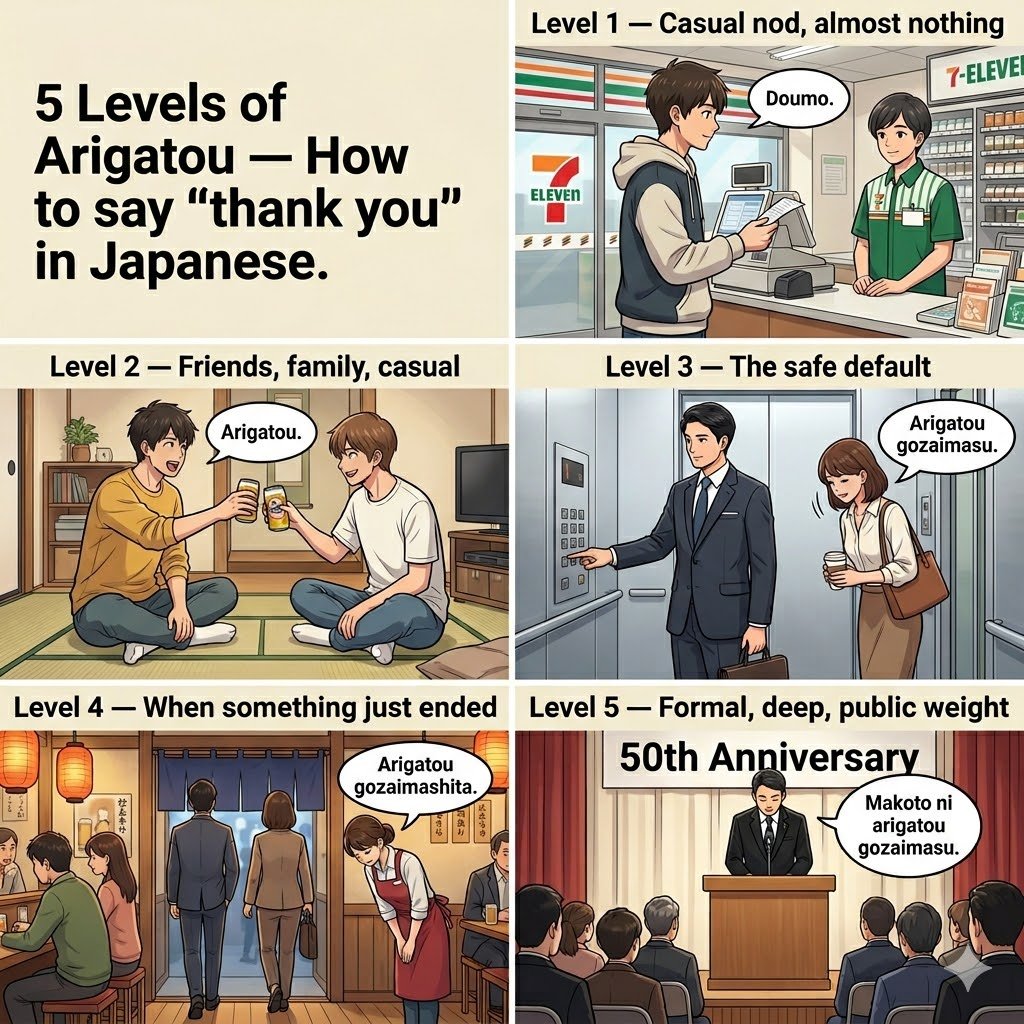
You probably learned that "thank you" in Japanese is arigatou gozaimasu.
There are 5 levels.
Pick the wrong one, and you'll sound rude, weirdly formal, or like you're trying way too hard.
Here's how it works.
Level 1 — Doumo (どうも)
You drop coins on the counter at 7-Eleven. The clerk hands you the receipt. You say doumo.
That's it.
"Got it. Thanks." Almost no weight.
Level 2 — Arigatou (ありがとう)
Your friend hands you a beer. You say arigatou.
Same energy as "thanks, man."
Level 3 — Arigatou gozaimasu (ありがとうございます)
A stranger holds the elevator for you. You say arigatou gozaimasu.
Polite. Respectful. Neutral.
The safest default in Japanese society.
Level 4 — Arigatou gozaimashita (ありがとうございました)
You finish dinner. As you leave, the staff bows and says arigatou gozaimashita.
Past tense.
Built into the word: "This is over, and we are grateful for it."
Level 5 — Makoto ni arigatou gozaimasu (誠にありがとうございます)
A CEO opens his speech at the company's 50th anniversary.
Makoto ni arigatou gozaimasu.
"Truly, thank you."
Used when gratitude has public, formal weight.
That's the 5.
Beyond them, there's osoreirimasu (恐れ入ります).
A thank-you mixed with apology.
Used when someone goes out of their way for you, and your gratitude carries: "I'm sorry I made you do that."
Five levels. One word, arigatou, branching into five different shades.
Each level says something the words themselves don't.
Who you are. Who they are. What just happened.
Next time someone in Japan thanks you, listen to which level they used.
That's where the real message is.
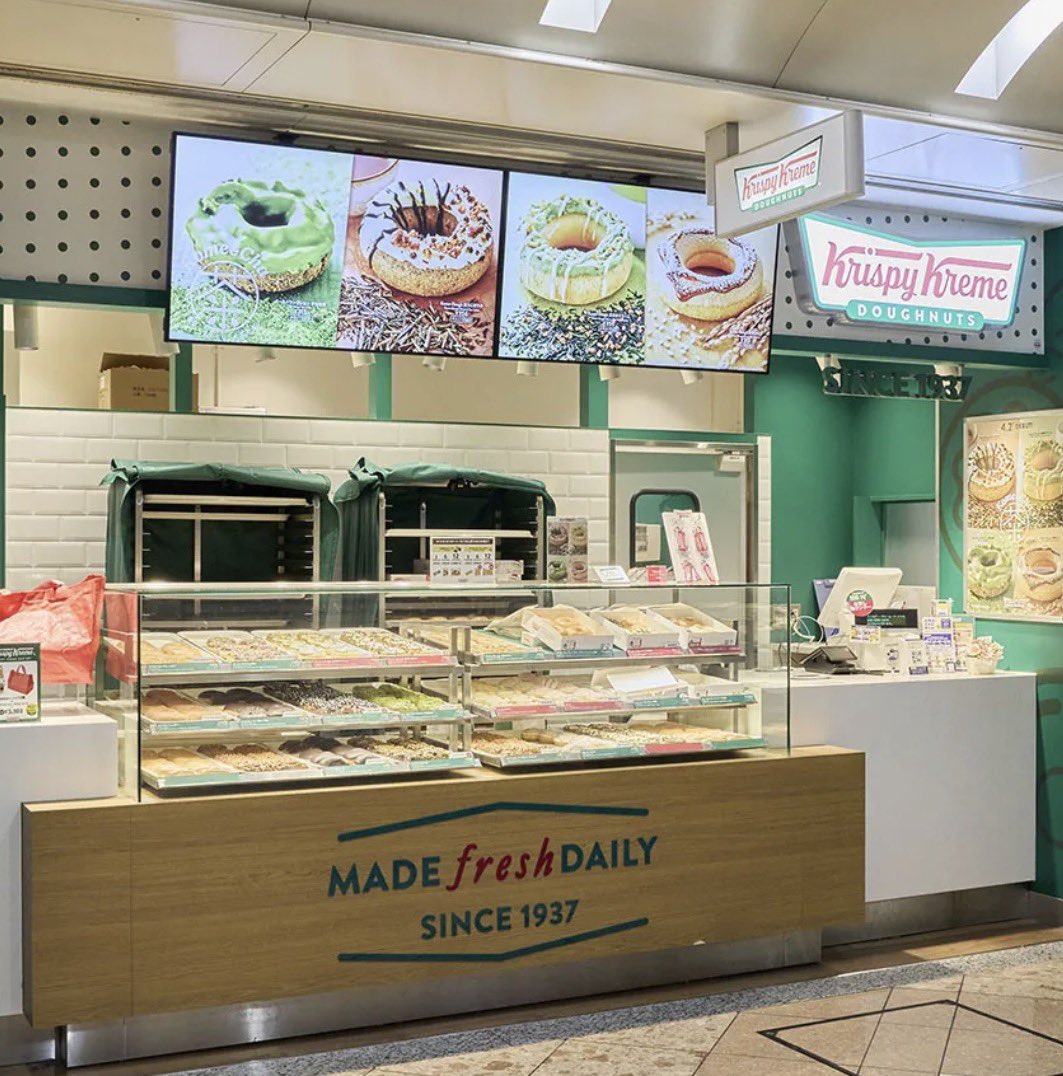
An American doughnut shop is dying in America.
In Japan, it's never been more alive.
The brand is Krispy Kreme. Founded in North Carolina, 1937. Famous for one thing: the Original Glazed.
In America, the company has had a rough few years. Sales dropped. A big partnership with McDonald's fell through last summer. The company has been quietly shrinking.
In Japan, 89 stores. The most in the brand's 20 years here. Their best year in Japan, ever.
Krispy Kreme arrived in Tokyo in 2006. People lined up for two hours. Free doughnut giveaways went viral. The "Donut Theater," a glass wall where you can watch the doughnuts being glazed in real time, became a Tokyo attraction by itself.
Then in 2015, the buzz faded. Half the stores closed. Newspapers asked if Krispy Kreme was leaving Japan.
It wasn't.
A new Japanese CEO took over that year and made a decision nobody expected. Instead of saving every store, she closed them. Pulled out of most regions. Concentrated on Tokyo, Nagoya, and Osaka. Rebuilt staff training from scratch.
Then, slowly, she found a new place for the brand in Japanese daily life.
Tiny take-out kiosks at train stations.
Cabinets inside Japanese supermarkets.
Boxes designed for *temiyage*, the Japanese custom of bringing a small gift when you visit someone's home.
The Original Glazed recipe never changed. Same dough. Same glaze. Made the same way as it has been since 1937.
What changed was the role of the doughnut.
In America, a Krispy Kreme is a treat you eat.
In Japan, it became a gift you give.
That's the Japanese way with foreign brands.
When something arrives from overseas, Japan doesn't just import it. Japan adopts it, reshapes it, gives it a place in someone's daily life. And keeps it alive long after the rest of the world has moved on.
Take Mister Donut. Founded in Boston, 1956. In America, it was absorbed by Dunkin' Donuts in 1990 and basically disappeared.
In Japan, it's the biggest doughnut chain in the country. Over 1,000 stores. The brand most Japanese people assume was born here.
Krispy Kreme just stepped onto that path.
I was doing laundry at a coin laundry in Osaka at like 11pm because that's when I had free time. This middle school kid was there folding clothes by himself.
Seemed weird for a kid that young to be out that late alone, but I minded my business. Until I saw him counting coins very carefully, looking stressed.
He didn't have enough for the dryer.
I walked over and asked in Japanese if he needed help. He got really embarrassed and said no. But I could see he'd washed his school uniform and it needed to be dry for tomorrow.
I gave him enough coins for the dryer. He refused like three times but eventually accepted and said he'd pay me back. I told him it's fine, just pay it forward someday.
He bowed like five times and left once his uniform was dry.
I didn't think much of it until two weeks later. I was at the same laundry and there was an envelope taped to "my" dryer (I guess I use the same one every time). Inside was the exact amount I gave him plus a little extra, and a note in careful English: "Thank you. I helped an old lady carry groceries today. Is this pay forward?"
I still have that note.
So I was caught in a random downpour in Kyoto and ducked into this small ramen shop. No umbrella, completely soaked.
When I finished eating and went to leave, the rain was still coming down hard. The owner, this older guy, saw me standing at the door and disappeared into the back.
Came back with an umbrella and just handed it to me. I tried to refuse because I can't return it, I'm leaving Japan in two days. He waved me off and said in broken English "is okay, is okay."
Then he pointed to the umbrella standing by the door. It was full of umbrellas. He said "people forget umbrellas here all the time. I keep them. When someone needs an umbrella, I give."
I asked what if someone takes one who doesn't actually need it? He just shrugged and said "maybe they need it more than I know."
I've been back home for three months now and I still have that umbrella. Use it all the time. Every time I do, I think about that guy just trusting that whoever takes an umbrella probably needs it.
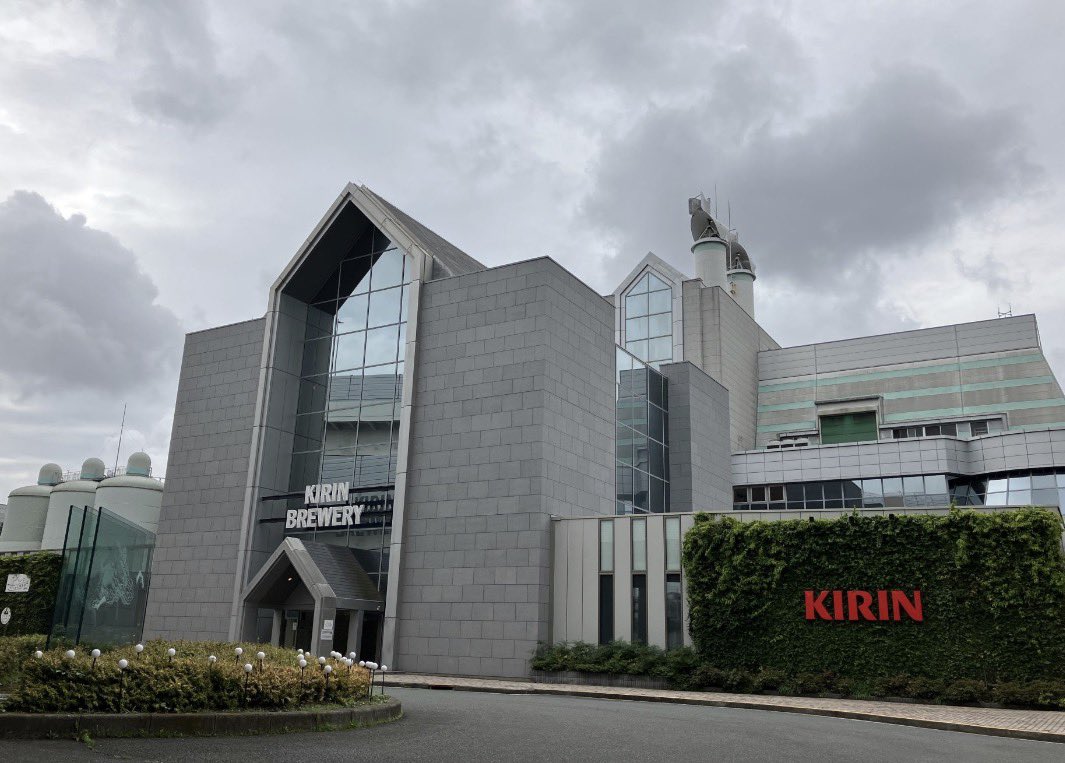
PSA for beer lovers visiting Japan: this is the move.
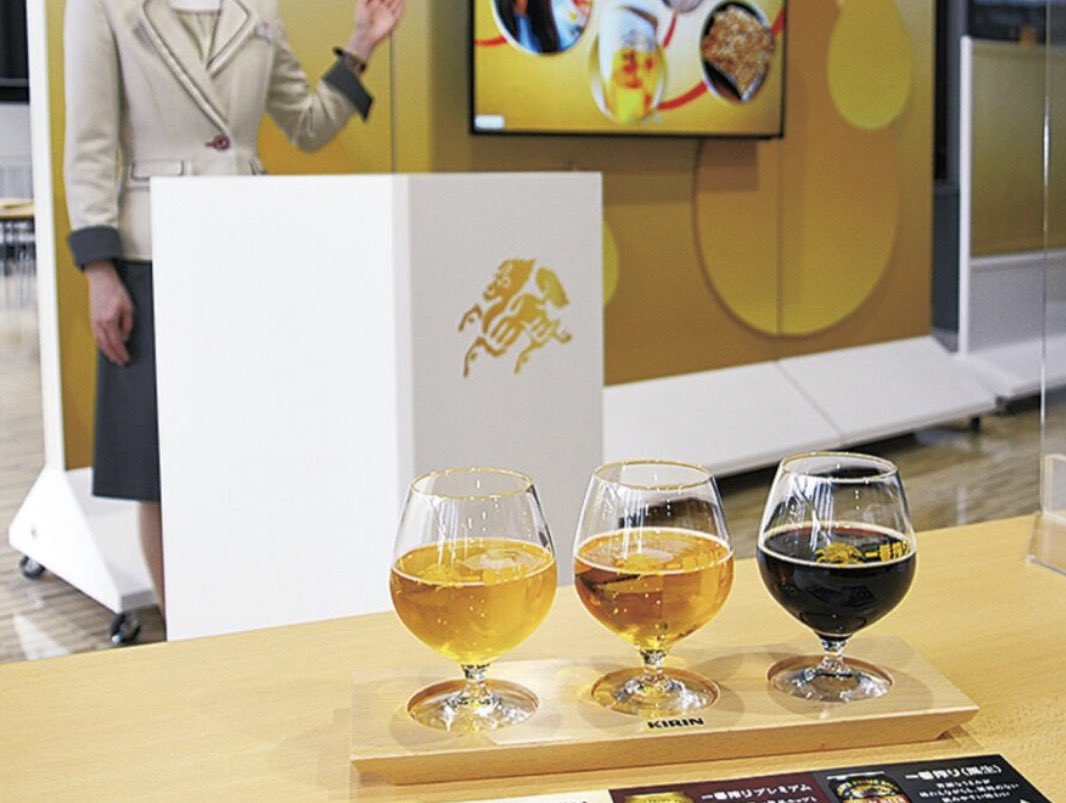
Kirin's Yokohama Brewery does a 90-minute tour for ¥500 ($3.30) where they walk you through how Ichiban Shibori is made — and then pour you THREE different beers at the end.
I've been THREE times. Each time it hits different.
The language thing — don't worry:
∙ Videos have English subtitles
∙ The brewing process is genuinely visual (you smell, taste, touch)
∙ You don't need to understand every word to get it
Things they don't tell you upfront:
∙ You taste the first-press wort vs second-press wort. It explains everything.
∙ You eat malted barley. (Sweet. Like a cracker. Who knew.)
∙ You smell hops. Like, cup them in your hands.
∙ The beer is poured by a "Brewery Draft Master" — an actual in-house certification.
∙ You can buy the official Ichiban Shibori glass in the gift shop.
The 3 beers you taste at the end:
∙ Ichiban Shibori (the standard, freshly brewed)
∙ Ichiban Shibori Premium (a premium edition mainly sold as gifts)
∙ Ichiban Shibori Black
I've had Ichiban Shibori a hundred times. Tasting it freshly made, poured by a certified specialist, in the official glass?
Different beverage entirely.
10 min walk from Namamugi Station (Keikyu Line). Online booking required. 20+ for the beer tour.
This place turns 100 years old in 2026. Go.
I am sure others have done this breakdown, but if you want to experience how fast Sebastian Sawe ran the London Marathon, go to a track and try to run 400m in 68 seconds. If you are in truly amazing shape, maybe you can do a second one. Now imagine doing 103 more.
Interceptor deployments are scheduled for the Philippines. 🇵🇭
As part of our 30 Cities Program, we will deploy our first Interceptor in the Meycauayan River in the coming months to prevent trash from flowing into the ocean from the Manila Bay Region.