@AnaMartine42073@bendjinosimonn You didn’t allow us, you were receiving the game, that’s your responsibilities. you should have had better crowd control protocols in place to mitigate pressure on access points…. No interest in winning loll what a joke
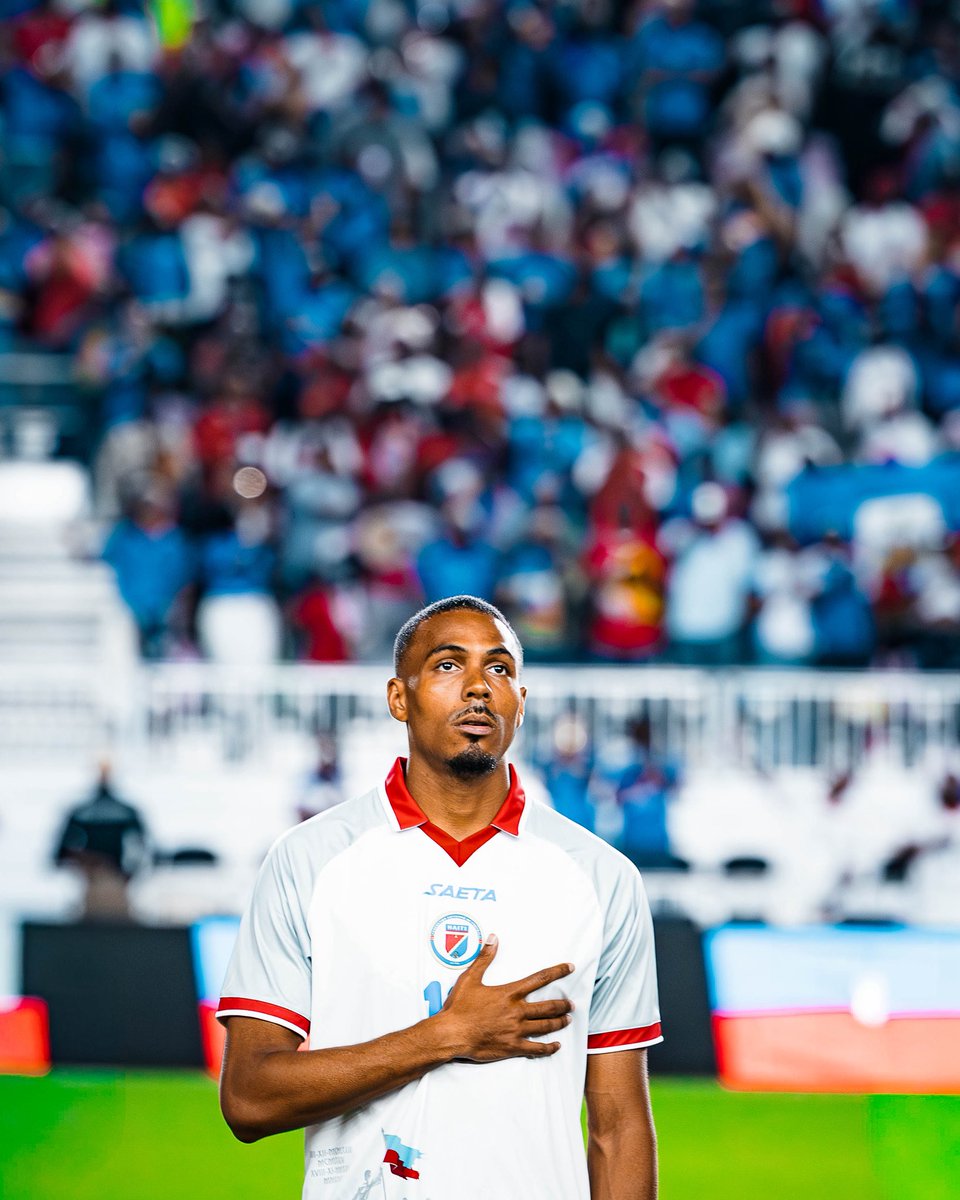
Représenter Haïti dépasse le football.
C’est porter une histoire, une identité, une culture et les espoirs de tout un peuple. C’est mesurer le privilège de défendre ses couleurs et la responsabilité qui l’accompagne.
Je porte ce maillot avec une immense fierté. Une fierté profonde, sincère, qui n’a besoin de s’opposer à personne pour exister.
Le football nous apprend justement cela : défendre passionnément ce qui nous appartient tout en respectant profondément ce que les autres défendent.
Pendant 90 minutes, il y a des couleurs, des rivalités, des émotions et cette volonté absolue de gagner.
Après, il reste l’essentiel : le respect que l’on se porte et ce que le sport est capable de créer entre les peuples.
Nos différences font la beauté du football.
Notre capacité à nous retrouver autour de lui en fait la grandeur.
Je suis fier d’Haïti.
Fier de notre peuple.
Fier de porter nos couleurs.
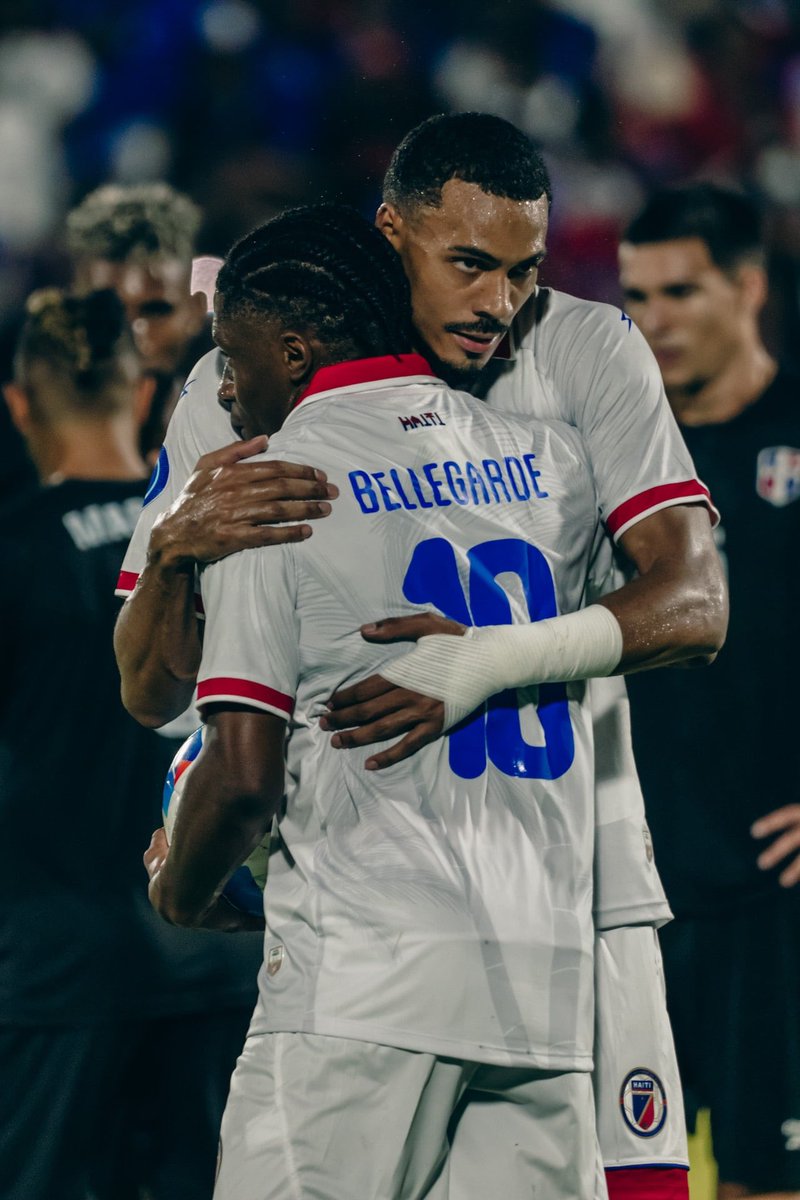
Et si le football peut nous opposer pendant 90 minutes sur le terrain, sa plus grande force est de nous rassembler en dehors.
🇭🇹🤝⚽
Wilson
Reminder
Today, October 3, 2026, marks 89 years since the 1937 massacre of Haitians and people of Haitian descent in the Dominican Republic, one of the darkest episodes in the history of Hispaniola.
The killings, remembered in Haiti as Kout Kouto and widely known in English as the Parsley Massacre, were carried out by Dominican military and state forces under the dictatorship of Rafael Leónidas Trujillo. The main wave of violence is generally dated from October 2 to October 8, although historical research indicates that killings had already begun in parts of the northern border region by September 29.
The exact number of victims will probably never be known. Estimates vary substantially, but historians commonly place the death toll in the tens of thousands, with scholarly estimates often ranging around 10,000–20,000. The victims were not only recent migrants from Haiti. They included families who had lived for years or generations in Dominican territory and Dominicans of Haitian descent who belonged to deeply interconnected communities along the border.
Trujillo’s rise cannot be separated from the history of the U.S. occupation of the Dominican Republic from 1916 to 1924. During the occupation, the United States created and trained the Dominican constabulary under the direction of U.S. Marine officers. Trujillo entered that force, rose rapidly through its ranks and eventually became commander of the country’s armed forces. The United States did not order the 1937 massacre, but the military institution through which Trujillo accumulated the power that eventually made his dictatorship possible was, in important respects, a product of the occupation. U.S. diplomatic records themselves describe the Guardia Nacional Dominicana as having been recruited and trained under Marine direction.
By 1930, Trujillo had converted that military power into political power and established the dictatorship that would dominate the Dominican Republic until his assassination in 1961. In 1937, the country was nearly bankrupt, and sugar prices had plummeted. In late September, Trujillo accepted a copy of Hitler's Mein Kampf and embraced its racial theories. As economic difficulties worsened and Europe’s turmoil echoed in the Dominican Republic, Trujillo's racist obsessions grew. Using this ideology, he aimed to distract Dominicans from their economic struggles by turning their frustrations toward Haitian migrants. His regime increasingly sought to impose centralized state control over a border region where Haitians and Dominicans had long lived, traded, married and formed communities across national lines. Historians have therefore cautioned against reducing the massacre to a sudden eruption of popular hatred. It was organized state violence, carried out within a broader project of racialization, border control and authoritarian nation-building.
Between 10000 and 20000+ killed and No high-ranking Dominican officials were ever held accountable for the massacre.
Le message d’Izi & Nazon était pourtant clair : FOOTBALL ,Chambrage Rien de plus. Arrêtons de transformer chaque mot en débat politique. Aujourd’hui, la vraie question est ailleurs qu’est-ce que NOUS Haïtiens, faisons concrètement pour faire avancer notre football ? Il est temps de construire, d’agir et de donner à nos joueurs les moyens de jouer et défendre dignement nos couleurs en Haïti 🇭🇹⚽
«L’Hispaniola est Haïti» («La Española es Haití»), frase atribuida a Wilson Isidor, se ha convertido en una polémica innecesaria. 🇭🇹⚽️
Los aficionados del PSG gritan «Ici, c’est Paris!» incluso fuera de París. Nadie cree que estén reclamando territorio.
La Española es la isla que compartimos. Tras ganar el derbi, interpreto sus palabras como orgullo y dominio futbolístico, no como una propuesta de cambiar fronteras.
Algunos nacionalistas dominicanos están exagerando una celebración deportiva. Dudo que hicieran tanto ruido si Haití hubiera perdido. 🤷🏾♂️
Ganamos un partido. No declaramos una guerra. Respeten el talento de nuestros jugadores y reconozcan la gran actuación de nuestra selección. 👏🏾
¡AQUÍ ES HAITÍ! 🇭🇹🔥