My PhD work on foraminiferal acclimation was published in @Nature. Our study shows that modern warming is threatening planktic foraminifera differently than before.
URL: https://t.co/1nJMAZWqJQ
🌟Excited to share that my paper has been published in Climate of the Past! 📝We unveiled global dust emissions over the entire Phanerozoic (the last 540 million years) and determined that palaeogeography is the main driver of the variations. https://t.co/DBGXstBAqm
My PhD work on foraminiferal acclimation was published in @Nature. Our study shows that modern warming is threatening planktic foraminifera differently than before.
URL: https://t.co/1nJMAZWqJQ
@Nature Our research overall shows that human-driven global warming is influencing the natural capacity of plankton acclimation in the long geological history. This is concerning given the continously growing CO2 concentration.
@Nature Another important factor is the rate of warming. Modern warming is so fast that ocean stratification occur quickly. Also, too fast change could influence plankton’s life cycle, which is the foundation of acclimation and adaptation.
@Nature This contrast is due to the difference in food availability, which is vital in compensating for the increasing metabolic cost under high temperatures. Food availability is decreasing under modern warming due to stratification, unlike the increased upwelling since deglaciation
@Nature We investigated foraminiferal niche in the last ice age and preindustrial day using both global fossil data and trait-based ecosystem model. We found that some foraminifera could acclimate to geological warming, and our newly developed model can capture this thermal niche change.
For all cGENIE users, I have developed and published a Python package (cgeniepy, https://t.co/zurV4Xr71R) that might help you read and visualise the Netcdf/time series data. Find out more in the documentation and I welcome any advice to improve!
Functionalities:
1. read in cGENIE data (both timeseries and timeslices) including ensemble model and multiple variables
2. read in observational data including those downloaded from Pangaea (*.tab)
3. model-data comparison such as searching the nearest data point given location
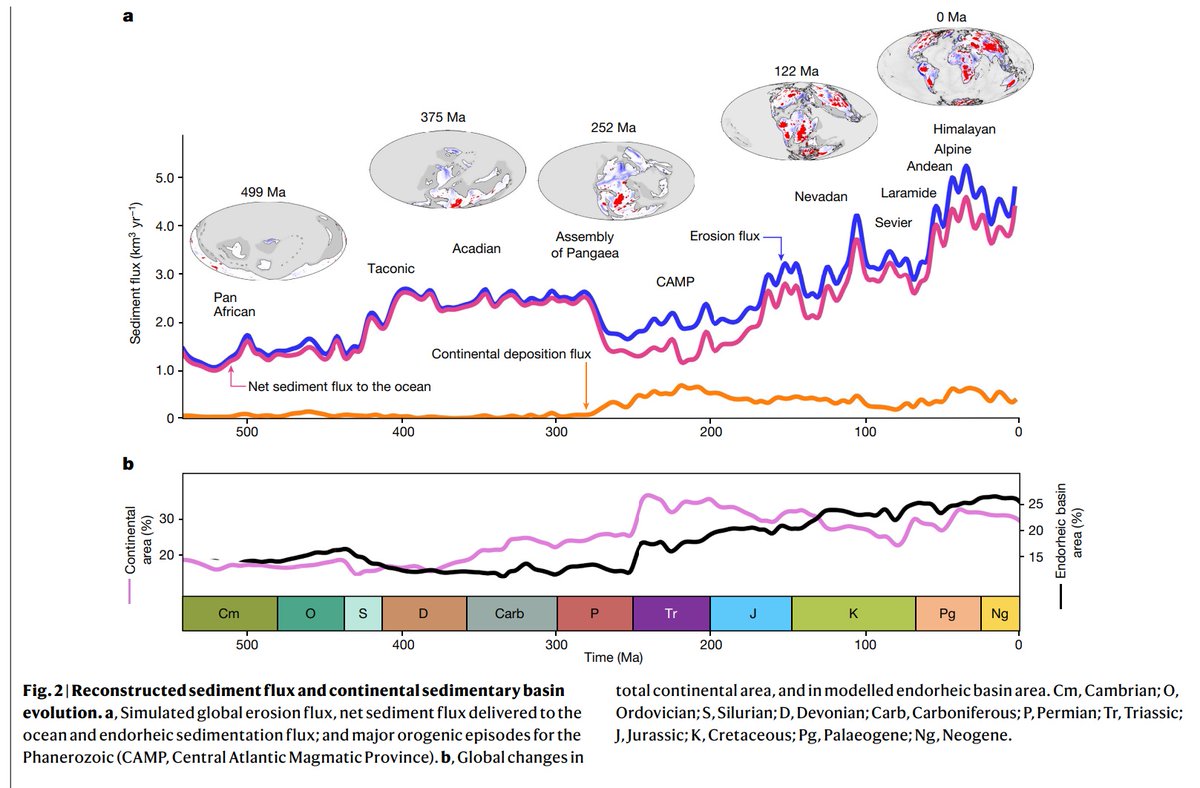
Cool article in @Nature on the fundamentally geological nature of the global biodiversification:
"...biodiversity is strongly reliant on landscape dynamics, which ...determine the carrying capacity..."
cc: @niles_eldredge@CoelhoPre@Trilolight@svalver
https://t.co/tHcPhyqcFw