Hello! I’m Yessica Leaño, a Colombian artist passionate about merging art with knowledge.
My goal is not just to capture your attention with striking images, but also to invite you to reflect and awaken your curiosity.
🧵🪡
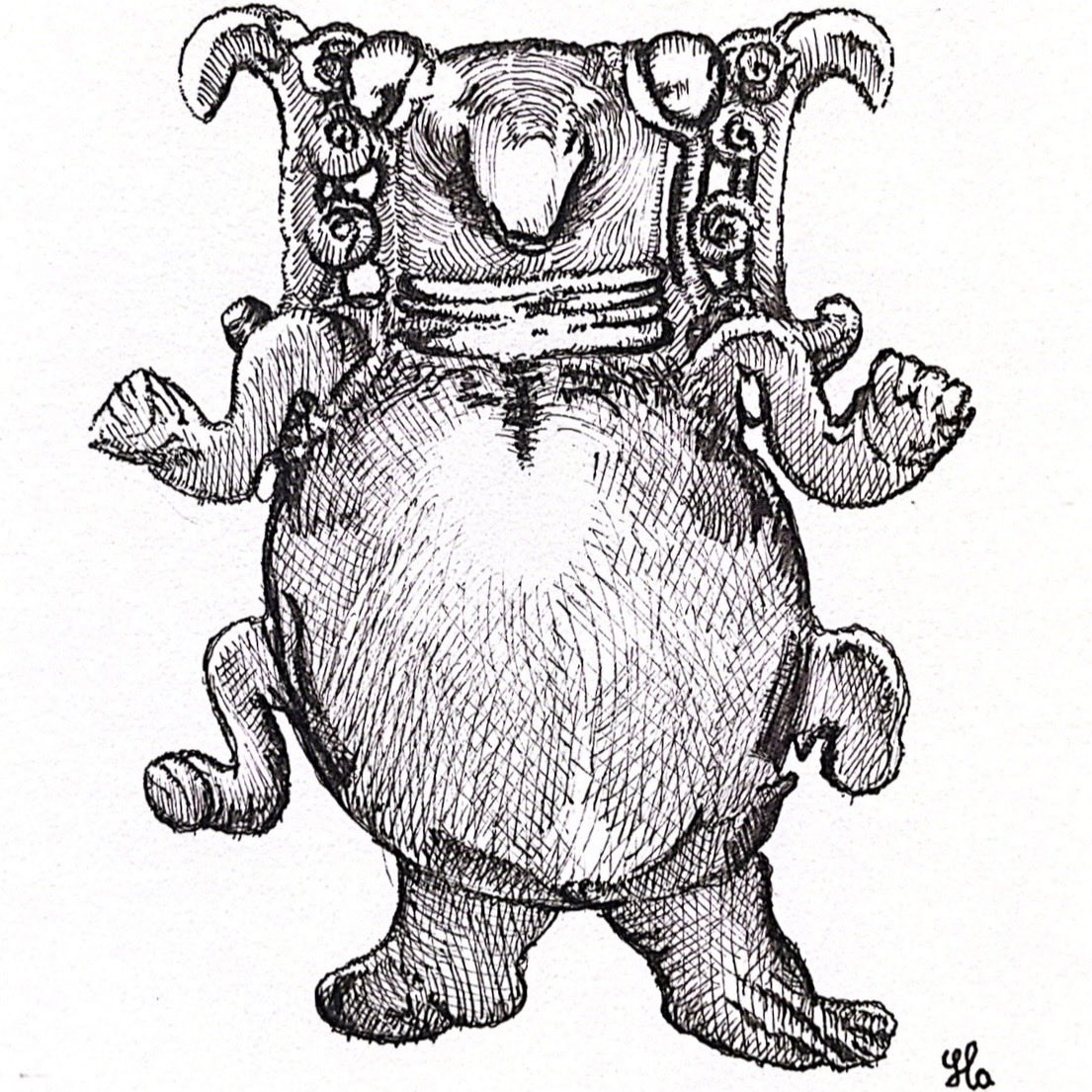
Maya Jade Pendant with the Face of a Deity. My drawing 326/365 V4.0
A Late Classic Maya jade pendant, created around 550–950 CE. Its mysterious face seems to blend traits of the Sun God K’inich Ajaw and the Howler Monkey God, patron of artists and scribes.
Maya Jade Pendant with the Face of a Deity. My drawing 326/365 V4.0
A Late Classic Maya jade pendant, created around 550–950 CE. Its mysterious face seems to blend traits of the Sun God K’inich Ajaw and the Howler Monkey God, patron of artists and scribes.
Igniting garnet sparkles between lines of ink: the Roman earrings from Syria, where each stroke seems to revive a spark of beauty that has been shining silently for centuries. 🟠✍
Calima-Yotoco Gold Tweezer.
A small gold tweezer from the Calima-Yotoco culture of southwestern Colombia, created between the 1st and 7th centuries CE. Its simple folded form may have been more than functional, with similar pieces serving as ornaments of prestige and authority.
Calima-Yotoco Gold Tweezer.
A small gold tweezer from the Calima-Yotoco culture of southwestern Colombia, created between the 1st and 7th centuries CE. Its simple folded form may have been more than functional, with similar pieces serving as ornaments of prestige and authority.
Gold Turtle of the Chiriquí Tradition. My drawing 324/365 V4.0
A gold turtle pendant-bell from the Chiriquí tradition, created between the 11th and 16th centuries CE. Hidden beneath its hollow shell, a tiny clapper made the jewel sound as its wearer moved.
Gold Turtle of the Chiriquí Tradition. My drawing 324/365 V4.0
A gold turtle pendant-bell from the Chiriquí tradition, created between the 11th and 16th centuries CE. Hidden beneath its hollow shell, a tiny clapper made the jewel sound as its wearer moved.
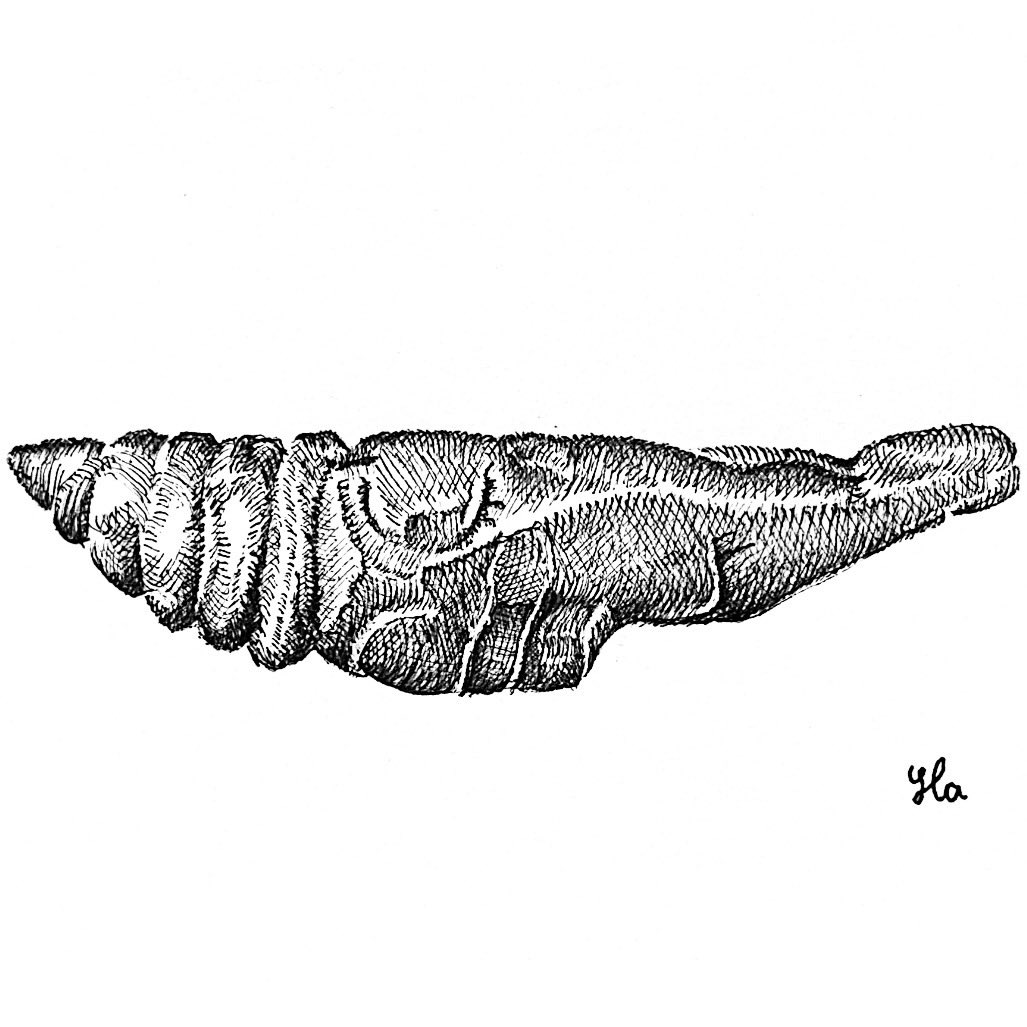
Maya Jadeite Shell Pendant. My drawing 323/365 V4.0
A Maya pendant from Guatemala, carved from jadeite between the 3rd and 9th centuries CE to imitate a seashell. Its deeper green edge is not painted, the artist followed a natural vein in the stone to shape the curve.
Maya Jadeite Shell Pendant. My drawing 323/365 V4.0
A Maya pendant from Guatemala, carved from jadeite between the 3rd and 9th centuries CE to imitate a seashell. Its deeper green edge is not painted, the artist followed a natural vein in the stone to shape the curve.
Quimbaya Gold Bead with Face and Nose Ornament. My drawing 322/365 V4.0
A tiny Early Quimbaya gold bead from Colombia, dated 300 BCE–700 CE. Its human face appears to wear a rounded nose ornament, making this 1.9 cm piece literally a jewel wearing another jewel.
Quimbaya Gold Bead with Face and Nose Ornament. My drawing 322/365 V4.0
A tiny Early Quimbaya gold bead from Colombia, dated 300 BCE–700 CE. Its human face appears to wear a rounded nose ornament, making this 1.9 cm piece literally a jewel wearing another jewel.
Piartal Headdress Ornament in Tumbaga. My drawing 321/365 V4.0
A Piartal headdress ornament from the Nariño highlands of Colombia, created between the 7th and 12th centuries CE. Nearly 37 cm wide, this tumbaga sheet may once have formed part of a larger ceremonial headdress.
Piartal Headdress Ornament in Tumbaga. My drawing 321/365 V4.0
A Piartal headdress ornament from the Nariño highlands of Colombia, created between the 7th and 12th centuries CE. Nearly 37 cm wide, this tumbaga sheet may once have formed part of a larger ceremonial headdress.
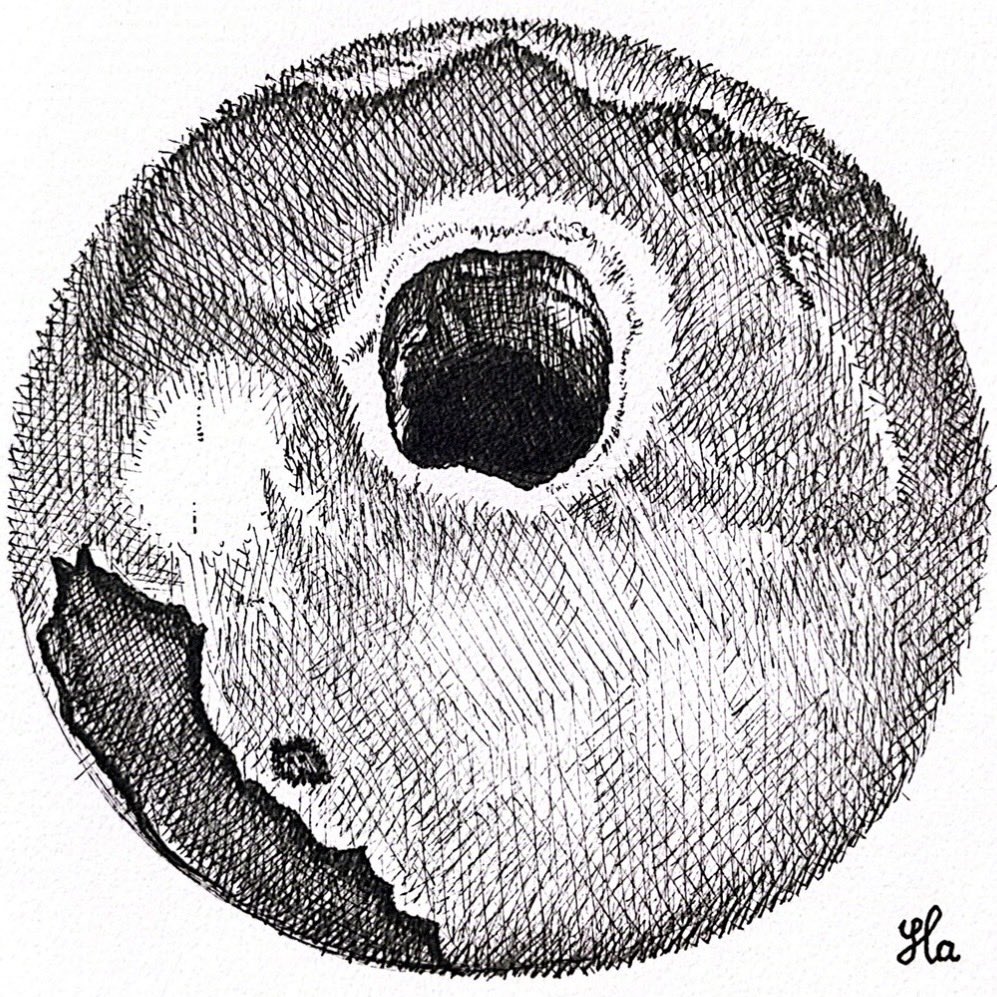
Mixtec Clay Bead Covered in Gold. My drawing Day 320/365 V4.0
A tiny Mixtec bead from Oaxaca, created between 1200 and 1519 CE, with a clay core once covered in gold. As the gold wore away, the hidden structure beneath became part of the story.
Mixtec Clay Bead Covered in Gold. My drawing Day 320/365 V4.0
A tiny Mixtec bead from Oaxaca, created between 1200 and 1519 CE, with a clay core once covered in gold. As the gold wore away, the hidden structure beneath became part of the story.
Plain Gold Cuff from Sitio Conte. My drawing 319
A plain gold cuff from Burial 11 at Sitio Conte, Panama, dated to 750–1000 CE. With no figures or relief decoration, its smooth surface still marked status, and gold cuffs at the site were associated with high-ranking individuals.
Plain Gold Cuff from Sitio Conte. My drawing 319
A plain gold cuff from Burial 11 at Sitio Conte, Panama, dated to 750–1000 CE. With no figures or relief decoration, its smooth surface still marked status, and gold cuffs at the site were associated with high-ranking individuals.
Coiling lines between two ram heads: the Iranian bracelet, where ink transforms an ancient curve of gold into a circle of ancestral strength. 🐏✍
*
Take a look at the result and the full story, on my profile and on Instagram (link in bio). Hope you like it! 😊