Most money advice starts at step seven.
The tip. The ticker. The thing your cousin doubled. All step-seven moves, handed to people standing on step one.
Not wrong. Out of order.
The seven steps, and why the order is the whole thing: https://t.co/3IXpc2MLTZ
@sircalebhammer I don't think cheating makes you a legend tbh. I wish us man would step away from those sexist comments @sircalebhammer and perhaps reinforce to the youth that lying is wrong period. Life happens and people can /should separate but lying doesn't make you a legend
Myth #015
"If the IRS calls and threatens arrest, I have to pay right away."
No. The IRS does not threaten to have you arrested for not paying, or demand gift cards or wire transfers. It generally mails a bill first.
https://t.co/2m4zSrT2aj
https://t.co/5ZRJJHWxmt
Myth #014
"A debt collector can call me whenever they want."
No. CFPB: collectors generally can't contact you before 8 a.m. or after 9 p.m. your local time, and must follow your instructions on when not to contact you.
https://t.co/HajTu7Hydz
https://t.co/5ZRJJHWxmt
We'd add a sixth: knowing your number. Most people on this list still couldn't tell you what one month of their life costs. That number is what makes the other five work.
5 financial signs you're on track
to escape 9-5 life early:
1. No car payment
2. No credit card debt
3. An emergency fund
4. Investing every month
5. Not caring what other people think
Myth #013
"If I leave my job, I lose my 401(k)."
No. IRS: money you put in from your paycheck is always 100% yours. Only employer money can follow a vesting schedule set by the plan.
https://t.co/rU4PyBlSJn
https://t.co/5ZRJJHWxmt
@The_Money_Buddy Before any 401k loan, check the order: capture the full employer match first, then ask HR what happens to the balance if you leave. An unpaid balance can be taxed as a withdrawal, plus a penalty if you are under 59 and a half.
@money_cruncher Compare before you move anything. Get the fee sheet for the old plan, check the new plan's expense ratios, and confirm the new plan accepts roll ins. Never take a check made out to you, ask for a direct rollover.
@theficouple Run the payment test first: principal, interest, taxes and insurance should fit inside 28 percent of gross monthly pay. Then confirm you can still save 15 percent for retirement after that payment.
@theficouple Before comparing buy versus rent, check two numbers: housing under about 28 percent of gross income, and 3 to 6 months of expenses still in cash after the down payment and closing costs.
@Budgetdog_ The order that makes this work: capture any employer match first, then pay off debt above roughly 8 percent, then automate the monthly amount so the 30 years actually happens.
@VerityArchitect Agreed. The date is what keeps a planned change from looking like a missed target. What changed, when it starts, why the number moved: that's a note you can still read a year later.
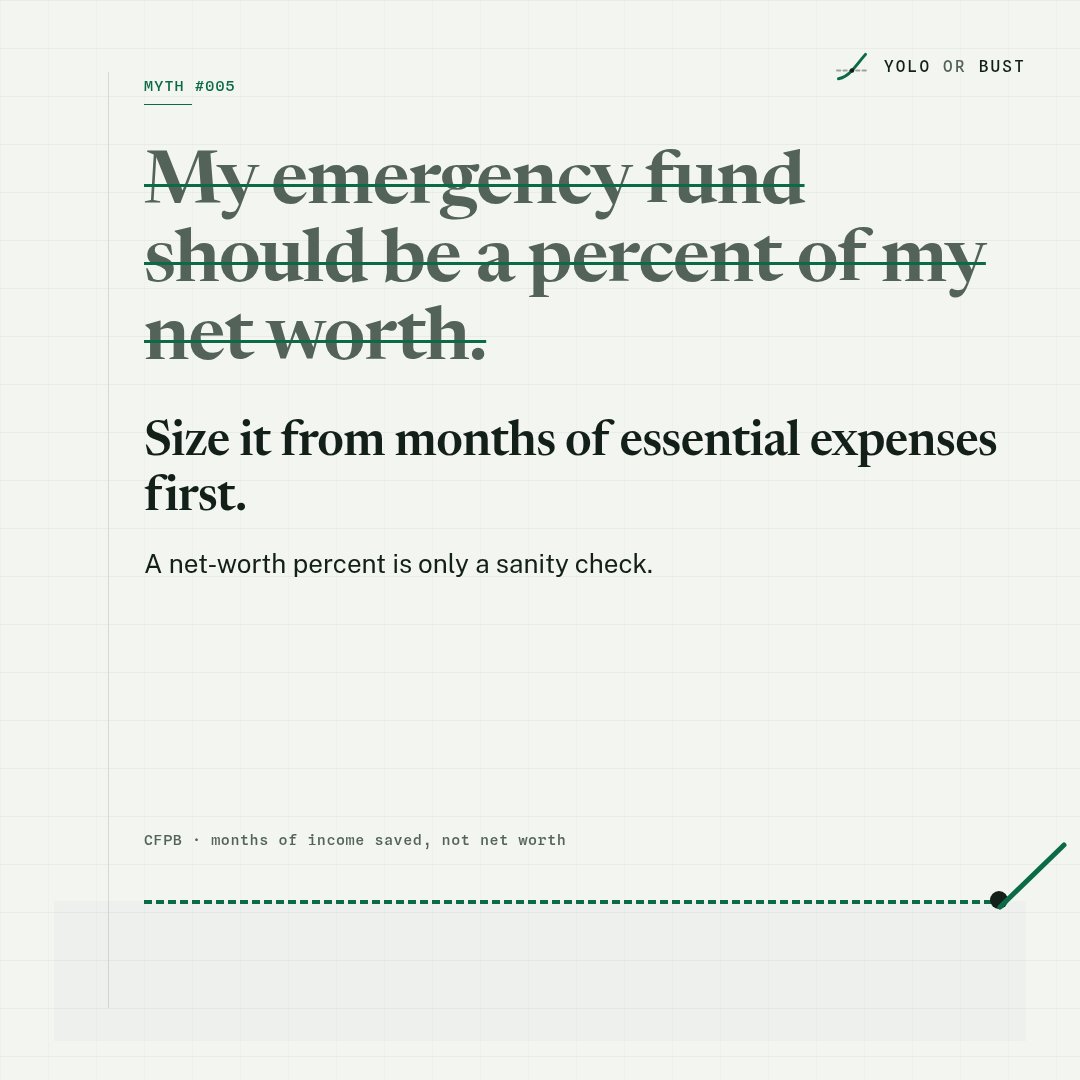
Myth #005
"My emergency fund should be a percent of my net worth."
No. Size it from months of essential expenses first. A net-worth percent is only a sanity check.
CFPB sizes the need from your situation and the unexpected costs you actually face. Their research groups people by months of income saved, not by net worth.
Guide:
https://t.co/4PIVbrEnHF
Research:
https://t.co/1PEEkjo1v0
https://t.co/Gf1aXHLpLx
@NicoSeguraT Good point on age. One nuance: a closed card in good standing can stay on your report for up to 10 years, so that hit comes later. The utilization hit is immediate. And yes, a small charge on autopay keeps an old card active so the issuer doesn't close it for you.
Myth #012
"Closing an old credit card will help my credit score."
No. It can lower it. CFPB: closing a card can raise your credit utilization ratio, because the same balance now sits against less available credit.
https://t.co/Z0boCayHvC
https://t.co/5ZRJJHWxmt
@savvymoneygirl Also learn the yearly limits. Unused room in these accounts does not carry forward, so a year you skip is space you cannot get back. Check each account's deadline, since they are not all the same.
@7figurevets Where it sits matters too. Keep it in its own savings account, apart from checking. It stays reachable for a real emergency, and the small bit of friction helps it survive a sale or a weekend out.
@CollegeInvestin Rates on savings accounts are variable, so the top number can slip. Before moving cash, check whether it is a promo rate that drops after a few months and that the bank is FDIC or NCUA insured.
@Budgetdog_ Same rule for a missed month. Skipping one contribution does not undo the plan. What counts is going back to your usual amount on the very next paycheck, without trying to make it up.
@wealthmoose Worth budgeting for the month after closing too. Movers, new locks, a first repair and furniture all land at once. Many buyers keep a separate cushion so the house starts without credit card debt.
Mortgage rates fell for the first time since late August. The 30-year average is 7.32%, down from 7.40%, per Freddie Mac. A year ago it was 6.19%.
On a $300K loan, that gap is about $225 more a month than last fall.
Run the payment against your real budget before you shop: https://t.co/Gf1aXHLpLx
https://t.co/vt6WiKR7Dq