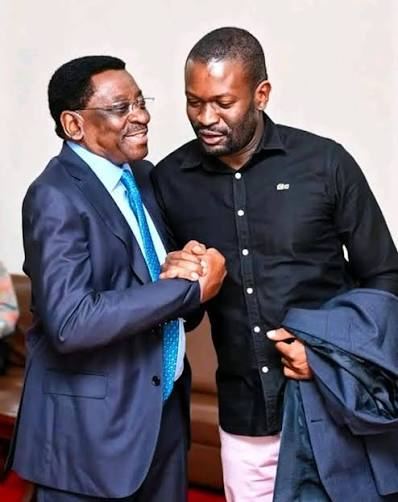
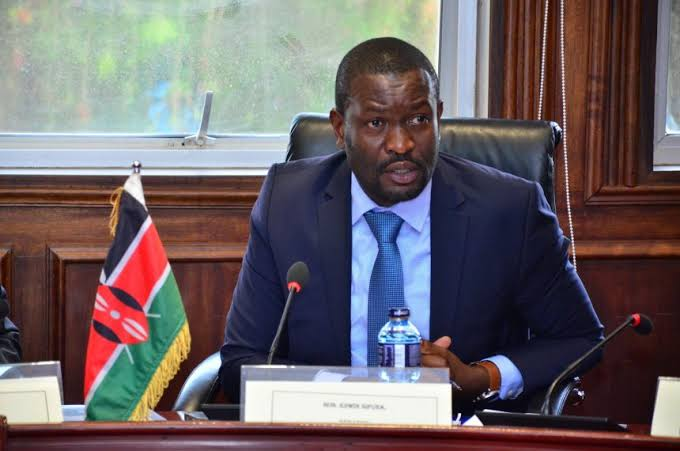
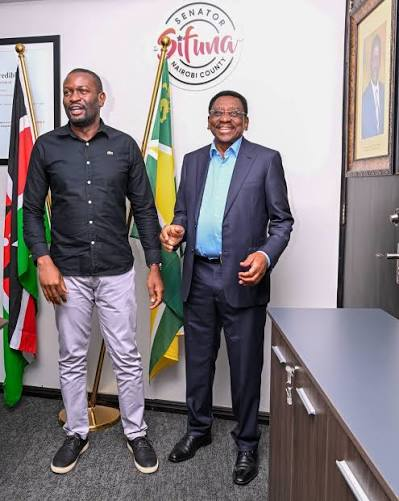
Edwin Sifuna Builds 2027 Presidential Support Amid Calls for Specific Promises
Sifuna’s emerging 2027 campaign is interesting not simply because of his rising political profile, but because it may represent an attempt to shift Kenya’s electoral competition from identity-based and patronage politics toward more programmatic politics.
His message—political independence from wealthy donors, employment beyond the public sector, rule of law, constitutionalism and transparent public finances—touches several fundamental questions in democratic governance.
First is political accountability. If a politician is financially dependent on powerful private interests, there is an obvious question of whose interests that politician will ultimately serve. Sifuna’s emphasis on grassroots crowdfunding is therefore politically significant; he has said Linda Mwananchi raised millions through small public contributions and presented this as an alternative to dependence on wealthy financiers.
Second is programmatic politics. Elections should ideally be contests over competing policy programmes—how to manage debt, create employment, reform healthcare, improve education, protect constitutional institutions and grow the economy—not simply contests between ethnic coalitions or political personalities.
Third is institutionalism. A serious political alternative must go beyond promising a “good president.” It must explain how institutions will be strengthened so that governance does not depend entirely on the character of whoever occupies State House.That is why the demand for specific promises and measurable policies is legitimate.Principles are necessary, but they are not sufficient.
Kenyans should ultimately ask:How will you reduce the debt burden?
1. Where exactly will the jobs come from?
2. How will you reform healthcare?
3. What will you do about taxation?
4. How will you reduce corruption and public wastage? 5. How will you make constitutional institutions genuinely independent?
6. What measurable outcomes should Kenyans expect after five years?
7. How would will you deal with the issue of police brutality, extrajudicial killings, goonsim, & police reforms?
This is where Sifuna's political project will ultimately be tested.
If Linda Mwananchi can successfully move the conversation from “Who is your tribe?” and “Which political kingpin supports you?” to “What is your governing programme and how will you deliver it?”, then it could represent something more significant than another opposition coalition.
It could become an experiment in programmatic electoral politics in Kenya.And that is the kind of political competition Kenya needs. Not merely a change of faces at State House, but a change in the incentives, institutions and ideas that determine how the country is governed. 🇰🇪
🔥 The Linda Mwananchi moment of truth has arrived.
Sifuna has strong support, while Orengo insists he has every right to compete for the same presidential ticket.
Let them compete. Let the people decide.
No coronation. No political kingpins. No ethnic arithmetic.
If Linda Mwananchi is truly about democratic change, its presidential candidate must emerge through free, transparent and credible internal democracy.
But as fate would have it, perhaps Kenyans have already made their choice. The King is SIFUNA. 👑🇰🇪
What poor leadership can do to society. 🇰🇪
Nakuru MP Samuel Arama faces backlash after tossing bread to a scrambling crowd. This is what economic desperation looks like in a country with a KSh 4.7 trillion national budget.
"Hon." Arama, this is not citizen representation. It is the humiliation of citizens—and a failure of leadership.
🇰🇪 MULTIPARTY DEMOCRACY: DID WE REALLY FINISH THE JOB?
In December 1991, Kenya repealed Section 2A of the Constitution, opening the way for the return of multiparty democracy. The 1992 elections became the first multiparty elections after years of one-party rule.
That was a historic democratic achievement.
Multiparty politics gave Kenyans something one-party supremacy could not:
• The freedom to form and join political parties
• Greater political competition
• Alternative candidates and ideologies
• Space for divergent political views
• Greater scrutiny of government
• A stronger opposition
• The possibility of changing governments through elections
• More opportunities for citizens to participate in political life
But here is the question I keep asking:
Did we create multiparty democracy—or did we simply create multiple vehicles for ethnic competition?
Because today, we can have many political parties but still have very little genuine political pluralism.
We keep creating parties around regions, tribes and political kingpins.
A party becomes “ours.” Another becomes “theirs.”
If you are Luo, you are expected to understand which party represents Luo interests.
If you are Kikuyu, there is an expectation that you belong to the dominant Kikuyu political formation.
If you are Luhya, Kalenjin, Kisii, Kamba or Somali, similar expectations can emerge.
And this creates a dangerous political culture: Your political independence becomes betrayal.
Imagine coming from a region where one political party dominates. You form your own party.
You support a presidential candidate outside the regional political establishment. Suddenly, you are accused of betraying your community. You may be denied political space. You may be branded a traitor. You may struggle to campaign in your own region.
So I ask: Where exactly is the multiparty democracy? If political parties are supposed to give Kenyans freedom of political association, why have we allowed regional political gatekeepers to determine which political choices are acceptable to an entire community?
A Kenyan should be able to say: “I am Luo, but I don't support the dominant Luo political party.” “I am Kikuyu, but I don't support the dominant Kikuyu political formation.” “I am Kalenjin, but I don't support the dominant Kalenjin politician.” And that should NOT make that Kenyan a traitor.
That is precisely what political pluralism should protect.
Otherwise, we have replaced one-party supremacy with regional party supremacy. And there is another problem. Can a competent Kenyan who has no regional political kingpin behind them realistically become President?
Often, they are forced into alliances with regional political establishments simply to assemble enough electoral numbers.
The consequence? Politics becomes a negotiation between political gatekeepers rather than a competition between ideas, competence and national programmes. Then comes the question of money. We have political parties receiving public resources. We have nominated politicians and political offices. We have enormous campaign machinery. We have political coalitions consuming enormous resources.
And ultimately, much of that political ecosystem is financed by the Kenyan taxpayer. Meanwhile, the ordinary Kenyan is struggling with taxes, unemployment, debt, healthcare costs, school fees, food prices and insecurity. At what point do we ask whether our political system is serving citizens—or sustaining political establishments? And nominated positions deserve scrutiny too. If nominations are constitutionally intended to improve representation and inclusion, they should not become a mechanism for rewarding political loyalty. A person should not enter Parliament simply because they are a powerful politician's ally.
Public office is not a retirement package for political friends. Then we reach perhaps the most uncomfortable question:
WHAT SHOULD HAPPEN WHEN A PERSON SEEKING ELECTIVE OFFICE HAS SERIOUS INTEGRITY QUESTIONS?
Why should unresolved integrity questions become a political shield simply because someone can invoke the argument that they have not exhausted every legal avenue? I believe Kenya needs a much stronger culture of integrity before political office, while still respecting due process and the presumption of innocence.
Being accused is not being guilty. But neither should political power become a way of indefinitely postponing accountability. If our Constitution demands leadership that demonstrates integrity, suitability and respect for the rule of law, then those standards must mean something.
We cannot build a serious democracy by changing governments while leaving the political culture unchanged. The goal should not simply be MORE political parties.
The goal should be: MORE political freedom. MORE ideological diversity. MORE independent candidates and citizens. LESS ethnic gatekeeping. LESS political patronage. MORE accountability. MORE competent leadership.
And ultimately: 🇰🇪 A Kenyan should be free to choose a political party because of its ideas—not because of their tribe. That, to me, is the unfinished business of multiparty democracy. We repealed Section 2A.
Now we must repeal the mentality that says political loyalty belongs to a tribe or political kingpin. Our political party should not be our tribe.
Our political party should be our choice.
🇰🇪 KENYA HAS A POLITICAL PROBLEM DEEPER THAN WHO WINS THE NEXT ELECTION.
Our politics has become us versus them—who wins based on regional dominance, tribal alignment, class, age, who has better chance to rig election or political slogans.
We divide ourselves into hustlers vs. dynasties, youth vs. old, rich vs. poor, “wantam” vs. “tutam.”
But that is not how you build a nation.
Democracy should not be about defending our person regardless of what they do. It should be about demanding competent, progressive, accountable and ethical leadership, whoever is in power.
We should be debating the real issues affecting Kenyans:
• Integrity and accountability
• Rampant corruption & NATIONAL DEBT.
• Youth unemployment
• Extrajudicial killings by police and abuse of state power
• A struggling education system and funding model
• Healthcare failures and the problems surrounding national health insurance
• Insecurity
• The cost of living and excessive taxation
• State capture and weakened constitutional institutions
• The independence of Parliament, the Judiciary and other constitutional offices
• Protection of the rule of law
Instead, every election cycle, we forget our problems.
We fight each other.
We insult each other.
We defend politicians who would never defend us.
We take opposing sides because someone is paying us, promising us something, or because “our people” are in power.
Then the election ends—and we return to the same suffering.
That is not political maturity. It is political manipulation. Kenya needs to move away from identity politics to issue based politics.
I want a Kenya where we can disagree politically without becoming enemies. A Kenya where leadership is judged by results, integrity, constitutionalism and service—not tribe, region or political allegiance.
And yes, I struggle with the idea that anyone should automatically deserve another term simply because they belong to the political camp they support.
Before we say “tutam,” Wantam, SIFUNA vs Kalonzo, or it is OUR TIME TO EAT, we should ask:
What have we actually received?
Have we become safer?
Are our young people finding meaningful work?
Are public institutions stronger?
Is corruption declining?
Can ordinary Kenyans afford to live?
Are we being governed according to the Constitution?
Are our leaders more accountable?
Are we building a better country for the next generation?
Kenya cannot vote its way out of suffering if every election is only about who beats whom.
We must learn to vote for something—not merely against someone.
🇰🇪 Our tribe should be Kenya. Our political ideology should be progress. And our loyalty should be to the Constitution and the future of the nation—not to politicians. #SISINDIOSIFUNA #wantam #policeuniform #rutomustGo #rejectFinanceBill24 #Lindamwananchi #AlbertOjwang
@AlionyaRoseline@HEBabuOwino Gladys wa Mapanga told us she's battling cancer for the last 12 years. Now see this reja reja,pulling the orphan&less previllage card. You realized you have run out of ideas to convince Kenyans untill you're revealing personal atrocities. We are not buying your sympathy. #WanTam
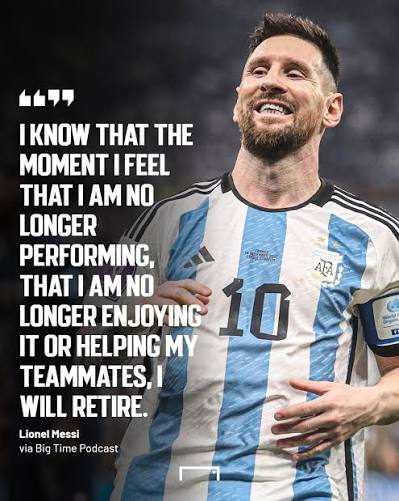
🚨🇦🇷 BREAKING:Lionel Messi announces his retirement from international football.
“I gave everything I had, and I don’t have anything more to give.”
After 20 years with Argentina,Messi leaves with peace and pride,grateful for the unforgettable journey.
A legend says goodbye.💔🐐
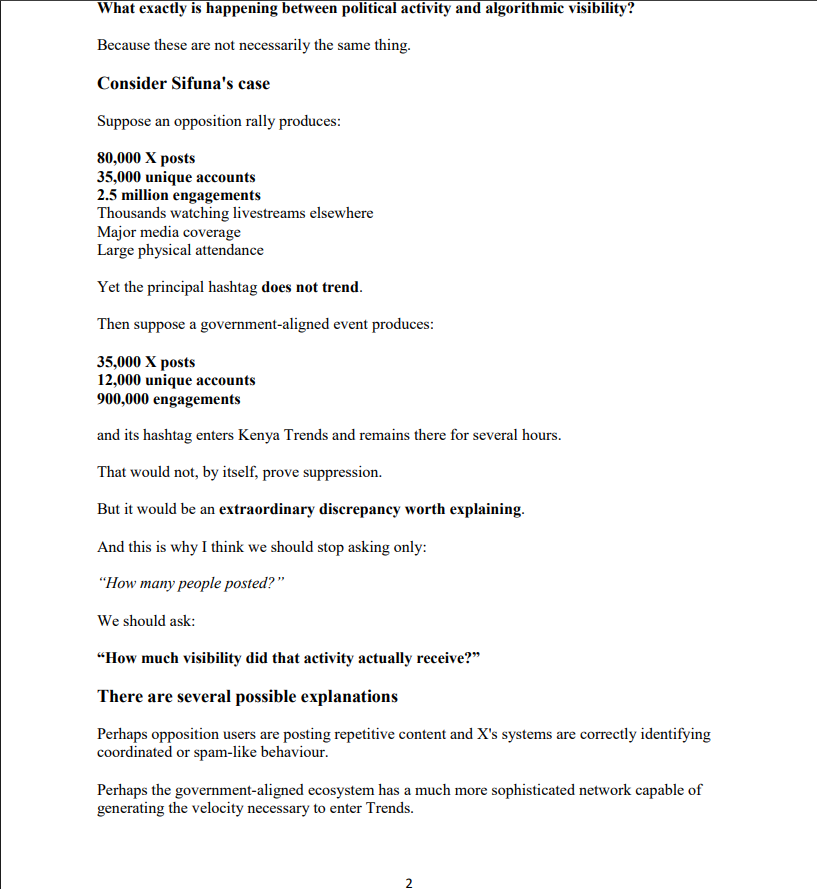
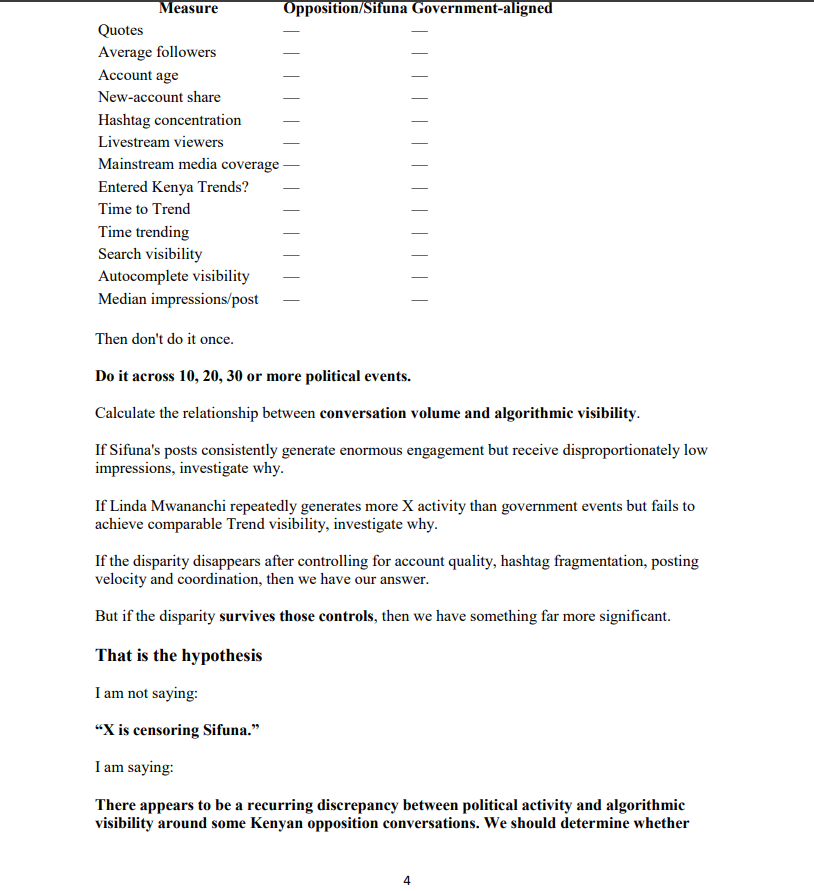
Is X censoring Sifuna and Linda Mwananchi?
Does X systematically convert comparable levels of Kenyan political activity into different levels of algorithmic visibility depending on the political side involved? #sifuna#lindamwananchi#wantam Ruto in 2027
It actually depends on the political narative you want to peddle since you are a dog for hire. ruto has killed our sugar companies. He bought some through proxies. Currently the sugar you are taking is imported. So yeah Luhyas are marginalized. #Sifuna#wantam
Kumbe Luhyas were also marginalized. Politically and economically.
‘Del Monte initially wanted to set up its pineapple firm in Kakamega, but President Kenyatta pushed it to come to Thika’
~ CEO Wayne Cook. https://t.co/IrOhiEOOO3
📈 Nairobi Securities Exchange keeps climbing, with strong H1 profits driven by higher trading volumes, block trades and recent IPOs, including Kenya Pipeline. Market cap remains in the multi-trillion range, led by banking, energy & insurance stocks. #NSE#KenyaMarkets#Politics
KRA eTIMS + IFMIS integration
⚠️ New rule for all government suppliers: KRA has integrated eTIMS with IFMIS. You must now generate a valid eTIMS invoice before any payment processing. Compliance is mandatory — strictness. #eTIMS#KRA#BusinessKenya#Politics#Football#Society
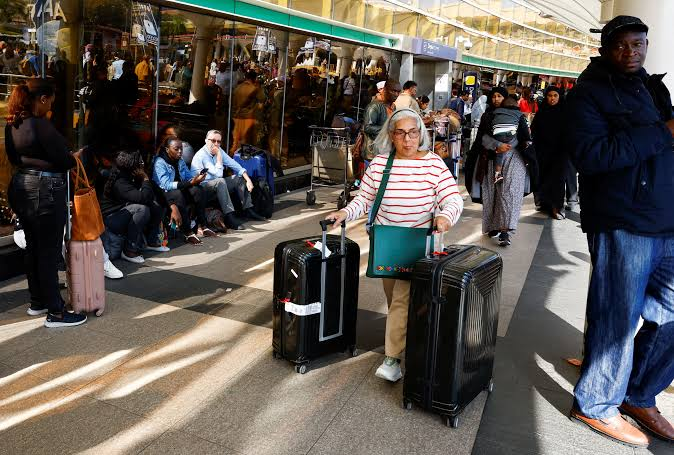
1. Aviation workers’ strike
🚨 Day 2 of the aviation workers’ go-slow: Major flight delays & cancellations at JKIA and other airports. Thousands of passengers stranded. This is damaging to Kenya’s export markets. Talks ongoing but no breakthrough yet. #JKIAStrike#KenyaAviation
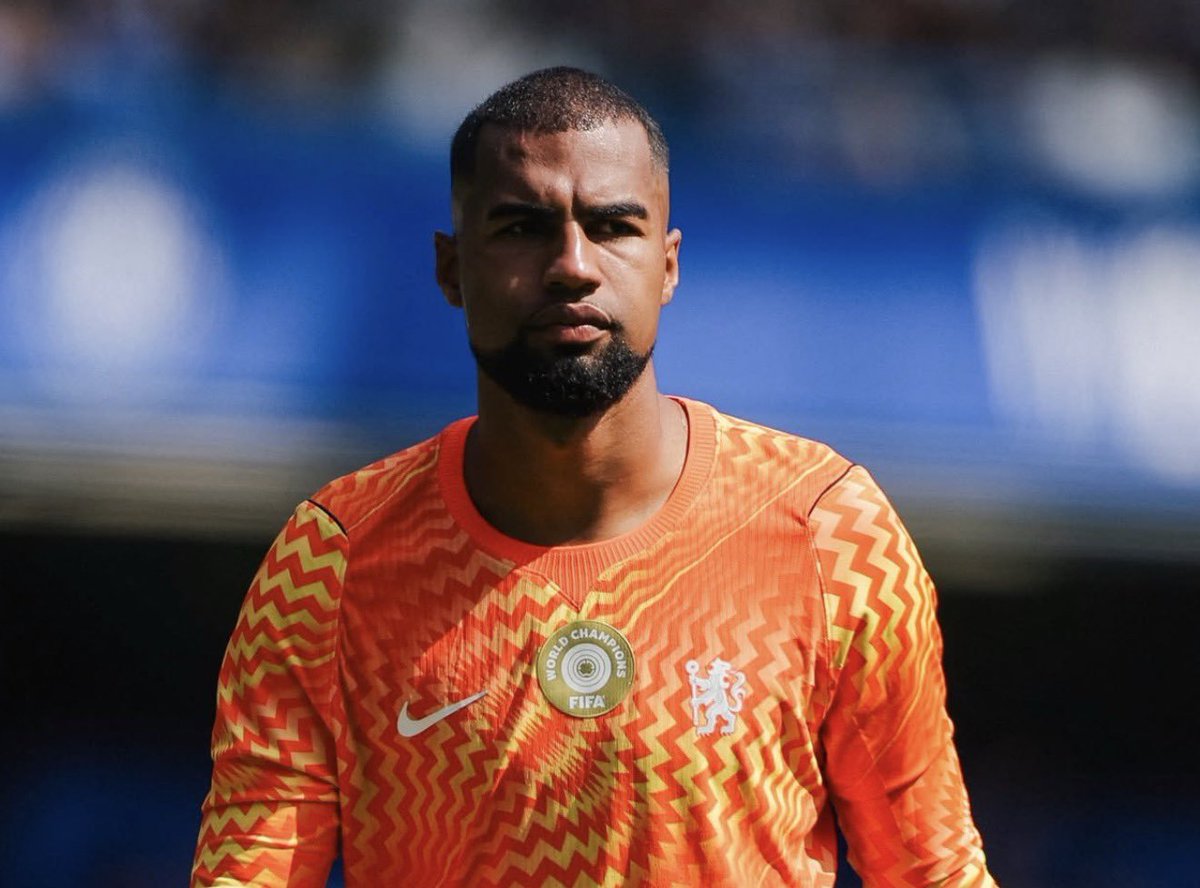
🚨📸 According to @FabrizioRomano, #Como are assessing #Robert#Sánchez as a goalkeeper option, while other clubs are also exploring a move.
If Sánchez leaves, Penders could stay at #Chelsea as Martínez’s deputy. 👀🔵
What do you think, Chelsea fans?
🚨📸 As revealed by @FabrizioRomano, #Tottenham are working on a deal to sign Tosin from #Chelsea as a replacement for Kevin Danso.Chelsea signed Tosin from Fulham as free agent. Now Spurs could pay Chelsea a transfer fee.Signed for free.Sold for a fee. Study the Chelsea model.