What Could Happen to Dr. Hak Ja Han: A Realistic Look at June 12 and Beyond
Dr. Hak Ja Han's final hearing is set for June 12, 2026.
Here is what can realistically happen, and what South Korea's conviction numbers say about the odds.
When will the verdict happen?
June 12 is the closing hearing, not the verdict. Both sides give final arguments that day. The judge then takes about 2 to 4 weeks to decide. Expect the actual verdict between late June and mid-July 2026.
Where does she stay while waiting?
She is already detained, so she stays in the detention center during those 2 to 4 weeks.
What happens on verdict day?
Her status changes immediately, on one of two paths.
Path A — She goes home that day. A Not Guilty verdict, a suspended sentence, or a fine voids the detention. She is released the same day. This is what happened to Rev. Son Hyun-bo in February 2026: suspended sentence, released that day.
Path B — She stays in custody. If the judge orders actual prison time, she remains confined to serve it, usually at the detention center if there is an appeal.
How do appeals work?
Not on verdict day. After the verdict, both sides have a strict 7-day window to file for appeal. The appeals trial starts months later.
Can prosecutors lock her back up if they appeal?
No. If she is released on verdict day (Path A), filing an appeal does not put her back in jail. She stays free at home during the appeals process. She would only be re-arrested if she loses the appeal and the higher court orders prison.
What are the realistic odds?
South Korea has one of the highest conviction rates in the developed world. Per the Supreme Prosecutors' Office, the full-acquittal rate in first-instance courts hit 1.06% recently, a decade high. For years it sat below 1%. Ministry of Justice data for 2007 to 2015 showed the not-guilty rate never rose above 0.7%, and fell under 0.5% in four of those years.
In plain terms: more than 98 of every 100 defendants who reach a verdict are convicted of something. A full acquittal is rare.
Two things to keep in mind.
These are averages across all cases, not a prediction for one trial. And a conviction is not the same as prison.
The acquittal numbers only count people cleared of every charge. Many who are convicted still receive suspended sentences or fines, which under Path A means release on verdict day.
The dates that matter: June 12 for closing arguments, late June to mid-July for the verdict, and the 7 days after for appeals.
Sources:
The Korean Criminal Procedure Act (형사소송법, Act No. 341 of 1954, as amended) — official English translation, hosted by WIPO Lex (World Intellectual Property Organization, a UN agency): https://t.co/PgU98rWMJn
Supreme Prosecutors' Office statistics, reported via Seoul Economic Daily (the 1.06% decade-high acquittal rate, 6,415 acquittals, 0.59% in 2016): https://t.co/q64moGOlNc
한학자 총재 구속집행정지, 한 달 연장―6월 30일까지
서울중앙지법이 가정연합 한학자 총재의 구속집행정지 기간을 한 달 더 연장했다.
재판장 우인성 부장판사는 오늘 한 총재 측의 연장 신청을 받아들였다.
구속집행정지는 이달 30일 만료될 예정이었으나 6월 30일 오후 2시까지로 늘어났다.
연장 사유는 병원 치료 때문이다.
지난해 9월 구속이 시작된 이후 한 총재의 건강은 악화되었다. 변호인단은 여러 차례 법원에 구속집행정지를 신청해 왔다.
지난해 11월과 올해 2월 한 총재는 낙상으로 인한 부상 치료를 받았고 녹내장 수술도 받았다.
3월에는 어깨 치료를 위해 신청한 구속집행정지가 받아들여졌다. 한 총재는 일시 석방된 상태로 재판을 받아 왔다.
2월 공판에서 변호인은 세 차례의 낙상 이후 통증이 전신으로 퍼져 진통제만으로는 부족한 상태라고 밝혔다.
변호인은 구치소 안에서는 제대로 된 치료가 불가능하며
입원하거나 전담 간호사의 돌봄이 필요하다고 덧붙였다.
Source
https://t.co/UN2wOuLqQ3
When God wanted to make David a king, He didn't give him a crown, He gave him a Goliath.
A lot of times when you feel like God's "breaking" you, He's actually BUILDING you for a specific purpose.
I just know there is someone who desperately needs to hear this today.
Have a safe and Happy Memorial Day! We remember, we celebrate, and we honor all those patriots who served and gave the ultimate sacrifice in the United States Armed Forces. To all those who gave their lives to serve and protect this great nation, all that we stand for and all who live here- We love you, we cherish you and your sacrifice, we thank you and we are so very grateful! ❤ 🙏 🇺🇸
New Information Act Set to Take Effect in July Raises Concerns Over Fake News Regulation and Platform Exit.
South Korea is preparing to implement stricter regulations under the Information and Communications Network Act starting in July.
The law aims to combat fake news through punitive damages and criminal penalties, but critics worry that the standards for determining what constitutes fake news will be heavily influenced by government-affiliated bodies, including the Korea Communications Commission.
This has sparked fears that platforms like Instagram Threads may withdraw from the Korean market, potentially limiting citizens’ access to diverse information sources.
Commentators argue that such broad and vaguely defined rules could restrict not only misinformation but also legitimate public discourse and investigative reporting.
This issue is significant because freedom of expression and access to information are foundational to a healthy democracy.
As digital platforms become primary sources of news, especially for younger generations, how Korea balances the fight against fake news with protecting free speech will shape the future of public debate and transparency in society.
Do you believe stronger government regulation is necessary to control fake news, or does it risk becoming a tool that limits citizens’ right to know?
Keep it! It’s a cute drama! It said in the very beginning that the drama is a work of fiction so why the hate? Why the bashing on the actors and writer? If historical accuracy was the issue why aren’t the directors or producers standing up? We all know it’s a work of fiction, but it lets us see Korea as a beautiful country and culture.
Dr. Hak Ja Han fell multiple times in her 70-square-foot cell at Seoul Detention Center in January. She never complained.
According to her lawyers, she does not express pain unless it is severe. She tried to maintain a composed appearance. She asked only for painkillers.
No one at the facility diagnosed the shoulder injury.
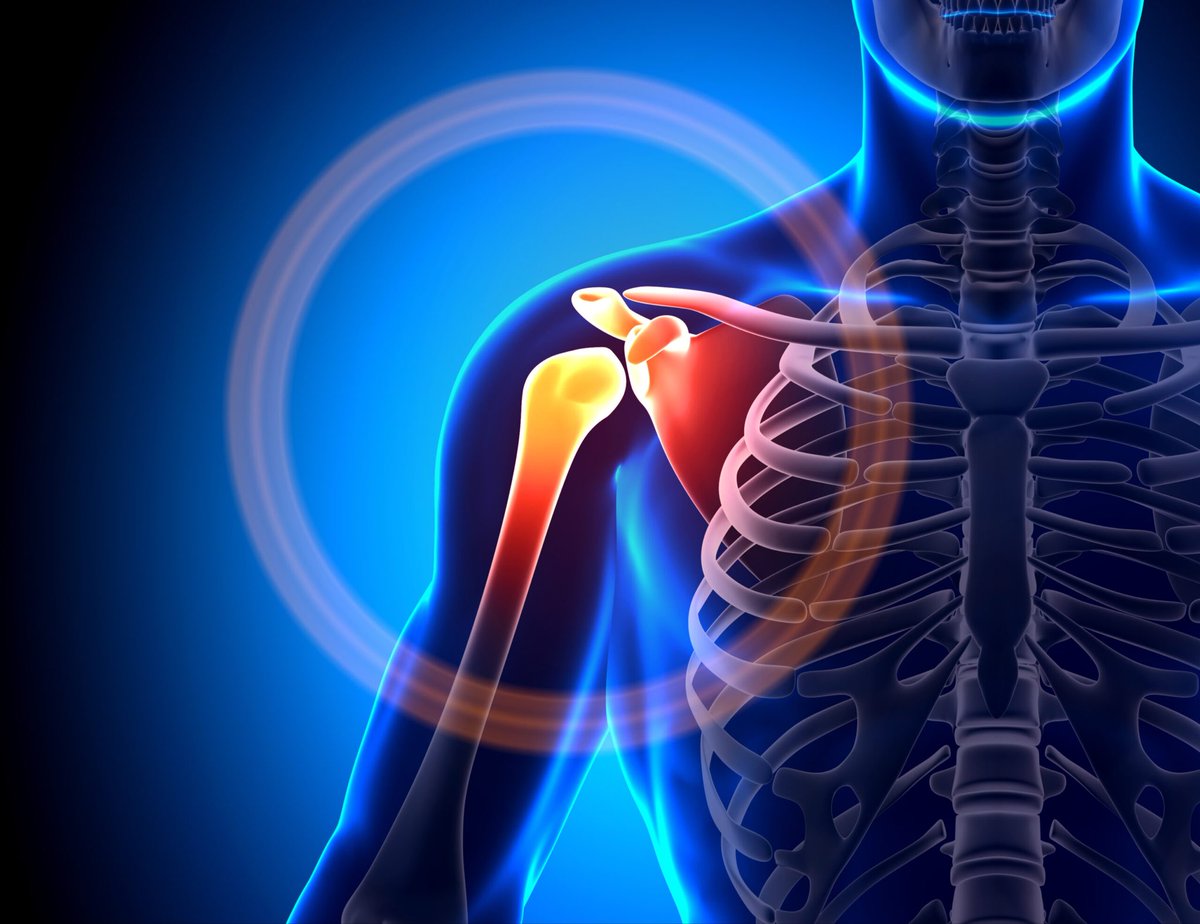
It was only discovered after a court granted her third medical suspension from detention and she was transferred to a hospital. Doctors found the left shoulder damage that had gone untreated for months.
The question that should keep someone in Seoul awake tonight: how does a post-cardiac-surgery 83-year-old fall repeatedly in your custody, ask for painkillers for months, and no one orders imaging on her shoulder?
The answer is in the pattern.
November 2025: three-day release for emergency eye surgery. Returned to custody.
February 2026: ten-day release for fall injuries. Extension denied. Returned.
March 2026: third suspension granted. Confined to hospital.
April 14, 2026: shoulder surgery. For an injury sustained in January.
204 days since her arrest on September 23, 2025. No conviction. No verdict.
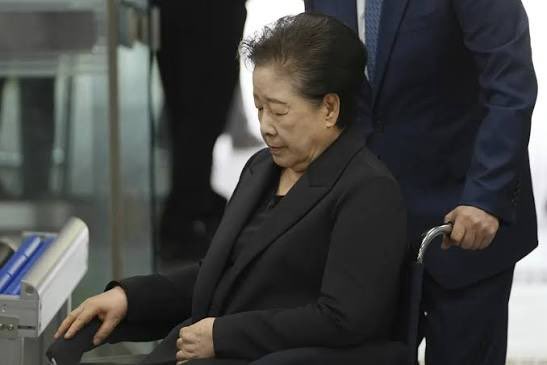
She arrived for questioning in a wheelchair, still recovering from heart surgery. The court detained her anyway.
A former political prisoner from communist Czechoslovakia wrote publicly that her conditions are worse than what he endured in 1974.
Former U.S. Secretary of State Mike Pompeo @mikepompeo called it lawfare.
On April 3, she was nominated for the 2026 Nobel Peace Prize.
She received that nomination recovering from a surgery that should never have been necessary. Because the injury should have been caught in January. Because she should not have been falling in the first place.
When a detention facility cannot keep a patient from falling, cannot diagnose what those falls break, and the patient is too dignified to scream, the system is not failing.
It is choosing not to look.
Source: Internal Message from FFWPU