The saying, “Confession is good for the soul,” generally means that admitting our errors is good for us, easing the burden of guilt, if nothing else. Although it isn’t a quote from Proverbs, the idea is clearly expressed.
The act of confessing one’s sins alleviates the stress and guilt that build up, producing both physical and emotional consequences.
“Whoever conceals their sins does not prosper, but the one who confesses and renounces them finds mercy.” (Proverbs 28:13)
Confession, however, is our gateway to freedom and to forgiveness.
As the Apostle John said in today’s verse, “If we confess our sins, He is faithful and just to forgive us our sins and to cleanse us from all unrighteousness.” (1 John 1:9)
Therefore, next time we mess up, we should resist the temptation to cover it up or ignore it. As David attested, sweeping our sins under the rug only makes matters worse. Instead, let’s pour out our hearts to God. As we confess our sins to God, He will heal our souls.
Confession is therefore good for our soul because it helps align us with God and with His purposes for our lives.
Thank you for posting this verse, and I pray that it ministers to all who read it. Have a great weekend, and may the Holy Spirit open new vistas of understanding of God’s will, way, and word to you. Take care, and God bless.
Thought For Today: “Complacency Prevents God’s Call”
Complacency keeps us from heeding God's call upon our lives.
One spring night, a flock of geese flew over a farm where a group of tame ducks floated on the pond. When the ducks heard the geese's call, it was as if an arrow had struck deep within them, and they began to flap their wings. The only problem was that they never left the water.
In their hearts, the matter was settled; the corn of the barnyard was more tempting than the call of the wild. Their desire to fly with the geese made them uncomfortable because of their complacency.
Joshua addressed the Israelites prior to his death, noting the people’s potential for compromise and then his stance against it, which would lead him to become Israel’s leader into the Promised Land.
“Now therefore, fear the Lord, serve Him in sincerity and in truth, and put away the gods which your fathers served on the other side of the River and in Egypt. Serve the Lord! And if it seems evil to you to serve the Lord, choose for yourselves this day whom you will serve, whether the gods which your fathers served that were on the other side of the River, or the gods of the Amorites, in whose land you dwell. But as for me and my house, we will serve the Lord.” (Joshua 24:14-15)
He has shown you, O man, what is good; And what does the Lord require of you But to do justly, To love mercy, And to walk humbly with your God? Micah 6 :8 NKJV
“What, then, shall we say in response to these things? If God is for us, who can be against us?” (Romans 8:31)
Besides the love of God bringing people to salvation, the fear of the Lord does as well.
Paul said, “Therefore, my beloved, as you have always obeyed, not as in my presence only, but now much more in my absence, work out your own salvation with fear and trembling.” (Philippians 2:12)
Unfortunately, the church has neutered the word fear when it comes to the Lord. While it does mean awe and reverence for God, that awe and reverence comes from the realization that we’re sinners standing before a holy and righteous God.
This should then bring a sense of real fear, because unless we get our lives right with God, then hell will be our outcome; hence the wording, “Working out our salvation with fear and trembling.”
In Romans 8:32, Paul asks, "If God is for us, who can be against us?” This is a powerful and remarkable verse. God is not just with us; He’s for us. And what makes this so remarkable is that there are so many reasons why He should be against us, and they all have to do with sin (Romans 5:8).
Oswald Chambers said, “The remarkable thing about fearing God is that when you fear God, you fear nothing else, whereas if you do not fear God, you fear everything else.”
A grace-filled heart is one that fears God. As Solomon says, “The fear of the Lord is the beginning of wisdom, and the knowledge of the Holy One is understanding” (Proverbs 9:10).
I pray that a holy fear encompasses God’s people so that a revival will sweep across this world. Take care and God bless
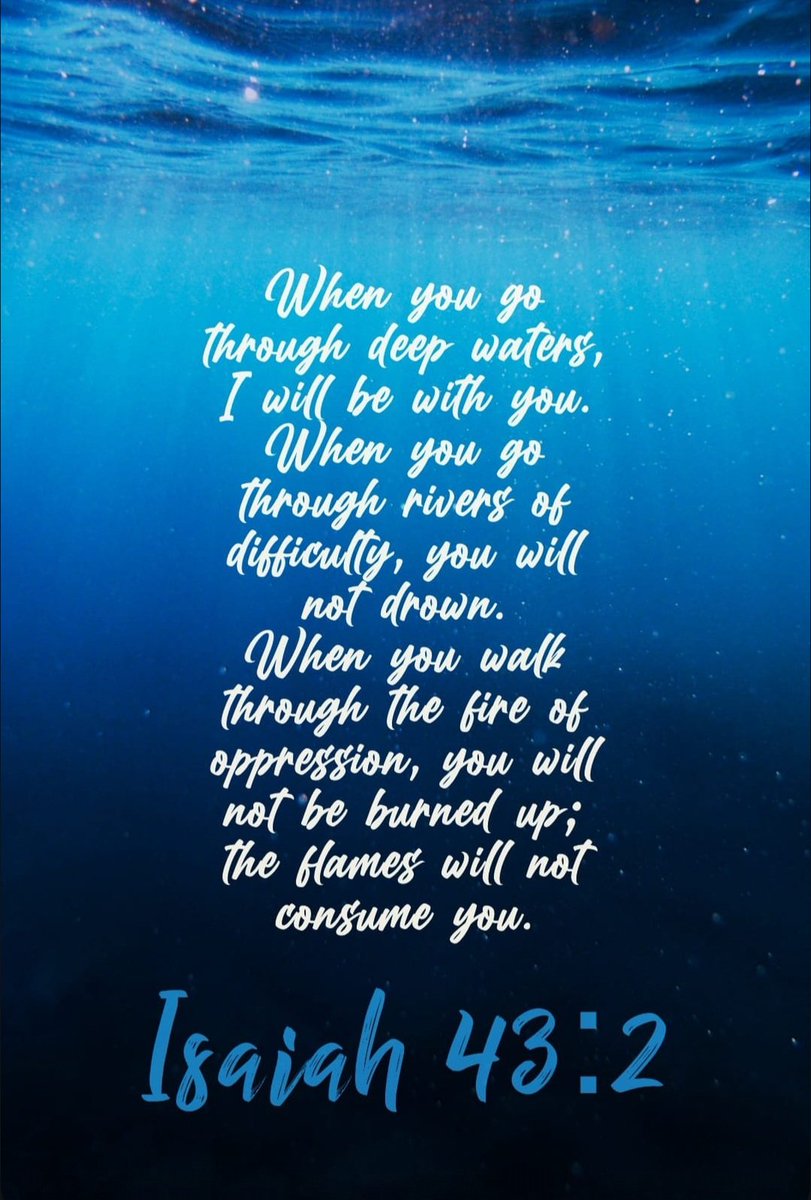
When you pass through the waters, I will be with you; And through the rivers, they shall not overflow you. When you walk through the fire, you shall not be burned, Nor shall the flame scorch you. Isaiah 43: 2 NKJV
I saw a picture of a man standing on the charred remains of a burned-out car, destroyed in the surge of violence, holding a sign that read, “No Justice, No Peace.”
I agree that all injustice should be addressed, but it should be done in a way that is productive and doesn’t promote further violence and injustice.
After Peter cut off the ear of one of the High Priest’s servants who came to arrest Jesus, Jesus said, “Put your sword in its place, for all who take the sword will perish by the sword.” (Matthew 26:52)
So instead of more violence, which inspires more in return, we need to seek justice in a way that promotes peace, which is at the heart of God, as Jesus makes it one of a Christian’s main attributes.
Jesus said, “Blessed are the peacemakers, for they shall be called sons of God” (Matthew 5:9), which Solomon calls a wise course of action (Proverbs 29:8).
To those who wanted justice against the woman caught in adultery and were ready to carry it out, Jesus said, “Let any one of you who is without sin be the first to throw a stone.” (John 8:7)
Jesus reminded them that they had to address their own injustice toward God before any justice could be meted out to anyone else.
Today, let’s start to sow seeds of grace and mercy, so that we will reap a crop of the same. Let’s remember that what we sow, we will also reap (Galatians 6:7). Take care and God bless
I saw a picture of a man standing on the charred remains of a burned-out car, destroyed in the surge of violence, holding a sign that read, “No Justice, No Peace.”
I agree that all injustice should be addressed, but it should be done in a way that is productive and doesn’t promote further violence and injustice.
After Peter cut off the ear of one of the High Priest’s servants who came to arrest Jesus, Jesus said, “Put your sword in its place, for all who take the sword will perish by the sword.” (Matthew 26:52)
So instead of more violence, which inspires more in return, we need to seek justice in a way that promotes peace, which is at the heart of God, as Jesus makes it one of a Christian’s main attributes.
Jesus said, “Blessed are the peacemakers, for they shall be called sons of God” (Matthew 5:9), which Solomon calls a wise course of action (Proverbs 29:8).
To those who wanted justice against the woman caught in adultery and were ready to carry it out, Jesus said, “Let any one of you who is without sin be the first to throw a stone.” (John 8:7)
Jesus reminded them that they had to address their own injustice toward God before any justice could be meted out to anyone else.
Today, let’s start to sow seeds of grace and mercy, so that we will reap a crop of the same. Let’s remember that what we sow, we will also reap (Galatians 6:7). Take care and God bless