Women: I want to exist without constantly being afraid.
Society: Carry your keys between your fingers. Share your location. Don’t walk alone. Don’t trust strangers. Don’t trust men. Don’t wear that. Don’t drink too much. Don’t stay out late.
Women: So what are men being taught?
Society: Well… anyway, stay safe.
Women: I want to say “no.”
Society: Be careful how you say it.
Women: I want to reject someone politely.
Society: Don’t embarrass him. Men can get angry.
Women: I want to be left alone.
Society: That’s dangerous too.
Women: I was assaulted.
Society: What were you wearing?
Women: I want freedom.
Society: Not at night.
Not alone.
Not in certain clothes.
Not after drinking.
Not online.
Not around the wrong men.
Not without protection.
Women: So when do I actually get to feel safe?
Society: …
Two young 🇨🇦 men with the last name Fox went to high school 24kms apart just outside of Vancouver, BC in the mid 1970s. Both young men would inspire the world and combine to fundraise over $3 billion for Cancer and Parkinson’s research. Two amazing Canadians, Terry Fox and Michael J Fox. 🇨🇦❤️
@ceraliza@Datsme147 Nothing says “strong leadership” like rage-deleting the one account tied to the operational backbone of the company before doing a handover.
I don't get to create slow-motion Snowflake videos every year in the middle of May on Mt. Seymour in Vancouver, BC. But here we are on May 15th, 2026. #bcstorm#shareyourweather
Adulting is realizing;
1. You will die, and most people won’t care after a while.
2. People use you until you’re no longer useful.
3. Most people secretly want you to fail.
4. One day you’ll wish you started today.
5. Most people fake happiness while dying inside.
6. No one is coming to save you.
7. You’ll be judged no matter what you do.
8. Your health is your greatest wealth.
9. Happiness is temporary—discipline is permanent.
10. Success takes longer than you think.
11. No one respects weakness, even if they sympathize.
12. Complaining changes nothing.
13. Not everyone you love will love you back.
14. Money won’t solve all your problems—but it solves most.
15. Social media lies to you every day.
16. You’re replaceable at your job.
17. Life is unfair—get used to it.
18. One day, you’ll run out of days.
19. Regret hurts more than failure.
20. Nobody cares about your excuses. Work harder
The earlier you understand this, the better and easier your life gets.
Today marks a significant moment in Canadian legal history with the Supreme Court of Canada’s decision in Ahluwalia v Ahluwalia and the recognition of a new tort of family violence.
For years, many victim-survivors have lived through patterns of coercive control, intimidation, isolation, psychological abuse, financial abuse, threats, surveillance, and post-separation abuse that profoundly altered their lives, yet often did not fit neatly within traditional legal frameworks focused primarily on physical violence or isolated incidents.
This decision reflects an evolving understanding that family violence is not always visible bruises or singular explosive events. It is often a pattern of domination, entrapment, fear, deprivation of liberty, and ongoing psychological harm across time.
The recognition of family violence as its own tort is significant because it acknowledges the seriousness and cumulative impact of coercive and controlling behaviour within intimate and family relationships. It signals that these harms are real, measurable, and deserving of legal recognition.
This decision will likely shape important conversations across family law, civil litigation, criminal law, risk assessment, and professional practice. It also raises critical questions about how systems identify, assess, document, and respond to coercive control moving forward.
For many survivors, this ruling is more than a legal development. It is validation that what happened to them was not simply “conflict,” “poor communication,” or “a difficult relationship.” Patterns of coercive control can fundamentally alter a person’s autonomy, safety, psychological functioning, parenting, financial stability, and ability to participate freely in daily life.
We still have substantial work ahead in ensuring coercive control is properly understood and appropriately responded to within legal and institutional systems. However, today represents an important step in acknowledging the realities many survivors have been describing for decades. -via Trish Guise MSc, MBA, Expert in Coercive Control @TrishGuise
I am happy to announce that I have joined the CBC News Indigenous Team as a Sr. Reporter based in Calgary!
I’ll be mainly reporting and doing TV, radio & web stories in AB, SK & BC, anywhere I’m needed from Indigenous specific stories and breaking news. I’m in WPG until July.
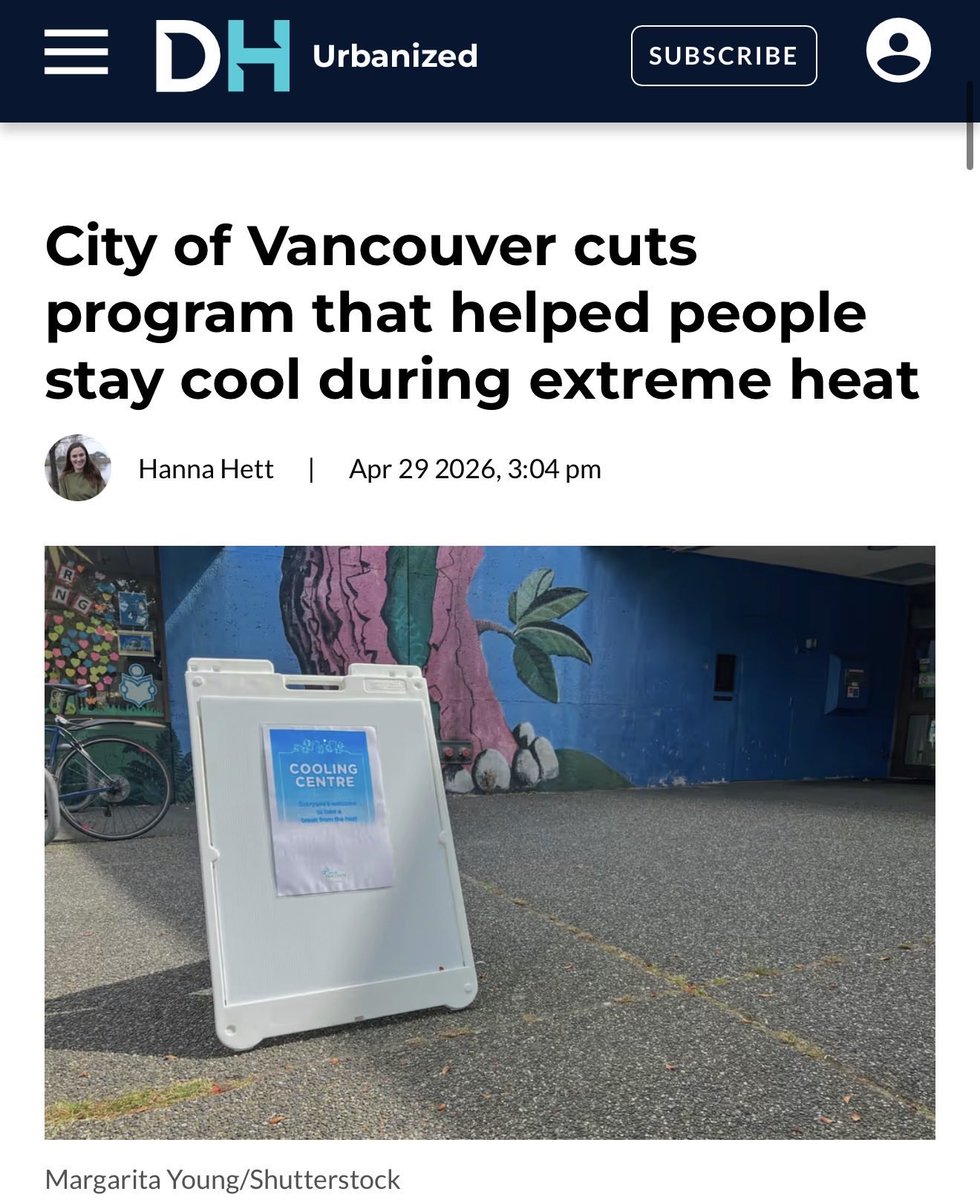
This is unconscionable @KenSimCity
Do you not remember the 619 people who died during the heatwave of 2021? Public health interventions for our most vulnerable city residents save lives.
“Sometimes the smallest things take up the most room in your heart.” – A. A. Milne
As we mark the 100th anniversary of the beloved Winnie-the-Pooh stories, The Queen has presented a very special gift to the New York Public Library, reuniting baby Roo with his friends from the 100 Acre Wood.
The Library is home to the original collection of toys owned by Christopher Robin Milne, son of A.A. Milne, which inspired the characters in the beloved Winnie-the-Pooh series. The collection is missing Roo, the baby kangaroo who was lost in an orchard in the 1930s.
The new addition of Roo was created by Shropshire-based company Merrythought, who also created the original toys.
👀 Watch Roo’s great adventure travelling from Buckingham Palace onboard Their Majesties’ flight to his new home in New York.
I feel so sorry for any elderly person who struggles with online admin / isn’t online and doesn’t have a support network to help with online admin. Almost everything is online or automated now. And for those who aren’t online (in particular the elderly), they are marginalised.
"We don’t need schools, libraries, and the government to be "run like a business." We need them be run like public services that advance the health and well being of all people."
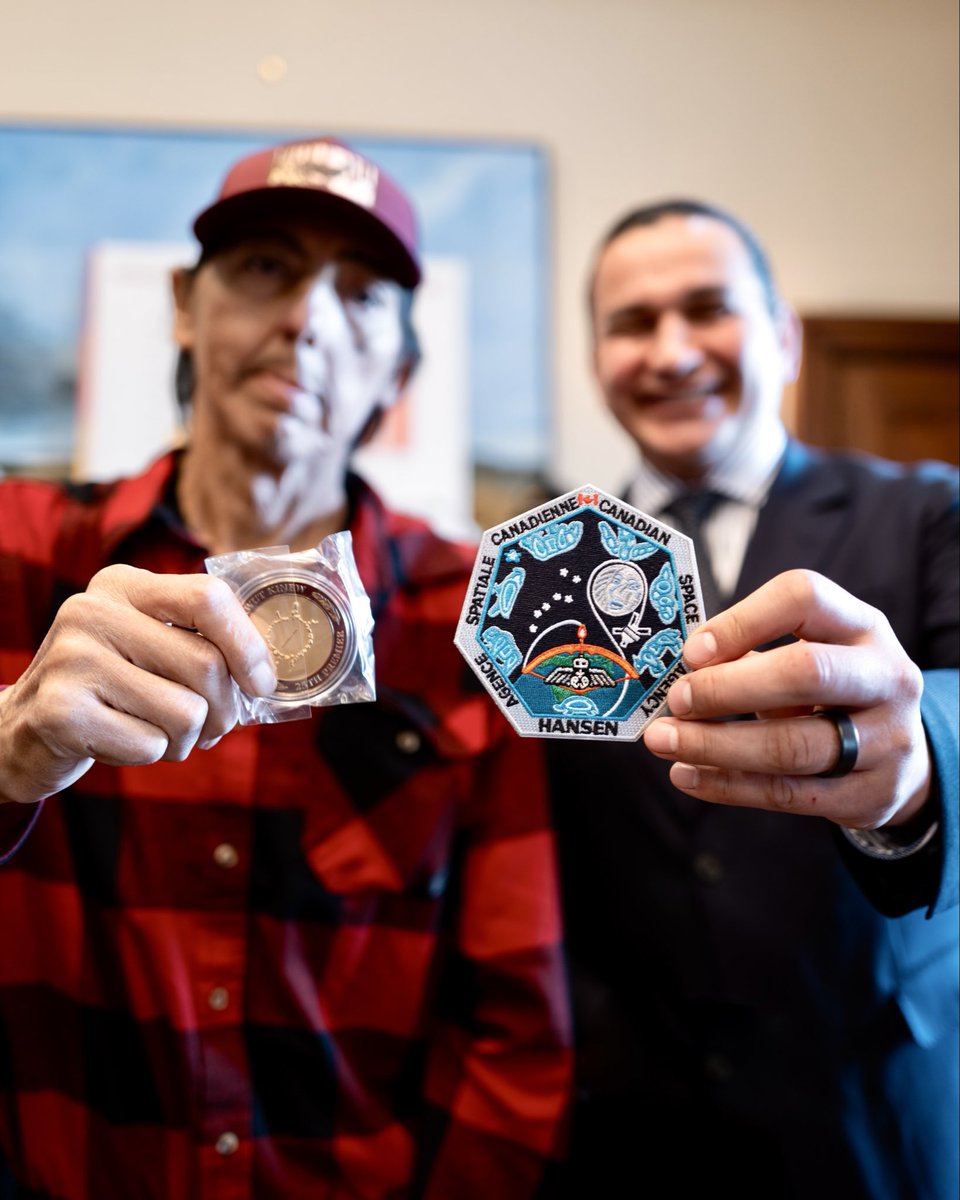
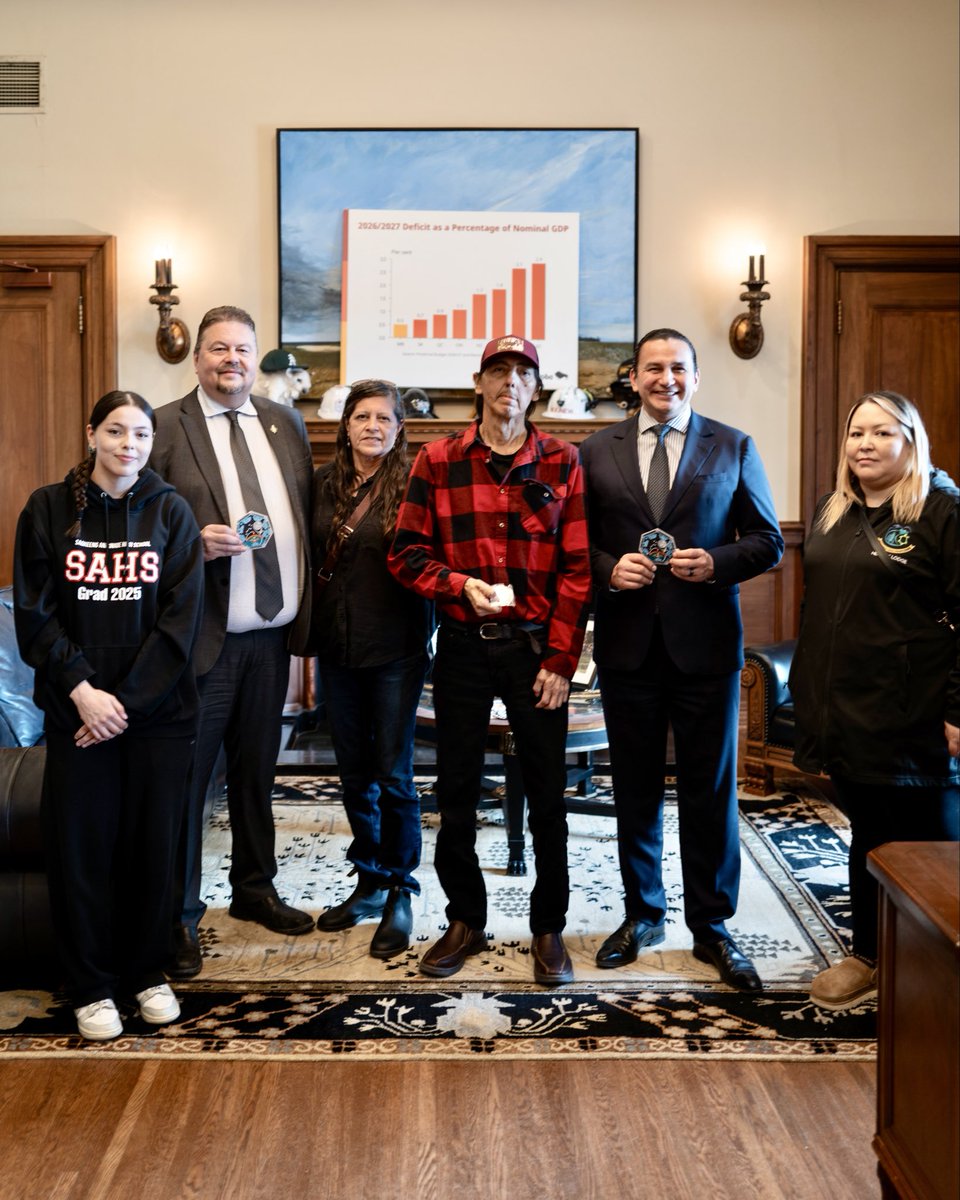
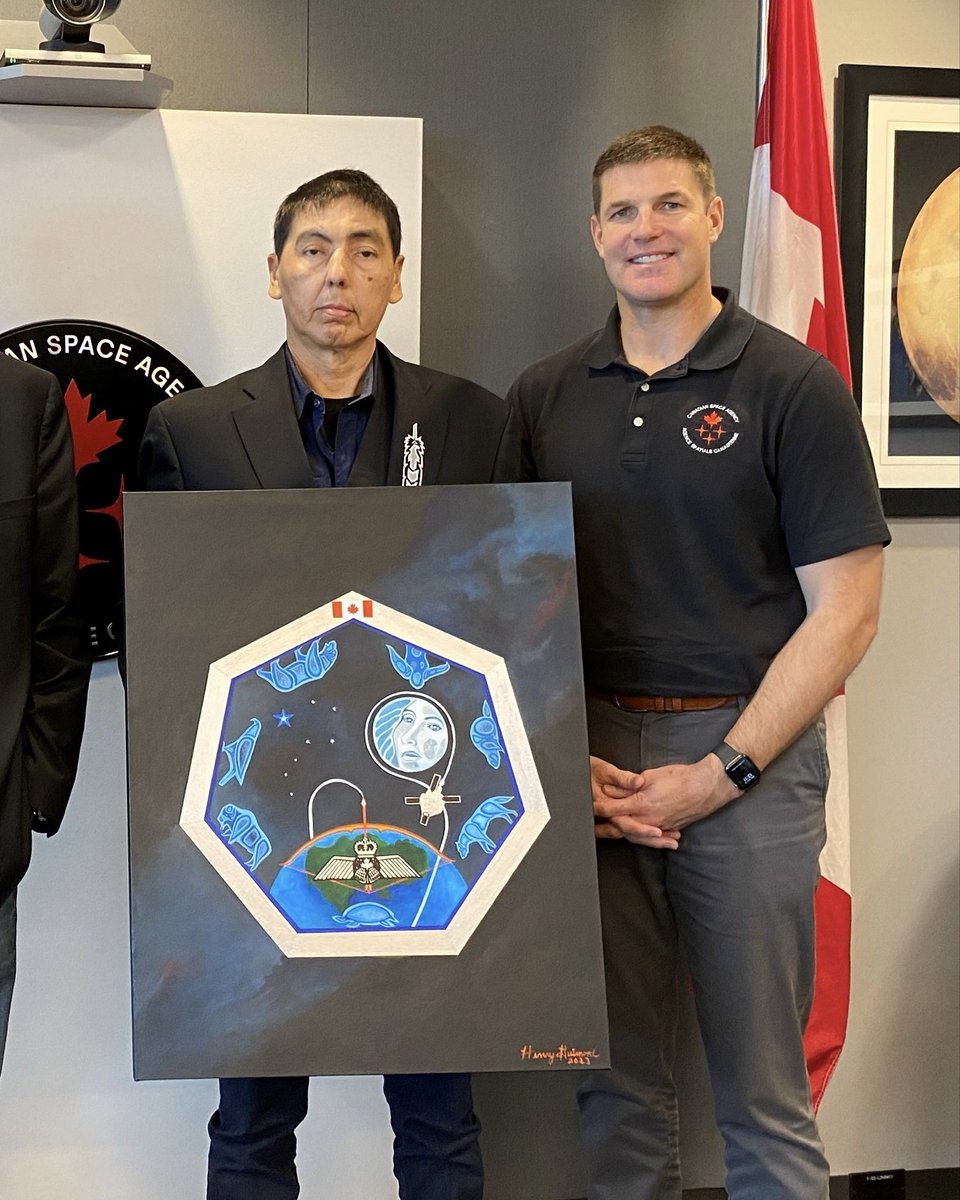
We’re proud of Anishinaabe artist Henry Guimond from Sagkeeng First Nation.
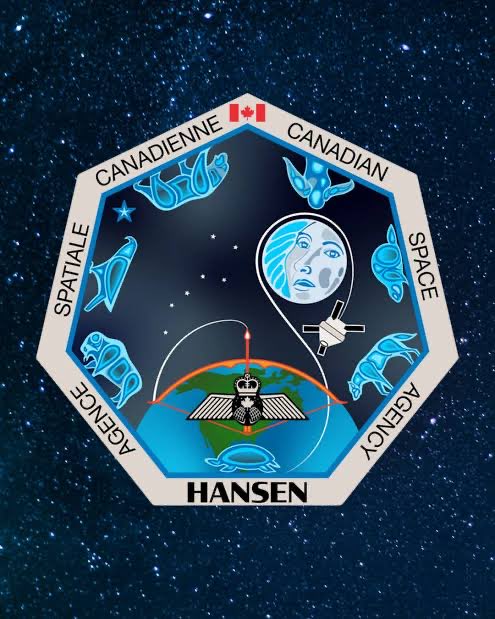
He designed the patch worn by Canadian astronaut Jeremy Hansen on the Artemis II mission-carrying the Seven Sacred Laws and Anishinaabe teachings into space.
Today he visited with his family, and we had the chance to connect, alongside Minister Ian Bushie. We traded a patch and a challenge coin- his design in my hand, and a coin featuring Manitoba petroforms in his.
From where the Creator lives to the stars, our stories travel with us. 🦬