"Let's wait until Monday."
Nobody objected. The feature sat in limbo for 4 days.
Deployment anxiety isn't a personality trait. It's the rational response to a process that doesn't provide confidence.
How it shows up:
→ Shrinking deploy windows
→ Batch accumulation (less deploys = larger batches = more risk)
→ One "deploy hero" who runs everything
→ VP approval for routine deploys
The cure isn't bravery. It's process:
• Visible release scope
• Staging branches
• QA gates (binary pass/fail)
• Tested rollback
• Deploy more often, not less
https://t.co/YvQspiU8Hc
#DevOps #DeploymentAnxiety #ReleaseManagement #SoftwareEngineering
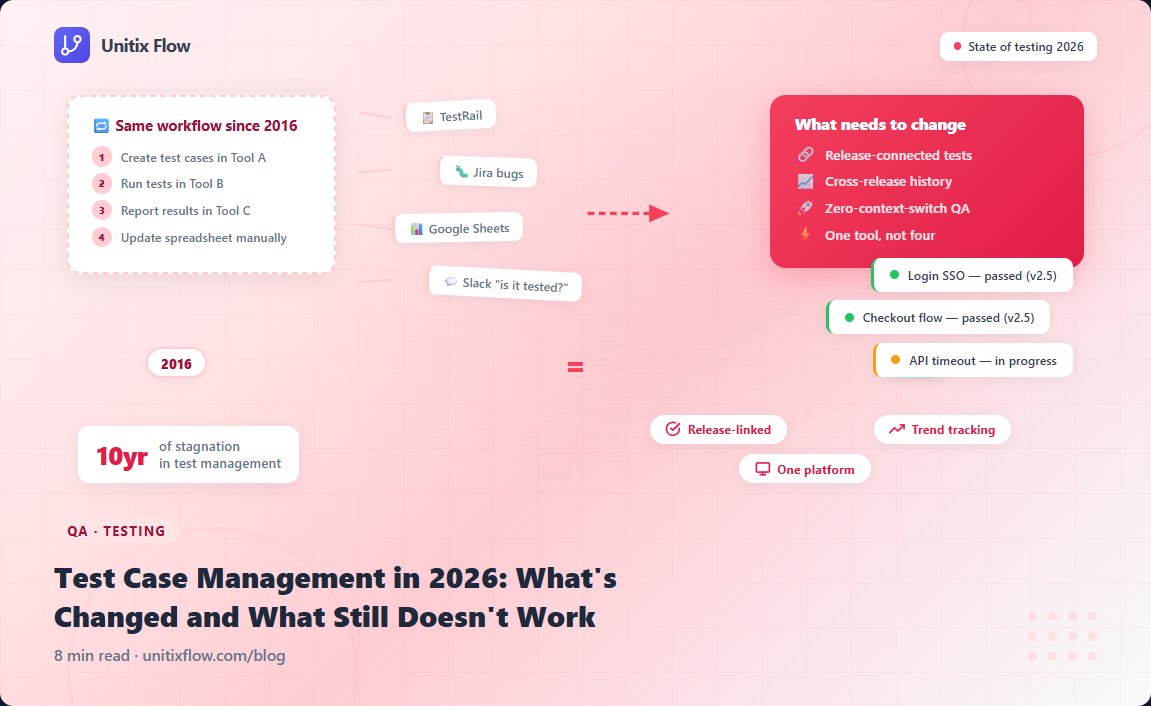
Test case management hasn't evolved in 10 years.
In 2026, the typical QA workflow:
1. Open Jira for tasks
2. Open TestRail for test cases
3. Open staging to test
4. Back to TestRail for results
5. Back to Jira to update
6. Post in Slack
6 steps. 5 tools. Zero connection between them.
What still doesn't work:
→ Tool silos
→ No release context (tests by project, not release)
→ Over-complexity (weeks to configure)
→ Per-user pricing ($30-50/user = only QA gets access)
What it should look like:
→ Organized by release
→ In the same tool as branches and pipelines
→ Accessible to devs, PMs, and QA
https://t.co/MvrtCzDvE7
#QA #TestManagement #DevOps #SoftwareEngineering
We rebuilt our release dashboard 3 times before getting it right.
Version 1: Feature list. "Done / In Progress / Not Started." Always out of date.
Version 2: Real-time GitLab data. Better, but no QA visibility.
Version 3: Built around 3 questions you answer without clicking.
The 3 questions:
→ What's shipping? (tasks + branches)
→ Is it tested? (QA matrix with pass/fail)
→ What's blocking? (unmerged branches, failing pipelines)
What most dashboards get wrong:
• Too many charts (25 metrics = no one looks)
• Informative but not actionable
• Separate from the workflow
Full build story + design decisions ↓
https://t.co/7ERB3Ok2RY
#BuildInPublic #DevOps #ReleaseManagement #Dashboard
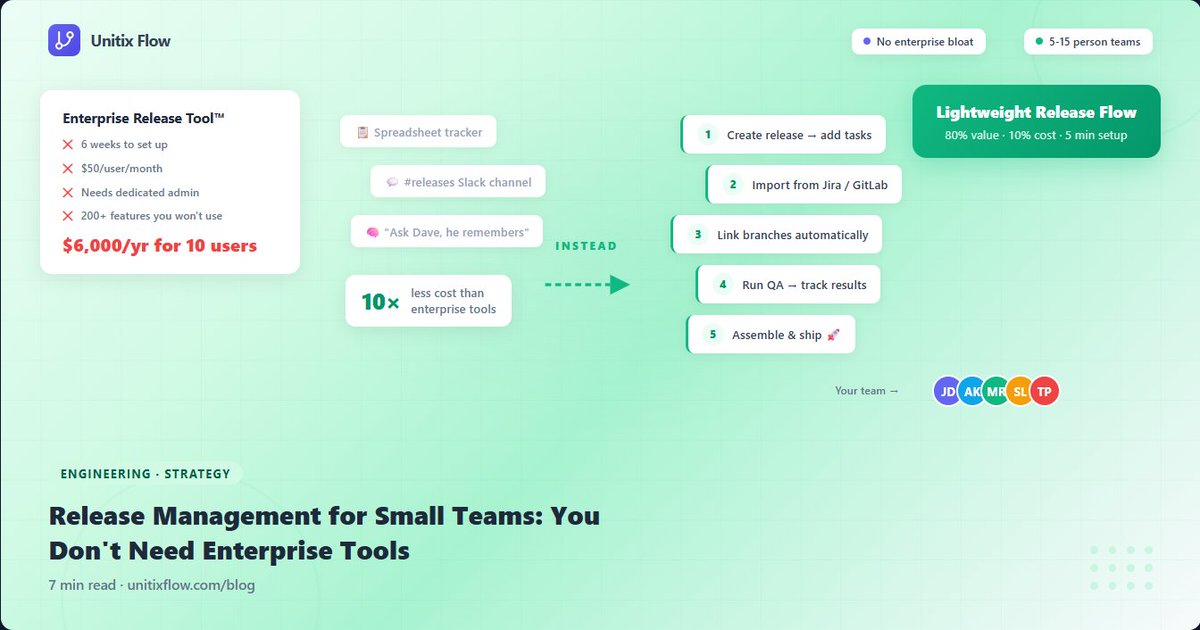
Enterprise release tools want $50/user.
Small teams need 80% of the value at 10% of the cost.
What actually works for teams of 3-20:
→ Name the release (not "whatever's in main")
→ Staging branches (merge features there first)
→ Basic QA tracking (checklist, not 200-field suite)
→ One-click deploy + rollback
→ 30-60 min overhead per release. That's it.
What you DON'T need:
• Approval chains
• Change advisory boards
• Release trains
• Enterprise artifact management
The right process is the one your team actually follows.
https://t.co/wkii2oxQdU
#ReleaseManagement #Startups #DevOps #SmallTeams
Most Jira integrations sync data INTO another tool. You leave Jira, open the tool, check status, go back.
We did it the other way. Push release context INTO Jira.
Every issue shows:
→ Which release it belongs to
→ Branch & pipeline status (real-time)
→ QA test results (pass/fail)
→ Release stage (Draft → QA → Released)
No tab-switching. No "let me check."
The integration should bring data to where work happens, not pull you somewhere else.
https://t.co/du5jn1xQ5V
#Jira #DevOps #ReleaseManagement #Integrations
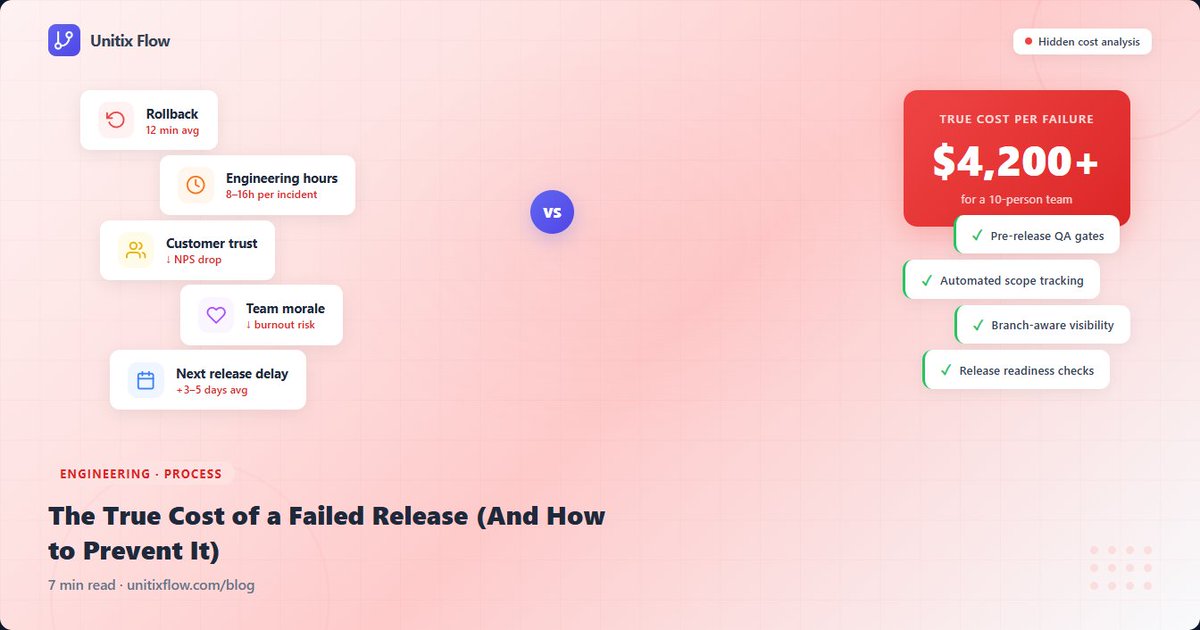
A failed release doesn't cost you 1 hour of rollback.
It costs you:
→ $4,000–$9,000 direct (rollback + debug + re-test)
→ 3–5 days of feature delay
→ Friday deploys banned forever
→ A new sign-off step after every failure
The hidden cycle: fewer deploys → larger batches → more risk → more failures.
The fix isn't zero failures — it's minimizing blast radius:
• Staging branches for integration testing
• QA gates that block deploy without sign-off
• Scope lock after testing starts
• One-click rollback
Full cost breakdown + prevention framework ↓
https://t.co/8G4YxTxWPS
#ReleaseManagement #DevOps #DeploymentFailure #SoftwareEngineering
QA doesn't belong at the end of your release cycle.
It belongs inside it.
When QA is a phase at the end:
→ Scope changes invalidate test plans
→ Testing window gets compressed
→ QA becomes the "bottleneck"
→ Bugs found late = expensive fixes
When QA is embedded throughout:
→ Test plans start during development
→ QA gates between stages (not just before deploy)
→ Scope is locked when testing starts
→ Bugs caught early = cheap fixes
The shift: QA as partner, not gatekeeper.
https://t.co/x86VGJtMC5
#QA #Testing #ReleaseManagement #DevOps
The fastest engineering teams aren't the ones writing more code.
They're the ones where everyone can see what's shipping, what's blocked, and what's being tested — without asking.
Visibility kills:
→ "Where are we with the release?" meetings
→ Stale Jira boards nobody trusts
→ One person who "just knows" everything
→ Surprises at deploy time
When the whole team sees branches, pipelines, QA status, and release scope in one place — decisions happen faster and deploys get boring.
https://t.co/haP3aROshh
#DevOps #ReleaseManagement #EngineeringCulture #Shipping