Good news researchers!
The Gemäldegalerie in Berlin is releasing hundreds of digitized images of lost works (around 580!), including Rubens and Van Dyck from glass negatives. The works were lost as a direct result of WWII, including fires, long term loans etc.
El Códice Beato de Silos (BL MS 11695), tesoros del medievo hispano cristiano.
El color amarillo fue usado por los ilustradores para representar el #silencio, conforme a las expresiones del Libro bíblico del Apocalipsis:
«Factum est silentium»
Y se hizo el silencio.
For thirty years, I have dreamed of staging a Romanesque exhibition in Japan. Since Romanesque art is kept in churches or museums as treasures that rarely leave Europe, mounting such an exhibition in distant Japan seemed nearly impossible. Yet, unexpectedly, my dream of a “Romanesque” exhibition has now come true.
The turning point came with Mr. Kazumi Sakata (Owner of Antiques Sakata; 1945–2022). Reflecting on his writings and speaking with Mr. Sugano of Seika, I began to wonder whether “Romanesque” in Japan could possess a metaphysical quality distinct from its historical definition.
Traditionally, in art history, “Romanesque” refers to the architecture and art of Western Europe produced from the late tenth to the thirteenth centuries. However, there are times when we notice a “Romanesquishness” in eighteenth-century Western furniture or folk artifacts. While I rarely encountered authentic Romanesque works at Antiques Sakata, I often saw pieces that evoked its spirit. This led me to ask whether reflecting on “Romanesquishness” could help us approach the very essence of Romanesque art, thus mirroring the evolution of my aspirations from the first paragraph.
Building on these reflections, I invited three outstanding artists to create works centered on the theme of “Romanesque.” Each piece remains grounded in its creator's individuality, yet all share a certain innocence reminiscent of Romanesque stonemasonry.
The plate is by Yoji Yamada, inspired by the Norman church of Iffley(2) with chevrons.
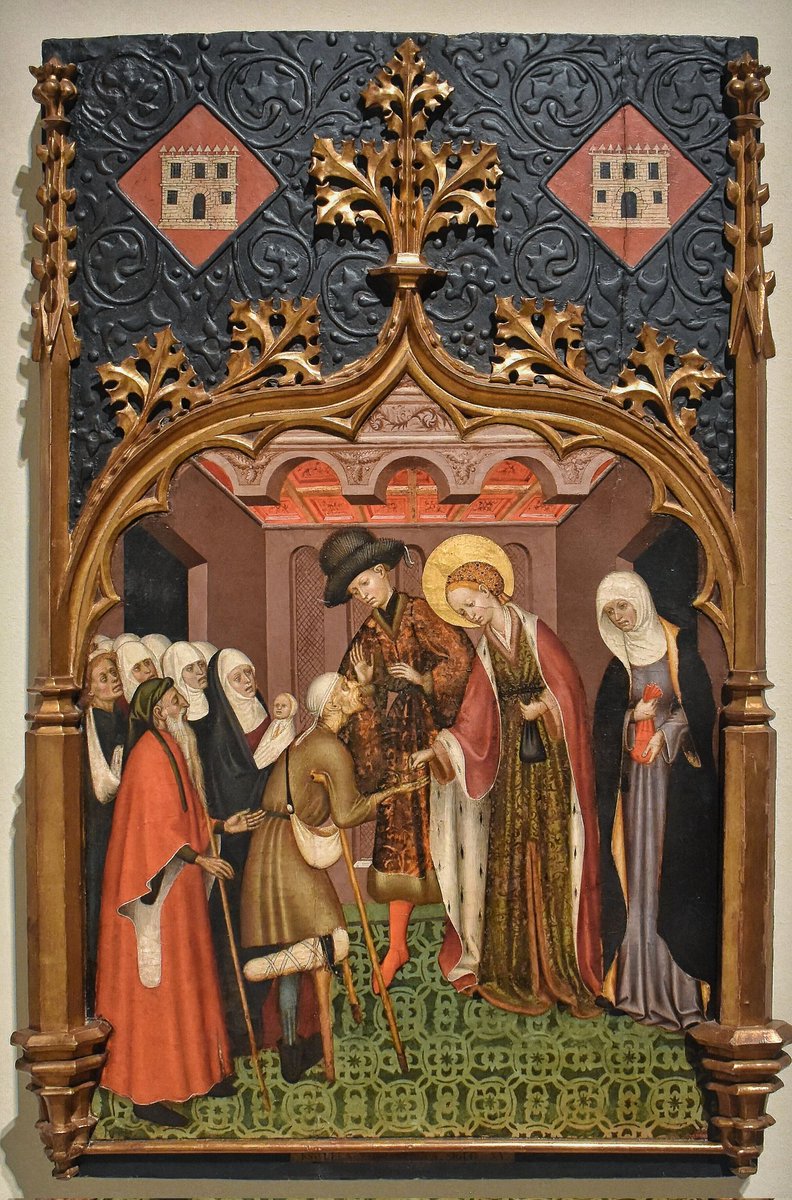
Ya sé que es gótico, pero es que me da mucha pena tener imágenes como ésta y cortarme en compartirlas por aquí por llamarme "Románico" 😅🙏
🖼 Santa Lucía repartiendo limosna
🎨 Bernat Martorell (1435 aprox)
🏛 @MuseuNac_Cat
📝 Tabla cimera de un retablo troceado
#BuenasNoches
✨ For the first time in history, see all of Jan van Eyck's portraits together. Only once, only at the National Gallery. ✨
Our 2026 exhibition, 'Van Eyck: The Portraits', brings together from across Europe all nine of the artist's known painted portraits, making up half of his surviving works worldwide.
Join us in autumn 2026 for this once-in-a-lifetime exhibition: https://t.co/vaOlgOSgR3


![heibonshatoday's tweet photo. \\ まもなく刊行!//
上智大学中世思想研究所が編訳・監修を手がける中世思想原典集成、[第Ⅱ期] の第4・5巻となる『ニコラウス・クザーヌス著作集 上』『ニコラウス・クザーヌス著作集 下』が5/26日に発売。同研究所による信仰と知の思索の成果であり、中世から近世を橋渡しし、現代哲学にもつながる思想家のテキストを集大成です。これをもって本シリーズの第Ⅱ期が完結となります。
https://t.co/7W6GVQNBCC
https://t.co/7nZtsz3JkH](https://pbs.twimg.com/media/HIQ7P0ia0AAzdLA.jpg)
















![heibonshatoday's tweet photo. \\ まもなく刊行!//
上智大学中世思想研究所が編訳・監修を手がける中世思想原典集成、[第Ⅱ期] の第4・5巻となる『ニコラウス・クザーヌス著作集 上』『ニコラウス・クザーヌス著作集 下』が5/26日に発売。同研究所による信仰と知の思索の成果であり、中世から近世を橋渡しし、現代哲学にもつながる思想家のテキストを集大成です。これをもって本シリーズの第Ⅱ期が完結となります。
https://t.co/7W6GVQNBCC
https://t.co/7nZtsz3JkH](https://pbs.twimg.com/media/HIQ7P0pbMAAXGpz.jpg)