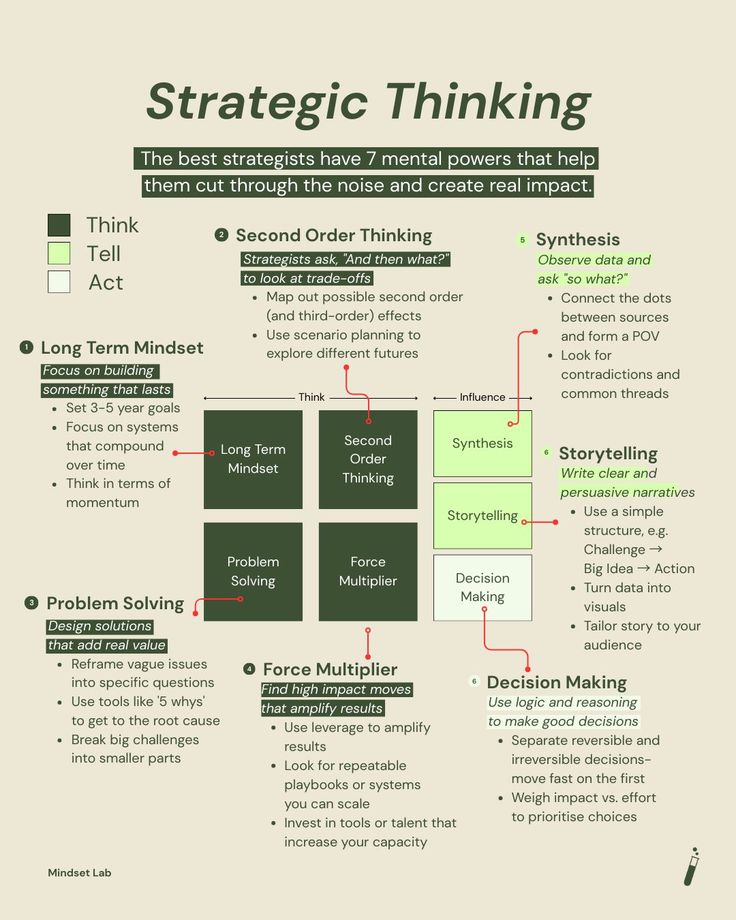
The most important skills by 2030?
They’re not technical, they’re strategic.
Here are key insights from Jeroen Kraaijenbrink and the World Economic Forum.
The skills that will shape the future aren’t about coding or data:
They’re about mindset and leadership.
Top skills in the high-impact zone include:
A) Systems thinking
B) Creative thinking
C) Analytical thinking
D) Drive and self-awareness
E) Leadership and influence
F) Resilience and adaptability
G) Curiosity and continuous learning
These aren’t just nice extras:
They’re essential for thriving in a changing world and achieving real results.
Sure, digital tools and AI are important,
But they mean nothing without the human mind driving them.
The competitive advantage in 2030 will come from:
Faster action.
Sharper thinking.
Stronger leadership.
That’s the winning formula.
P.S. Which of these skills are you focused on developing?
♻️ Share this so your network can prepare for what’s ahead.
----
📌 Investment MBA is launching soon:
The top community-powered investment program.
I will cover asset classes, portfolio management, etc.
(Sharing my experience from helping manage $ billions)
900+ leaders are already on the waitlist.
Subscribe to my newsletter at https://t.co/jTnaNRaV2d to submit your interest.
All waitlist members get my guide on:
How to build 7-figure wealth through long-term investing.
Prompt engineering is slowly dying
Enter 𝗖𝗼𝗻𝘁𝗲𝘅𝘁 𝗘𝗻𝗴𝗶𝗻𝗲𝗲𝗿𝗶𝗻𝗴
(Maybe not quite dead — but evolving into something far more powerful)
As AI grows from simple chatbots to 𝗮𝘂𝘁𝗼𝗻𝗼𝗺𝗼𝘂𝘀 𝗮𝗴𝗲𝗻𝘁𝘀, clever prompts alone will not be enough. The real challenge is orchestrating an entire ecosystem of information and tools so the model can actually get things done.
So, what does context engineering look like in practice?
𝗖𝗼𝗿𝗲 𝗰𝗼𝗺𝗽𝗼𝗻𝗲𝗻𝘁𝘀:
👤 User information: Preferences, history, and personalization data
⚒️ Tools & APIs: Calculators, search engines, or anything the LLM needs to complete the task
📖 Retrieved knowledge: Dynamic info from databases or external sources
💻 User input: The task or query itself
⛓️ LLM reasoning: The chain of thought and decision-making logic
🧠 Conversation memory: Previous interactions that provide continuity
𝗠𝗲𝗺𝗼𝗿𝘆 𝗽𝗹𝗮𝘆𝘀 𝗮 𝗰𝗿𝘂𝗰𝗶𝗮𝗹 𝗿𝗼𝗹𝗲:
• Short-term memory: Lives in the context window, for the current conversation
• Long-term memory: Stored externally (vector DBs, knowledge bases) to persist preferences and past interactions
LLMs aren’t mind readers. Garbage in, garbage out still applies. The difference is now we’re thinking about the 𝗲𝗻𝘁𝗶𝗿𝗲 𝗽𝗶𝗽𝗲𝗹𝗶𝗻𝗲 𝗼𝗳 𝗴𝗲𝘁𝘁𝗶𝗻𝗴 𝘁𝗵𝗲 𝗿𝗶𝗴𝗵𝘁 𝗴𝗮𝗿𝗯𝗮𝗴𝗲… 𝗜 𝗺𝗲𝗮𝗻, 𝗰𝗼𝗻𝘁𝗲𝘅𝘁… 𝘁𝗼 𝗼𝘂𝗿 𝗺𝗼𝗱𝗲𝗹𝘀.
The key question to ask yourself: “𝘊𝘢𝘯 𝘵𝘩𝘦 𝘓𝘓𝘔 𝘱𝘭𝘢𝘶𝘴𝘪𝘣𝘭𝘺 𝘢𝘤𝘤𝘰𝘮𝘱𝘭𝘪𝘴𝘩 𝘵𝘩𝘦 𝘵𝘢𝘴𝘬 𝘸𝘪𝘵𝘩 𝘸𝘩𝘢𝘵 𝘐'𝘷𝘦 𝘨𝘪𝘷𝘦𝘯 𝘪𝘵?”
Context engineering isn’t just the next step after prompts, it’s 𝗯𝘂𝗶𝗹𝗱𝗶𝗻𝗴 𝘀𝘆𝘀𝘁𝗲𝗺𝘀 𝘁𝗵𝗮𝘁 𝘀𝗲𝘁 𝗔𝗜 𝘂𝗽 𝗳𝗼𝗿 𝗿𝗲𝗮𝗹 𝘀𝘂𝗰𝗰𝗲𝘀𝘀.
How Well Do You Understand the System Design Ecosystem?
Designing a modern, scalable system isn't just about picking the right database or breaking a monolith into microservices. It’s about understanding how all the layers, from infrastructure to orchestration work together like a well-organised machine.
Here’s a complete System Design Ecosystem, breaking it down into Core, Service, System, and Ecosystem layers. Whether you’re building your first backend or scaling to millions of users, these layers must work together perfectly to deliver performance, reliability, and scalability.
Here’s what each layer includes:
1. Core Layer
→ Databases, Load Balancers, Storage, Caching, CDN, DNS, Search, API Gateway
Foundational infrastructure that powers all modern apps.
2. Service Layer
→ Microservices, Message Queues, Service Discovery, Workflow Orchestration
Handles modularity, communication, and task management in a service-oriented architecture.
3. System Layer
→ Monitoring, Logging, Security, Observability, Failover & Recovery, Config Mgmt
Ensures visibility, reliability, and safety across distributed systems.
4. Ecosystem Layer
→ Orchestration (Kubernetes), CI/CD Pipelines, Scaling Strategies, Cost Management, Compliance & Governance
Brings everything together for scale, automation, compliance, and cost efficiency.
Save this if you're building scalable architectures or prepping for a system design interview. It's your blueprint to think beyond just services and build reliable ecosystems.
A graph-powered all-in-one RAG system!
RAG-Anything is a graph-driven, all-in-one multimodal document processing RAG system built on LightRAG.
It supports all content modalities within a single integrated framework.
100% open-source.
We made step-by-step guides to Fine-tune & Run every single LLM! 🦥
What you'll learn:
• Technical analysis + Bug fixes explained for each model
• Best practices & optimal settings
• How to fine-tune with our notebooks
• Directory of model variants
🔗https://t.co/mgUHIZtQ7X
This is a playlist of 9 AI & ML youtube videos you can’t miss as an AI engineer,
It’s 50+ hours of technical hands-on courses:
1. Neural Networks Zero to Hero (Karpathy)
https://t.co/ffdq7buycG
From micro-gradients to nanoGPT, code-first all the way.
2. Stanford CS336 (2025): Language Modelling from Scratch
https://t.co/0p7LUY8Dzm
A full-stack LLM bootcamp: data → training → serving → evaluation.
3. MIT 6.S191 (2025): Intro to Deep Learning
https://t.co/n7P1poXDEr
Transformers, diffusion, and modern DL in under 2 hours.
4. CS25: Intro to Transformers with Karpathy
https://t.co/CXeva0AMPM
Turns “Attention Is All You Need” into code you can actually deploy.
5. Stanford CS229 Guest Lecture: Building LLMs
https://t.co/Gn01aGHkkY
Behind the curtain of Stanford’s 2025 LLM stack.
6. Deep Dive into LLMs like ChatGPT
https://t.co/tIKBP2p7HK
3.5 hours of how GPTs really work under the hood.
7. Let’s Build GPT from Scratch
https://t.co/wqKHo4vmUr
200 lines of Python → a functional GPT. Watch, code, repeat.
8. Agentic AI by Stanford
https://t.co/4qO2hEbLvg
Gain an introduction to the concept of agentic AI language.
9. Transformers and Self-Attention
https://t.co/fZIsULEQlp
Introduction to the Transformers architecture from scratch
Hats off to @ordax for the list!
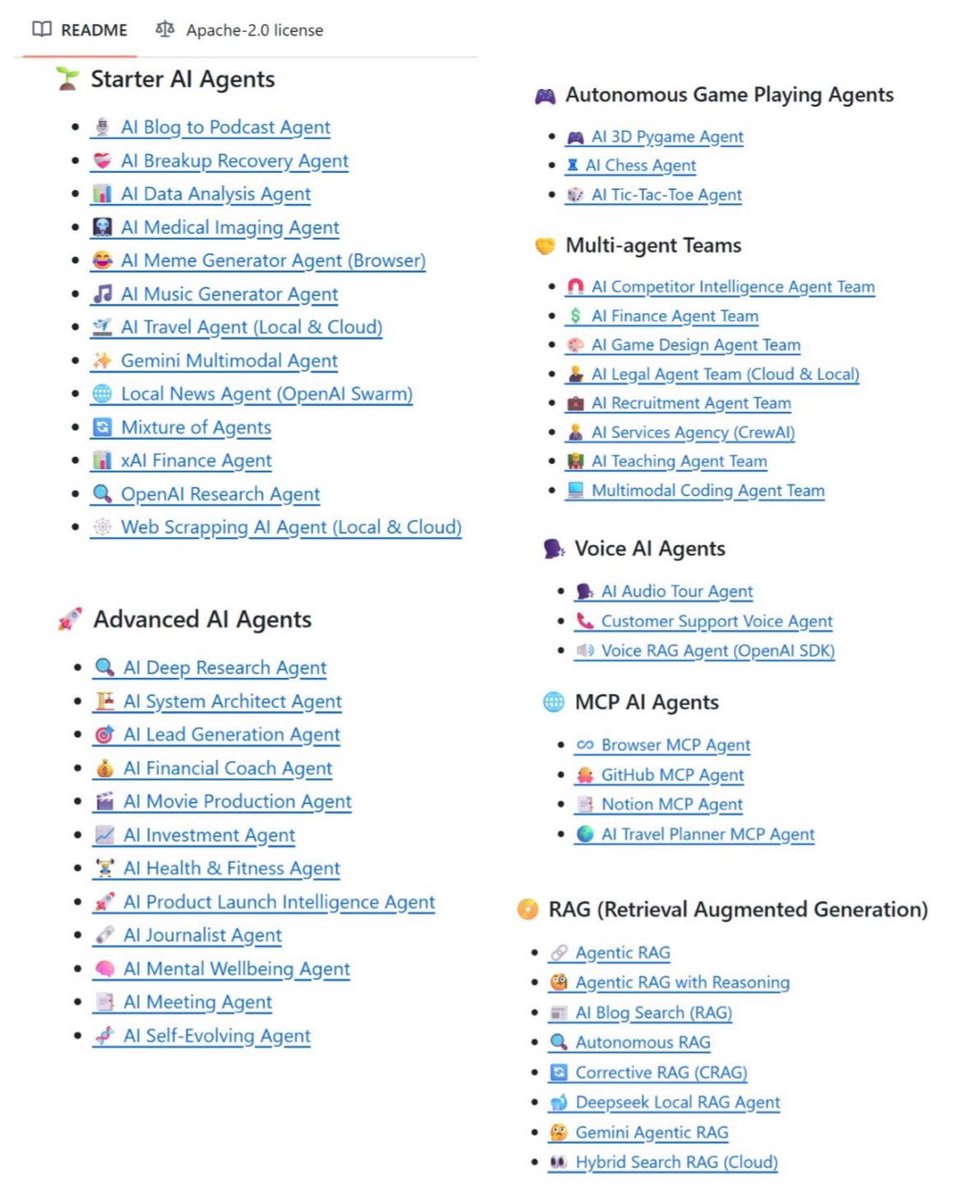
this repo is gold! a collection of LLM apps with multi-agents, MCP, RAG and so much more.
the best way to learn is by building, and this repo provides the blueprint.
Ilya has emerged from hiding to proclaim that digital intelligence can do whatever biological intelligence can and he is 100% certain about it
I think there is zero doubt about this
Already, AI surpasses most humans on most problems.