Top 20 AI Skills for Developers in 2026
1. Working with AI coding assistants (Claude Code, Cursor, Copilot) — using them fluently for daily coding, not just autocomplete but delegating whole tasks.
2. Writing effective prompts and task specs — describing a task with enough context and constraints that the model gets it right the first time.
3. Context management — deciding what files, docs, and examples the model should see, and keeping long sessions from drifting.
4. Reviewing AI-generated code — reading generated code critically, assuming it is wrong somewhere, and catching the bug before merge.
5. Debugging AI-written code — finding failure causes in code no human on the team wrote or fully understands.
6. Calling LLM APIs (OpenAI, Anthropic, Gemini) — requests, streaming, structured outputs, error handling, token and cost management.
7. Building AI agents — systems where the model plans, calls tools, and executes multi-step tasks, using frameworks like LangChain or the vendor SDKs.
8. MCP (Model Context Protocol) — building servers and integrations that connect models to real tools and data, one of the hottest new niches in the JS ecosystem.
9. RAG (Retrieval-Augmented Generation) — connecting models to your own data: chunking, embeddings, vector databases (pgvector, Pinecone), retrieval quality.
10. Evals and testing AI features — writing automated checks that measure whether model output is correct, safe, and consistent before shipping.
11. AI output validation and guardrails — schema validation, moderation, fallbacks, and constraints so the model cannot break your product.
12. Security of AI-generated code — knowing the typical vulnerabilities generated code introduces (injections, secrets, weak auth patterns) and scanning for them.
13. AI cost and token engineering — choosing models, caching, batching, and prompt design to keep API bills sane at scale.
14. Fine-tuning and model customization basics — knowing when fine-tuning beats prompting, and how to prepare data for it.
15. Local and open-source models — running models with Ollama or similar, knowing when local beats API (privacy, cost, latency).
16. AI-assisted testing — generating test suites with AI and, more importantly, judging which generated tests actually test something.
17. Multi-agent orchestration — coordinating several agents in one workflow: routing, shared state, human approval steps.
18. System design for AI features — architecting apps where AI is a component: queues, retries, latency budgets, graceful degradation when the model fails.
19. Voice and multimodal integration — speech-to-text, text-to-speech, and image input in web apps, now that real-time voice AI went open source.
20. Knowing when NOT to use AI — recognizing tasks where doing it manually is faster, cheaper, or safer than generating and reviewing.
💼 Hiring Senior Frontend Software Engineer | Remote (Serbia)
Build high-performance React applications for a global game commerce platform, creating scalable user experiences that power digital products used by millions of players worldwide.
✅ React, TypeScript
✅ Redux, Zustand, GraphQL
✅ Jest, Cypress
✅ Docker, AWS, GCP
✅ GitHub Actions, CI/CD
✅ Gaming & FinTech
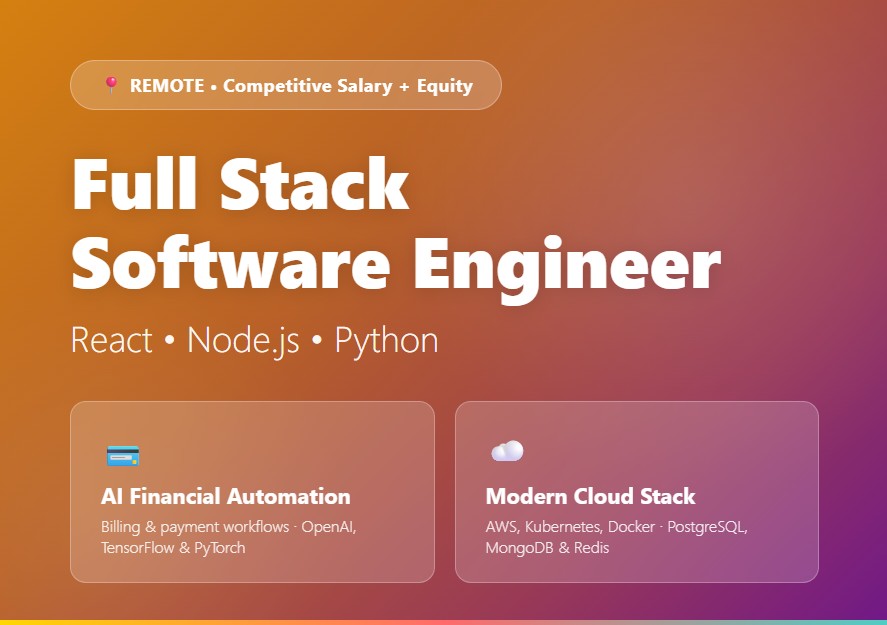
💼 Hiring Full Stack Software Engineer | Remote | Competitive Salary + Equity
Build AI-powered financial automation software used to streamline billing and payment workflows while working across the full stack with modern cloud and machine learning technologies.
✅ React, Next.js, TypeScript
✅ Node.js, Express, FastAPI, Python
✅ PostgreSQL, MongoDB, Redis
✅ AWS, Docker, Kubernetes
✅ OpenAI, TensorFlow, PyTorch
✅ FinTech & AI
💼 Hiring Senior Frontend Engineer | Remote (Americas & Europe) | $140K–$200K
Build production-grade React applications powering AI data creation, labeling, and evaluation workflows used by over 1 million Label Studio users while working closely with Product and Design to shape the future of AI infrastructure.
✅ React, TypeScript
✅ Python/Django, REST APIs
✅ AWS, Kubernetes, Postgres, Redis
✅ Jest, Cypress
✅ AI & ML products
✅ Product-driven engineering
Companies fired developers because AI would write the code.
12 months later the same companies are posting jobs to clean up what AI wrote.
I run a JS job board. These postings went from zero to weekly.
The layoff was the rough draft. The cleanup is the invoice.
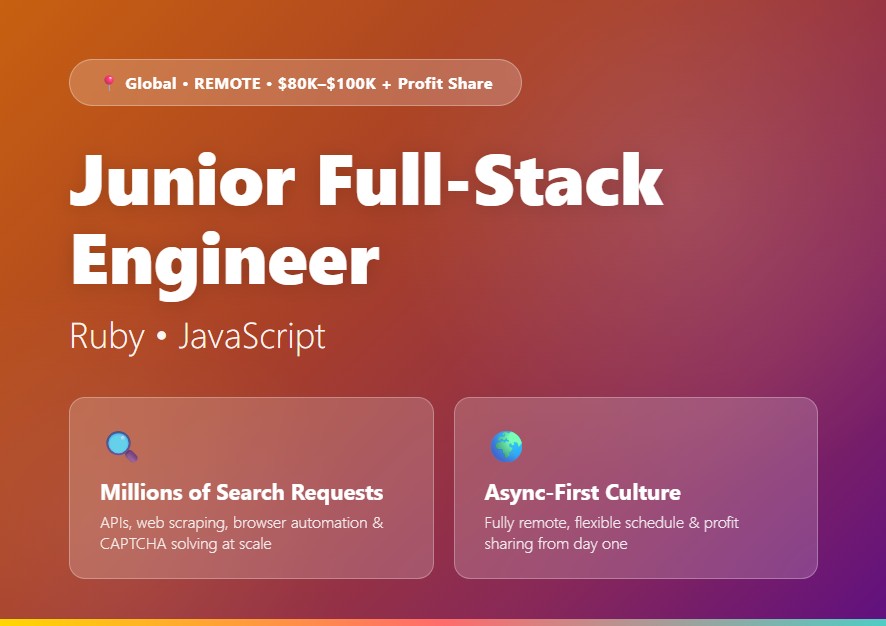
💼 Hiring Junior Full-Stack Engineer (Ruby / JavaScript) | Global Remote | $80K–$100K + Profit Share
Build and scale APIs powering millions of search requests while working in a fully remote, async-first engineering culture with worldwide hiring.
✅ Ruby on Rails, JavaScript
✅ MongoDB, AWS, Linux
✅ API development and web scraping
✅ Browser automation and CAPTCHA solving
✅ Remote-first, async engineering
✅ Profit sharing and flexible schedule
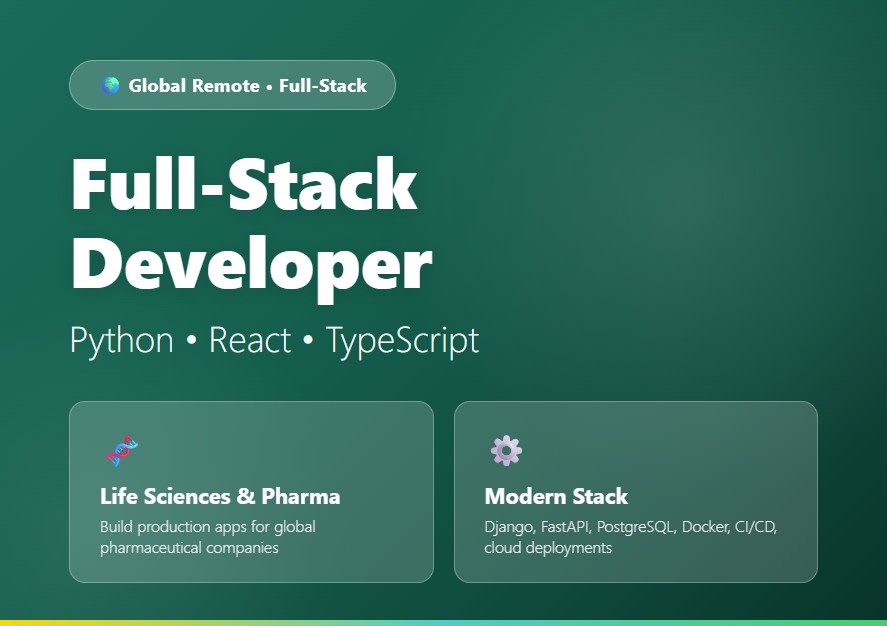
💼 Hiring Full-Stack Developer (Python / React) | Global Remote
Build production-grade web applications for global pharmaceutical and life sciences companies using modern Python, React, and cloud technologies.
✅ Python (Django, Flask, FastAPI)
✅ React, TypeScript, JavaScript
✅ PostgreSQL, MySQL
✅ REST APIs and full-stack development
✅ Docker, CI/CD, cloud deployments
✅ Healthcare and life sciences software
Quick one, just for fun.
If you weren't in tech, what would you be doing instead?
Drop it in the comments.
Curious what JS developers secretly wanted to become.
💼 Hiring Senior Full-Stack Engineer (Node.js / React) | Global Remote
Build enterprise Digital Menu Board solutions for leading QSR brands, working across backend, frontend, and cloud infrastructure with modern TypeScript technologies.
✅ TypeScript, Node.js
✅ NestJS, Express
✅ React, Angular, or Svelte
✅ AWS and cloud-native applications
✅ CMS development and distributed systems
✅ Architecture, scalability, and technical leadership