$ZECTOOLS is live on Robinhood Chain.
Every chain watcher sells what it can see. On Zcash the useful number is what nobody can see, and the chain publishes its shape on every block.
CA: 0x922945095e5d712fb4542280a6e6c9991cdcaf64
ZecTools is the terminal that reads that shape.
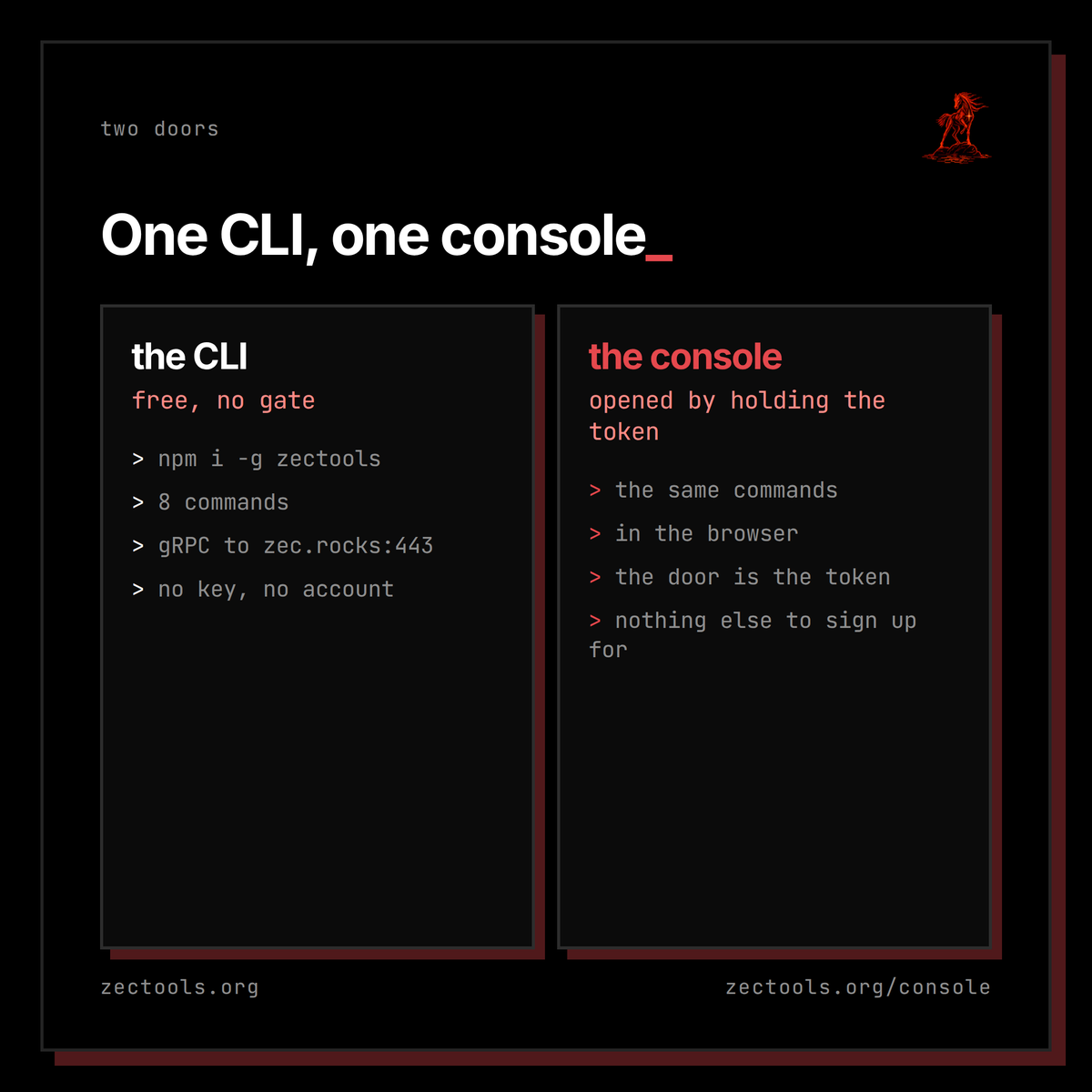
$ZECTOOLS has one job. Hold it and the hosted console opens: the same eight commands, run server side against the same public lightwalletd, with nothing to install.
The CLI stays free and ungated because a gate on a public read would be theatre. Minimum to open the console: 1,000 $ZECTOOLS.
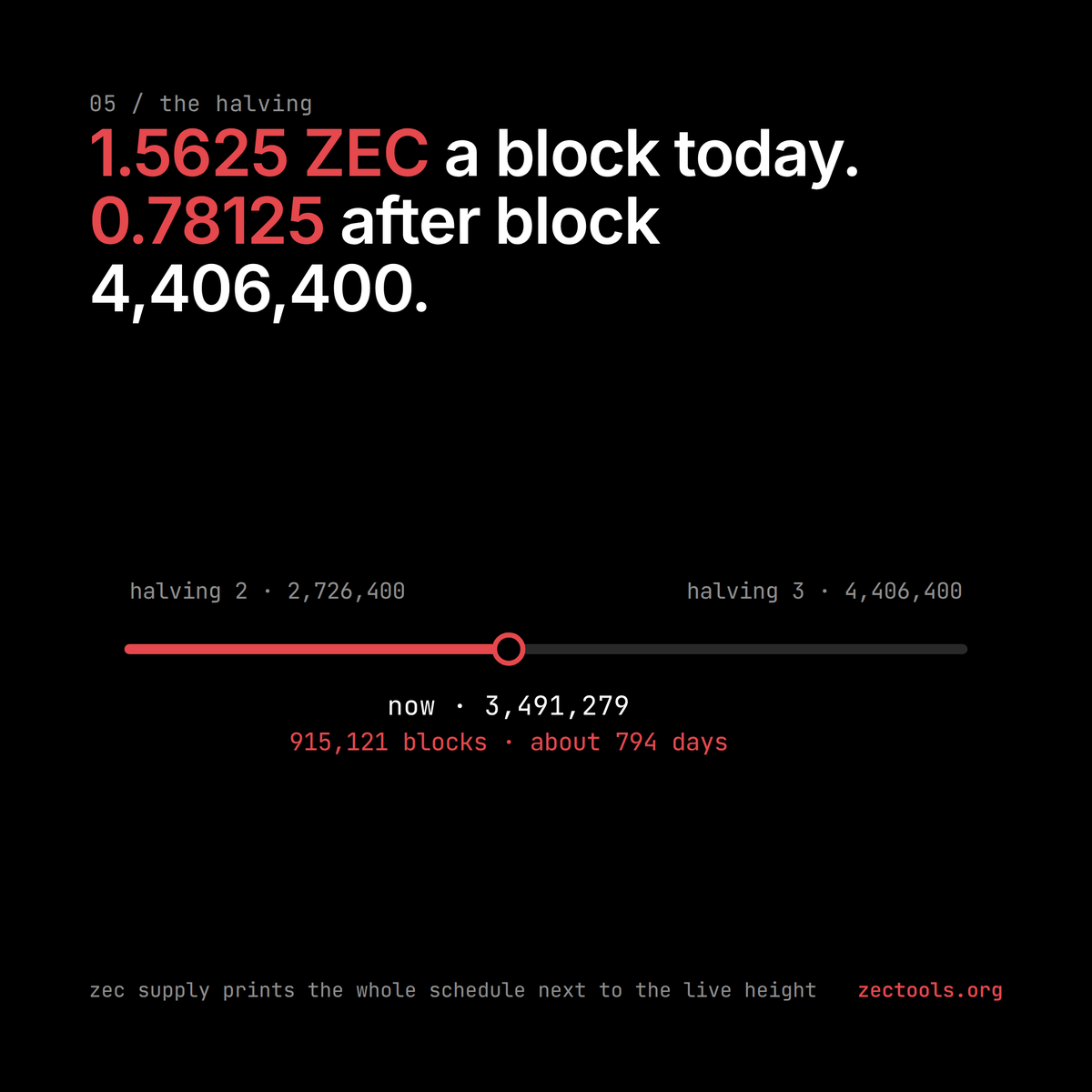
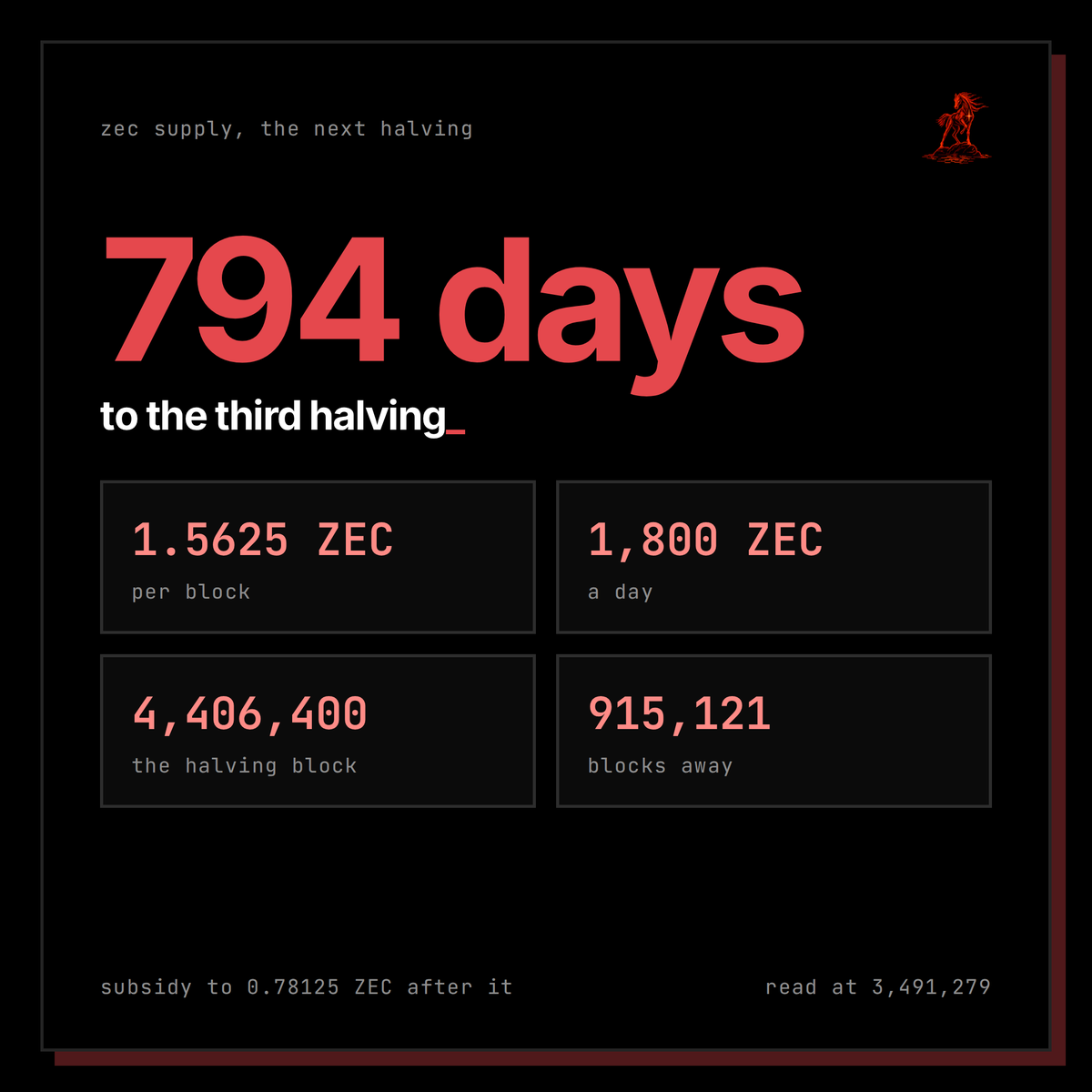
A Zcash block pays 1.5625 ZEC today.
At block 4,406,400 it halves to 0.78125. That is 915,121 blocks from here, about 794 days at 75 seconds a block. zec supply prints the whole schedule, past and future, next to the live height.
https://t.co/R0fm6NCaKl
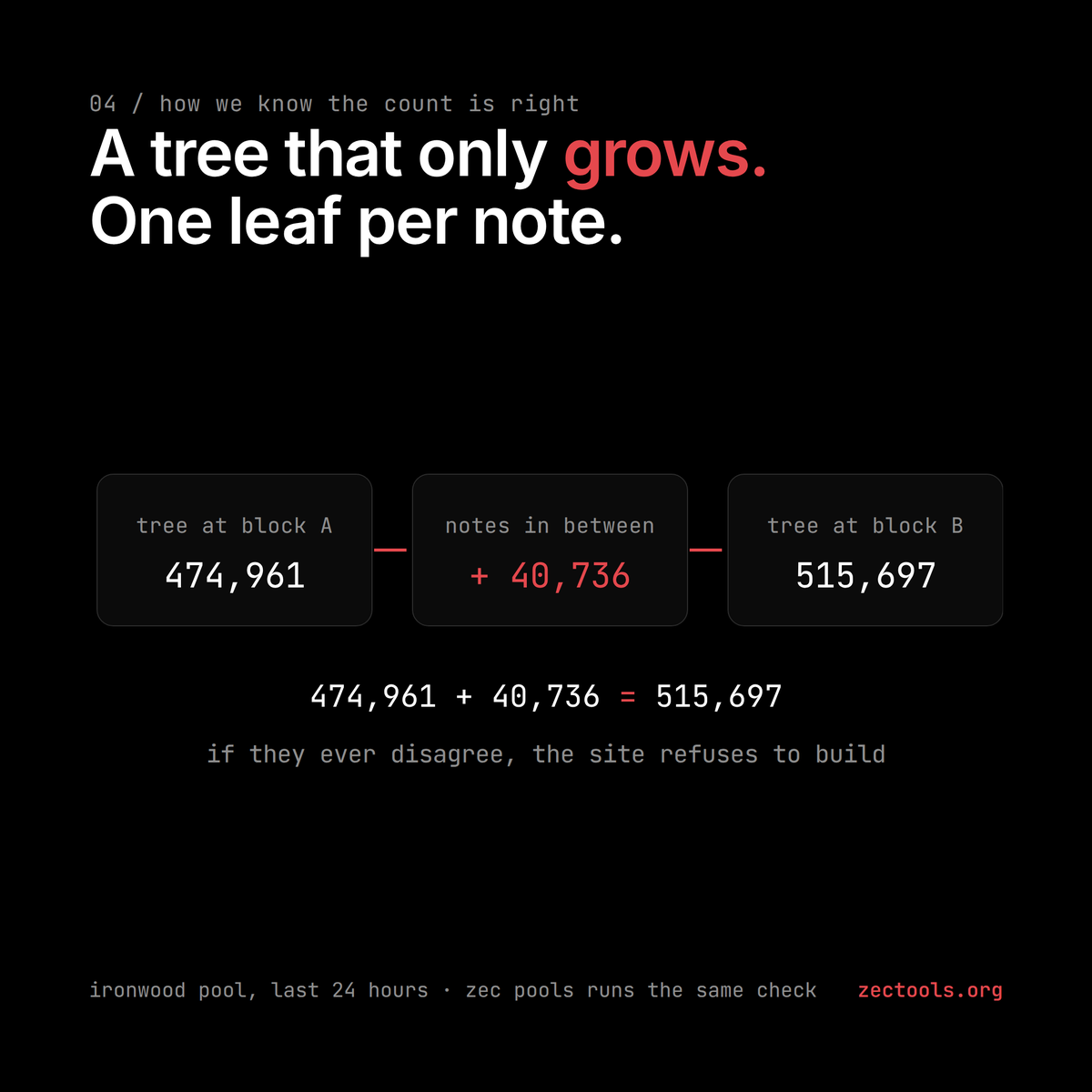
How we know the counts are right.
Each pool keeps a tree that only grows, one leaf per note. Read the tree at two blocks, count the notes in the blocks between, and the numbers have to match. Yesterday in Ironwood: 474,961 plus 40,736 equals 515,697.
If they ever disagree, the site refuses to build.
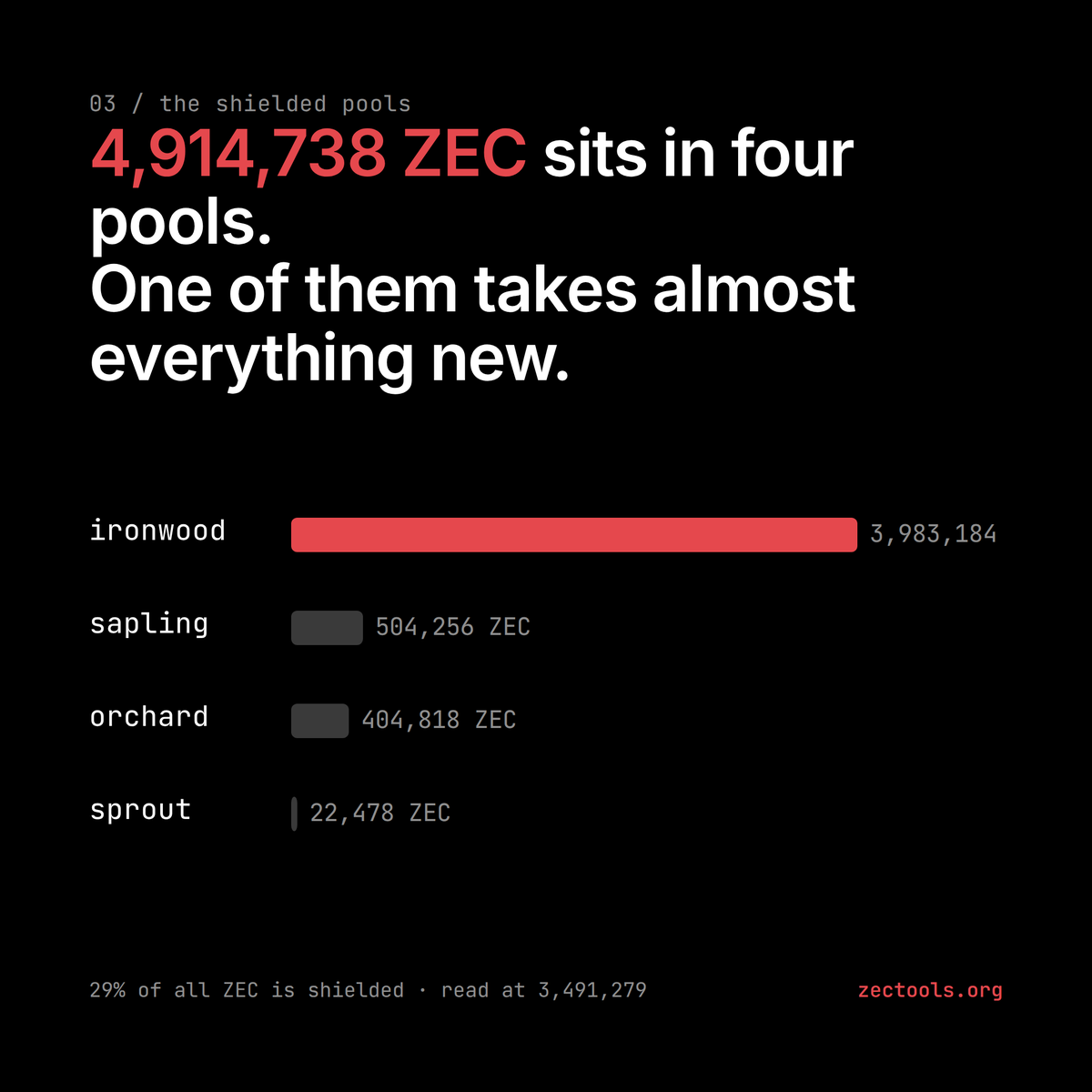
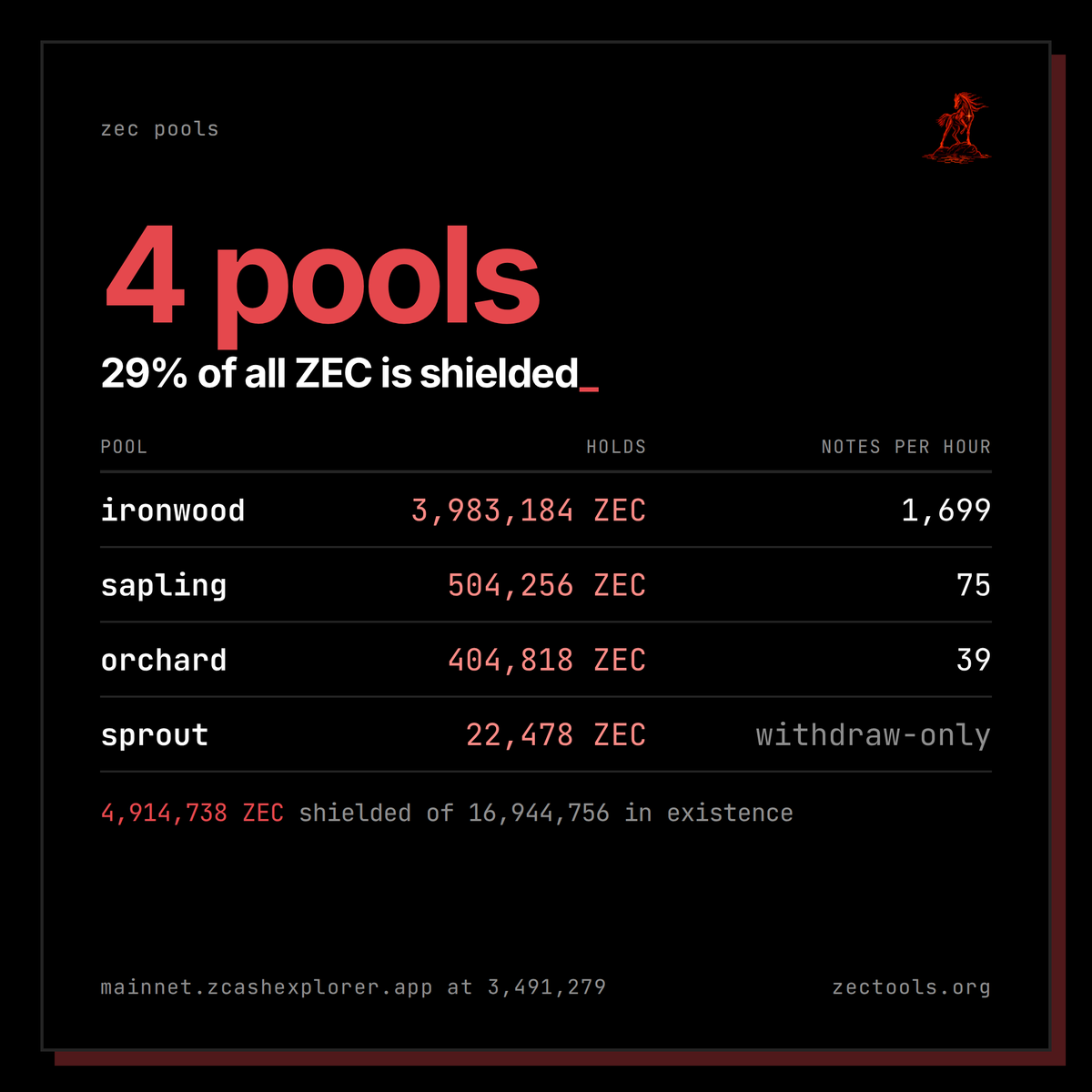
Zcash has four shielded pools, and one of them takes almost everything new.
Ironwood, opened in July, holds 3.98 million ZEC. Sapling and Orchard hold about half a million each. Sprout, the original from 2016, holds 22 thousand and only lets coins out.
Put together, 29 percent of all ZEC sits shielded.
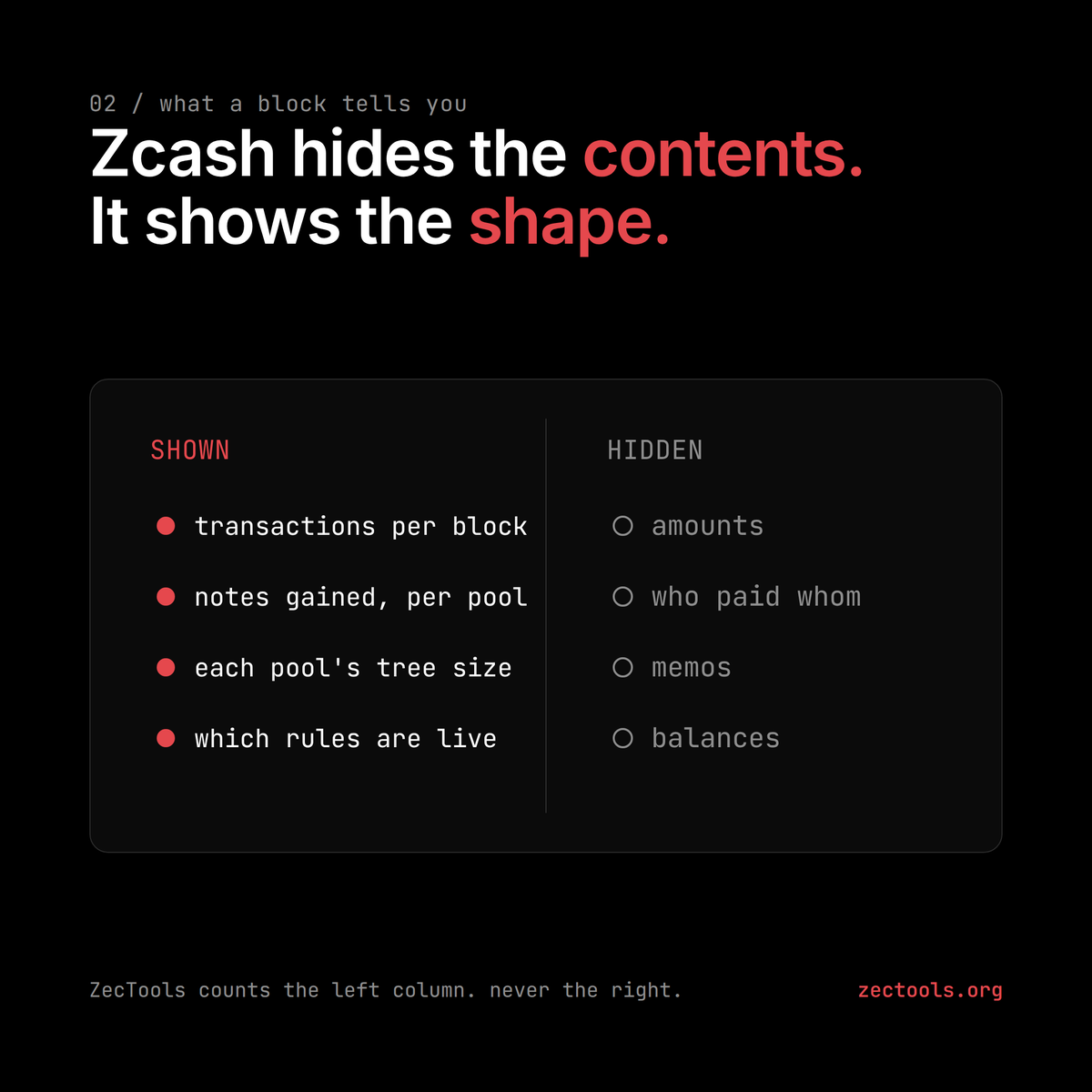
Zcash hides what is inside a transaction: the amounts, who paid whom, the memo. It does not hide that the transaction happened. Every block still says how many there were and how many notes each pool gained.
ZecTools counts that part, and only that part.
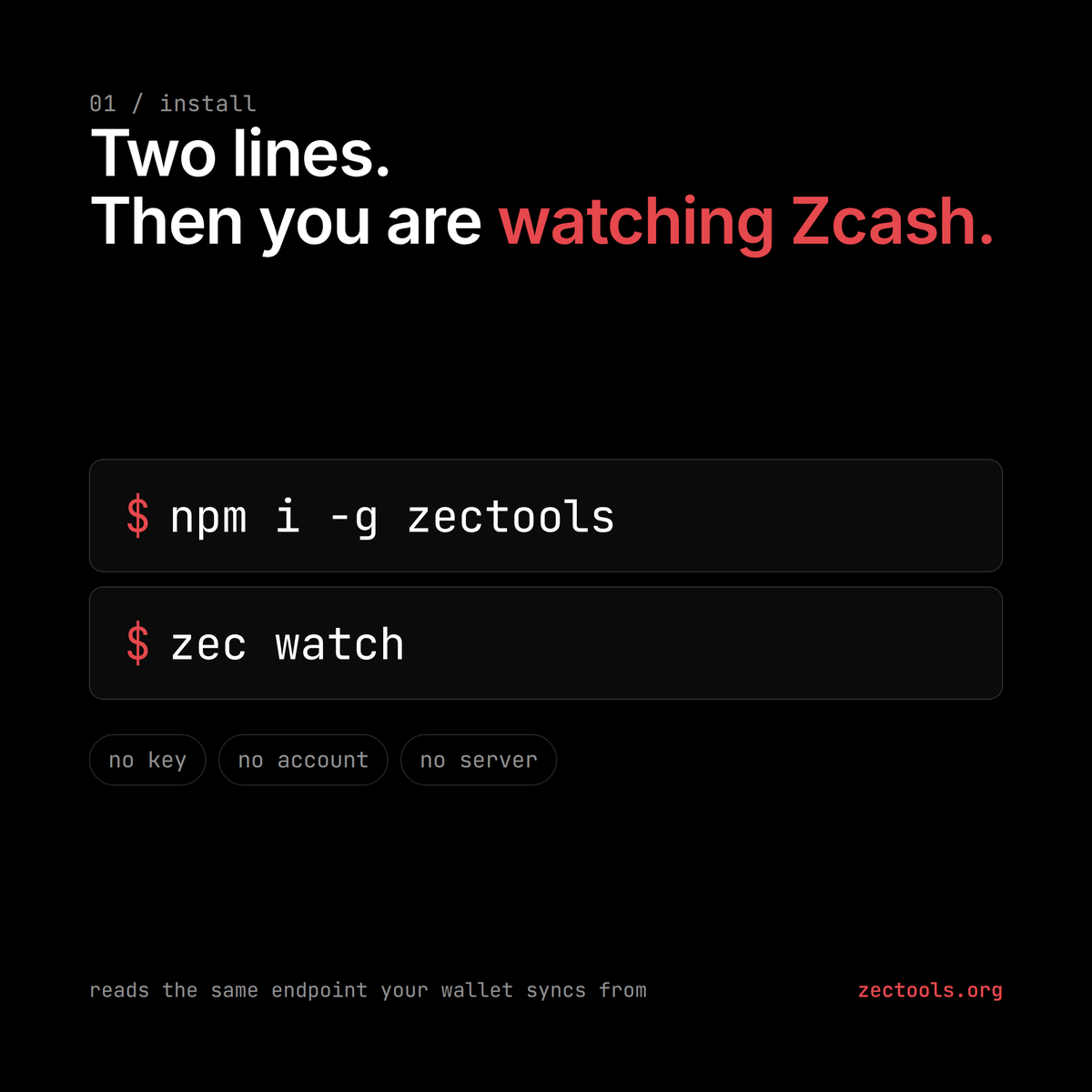
Two lines and you are watching Zcash.
npm i -g zectools, then zec watch.
It prints one line per block: how many transactions, how many touched a shielded pool, how many notes each pool gained, and the seconds since the last block. No key, no account, nothing to sign up for.
Everything the site publishes is one file, and the API serves the same file. /api/summary for the landing figures, /api/blocks for the last 48 blocks, /api/pools for the trees and balances, /api/upgrades for the rules. No key, no rate limit, CORS open.
The network reports its consensus branch on every read: 37a5165b today, which is NU6.3, the Ironwood rules.
zec upgrades prints every upgrade since Sprout with its height and branch next to the live answer. If the network ever moves to a branch the build has no name for, every command says so rather than guessing.
The same commands with nothing installed.
Type info, block, mempool or check into the console and the server runs the read against the same lightwalletd, live.
Holding $ZECTOOLS is what opens it, and that is the token's only job.
The halving is arithmetic, so the CLI does the arithmetic. 1.5625 ZEC a block, 1,800 ZEC a day, halving at block 4,406,400, 915,121 blocks away at the height this was written, about 794 days. zec supply prints the schedule through the fifth halving next to the live height.
Four pools, one chain.
Sprout, withdraw only, 22,478 ZEC.
Sapling, 504,256.
Orchard, spend only since July, 404,818 and falling. Ironwood, opened 28 July at block 3,428,143, 3,983,184 ZEC and 1,699 new notes an hour.
The counts come from the chain's own trees; the balances from a public full node the site names on the page.
A shielded balance stays shielded. zec check on a zs1 or u1 address tells you the kind of address, why there is nothing to read without the viewing key, and stops.
The tool is built around the one thing it cannot do, because on Zcash that is the point.
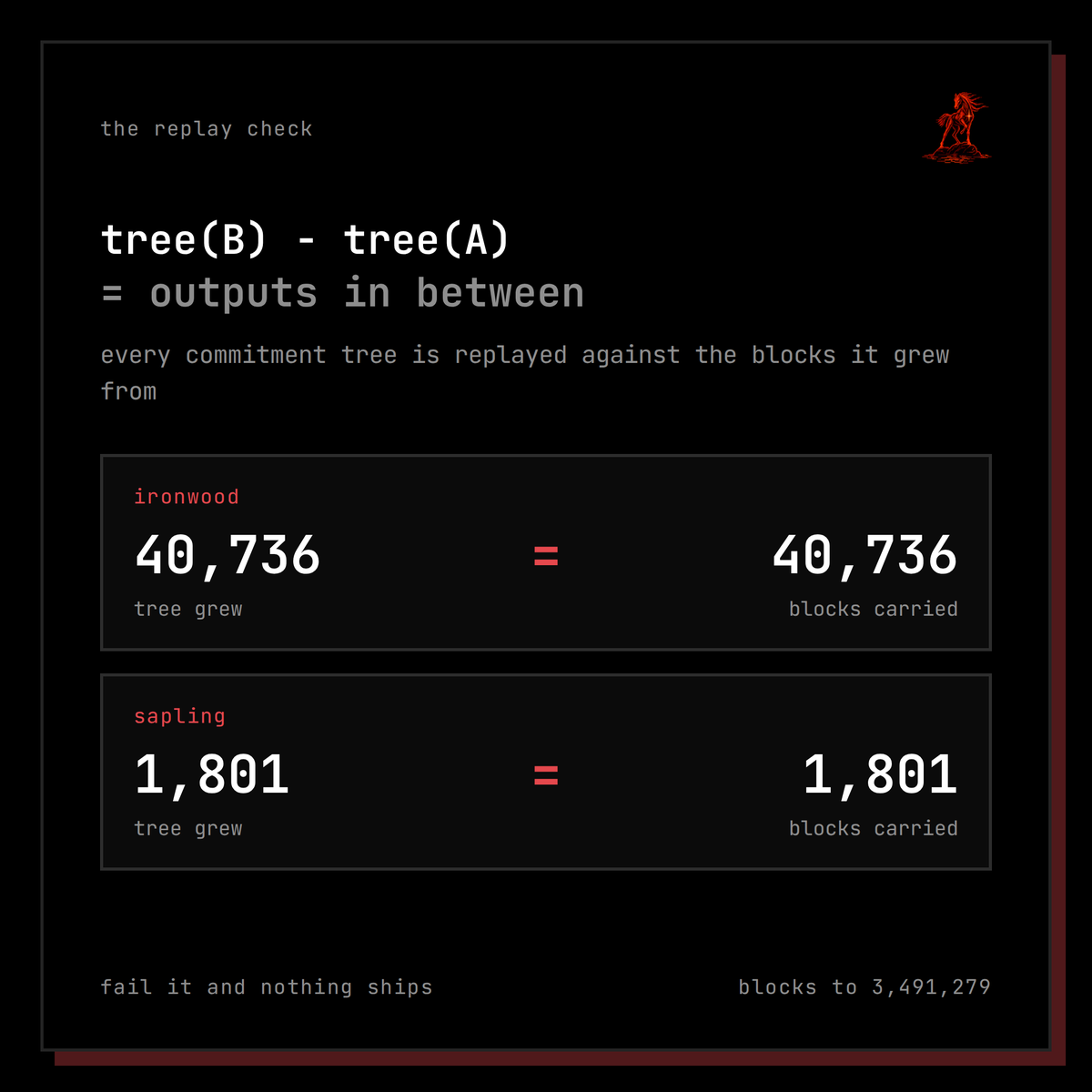
One equation gates every deploy of https://t.co/XdLBglTJSA: the note commitment tree at the end of the window minus the tree at the start has to equal the shielded outputs the blocks in between carried.
Today that is 40,736 against 40,736 for Ironwood and 1,801 against 1,801 for Sapling.
Fail it and nothing ships.
Watch the honest answer.
A t1 address gets 313,848.31 ZEC and 52 unspent outputs, read at the current height. A u1 address gets: unified, shielded, nothing to read without the viewing key. Both took one command and neither needed a key.
Quick look at the pools.
Three rows, one per pool: how many notes it has ever received, how many in the last window, how much ZEC a full node says it holds, and whether the tree grew by exactly what the blocks carried.
All three rows read "replays". zec pools.
Here is a day of Zcash going past.
One line per block: transactions, how many touched a pool, notes per pool, and the spacing since the previous block. Blocks are landing a median 53 seconds apart this week against a 75 second target. zec watch, with a desktop alert on any block carrying 200 or more shielded notes.