Part 3 of my RWA infrastructure series:
Variable gas fees are incompatible with institutional finance.
Budget cycles require predictable costs. Compliance requires audit trails with fixed numbers. Client reporting can't show fluctuating transaction fees.
This is why the reverse gas model matters for RWA infrastructure.
When developers pay for computation upfront and users transact for free, you get:
Predictable operational costs for issuers
Zero friction for end-user distribution
No wallet or gas onboarding for clients
Most chains treat low fees as a feature. For RWA infrastructure, zero fees for end users isn't a nice-to-have. It's a requirement.
The difference between a crypto product and financial infrastructure is who bears the cost of using it.
Read my full take on sovereign infrastructure for RWAs: https://t.co/EXJTIRQ8uS
OFFICIAL ANNOUNCEMENT:🗣️
Today I had an hour-long discussion with Dennis Platzl, CEO of the Swiss Subnet🇨🇭. We talked about their clients, as well as future plans and upcoming projects.
Starting today, I’ll be sharing a short mini-series with my viewers focused on the Swiss Subnet and the mass adoption of $ICP. Based on what we discussed, I’m expecting a significant increase in usage.
I got much more clarity on the timeline and what’s coming next, which I am going to share with you soon.
Stay tuned.
$ICP = World Computer ♾
2026 will be the best year since Genesis for $ICP. All the efforts of the DFINITY Foundation (years of hard work) will materialize in the next 6-12 months
= Onboarding Institutions
= Onboarding Governments
= Significantly cut Inflation
= A lot more usage
= Decentralized cloud solutions ready to deploy outside Web 3
= AI
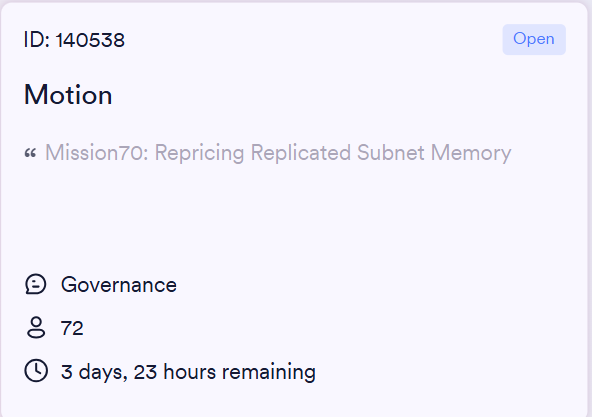
M70 marks a historical moment for the $ICP Blockchain:
https://t.co/m1Xex6Eexr
Modifying tokenomics is never the ideal scenario. It’s a last resort.
For the sake of sustainability, we need better tokenomics and more time to achieve a meaningful increase in usage and adoption.
As mentioned multiple times, 2026 will dictate the direction of the project.
Cutting costs is essential, but increasing adoption and real usage is even more important.
YTD, SOL covered only 1% of its expenses, while ETH covered just 1.8%.
What about $ICP, NEAR, and FIL?
In this video, I’ll focus on the money metrics of major blockchains.
https://t.co/LSdMje8ER4
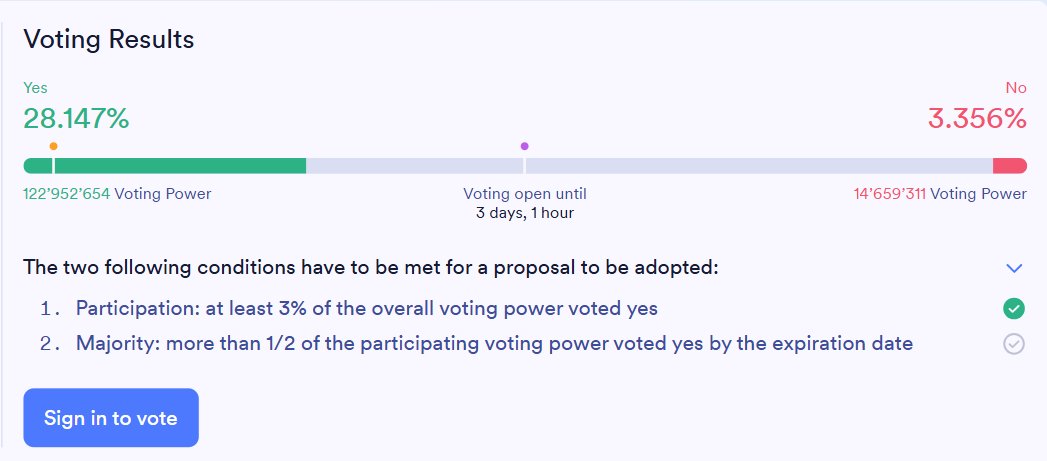
Interesting. Seems like M70 will be split in multiple proposals.
I am looking forward to the X space for more details.
We need a detailed plan. This will be the most important proposal(s) since Genesis for $ICP.
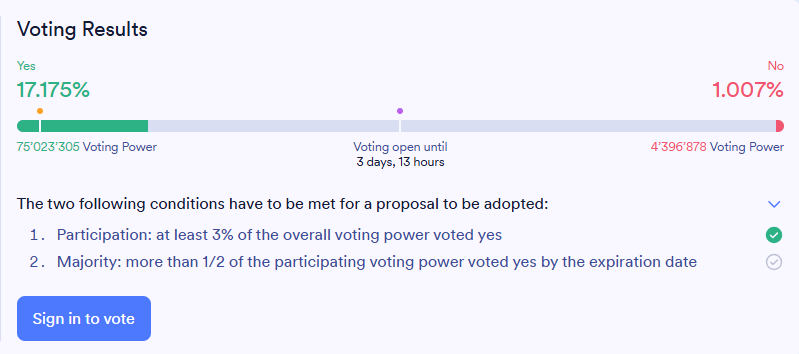
Part 1 of M70 will solely affect the cost of replicated subnet memory on $ICP (proposed increase by 2.5X)
Computation and network cycle pricing should be subject to further review.