Marian Croak, the genius mind behind the technology that powers the way we all communicate today — Zoom, FaceTime, WhatsApp and more — has officially been honored with her place in the National Inventors Hall of Fame. 👑📲
With over 200 patents to her name, her work has shaped the world forever. Give her flowers while she can still smell them. 🌹
@historyinmemes He kept a lifelong promise to his mother to finish his education after leaving LSU early. This specific drive eventually led him all the way to earning a legitimate doctorate.
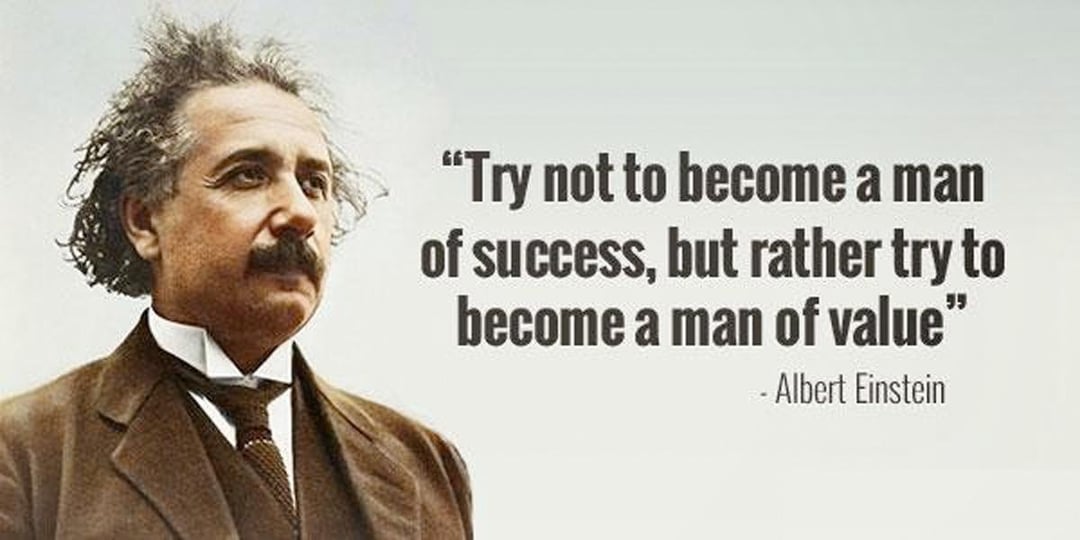
Do not show up trying to become important. That is a rookie mistake.
First become useful.
Become useful enough and people start trusting you with harder problems.
Solve enough hard problems and leverage appears.
Importance is downstream of usefulness.
Biden: The reflecting pool reflects something even worse than the narcissism and incompetence at the core of this administration. It’s the corruption. The corruption. The brazen, blatant corruption. Corruption on a scale never seen before in American history in any administration.
Trump has made billions of dollars since returning to the White House. Simply stunning to me.
He has no shame. Frankly, it’s embarrassing for the country. Trump couldn’t care less.
Making money off the presidency is one of the reasons he wants to be president
Most extraordinary people I meet have an incredibly high tolerance for boring repetitive tasks. They are able to spend hours doing things normal people lose interest in within minutes.
We've seen many examples; a researcher who read the same paper 80 times trying to find a flaw, or a scientist who spent 17hrs repeating the same experiment hundreds of times before it worked, and a pianist who needed 20,000 playthroughs to perfect a certain Chopin piece.
We are falsely told by society to become well rounded and practise lots of different things, but great minds do the complete opposite; the 1st iteration is just an introduction, it's the 1000th iteration before you fully understand how something actually works, and virtually no one is willing to stay long enough to reach that point.
At 30, Taikichiro Mori was an economics professor in Japan. He didn't start his real estate business until he was 51. At 87, Forbes named him the richest person alive.
Mori had been an academic his entire adult life, teaching commerce and trade at Japanese universities from 1932 onward and eventually running the business school at Yokohama City University. His father, a rice merchant, had quietly picked up a handful of small buildings in Tokyo over the years. When Mori was 51, he started managing that property on the side.
At 55, after his father died and left him the buildings, he quit teaching and moved into real estate full time. The year was 1959, right as Japan kicked off one of the fastest economic booms any country has ever run.
He focused on Toranomon, a stretch of central Tokyo packed with narrow lanes and old wooden houses, a neighborhood that had been flattened by an earthquake in 1923 and again by wartime bombing. The work was slow. For one project he spent seventeen years convincing roughly 500 residents to agree, sometimes giving them new apartments at his own expense. He numbered his buildings as he went. Mori Building One, Mori Building Two, and on down the line.
By 1991, Japan's land boom had pushed Tokyo real estate to sky-high prices, and Mori sat right on top of it. Forbes ranked him the richest person in the world that year, worth about 15 billion dollars, more than 30 billion in today's money. He held the title again in 1992, worth roughly double Bill Gates that year, even as the land bubble began to deflate and his net worth fell two billion dollars in a single year.
The company is still going. Mori Building brings in around 386 billion yen a year, close to 2.5 billion dollars, and it built Roppongi Hills, which draws 40 million visitors annually. In 2023 it finished Azabudai Hills, anchored by a 330 meter tower that is now the tallest building in Japan. Mori had started negotiating for that land back in 1989. The tower opened thirty years after he died.
The career he is remembered for did not begin until he was past 50. At 30, he was grading papers.
Terence Tao showed up to the International Mathematical Olympiad, the world championship math contest for high schoolers, when he was 10. Forty years and thousands of brilliant young mathematicians later, nobody younger has ever competed in it.
He took bronze that year, silver at 11, and gold by 13, and he is still the youngest person to win gold in the contest's history. He finished a bachelor's and a master's degree at 16, earned a PhD from Princeton at 21, and at 24 became the youngest full professor in UCLA's history.
At 31 he won the Fields Medal, the top prize in mathematics, given once every four years to a few people under 40. The same year, he won a MacArthur 'genius grant.' In 2014 he was one of five people to share the first Breakthrough Prize in Mathematics, worth three million dollars each. He argued, without success, that the money should be split among more researchers instead.
His most famous result came in 2004 with the British mathematician Ben Green. They proved that hidden inside the prime numbers, the numbers every other whole number is built from, you can find evenly spaced runs of numbers as long as you like.
He is 50 now and working at the edge of something new. A challenge he set in early 2024, getting software to check every line of a hard proof, had stalled after more than 18 months of expert effort. An AI system finished it in three weeks. He runs these tools himself, writes about where they fail, and has started rewriting one of his own textbooks so a computer can check every step.
The most awarded mathematician of his generation keeps describing the same plain method. Look at the problem, play with it, work out a strategy. At 50 he is running that method on a fresh set of tools, still reaching for the next ledge.
"One reason why mathematics enjoys special esteem, above all other sciences, is that its laws are absolutely certain and indisputable, while those of other sciences are to some extent debatable and in constant danger of being overthrown by newly discovered facts."
— Albert Einstein
Introducing a limited preview of GPT-5.6 Sol, our next generation frontier model, as well as GPT-5.6 Terra, a balanced model for efficient, everyday work, and GPT-5.6 Luna, a fast and affordable model for high-volume work.
https://t.co/OoM83SyISN
Pete Hegseth fired a Navy Vice Admiral to make her disappear, and yesterday the voters of South Carolina handed her a path to a seat in Congress. Her name is Nancy Lacore.
People who do exceptional work are often anti-charismatic; they can’t talk to strangers, don’t understand social cues and usually prefer to be alone.
Across 5000+ meetings, we interviewed a CEO who hid in a stairwell for an hour at his own launch party because the chit-chat was unbearable, and a scientist who ate lunch in his car for years rather than in the cafeteria. There was also a senior researcher who took 6 flights of stairs rather than the elevator to avoid conversations with colleagues.
This group spent most of their lives being told to be more friendly or social and more present, but a person that finds small talk difficult usually has a mind that is focused on bigger problems to solve. Society tries so hard to teach brilliant people to be normal that it risks losing the quirks that made them brilliant in the first place.