DeFi doesn’t have a liquidity problem. It has a navigation problem.
Every swap becomes a little investigation of which pool? which route? which chain? and where did your transaction actually go?
That’s the problem @BanditOnchain is looking to solve.
I broke it down in the video below. But there’s more to this than finding a better swap route.
Let’s get into what Bandit is building and why it matters. 👇
A tokenized gold product is one thing. Building an entire financial ecosystem around it is a different challenge.
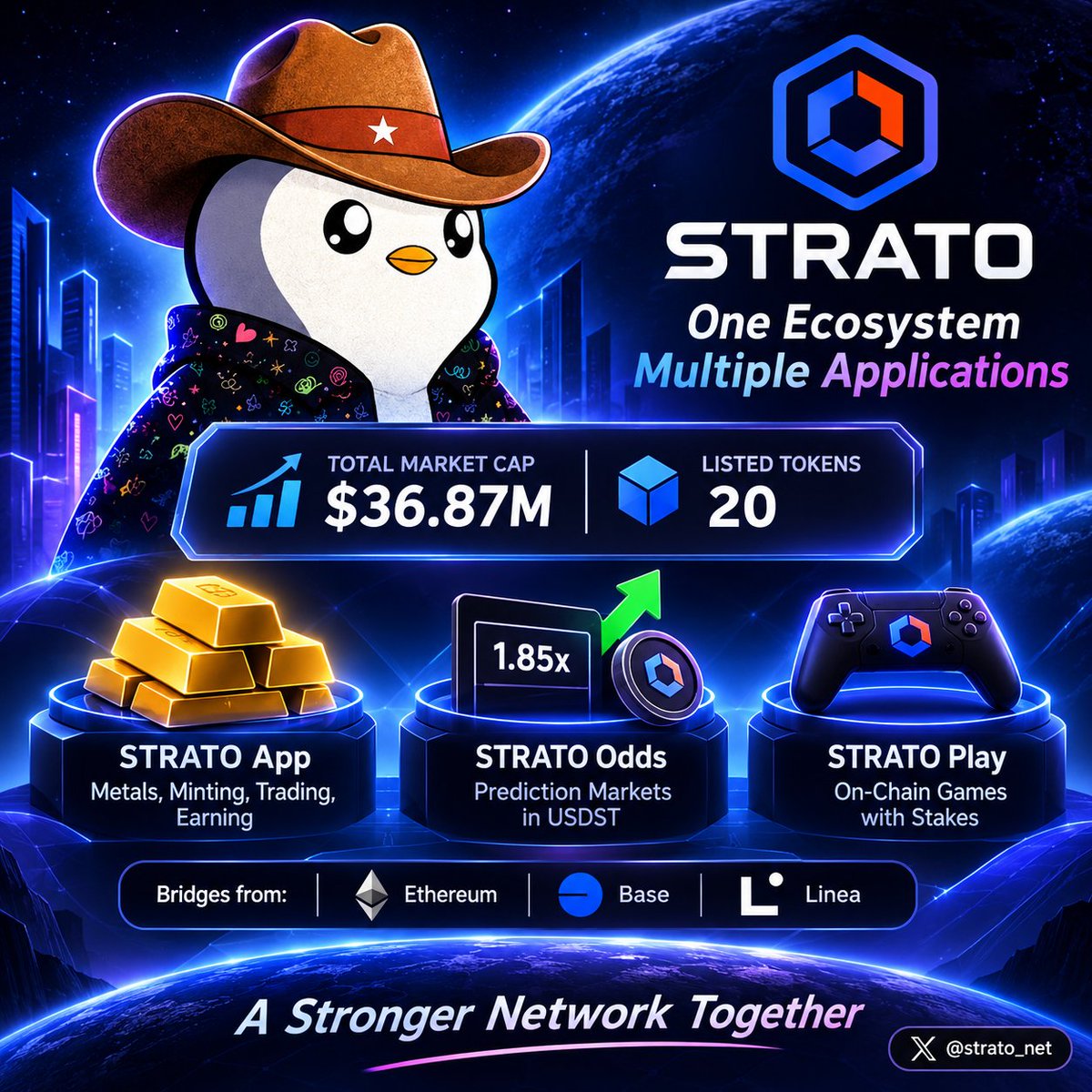
That's the direction @strato_net is taking.
The STRATO App brings together tokenized metals, USDST minting, trading and savings. But the ecosystem doesn't stop at financial products.
STRATO Odds runs prediction markets settled in USDST, while STRATO Play brings on-chain games with stakes held in smart contracts.
There's another piece worth noticing: assets can move into STRATO through bridges from Ethereum, Base and Linea.
What connects all of this is the same underlying network and financial infrastructure.
I find that more interesting than simply counting how many applications a chain has.
If people actually use these products, activity across them could create more reasons to use the same network.
There's still a lot to prove when it comes to adoption and network effects.
And one detail worth keeping clear: staking is active on testnet, while mainnet validator activation is planned for a later stage.
But the applications already give STRATO something concrete to build on.
𝗛𝗼𝘄 𝗺𝗮𝗻𝘆 𝗶𝗻𝘁𝗲𝗿𝗲𝘀𝘁𝗶𝗻𝗴 𝘁𝗵𝗶𝗻𝗴𝘀 𝗵𝗮𝘃𝗲 𝘄𝗲 𝘀𝗲𝗲𝗻 𝗼𝗻 𝘁𝗵𝗲 𝘀𝘁𝗿𝗲𝗲𝘁𝘀 𝗯𝘂𝘁 𝗻𝗲𝘃𝗲𝗿 𝘁𝗵𝗼𝘂𝗴𝗵𝘁 𝘁𝗼 𝗰𝗮𝗽𝘁𝘂𝗿𝗲?
That's what makes @onlystreetsfun interesting.
Instead of recycling old memes, it gives real-life moments a chance to become the next internet sensation.
Capture it, name it, launch it.
A fresh approach to memecoin culture on Solana.
Fast passes alone do not win games. The real difference comes from how well the team connects.
The same applies to onchain finance. USDC has already become an important part of Web3, and @circle is taking that further with @arc
What makes Arc interesting is not just fast transactions, but its focus on stablecoin finance, seamless connections, and reliable infrastructure.
The bigger question is whether Arc can turn these building blocks into real everyday utility.
That is what I would be watching.
GM Founders/Devs
Building in silence stalls a lot of good Web3 ideas. Nobody can use what they've never heard of.
Visibility isn't just being noticed, it's being remembered, and that mostly comes from showing up again and again. The gap between average and exceptional is often just consistency repeated long enough.
But getting seen isn't the goal. A post can get thousands of impressions and still not bring in one real user. So what happened after people saw it? Did anyone connect a wallet, try the product, come back?
That's the point of attribution. It connects what people say to what they actually do, so you can tell which posts bring users and which only bring noise.
Keep what works, drop what doesn't.
If you want your project explained clearly, book a session with me here: https://t.co/JTvQYURdys
If mainnet launches on December 13, your Clarke node should have started running by November 13.
That is not a suggestion. It is a hard deadline.
@GenLayer requires 30 days of node uptime on Clarke before mainnet. Miss that window, and all your staked points mean nothing.
Here is the path to a node seat:
• Stake your GEN (airdrop or extra) to earn 1 Staking Point daily.
• Run a node on Clarke for 30 days to build eligibility.
• Climb the leaderboard to determine your share of seats.
• At the mainnet snapshot, eligible wallets get Foundation-backed validator positions.
The Foundation backs winners with its own GEN. Validators earn fees on every transaction. That is the prize.
But here is what most people miss: You do not need to run the server yourself. A node-as-a-service partner can handle the infrastructure. The uptime requirement stays the same, but the technical barrier disappears.
So the real question is not "can I run a node?"
It is "will I start before the deadline?"
Time is the one resource you cannot stake more of.
What is your target start date for the Clarke node? Share it below so we can hold each other accountable.
One thing that is important in prediction markets is how the final outcome is determined.
To make a prediction is easy. It's trusting the settlement process that's the important bit.
@sight_hood is dealing with this via onchain market settlement.For token markets the opening and closing reference prices determine whether the outcome is UP DOWN or a refund.
I also found the refund mechanism quite interesting. If both sides are in agreement (i.e. no opposing positions) the user is entitled to a refund of the eligible amount rather than being given a misleading 'win'.
This kind of transparent rule based settlement is absolutely vital for building trust in prediction markets.
For me a good platform is not just about creating markets. It is about setting the rules very clearly before anyone even comes on board.
@sight_hood
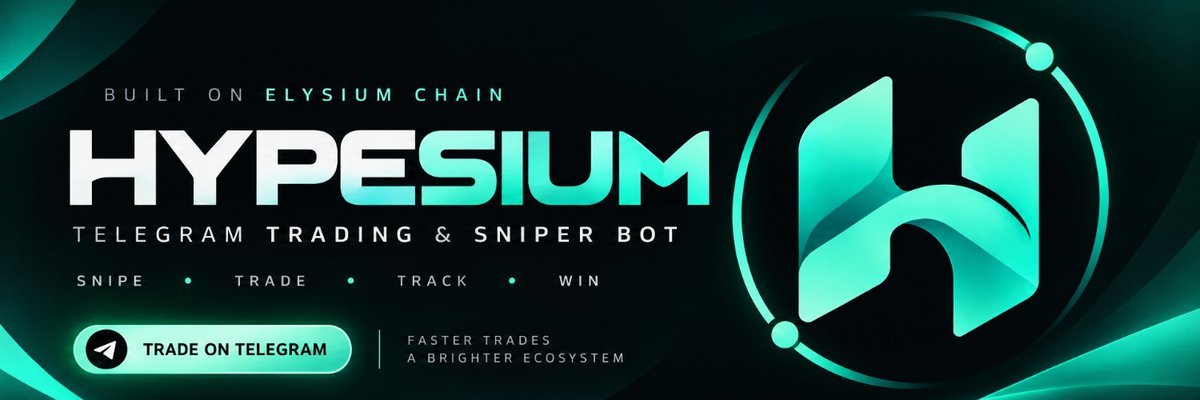
On most chains we watch the mempool and try to find hope. On Elysium a block prints every 100 ms and nothing is public, so the only window that actually matters is the one that opens the pool. @Hypesium signs the route, calldata and tip before that log even exists.
I would arm the next Montra launch with 0.35 HYPE, turbo on, and the Risky profile. Tip set to 1.8 so the sequencer puts me near the front of that first block. Anything slower is just buying the third or fourth print.
What if you could prove your money exists without showing everyone where you keep it?
That one of the reasons I've been spending time exploring @primus_labs.
At first, I joined their XP campaign to complete attestations and build my reputation score.
But the more I looked into the technology, the more interesting the project became.
Take Proof of Reserves, for example. A stablecoin issuer can publish a dashboard showing $50 million in reserves. Sounds reassuring, right?
But how do we know where that number came from? And who verified the calculation?
This is where Primus have built something worth examining.
Their verification process works roughly like this:
🔸 zkTLS verifies that financial data comes from an authentic source, such as an exchange API.
🔸 TEE protects sensitive information while it's being processed.
🔸 Brevis Pico zkVM proves that the reserve calculation was performed correctly.
The result is a cryptographically verifiable reserve figure without publicly exposing every underlying account detail.
And this technology is already being used in Proof of Reserves integrations, including Unitas.
For me that's a much more interesting application of cryptography than another theoretical privacy concept.
And here why I think completing the XP from @primus_labs tasks is worth considering. You are actually testing the same core technology used in these financial applications.
Want to try it yourself?
➜ Visit https://t.co/9HC7IMmoA5
➜ Connect your EVM wallet and install the Primus extension.
➜ Choose an attestation and verify your account activity.
➜ Pay the required small fee on Base and collect your XP after successful verification.
You can also explore the Confidential Vault and its three-day scoring cycles, although that involves putting real funds at risk.
Primus has raised $6.5M, attracted backing from VanEck, Samsung Next and YZi Labs, and contributed research published at USENIX Security 2026.
Of course, XP doesn't guarantee an airdrop, and Proof of Reserves doesn't replace a full financial audit.
But I like that there's something tangible to explore here.
I'm interested in where Primus takes this technology next, especially as verifiable financial data becomes increasingly important for DeFi.
There's a difference between receiving a token bonus and actually getting value from holding a token.
@RebateLaunch is trying to address both sides.
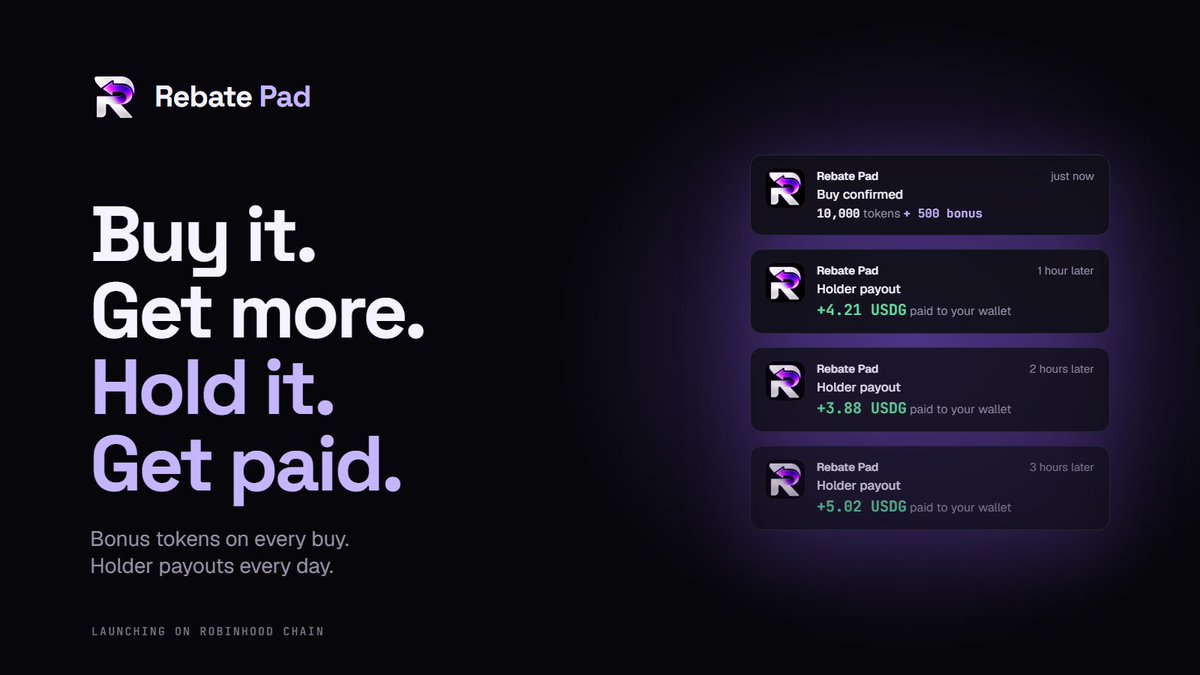
When someone buys through Rebate Pad, they receive extra tokens on top of their purchase. Holders can also receive payouts in the token's pair asset, sent directly to their wallets several times a day.
No staking, no manual claims.
The model now runs across Robinhood Chain, HyperEVM and Elysium, giving creators three networks to launch on.
One thing worth understanding is where the rewards come from: they're funded by activity on the pad, not newly minted tokens. That makes real usage an important part of the model.