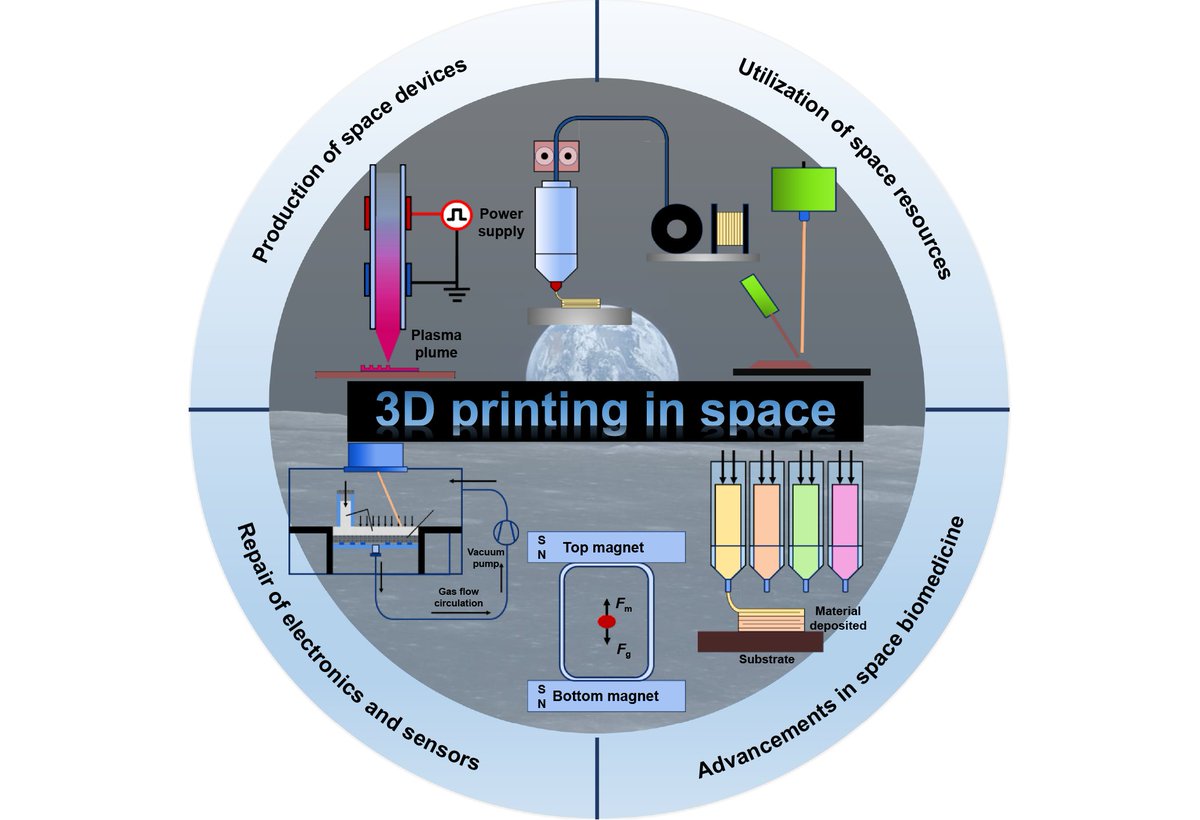
#3DPrinting in #SpaceApplication is promising. Prof. Jiankang He, Prof. Dichen Li, and Prof. Bingheng Lu from Xi'an Jiaotong University offer a comprehensive #Perspective about the future challenges and research direction.
For more👉https://t.co/SzOeh1dyAZ
#SpaceTechnology
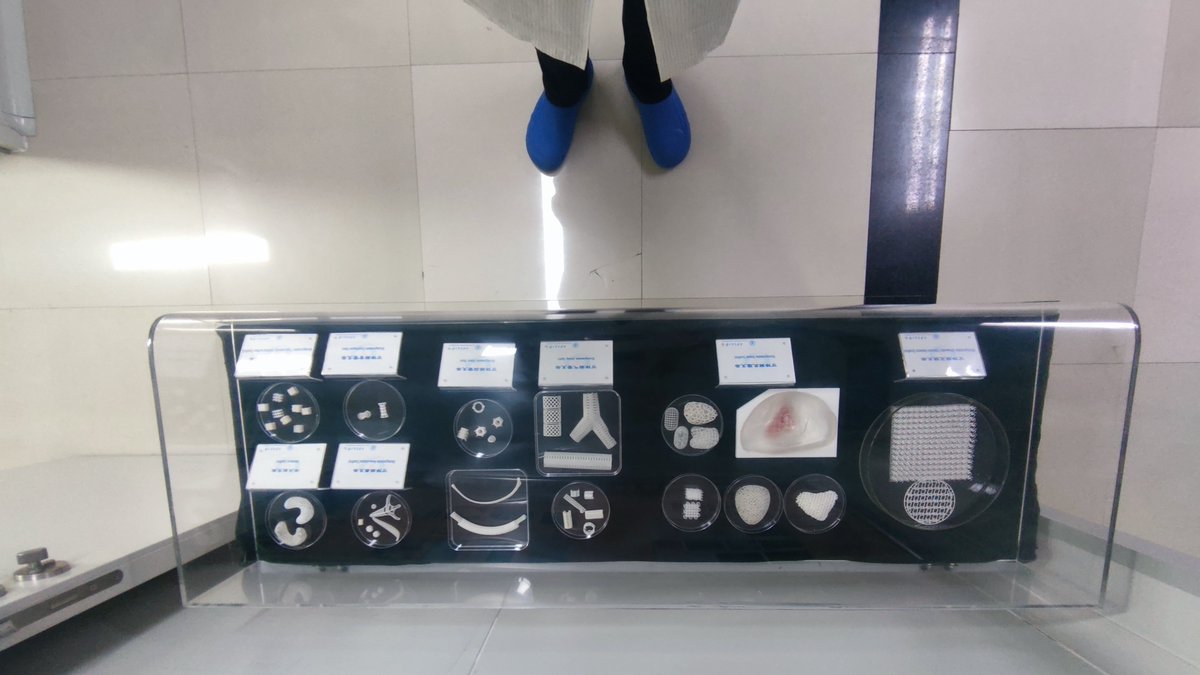
A new work entitled "Effect of in vivo implantation sites on the graft-to-bone osteointegration induced by gradient nanofibrous scaffolds" was published in Applied materials today.
https://t.co/MksPiptwyR
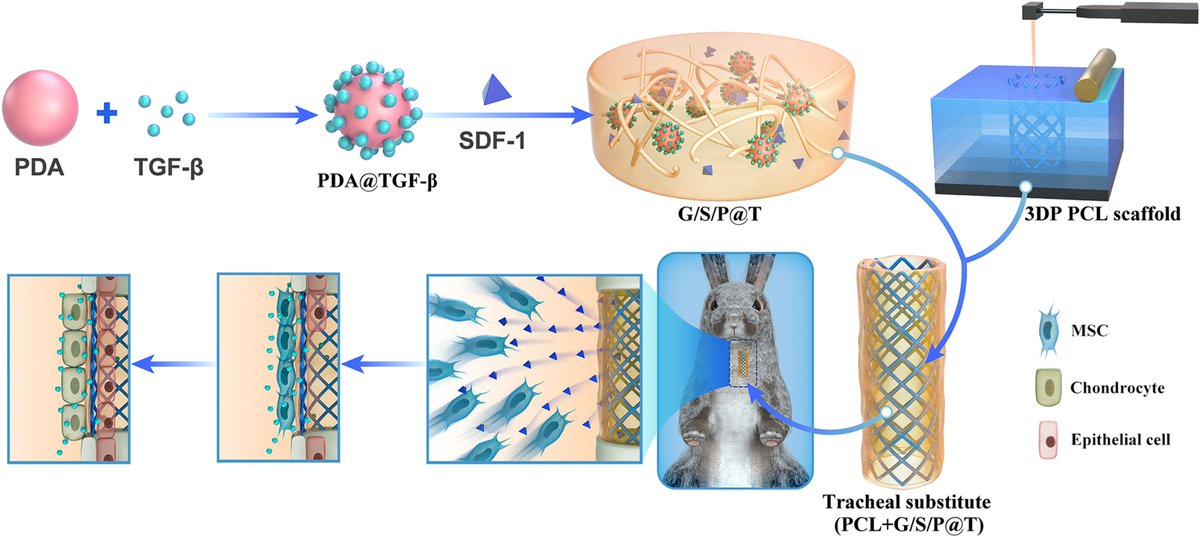
New work entitled "A cell-free tissue-engineered tracheal substitute with sequential cytokine release maintained airway opening in a rabbit tracheal full circumferential defect model" was published in Biomaterials.🥳https://t.co/iK9adVeNPn #3Dprinting
Our new work expands the applicability of embedded printing to thermoplastic biopolymers. (Published in Virtual and Physical Prototyping, IF: 10) Relevant information can be found on the provided link.
https://t.co/xGarv3NzpS
New work published in IJEM (IF: 10).
Combining 3D printed PCL framework and unidirectional freeze-cast nanofibrous architectures for forming scaffolds with hierarchical architectures for guided tissue infiltration and growth.
https://t.co/HUNRIxTpGB
Researchers from Xi’an Jiaotong University have developed a novel hybrid #manufacturing technique for the fabrication of composite scaffolds with #3D-printed #macroscale frameworks and aligned nanofibrous architectures to improve #cellular organizations.
https://t.co/gyZvXrxRhu
Recent work on electrohydrodynamic printing in an anti-gravity setup for potential in-space manufacturing under microgravity. (Additive Manufacturing 61 (2023) 103349) Very interesting! #EHD#3Dprinted#electronics
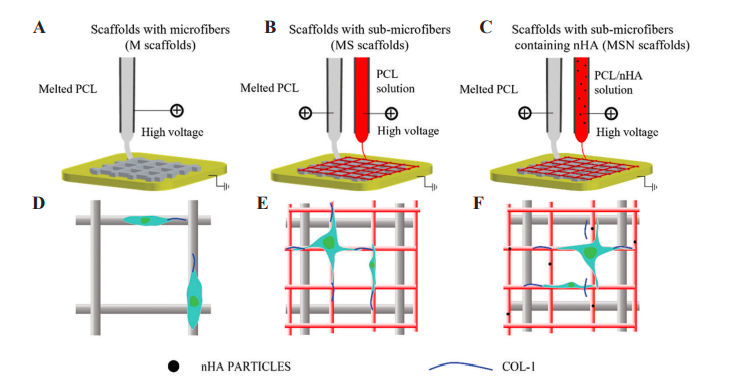
Gain new insights into the design and fabrication of #FibrousScaffolds for #BoneTissue engineering, read more“Enhanced Attachment and Collagen Type I Deposition of MC3T3-E1 Cells via #Electrohydrodynamic Printed Sub-Microscale #Fibrous Architectures” 👇
https://t.co/GLE61GhaGI
EHD printing, a technique exploiting electrical forces between a nozzle tip and a collecting surface, fails in retaining order in cm-scale scaffolds.
Neutralizing this charge can lead to highly-ordered fibrous architectures up to 1 cm high.
👉 https://t.co/pHxbPttGXp
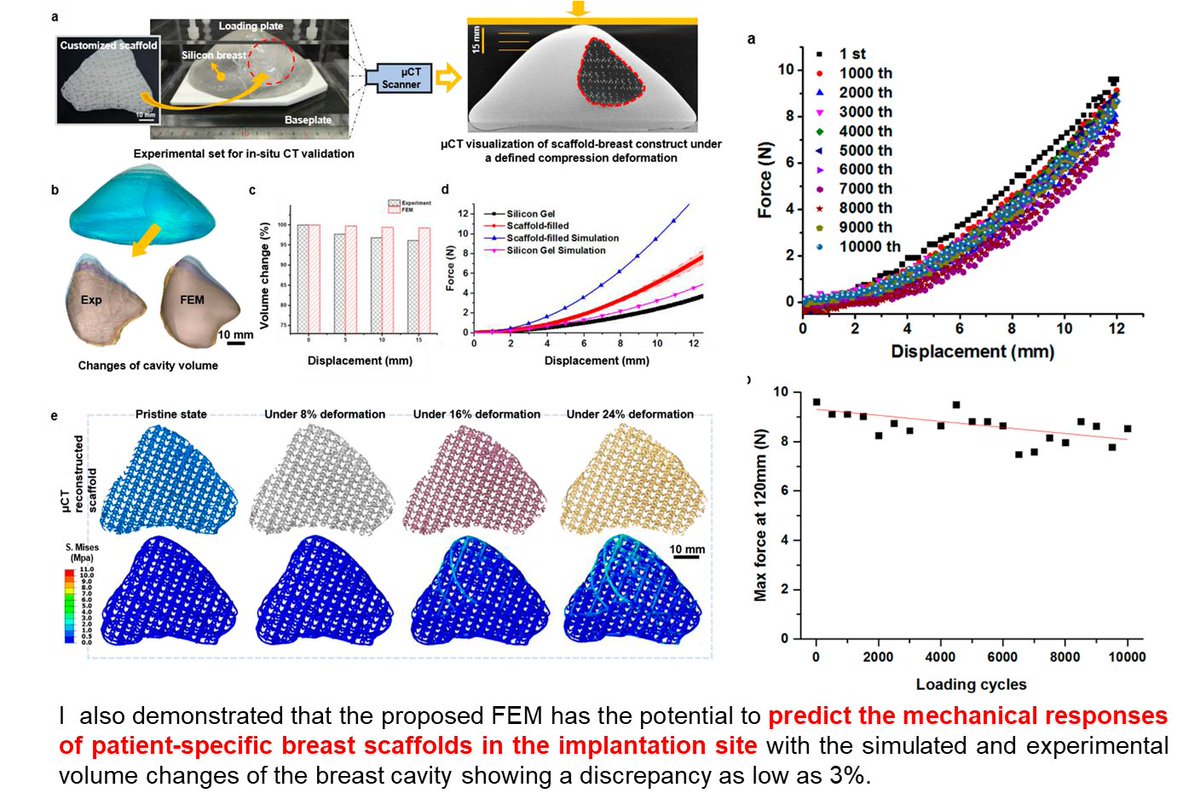
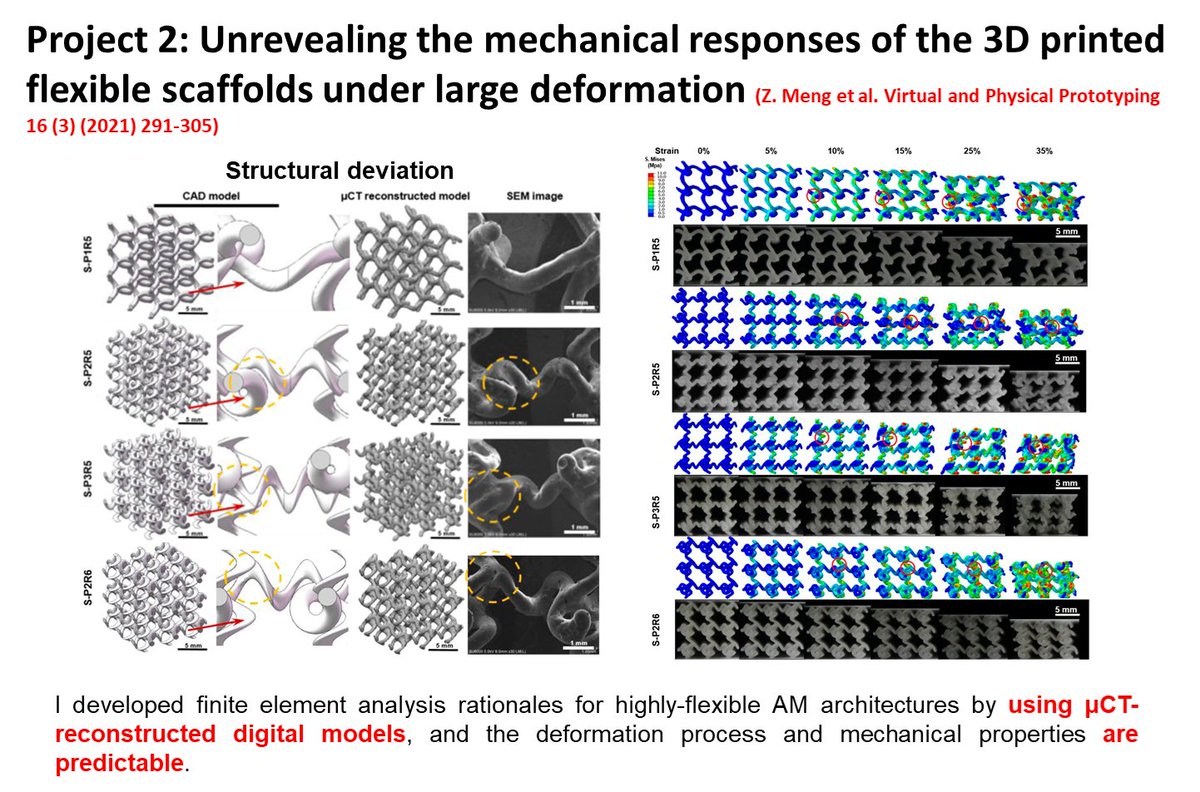
The AM-derived scaffolds have intrinsic microstructures and deviations from their designed model, which caused mechanical properties unpredictable. Here I developed a μCT-based FEM method to unrevealing the mechanical responses of the AM scaffolds. #3dprinting
@anifel20 Dear sir, I have extensive experience in 3d printing of polymeric scaffolds and electrospinning of polymeric mats. I'm completing my Ph.D. soon. Contact me.
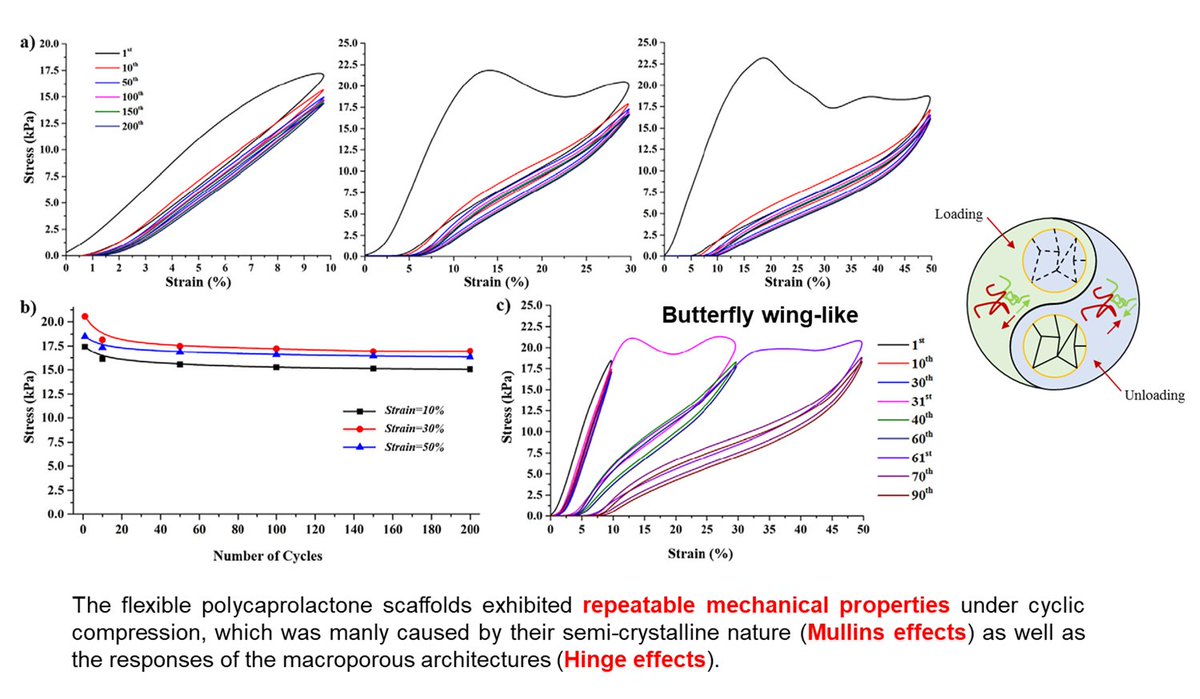
We also observed the Mullins Effect on the 3D-printed scaffolds. This interesting stress-softening effect might be useful in enhancing the adaptability of the scaffolds, as the mechanical properties can be further adjusted by pre-compression. #additivemanufacturing