I feel you on this one heavy, and you're not entirely wrong. The more money and responsibility you stack, the clearer it becomes that time is your most expensive asset.
Not everybody deserves access to it. When you start winning properly, you notice how many people approach conversations not to exchange value, but to extract something.
In 1999, Australian truck driver Bill Morgan was involved in a serious accident that left him in a coma.
Even though doctors said he had no chance of living, he miraculously woke up after 12 days and was completely fine. Feeling lucky for having survived, he went on and bought a scratch lottery ticket.
The result? He won a $17,000 car. Normally, winning a car wouldn’t have made it to the news, but because of Morgan’s accident story, Channel 9 decided to do a feature on the man who was "clinically dead and came back to win the lottery."
While filming, they asked him to buy a lottery ticket so they could reenact the winning scratch. He happily obliged and started scratching the ticket on camera. To everyone's dismay, he won a further $250,000.
The coolest photos ever taken: https://t.co/UP5OjjFjqp
🇺🇸🇻🇪 It looks like Chevron & Exxon got a bit more revenue & US GDP to add a few more points to the U.S. stock market.
This is not World War 3.
This is the world being split into regions.
What looks like chaos is actually the map being defined for a new multipolar world order, with the U.S. defining its new role as a regional power rather than a global one.
For this to work, people need to believe we are on the verge of World War 3, so U.S. corporate interests can extract maximum leverage for the financial–industrial complex (FIC).
The more the world appears to be on the brink of World War 3, the better the terms they secure from nation states, as investors shift capital flows based on perceived war risk.
The crazier the U.S. appears, the more the network can extract from U.S. debt to pump stocks and feed revenue. This asset-strips the U.S. and the West in favor of FIC-controlled entities, one merger and acquisition at a time.
All of these events signal that each sovereign country is setting its terms within the proof-of-weapons network, while the dollar is weakened year by year.
The dollar is being slowly shrunk into a regional currency over time.
Strategic ports are being divided between regional powers, U.S. private corporate interests, foreign state interests, and sovereign wealth funds.
Dollar down.
Stock markets up.
Commodities up.
Hard money is more useful in a multipolar world than in a dollar-dominated world.
Welcome to 2026.
It will be 2027 before you know it, and no World War 3 will have started.
Remember every influencer you follow who said World War 3 is coming—and question whether you want to listen to them next time.
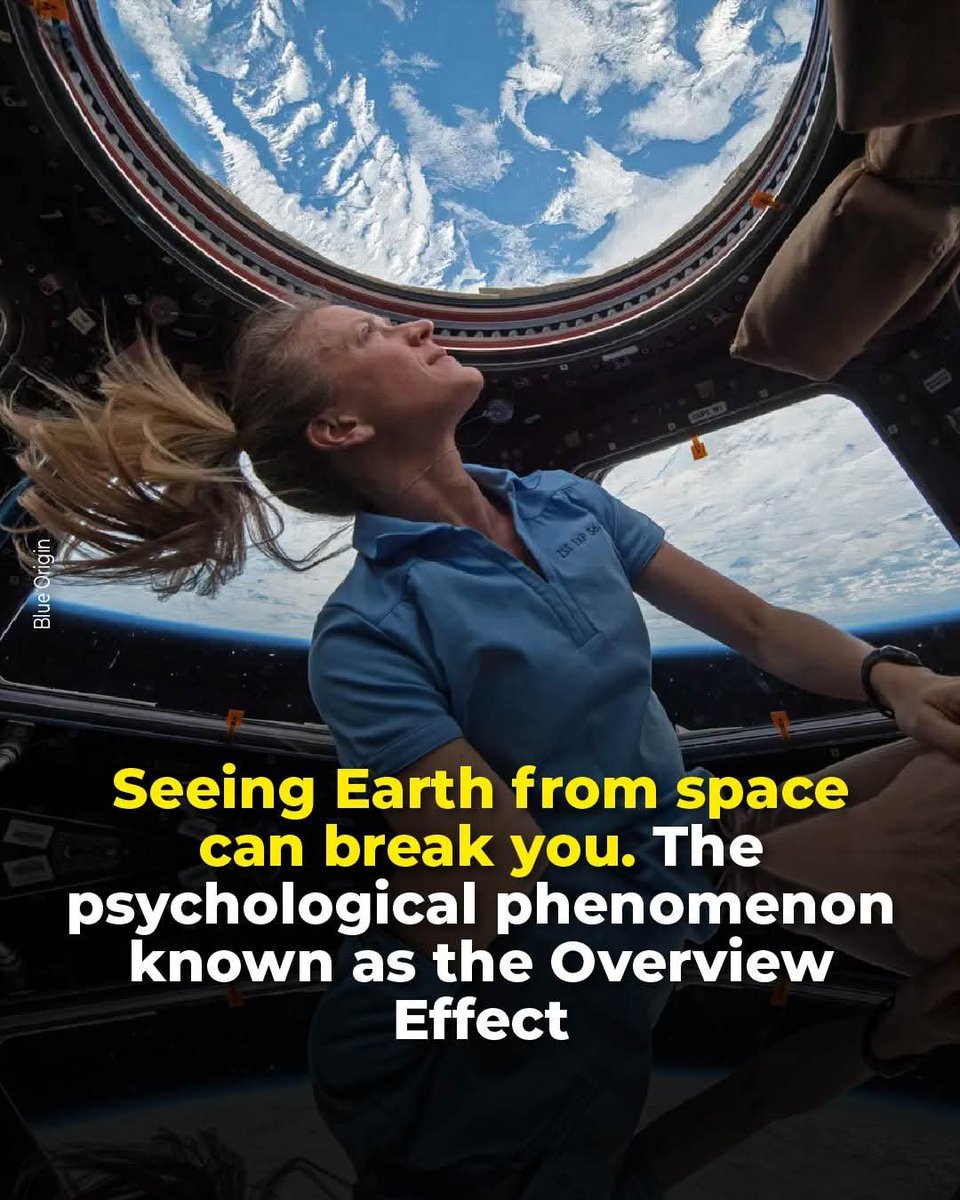
Crying when you see Earth for the first time isn’t crazy, it’s human. Psychologists call it the Overview Effect, and it’s one of the deepest emotional shifts a human being can experience.
When an astronaut looks at Earth from space, the brain is confronted with something it was never prepared for: an entire planet floating in the void, without borders, without flags, protected only by an atmosphere as thin as the skin of an apple.
Many astronauts describe it the same way:
“From here you don’t see ideologies or countries. Just a fragile crew traveling together on the same ship.”
In that moment, something breaks inside, and all problems seem insignificant against the cosmic silence.
Perhaps humanity’s greatest mistake isn’t moral or technological, but one of distance.
Maybe we don’t need more progress… maybe we need to look at our home from farther away to understand how absurd it is to destroy it from within.
People know I’m obsessed with aviation and frequently ask me whether it’s safe to fly. My advice is always this: flying commercial is the safest mode of transport. But never fly private or step foot in a helicopter for any reason except getting rescued.