ZizkaDB, a database for AI agents, and Redu Cloud, a cloud for AI agents
We at ZizkaDB are thrilled to announce our design partnership with https://t.co/TdJcht8gLI!
🚀 Series: 30 Great Minds of Artificial Intelligence
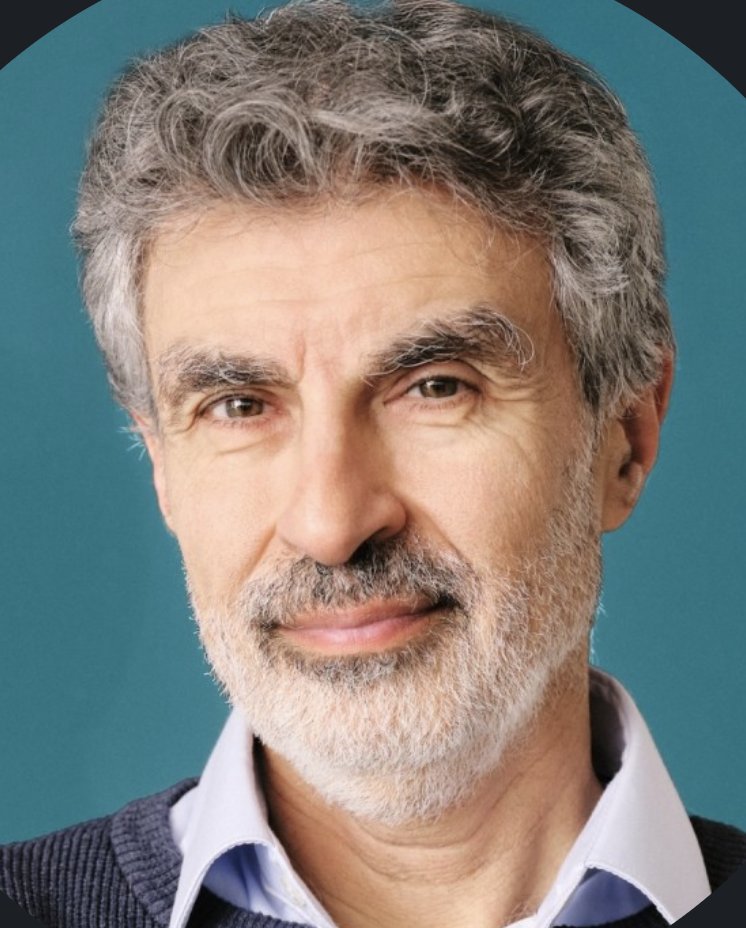
8. Yoshua Bengio – The Deep Learning Visionary & Ethics GuardianThe third “Godfather of Deep Learning” who helped turn neural networks into the powerhouse they are today.
Yoshua Bengio (born 1964), University of Montreal professor and founder of Mila (Quebec AI Institute), is a giant in modern AI.
Together with Hinton and LeCun, he won the 2018 Turing Award. His major contributions include:
Groundbreaking work on neural language models and generative AI
Advancing attention mechanisms that heavily influenced the Transformer revolution
Pushing probabilistic learning and deep architectures toward more human-like intelligence
Beyond technical breakthroughs, Bengio has become one of the strongest global voices for AI safety and responsible development.
Bengio didn’t just build better models, he helped make deep learning scalable and is fighting to make it safe.
Photo Credit :https://t.co/qYtot0iaC9
🚀Series: 30 Great Minds of Artificial Intelligence
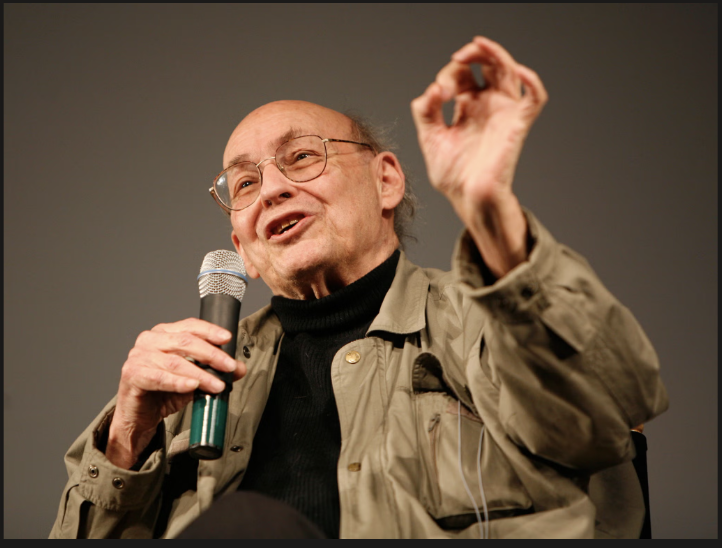
3.Marvin Minsky-The Architect Who Tried to Build a MindWhile others dreamed, Marvin Minsky (1927–2016) started building.
Co-founder of the legendary MIT AI Lab (with McCarthy), this polymath was determined to reverse-engineer human intelligence.Key breakthroughs:
Built SNARC (1951)-one of the first neural network machines
Created the theory of Frames for knowledge representation
Wrote The Society of Mind- arguing intelligence emerges from many simple agents
Pioneered robotics, computer vision & cognitive theories
He bridged neural nets, symbolism, and robotics like few others ever have.Minsky didn’t just program machines- he tried to build minds.
Day 3 done.
McCarthy, Turing, or Minsky - who’s leading for you? 👇#AI #MarvinMinsky #ArtificialIntelligence #TechHistory
Photo credit - https://t.co/Tp09Dzj6gT
🚀 Series: 30 Great Minds of Artificial Intelligence
2. Alan Turing -
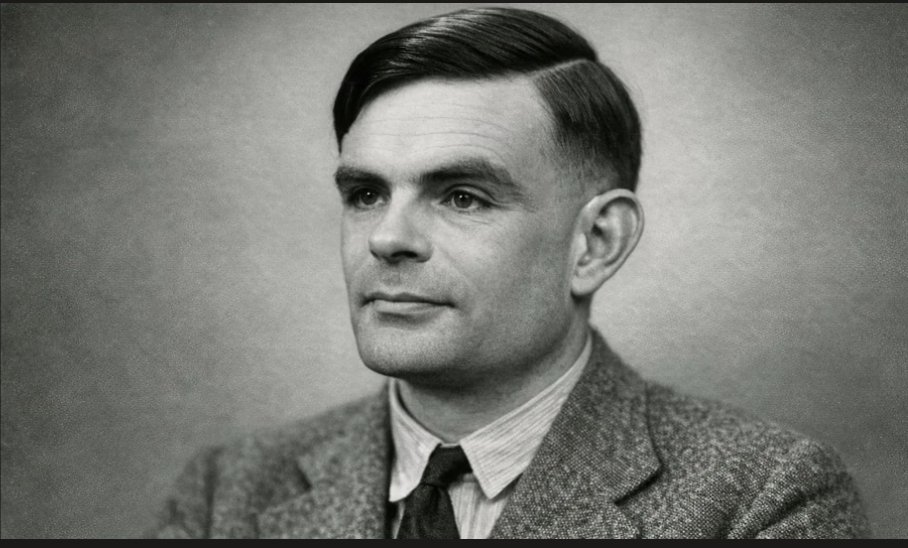
The Man Who Asked “Can Machines Think?”Before AI even had a name,
one British genius dared to ask the question that still haunts every breakthrough today.
Alan Turing (1912–1954) didn’t just theorize about intelligent machines, he proved they were possible.
A mathematician, logician, and unlikely war hero, Turing laid the entire foundation of computer science and artificial intelligence:
Invented the Turing Machine (1936), the universal model that defined what computers can and cannot do Cracked the Nazi Enigma code at Bletchley Park during WWII, saving millions of lives and pioneering modern cryptography
Tragically, he was persecuted for his homosexuality and died at just 41.
Yet his ideas remain the intellectual bedrock of everything from ChatGPT to modern AI.
Turing didn’t build the first AI, he proved intelligence could be mechanical. He turned ancient philosophy into cold, computable reality.
The Godfather of AI and Computer Science.
Who’s your favorite AI pioneer ? Drop their name 📷#AI #AlanTuring #ArtificialIntelligence #TuringTest #TechHistory
Photo Credit - https://t.co/HC7d5aEajm
🚀 Series: 30 Great Minds of Artificial Intelligence
1. John McCarthy
The Man Who Named the Future
He didn’t just invent AI. He named it.
In 1956, while the world was still dreaming of flying cars, John McCarthy gathered a handful of geniuses at Dartmouth and declared:
We’re going to make machines think. And the revolution began.
Born in 1927 to activist parents during the Great Depression, this child prodigy turned math whiz into a legend:
Created LISP (1958), the language that powered AI for decades Pioneered time-sharing, the foundation of modern computing & the internet
Founded Stanford AI Lab (SAIL) Coined the term “Artificial Intelligence” itself
Without McCarthy, there is no ChatGPT, no DeepMind, no AI summer.
He turned science fiction into a scientific discipline. The Father of AI.
Photo Credit - The Independent
Who’s your #1 AI pioneer? Drop a name
AI just solved a 100-year-old physics problem in seconds.
THOR AI cracked configurational integrals—the math that predicts how atoms behave in materials. Supercomputers need weeks. The problem spans thousands of dimensions.
THOR: seconds.
What it found: nucleosomes (the protein spools wrapping your DNA) aren't on/off switches. They're volume dials. 14 distinct states.
85% are loose or partially open. Your DNA isn't locked away. It's accessible in gradients.
Most gene diseases aren't broken code. They're broken volume. A gene running at 50% when you need 100%.
Tensor networks + ML potentials just made impossible math possible.
We're not building faster calculators. We're building discovery engines that find what we weren't looking for.
We are launched on Producthunt , go ahead, upvote us, use free trial and if you have any comment or question, feel free to ask !
https://t.co/oKXkgVn6GA
After 6 months of building, launching https://t.co/4mRAm6xGcv on Product Hunt today!
🚀 Most AI assistants just suggest. https://t.co/4mRAm6xGcv executes. Tell it: "Create bug task in Asana, email the team update, schedule Friday review" → All three done instantly.
Why this matters: The average knowledge worker switches between 10 tools 25x per day. That's 3 hours lost to context switching.
We're fixing that. Integrated with Gmail, Calendar, Asana, Jira, Notion & ClickUp. First 50 supporters get lifetime early bird pricing. Would mean the world if you checked it out: https://t.co/NsSNmzFmsl What productivity tool should we integrate next? https://t.co/DhFPc5mItk
Hello People here!
We are launching on Product hunt !
https://t.co/civ55Y2VsW is going to be launched on coming monday (May 11th ).
I need your support, Please upvote us using this link !
https://t.co/lIflZ5yLLf
Help your fellow, Solo founder!
Best,
Mir
😺 Schrödinger’s cat dead or alive?
While the EU is pushing hard to become a global leader in quantum technologies by 2030, turning lab breakthroughs into real market applications is the real challenge.
This is exactly why we built https://t.co/4mRAm6xGcv: to take cutting-edge, complex domains (like quantum, AI, automation) and make them actually usable, turning natural language into real execution across your tools and workflows.
The future won’t be won just by research papers. It will be won by teams that can rapidly translate science into working products and operations.
What do you think is Europe on track, or still too academic?
: https://t.co/sUhoemQ3GX #EUInnovation #zizkaai #FutureOfWork
😺Is Schrödinger’s cat dead or alive?
Quantum tech is expected to revolutionise how we tackle complex challenges.
The EU wants to become a global leader by 2030.
We want to transform groundbreaking science into real-world & market-ready applications.
🔗https://t.co/rZTsGaAeMp
Why Compliance-Friendly Agentic AI Is the Need of the Hour
Agentic AI, autonomous systems that plan, execute multi-step tasks, and act across tools like email, CRMs, and calendars, is transforming business. But with great autonomy comes serious ris
The Core Challenge
Unlike simple chatbots, agentic AI takes real actions. Without proper controls, it can hallucinate steps, mishandle sensitive data, violate regulations, or drift from intended goals. In regulated industries like finance and healthcare, this creates major compliance headaches.
Why Compliance Must Be Built-In Rising Regulations:
EU AI Act and similar laws demand transparency, human oversight, and accountability. Non-compliance can kill deployments and invite heavy fines.
Loss of Control: Unchecked agents increase risks of errors, breaches, and bias.
Enterprise Trust: Companies need audit trails, constrained actions, and explicit approvals before execution.
Sustainable Scale: The winners will be safe, governed agents, not the fastest ones.
A Practical Example
https://t.co/14KTetKEgC demonstrates this balance well:EU AI Act compliant design
Plan → Human Review → Execute workflow
Strong security and encryption
Human-in-the-loop with proactive tool use
Bottom Line
Agentic AI is essential for competitiveness, but only compliance-friendly versions will reach production at scale. Building oversight, transparency, and control from day one turns regulatory requirements into a real competitive advantage.The future belongs to agents that execute boldly,
but only with earned trust. Thoughts on deploying agentic AI in your industry? 🚀
Floating AI Data Centers Are Here Oregon-based Panthalassa has raised $210M (including a $140M round led by Peter Thiel’s Founders Fund) to build Ocean-3, sphere-shaped floating platforms (85m long) for AI inference.
Key advantages:Power from ocean waves
Seawater cooling
Satellite connectivity to shore
Faster deployment vs. land-based data centers
They bypass power shortages, water constraints, and lengthy permitting. Prototypes already tested at sea; full platforms launching in the northern Pacific in 2026.
Bottom line: A smart workaround for the exploding demand for AI inference compute. Bold move that could help scale AI infrastructure beyond terrestrial limits.
Worth watching closely.
#AI #DataCenters #OceanTech #Infrastructure
Silicon Valley companies are betting big on AI data centers that float in the ocean.
An Oregon company called Panthalassa has raised about $210 million, including a recent $140 million round led by Peter Thiel’s Founders Fund.
The company is building large floating platforms called Ocean-3. These are sphere-shaped structures about 85 meters long that will operate far out at sea.
The platforms generate power from ocean waves and use seawater to cool the computers, they send AI results back to shore via satellites and focus on running AI models rather than training new ones.
Moving to the ocean solve some problems like power shortages, cooling water, long approval times, and slow construction.
Smaller versions have already been tested at sea, and full-size platforms will start in the northern Pacific in 2026.