Introducing zkdesk. $ZKD
CA: 0x2c612e2f811f106f1baa1dbc5fbae88f1ac561c7
Confidential credit, treasury, and payments for businesses and funds on Robinhood Chain.
Borrow against tokenized assets (RWA). Set treasury controls. Run payroll and invoices through mandates.
Private operations. Verifiable conditions. Selective disclosure.
Important read for anyone thinking about onchain finance beyond trading.
The question is not if payments settle publicly. It is whether every balance, counterparty, and treasury decision becomes public data.
Privacy with verifiable rules is the missing operating layer. @ZkDesk
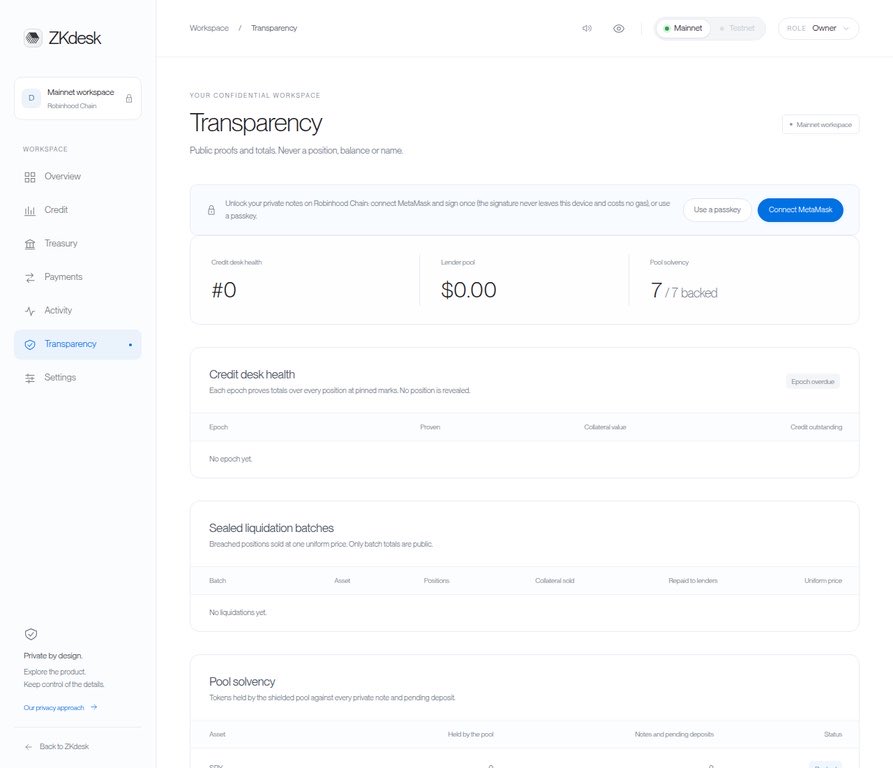
Transparency is not a public balance sheet.
zkdesk shows public proofs, pool backing, sealed liquidation batches, and governance state. It does not publish a position, a balance, or a name.
Show the condition. Protect the business record.
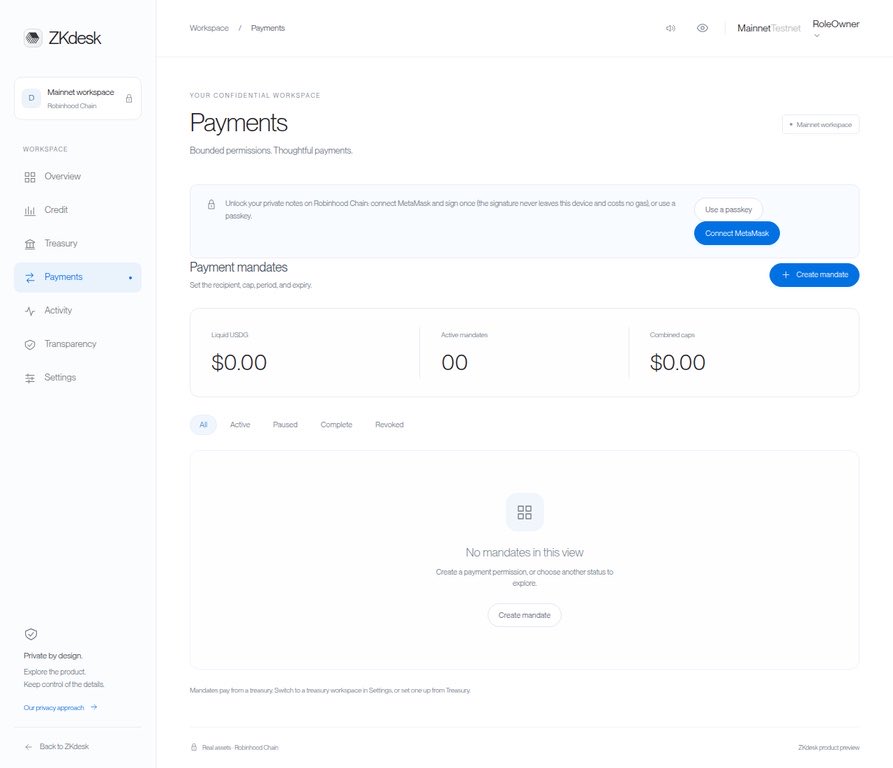
A payment mandate is not a subscription. It is a boundary.
Set the recipient, cap, period, and expiry before a payment can happen. The payer or agent can operate within the rule. Nothing outside it is authorised.
That is how recurring payments should work onchain.
ZKdesk 3.27 hardens private pay per call.
Each challenge is bound to one API, price, host, method, and path. A cheap call cannot unlock a premium endpoint.
If a paid request fails, the agent retries it without paying twice.
Not every part of finance needs to be public to be accountable.
A payment can remain confidential while a receipt proves it happened. A treasury can stay private while it proves it can meet an obligation.
That is the standard zkdesk is building toward.
ZKdesk 3.26 adds an emergency stop for agents.
An alert opens the exact treasury pause screen. You still confirm with your Owner wallet or passkey. The watcher can read, never sign.
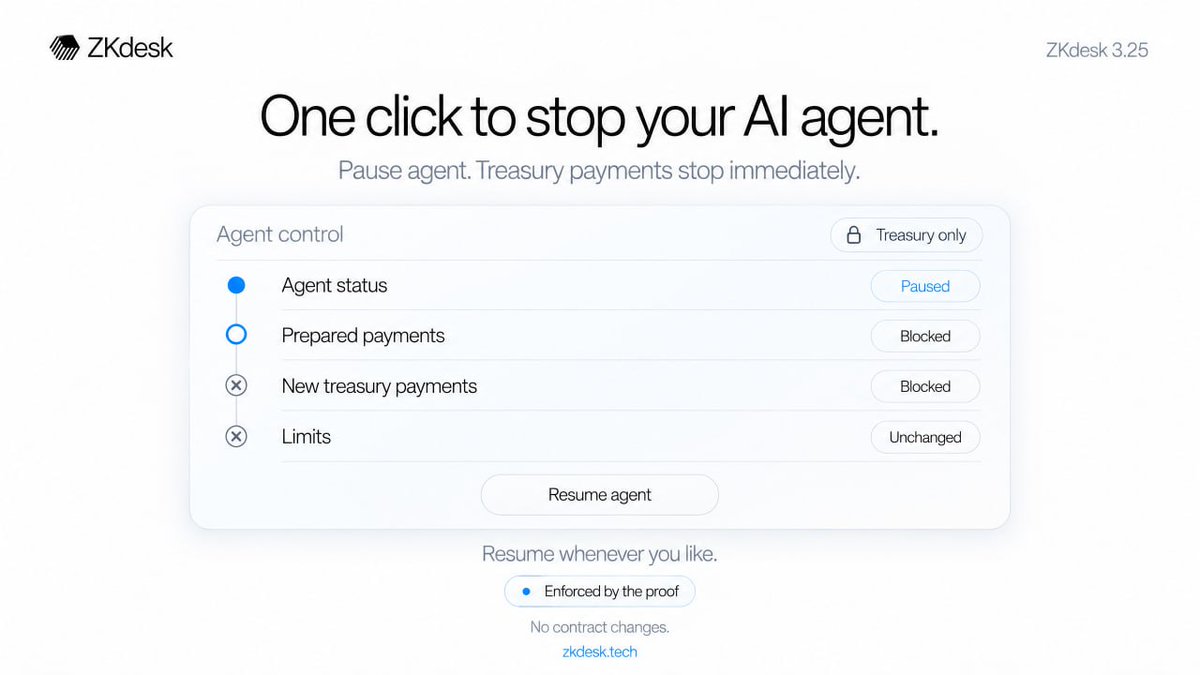
Once paused, even prepared payments are refused.
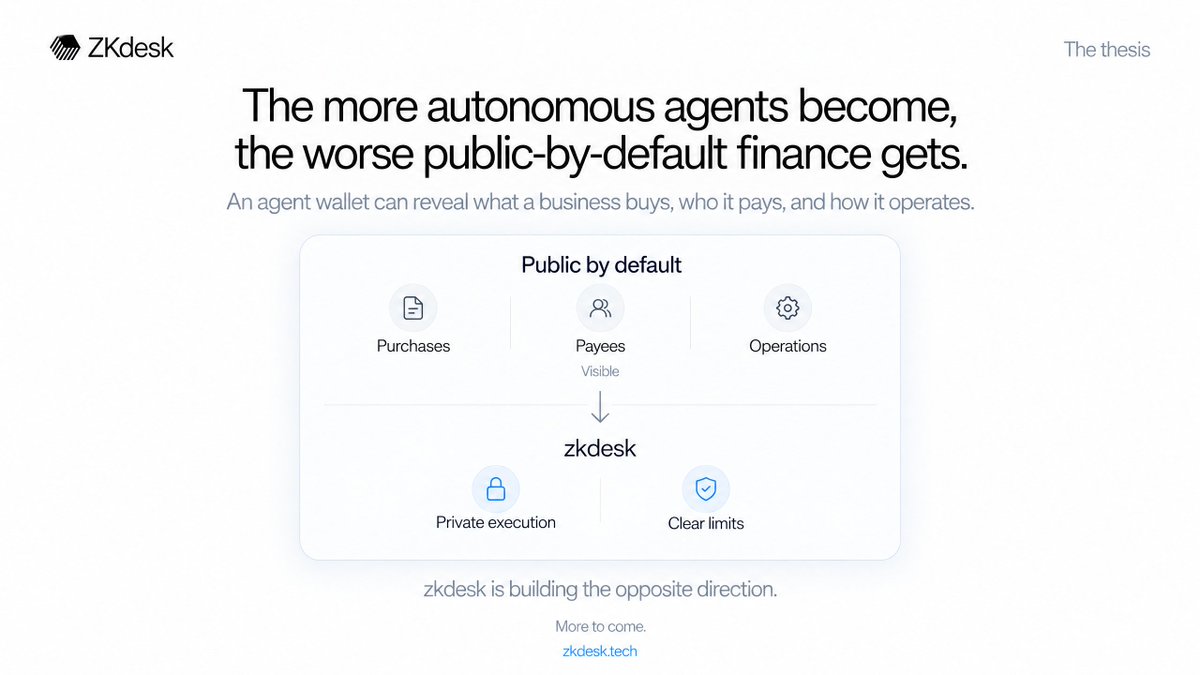
The more autonomous agents become, the worse public by default finance gets.
An agent wallet can reveal what a business buys, who it pays, and how it operates.
zkdesk is building the opposite direction: private execution with clear limits.
More to come.
Private credit needs two views of the same market.
Borrowers see their own collateral, debt, and LTV. The protocol publishes the rate curve and proves desk health in aggregate.
zkdesk keeps positions private without making the credit desk a black box.
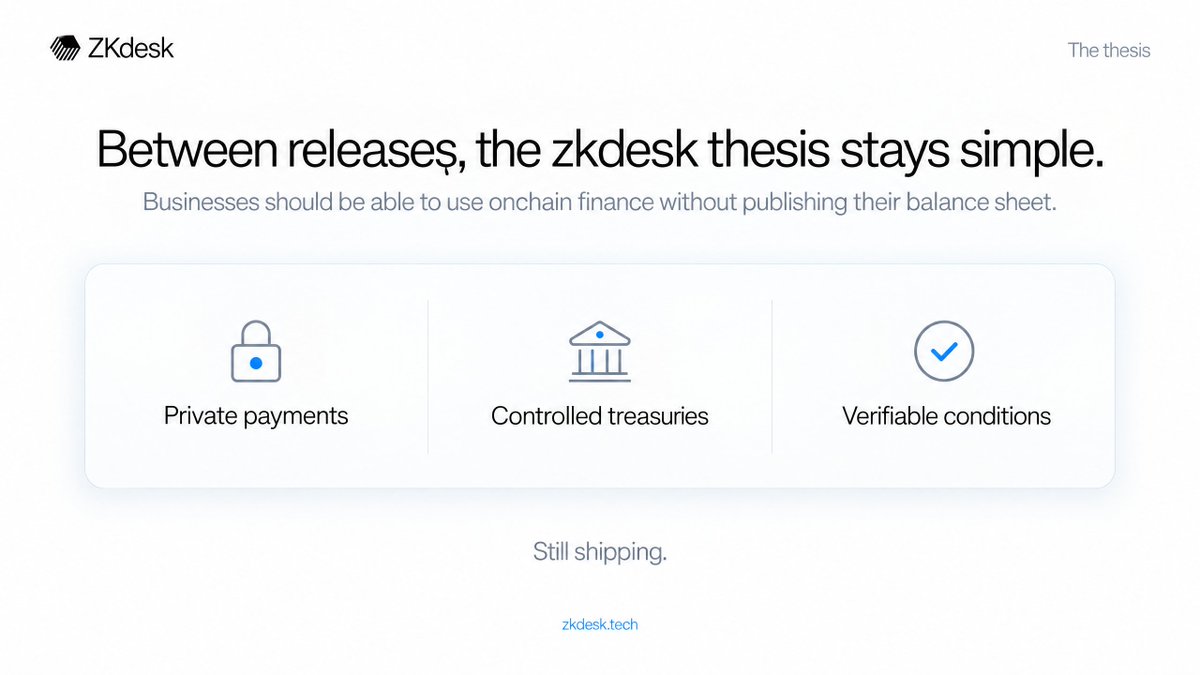
Between releases, the zkdesk thesis stays simple.
Businesses should be able to use onchain finance without publishing their balance sheet.
Private payments. Controlled treasuries. Verifiable conditions.
Still shipping.
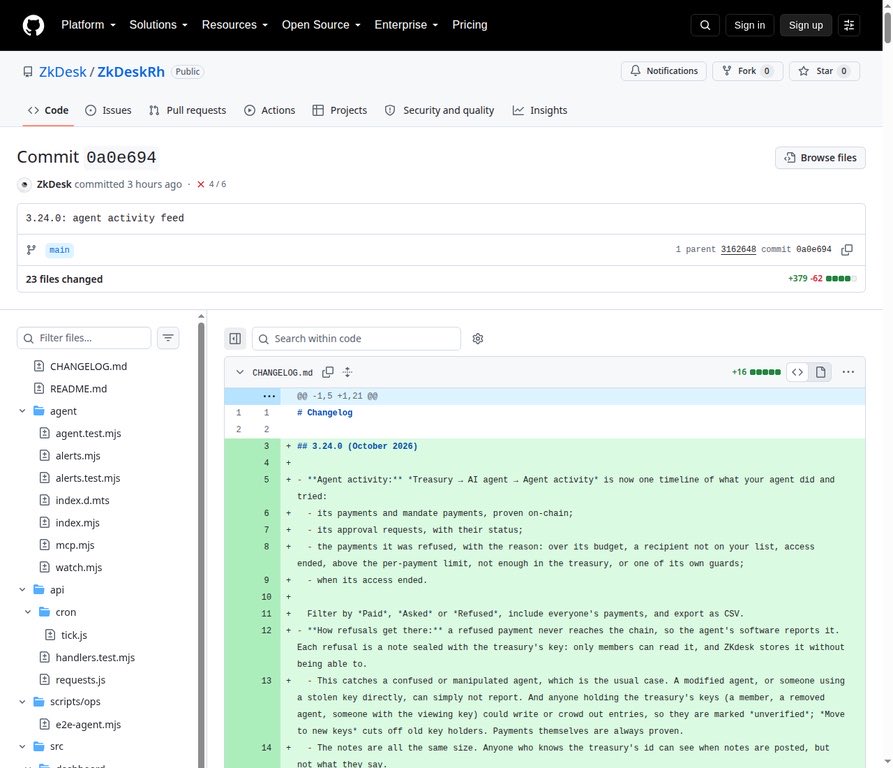
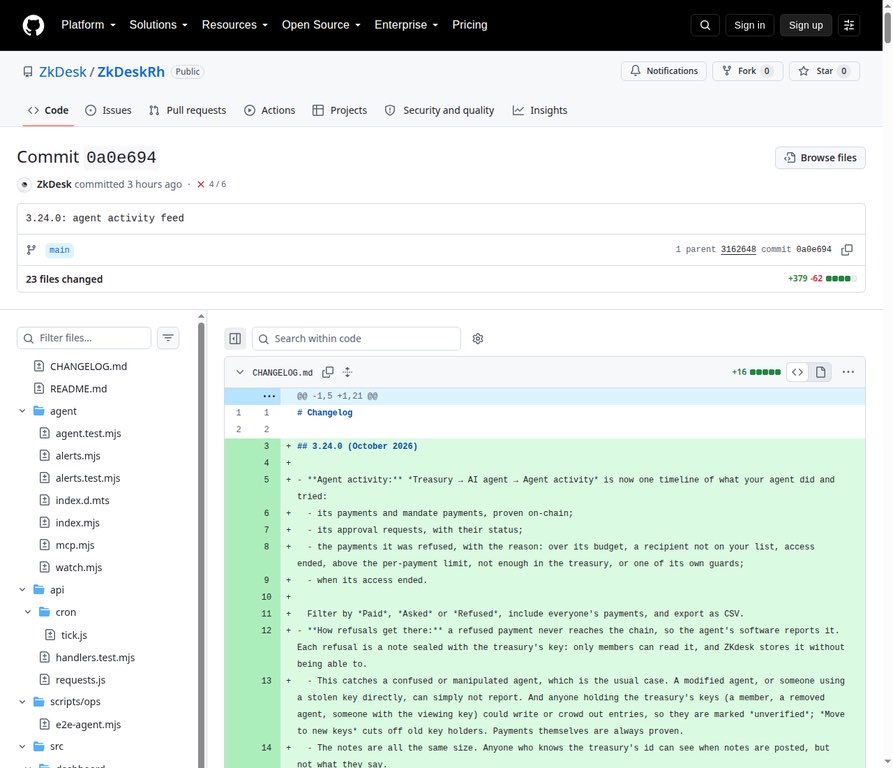
ZKdesk 3.24 adds a private activity trail for agents.
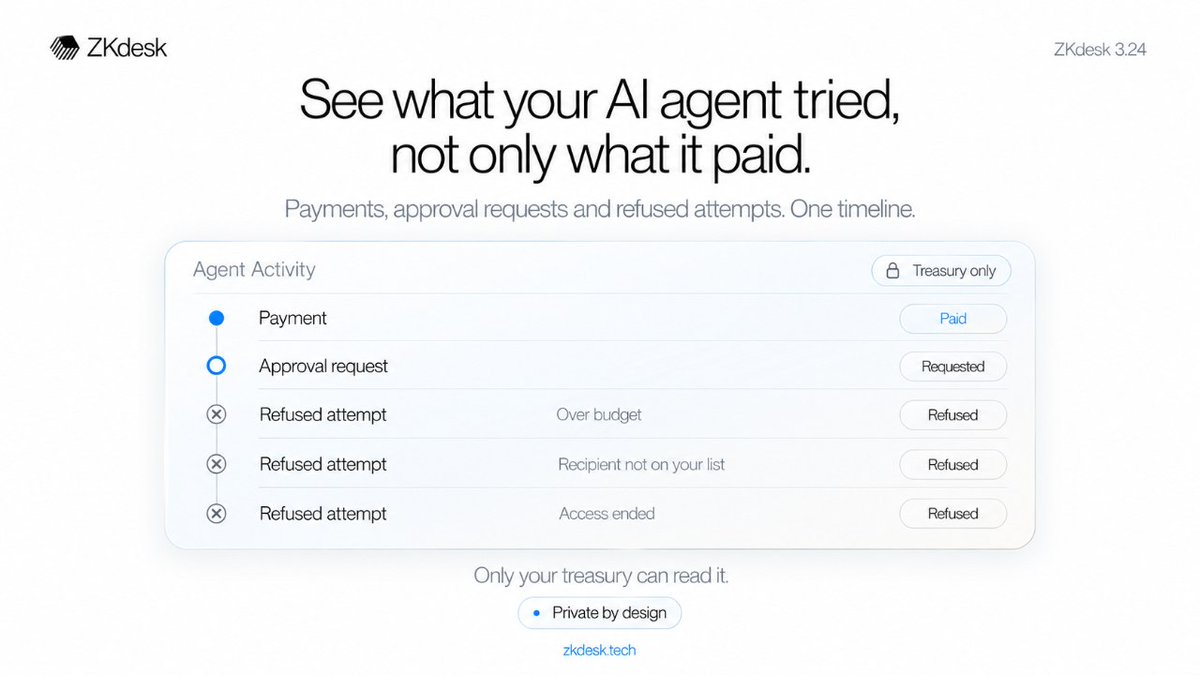
Payments are checked onchain. Requests show status. Refused attempts are sealed for treasury members with the reason they were blocked.
Payments are proven. Refusals are reported. $ZKD.
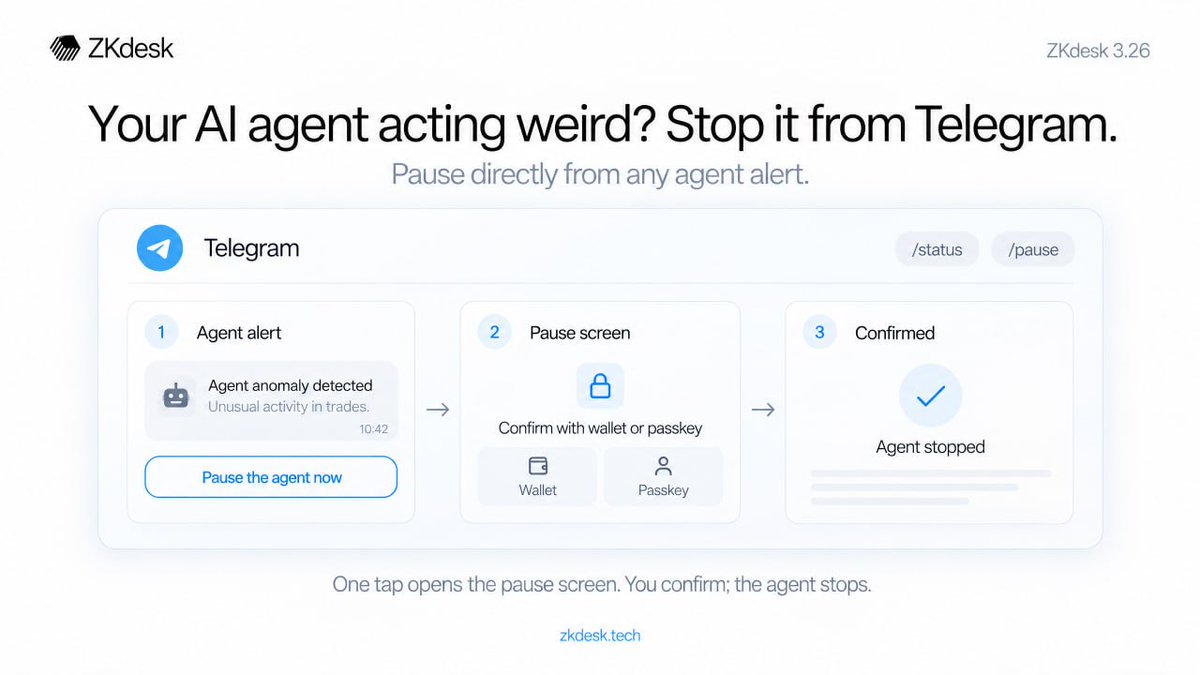
Your AI agent acting weird? Stop it from Telegram.
ZKdesk 3.26: every agent alert now ends with "Pause the agent now". One tap opens the pause screen, you confirm with your wallet or passkey, and the agent is stopped.
Plus /status and /pause in your chat.
@FReza1984 Ours does both: every proof is bound to the treasury's policy, so a pause also kills payments the agent already prepared. Resume restores it. A real revoke (leaked key) = move the treasury to new keys.
One click to stop your AI agent.
ZKdesk 3.25: Pause agent. From the moment it lands, the agent can't make any treasury payment, even ones it already prepared. Its limits stay put; resume whenever you like.
Enforced by the proof. No contract chang
See what your AI agent tried, not only what it paid.
ZKdesk 3.24: one Agent Activity timeline of payments, approval requests and refused attempts ("over budget", "recipient not on your list", "access ended").
Private: only your treasury can read it.
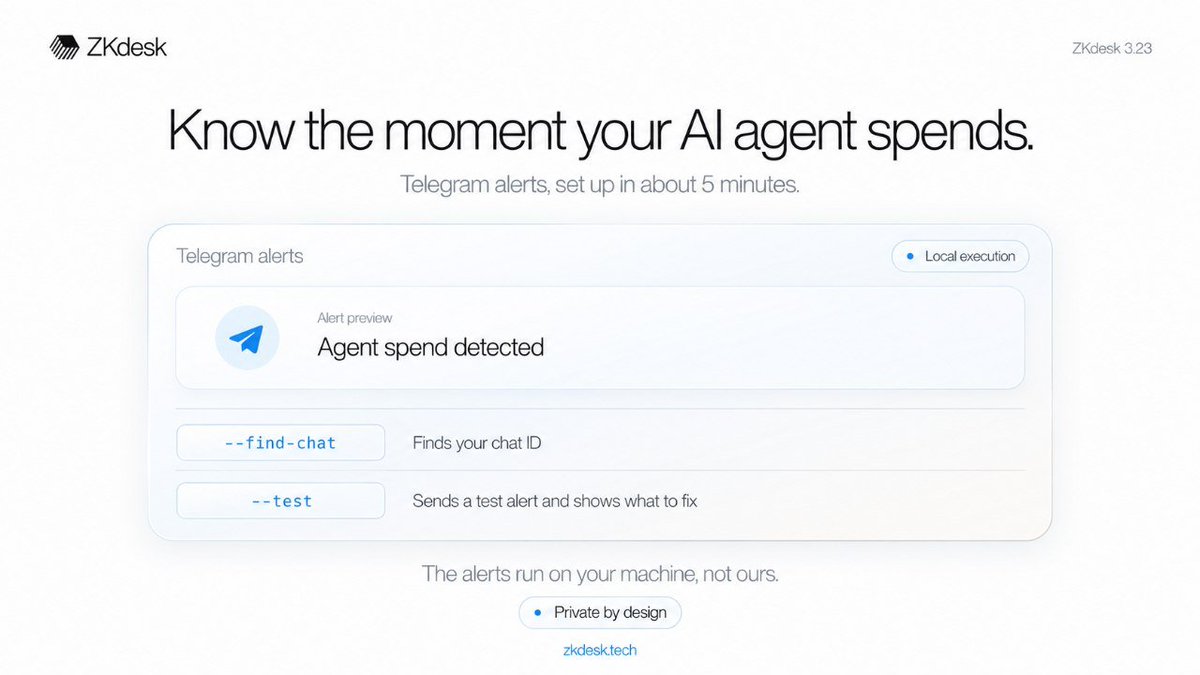
Know the moment your AI agent spends.
ZKdesk 3.23: Telegram alerts in about 5 minutes.
• --find-chat finds your chat ID for you
• --test sends a test alert and tells you exactly what to fix
Private by design: the alerts run on your machine, not ours.