GM architects
Public blockchains show everything to everyone forever.
That is the feature that made crypto trustless. It is also the wall that kept institutions out.
Think about what a bank actually does in a day. It moves collateral. It manages lending positions. It executes payroll. It settles trades between counterparties.
Now imagine all of that visible to every competitor in real time.
A hedge fund cannot publish its collateral positions while the trade is still open. A corporate treasury cannot broadcast its liquidity levels to the market before settlement. A lending desk cannot show every borrower's risk exposure to every other participant.
This is not paranoia. This is how finance actually works. Confidentiality is not optional, it is the product.
@arc 's privacy layer changes this completely.
Two execution environments on one chain. Public activity runs in the clear. Sensitive activity runs inside hardware enclaves where only authorized parties can see the state. Compliance teams get the access they need. Auditors get what they require. Counterparties see only what is relevant to their trade. Everyone else sees nothing.
The total supply stays verifiable. The network stays trustless. But the financial data stays private.
Arc was designed into the privacy infrastructure from the start.
Built secure. Built different.
gArc.
Paying gas in USDC on Arc sounds like a small detail. It is not.
On Ethereum you need ETH to pay for transactions. On Solana you need SOL. On most chains you need the native token just to move your money around. That means before you can do anything you need to buy a volatile asset first.
On @arc you pay gas in USDC.
The asset you are already using to transact is the same asset that pays for the transaction. No extra token to buy. No volatile gas costs eating into your balance.
No "I ran out of ETH and now my transaction is stuck."
For a developer building a payment app this is not a small detail. It means you can build a product where users never think about gas. They just send money. The fee comes out of the same dollar balance they are already spending from.
That is what stablecoin native infrastructure actually looks like in practice.
If you want to experience it firsthand, Arc Portal is live. Connect your wallet, fund with USDC, and send your first transaction. The gas experience is exactly what you would expect it to be.
Nothing.
https://t.co/6Qfz6GJ3Xr
A machine-to-machine layer is emerging in tech, and it's happening fast 🤖
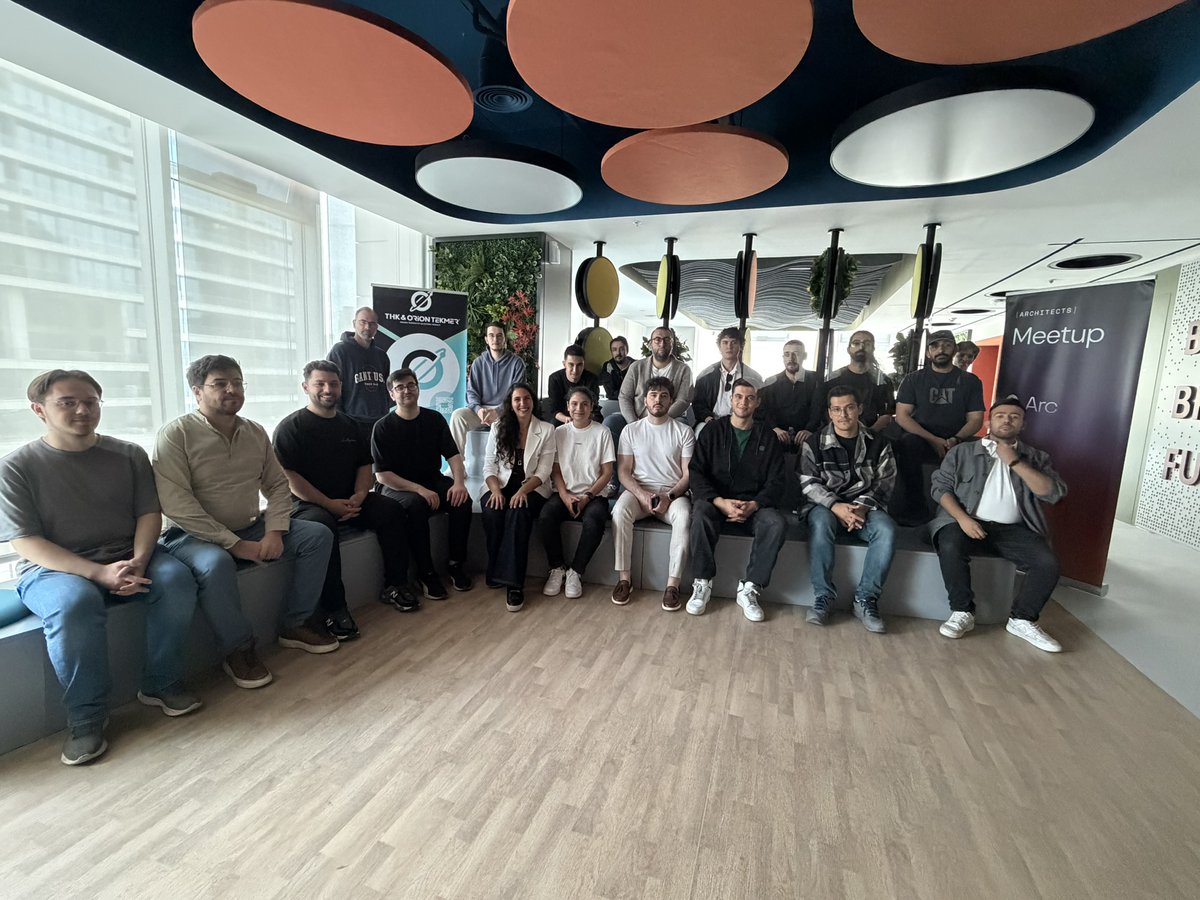
We brought that conversation to Ankara last weekend. At Orion Tekmer, builders dug into how agents establish identity, run workflows, and operate on their own.
Thank you all, and thanks Orion Tekmer for having us 🙏
Paying gas in USDC on Arc sounds like a small detail. It is not.
On Ethereum you need ETH to pay for transactions. On Solana you need SOL. On most chains you need the native token just to move your money around. That means before you can do anything you need to buy a volatile asset first.
On @arc you pay gas in USDC.
The asset you are already using to transact is the same asset that pays for the transaction. No extra token to buy. No volatile gas costs eating into your balance.
No "I ran out of ETH and now my transaction is stuck."
For a developer building a payment app this is not a small detail. It means you can build a product where users never think about gas. They just send money. The fee comes out of the same dollar balance they are already spending from.
That is what stablecoin native infrastructure actually looks like in practice.
If you want to experience it firsthand, Arc Portal is live. Connect your wallet, fund with USDC, and send your first transaction. The gas experience is exactly what you would expect it to be.
Nothing.
https://t.co/6Qfz6GJ3Xr
@RimonR23@quipnetwork Post-quantum defense for legacy chains combined with usefulwork compute is an ambitious infrastructure shift worth keeping an eye on.
We finally made it to the @circle Alliance Program with Vector Protocol.
It’s been an incredible journey building on @Arc, and this is a special milestone for us.
Grateful for everyone who’s been part of the journey.