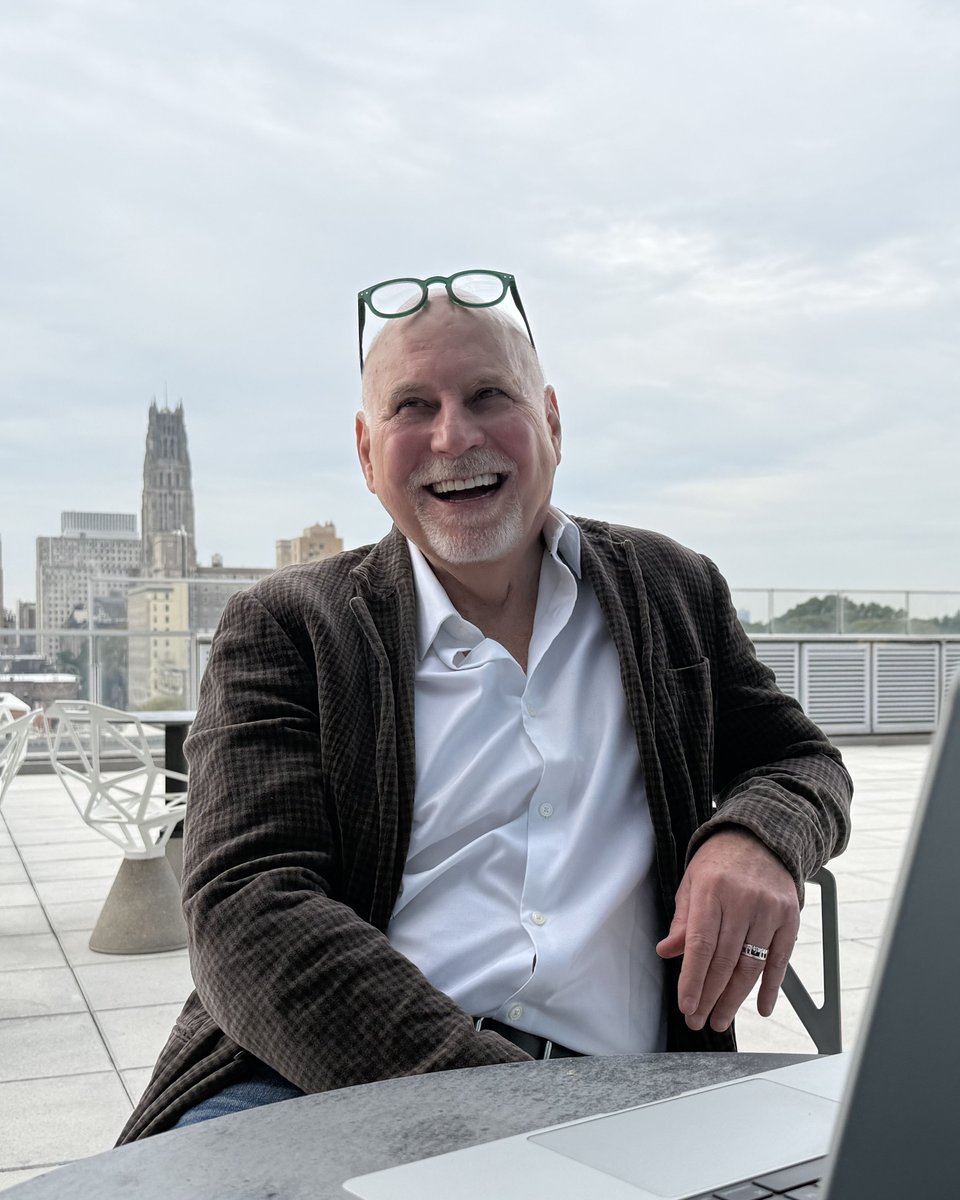
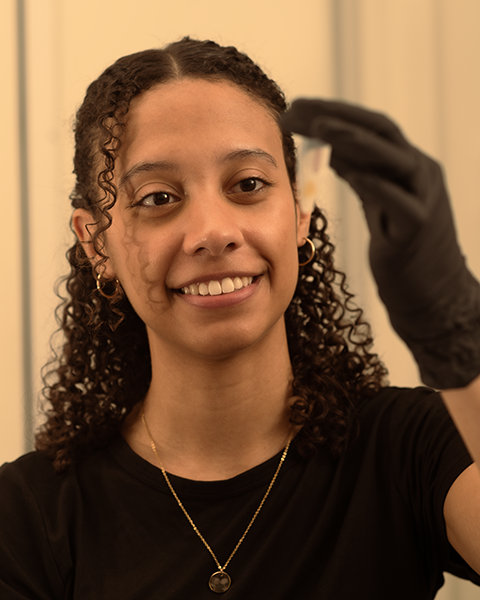
Why bring writers and neuroscientists together? Pulitzer Prize-winning novelist Hernan Diaz explored that question in the @FT, sharing how his experiences as a writer-in-residence at @Columbia’s Zuckerman Institute shaped his novel Ply (and showing off a 3D-printed brain!).
https://t.co/D9AUMrwpYd
Why study cuttlefish in a neuroscience lab? A recent @nytimes article dives deep into this creature’s ability to mimic on its skin what it sees in the environment.
Read more about Tessa Montague, Connor Gibbons Thomas Barlow and Erika Shook:
https://t.co/TyFBdkyyTP
Exclusive: When Tessa Montague learned about #CRISPR, the gene-editing system that was supposed to make it easy to modify any organism, she set her sights on the cuttlefish. The Columbia University neuroscientist dreamed of injecting its embryos with genes that would prompt its neurons to fluoresce as they fired.
The flashes would let her track how this tentacled creature's brain controls one of its most striking behaviors: camouflaging itself by copying patterns it perceives in its surroundings onto its skin. Unlike most animals, she says, “cuttlefish can actually tell us what they see.”
Six years and thousands of embryos later, she has reached a milestone: seven cuttlefish that glow red under fluorescent light. Every cell in their boneless bodies contains a gene encoding a synthetic fluorescent protein—even their eggs and sperm, which means their cuttlebabies glow, too.
The work, posted as a preprint, marks the first time anyone has successfully added a new gene to a cephalopod. https://t.co/URTEOdc5za @NewsfromScience
As we congratulate @Columbia economist Michael Woodford on his Nobel Prize, we remember an unusual collaboration he undertook years ago with neuroscientist Jacqueline Gottlieb: an exploration of what motivates us to pay attention to certain pieces of information and invest in acquiring them.
https://t.co/4EAoJHSF7K
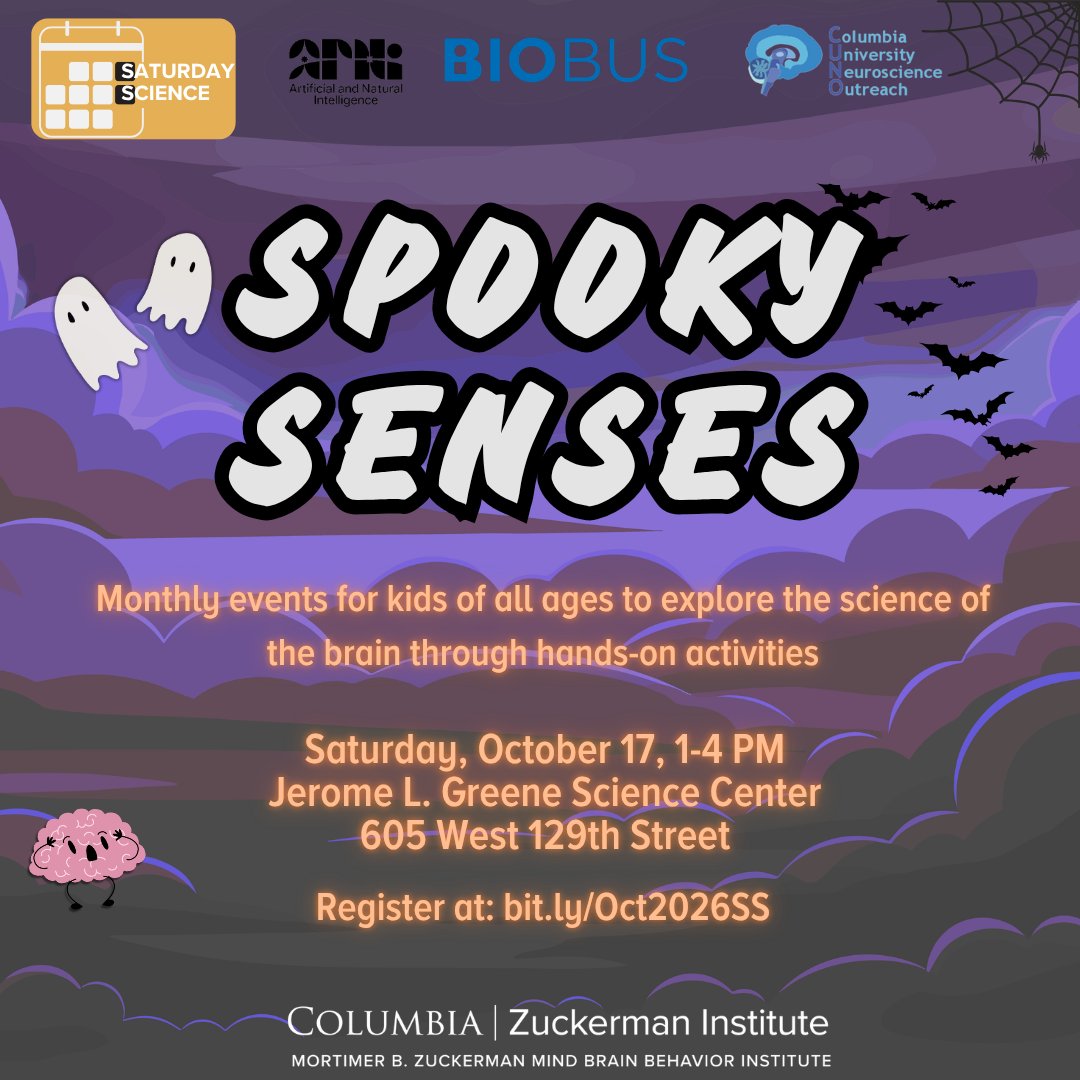
Things are getting spooky at Saturday Science!
Join us on October 17 for Spooky Senses, an afternoon of hands-on activities exploring the science of the brain and our senses. Bring the whole family for some spooky science fun!
Free and open to all ages! Register at https://t.co/FUlqvzl99k
“I offer my deepest congratulations to Michael Woodford on this tremendous honor. What a tribute to his groundbreaking work alongside Robert E. Hall that has fundamentally reshaped the theoretical foundations of stabilization policy and provided us with the tools to navigate economic upturns and downturns more effectively.” —Columbia University President Jennifer L. Mnookin.
Professor Michael Woodford is the 16th Columbian to receive the Sveriges Riksbank Prize in Economic Sciences in Memory of Alfred Nobel. He shares the honor this year with Robert E. Hall for their research on the microeconomic foundations of macroeconomic stabilization: https://t.co/GZq3En9lsZ
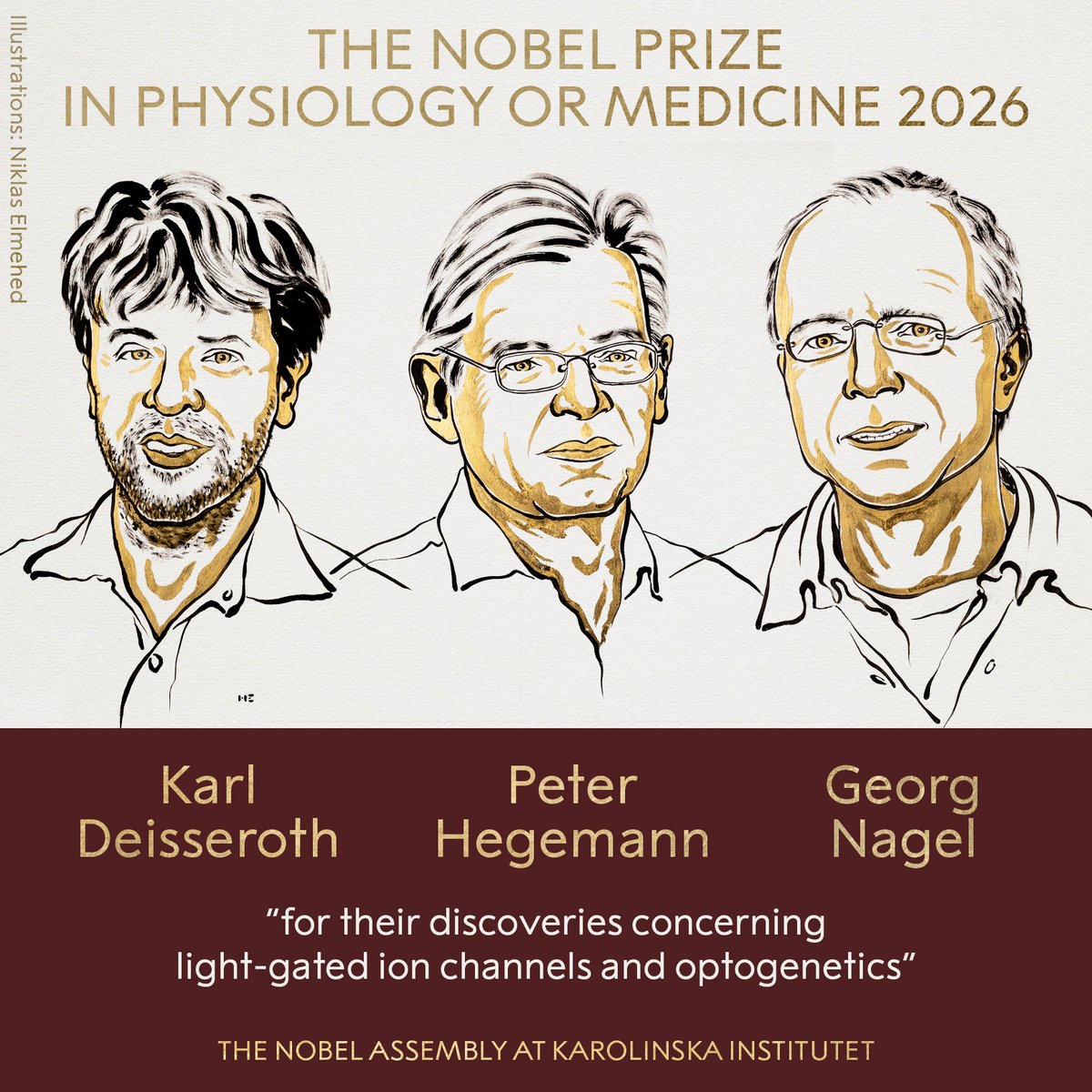
This year���s Nobel Prize in Physiology or Medicine honors optogenetics: a tool that has revolutionized neuroscience by allowing scientists to turn specific brain cells on and off with light. We congratulate the pioneers of this technology (a mainstay in many of our labs) at @Stanford, @HumboldtUni and @Uni_WUE
👏🧠👏
BREAKING NEWS
The 2026 #NobelPrize in Physiology or Medicine has been awarded to Karl Deisseroth, Peter Hegemann and Georg Nagel “for their discoveries concerning light-gated ion channels and optogenetics.”
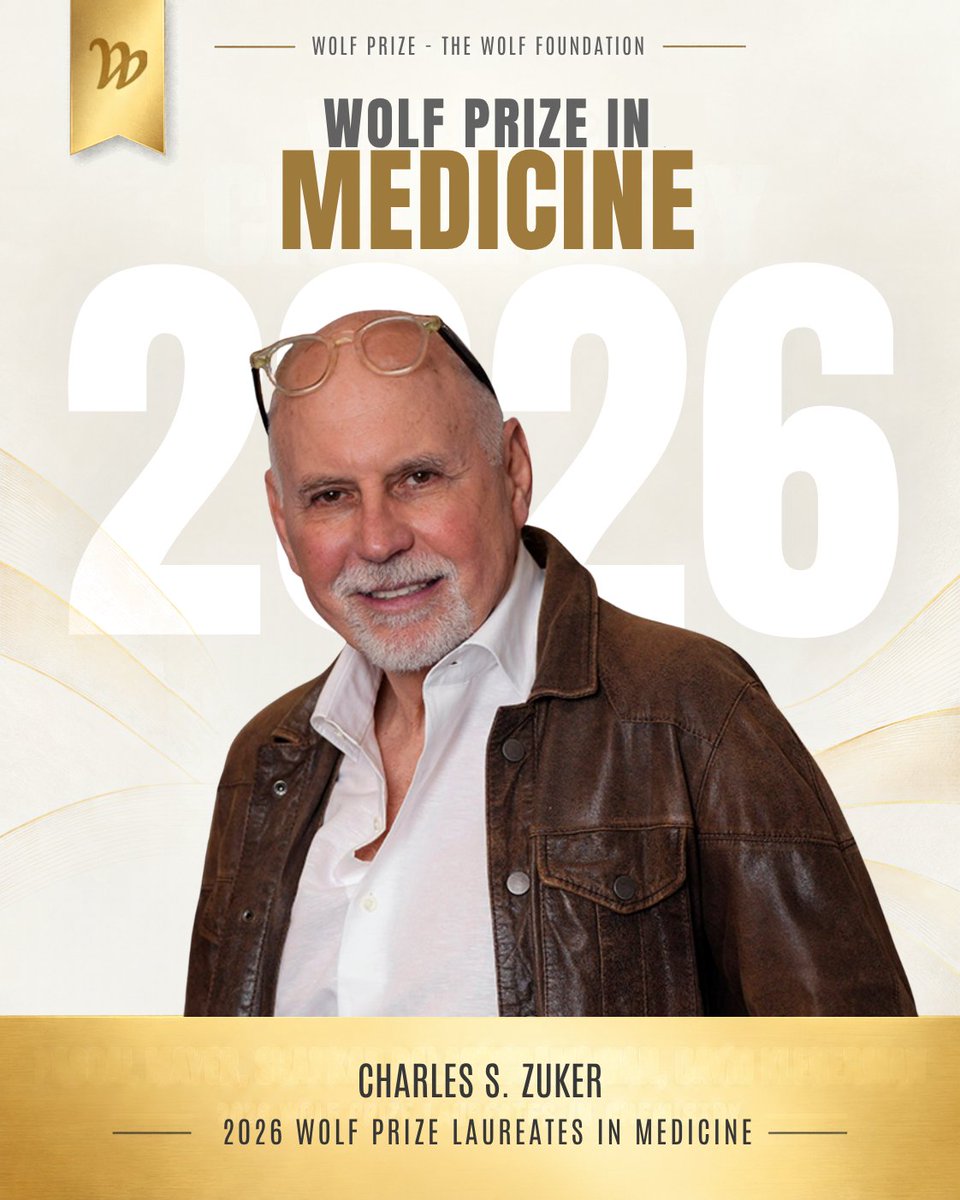
ANNOUNCING THE 2026 WOLF PRIZE LAUREATE IN MEDICINE
The 2026 Wolf Prize in Medicine is awarded to Charles S. Zuker of Columbia University and the Howard Hughes Medical Institute, “for revolutionizing our understanding of taste, the last of our senses to be elucidated.”
Sweet. Sour. Bitter. Salty. Umami:
Zuker’s research revealed the cells and receptors responsible for each of the five basic tastes - and showed how those signals are encoded and represented in the brain.
His experiments went even further: by rewiring taste receptors in mice, his team demonstrated that what makes something feel “sweet” or “bitter” is not simply the receptor itself, but the specific neural pathway activated between the tongue and the brain.
By defining how chemical signals on the tongue are translated into perception and behavior, Zuker transformed taste from one of the least understood sensory systems into one of the best mapped in modern neuroscience.
Congratulations to Charles S. Zuker, 2026 Wolf Prize Laureate in Medicine.
This year's prestigious @WolfPrize_ in Medicine goes to our very own @Columbia Charles Zuker: "For revolutionizing our understanding of taste," as the citation reads, "the last of our senses to be elucidated.”
https://t.co/KDGDHM9I0E
@ColumbiaMed
Don't miss next week's event, Embodied Memory:
https://t.co/ncGDUizQRC
Sarah Ruhl, Kathy Chalfant, and Daphna Shohamy, PhD, will explore the connections between storytelling, performance, and the science of the mind.
Have you seen Dr. Genevera Allen’s Faces of IICD feature? 🎥
A Professor of Statistics, @ZuckermanBrain affiliate, and IICD core member, Dr. Allen develops machine learning and statistical methods to turn complex data into scientific insight.
Watch: https://t.co/hzDYrDag0z
Congratulations to @BriMcR, PhD, for her @RockefellerInstnew New York State Science Policy Fellowship! Aiming to bring scientific experts into high-level advisory roles for state government, the fellowship recognizes her research on motherhood-related brain changes and her advocacy for federal research funding.
https://t.co/FKzM0eGcZW
We're thrilled to announce our third cohort of NYS Science Policy Fellows! These PhD scientists are working with the NYS executive and legislature to bring additional scientific expertise to bear on important policy problems.
👇 Meet the fellows! 🧵https://t.co/fIHCPnhEIz
@NPR reports on a recent Sawtell lab discovery of brain cells that keep electric fish from blinding themselves while sensing their environment. Listen here! https://t.co/I5Spxt0fOw.
Read more at https://t.co/qoaVOAaAdU
Imagine yelling while trying to listen. That’s kind of what electric fish do when they scan their environs by emitting and detecting electric fields at the same time. Krista Perks, Salomon Muller, Nate Sawtell & team have discovered the mental circuitry that makes this feat possible, work that could help design AIs that learn better. @Nature
https://t.co/ctsW2buW1J
Which computer models of the brain best capture what an actual brain does? @KriegeskorteLab and colleagues are answering this question by forcing AIs to disagree with each other, using bespoke images. Explore this unusual and promising strategy in @NatureNeuro.
https://t.co/voVrOuhe3l
Join us for Embodied Memory: a closing conversation with playwright and Alan Kanzer Writer-in-Residence Sarah Ruhl. Featuring actress Kathy Chalfant, and neuroscientist Daphna Shohamy, PhD.
🗓️ October 5th, 4:00 pm
Learn more and register: https://t.co/ncGDUizQRC
Special thanks to the Stavros Niarchos Foundation (#humanityatthecore), the Pinkerton Foundation, and the National Institute of Neurological Disorders and Stroke for supporting this program.
🔬Congratulations to this year’s @ZuckermanBrain BRAINYAC teen grads! ✨
Our BRAINYAC summer research program pairs 10th & 11th graders from partner schools in Upper Manhattan & the South Bronx with @Columbia neuroscientists for hands-on lab experience, mentorship and a front-row seat to discovery. The future of science is in good hands!
📷 Eileen Barroso #ColumbiaUniversity