How do you monitor a monopile’s verticality as it’s lowered into place?
The installation crew needs to see whether the pile is tilting while there’s still time to adjust it. Mounting sensors or targets directly to the pile adds another step to the installation setup.
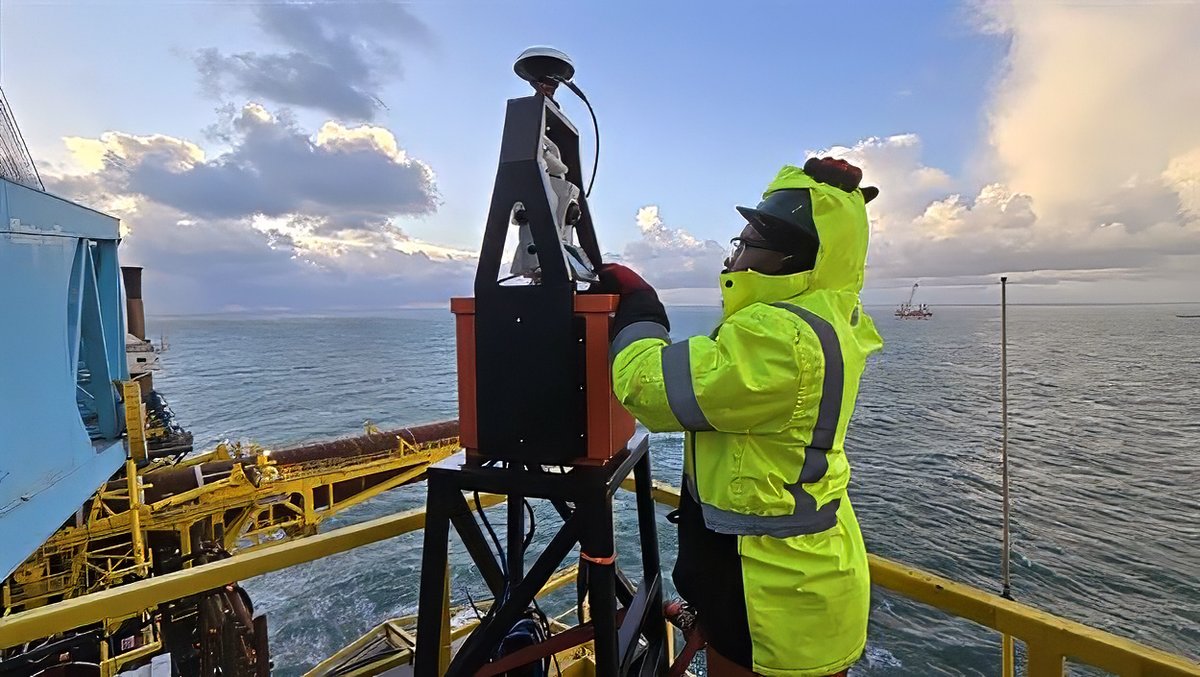
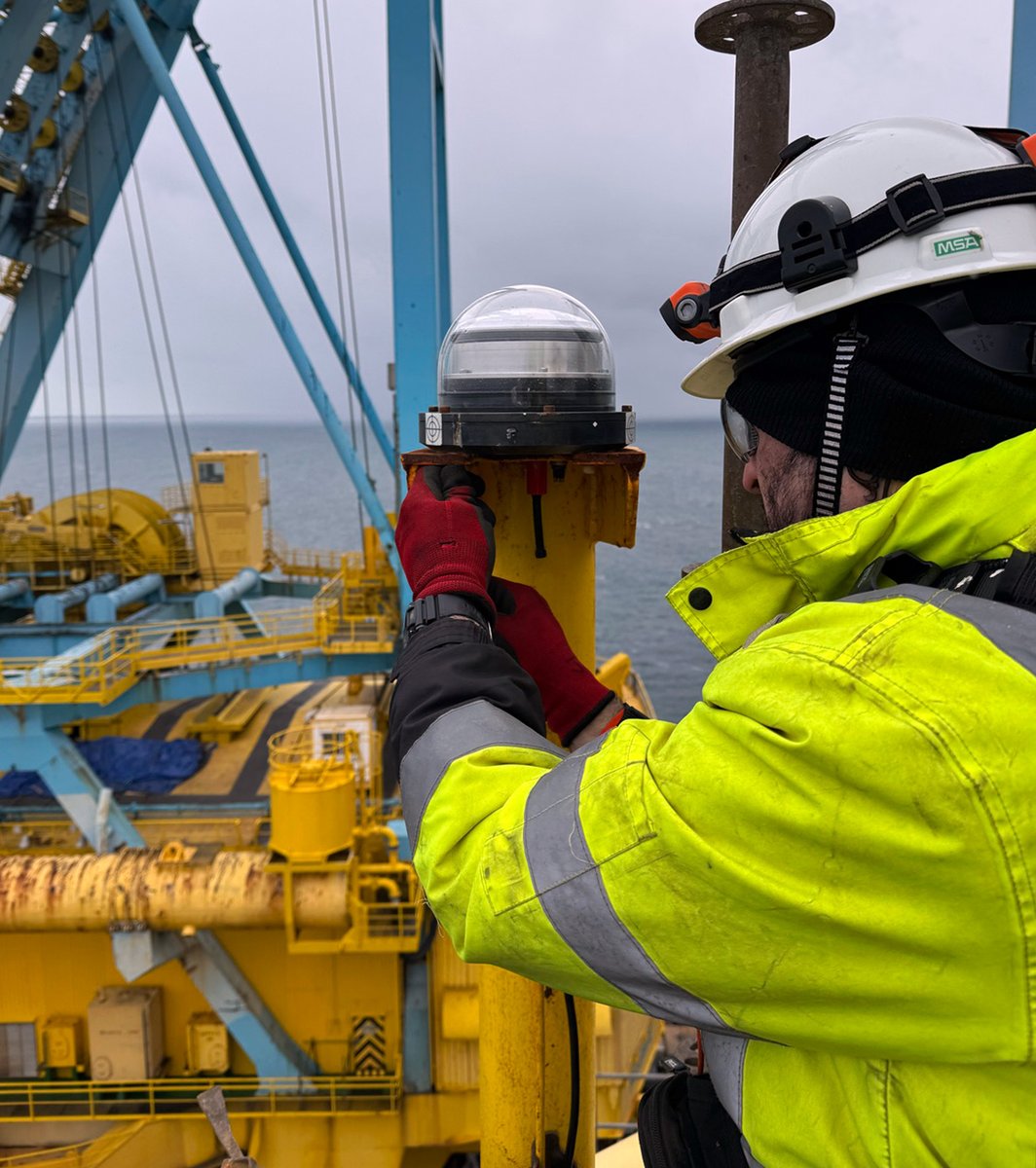
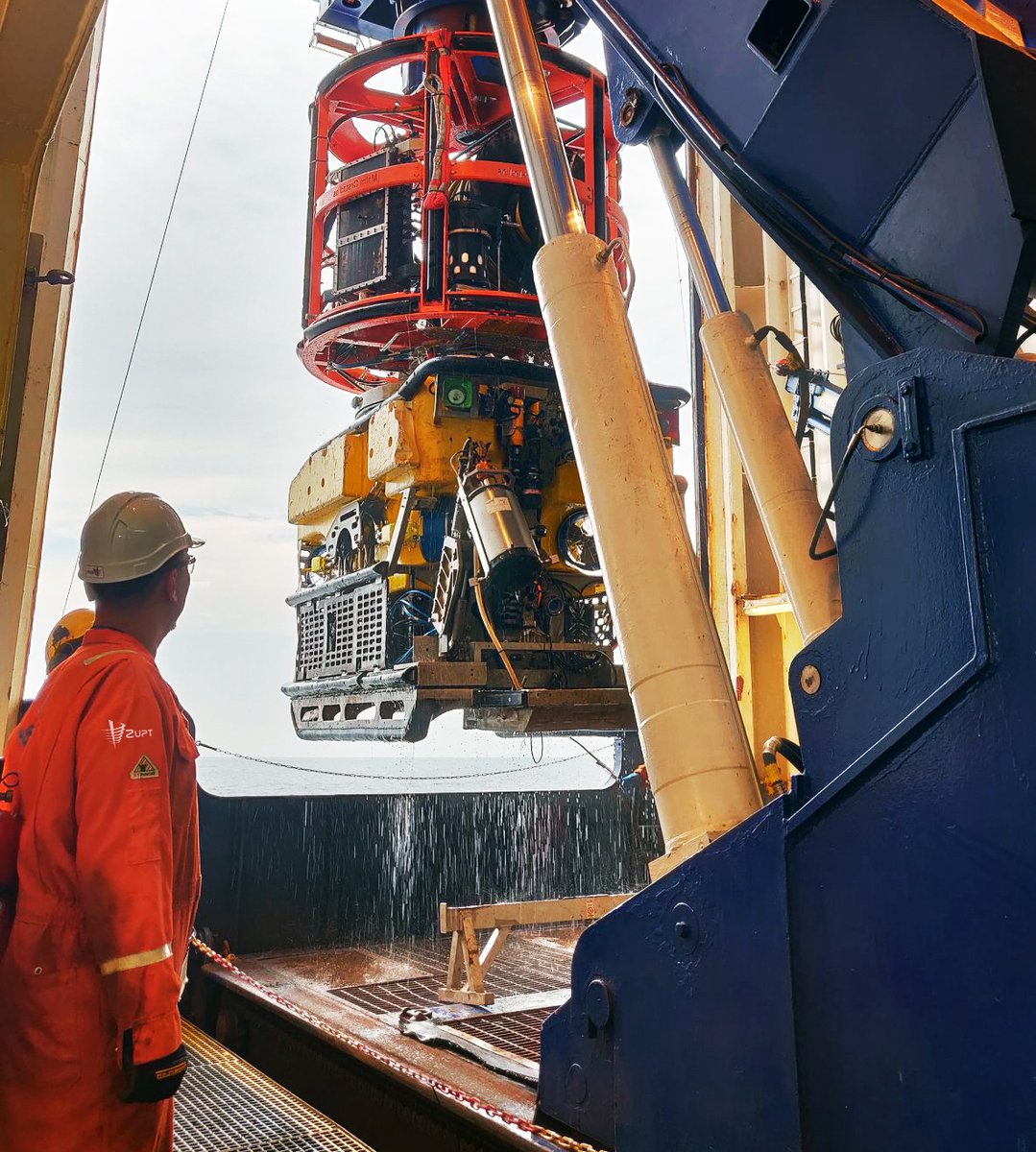
Zupt’s VertiCAM uses vessel-mounted LiDAR to track the exposed section of the monopile and provide a live readout of pitch and roll. The LiDAR measurement requires no sensors, brackets, or targets on the pile.
The crew can check the pile’s alignment as it goes in and see the effect of any adjustments in real time.
Explore VertiCAM: https://t.co/Py9nx1x63I
#Zupt #VertiCAM #OffshoreWind #MonopileInstallation
Five years ago, on its first commercial project, Zupt’s 3D Recon collected the data for a photogrammetry-based spool metrology in under three hours.
That was in June 2021 in the US Gulf, after years of development and testing. The team delivered a high-resolution 3D model of the spool and metrology results that met the tight metrology accuracy specifications.
Since then, we’ve used 3D Recon for production metrology, surveys of jumpers already in place, and spool metrology on a floating pontoon. We’ve also used 3D Recon to capture detailed geometry for subsea insulation retrofits, assess sub-millimeter structure damage, and support large-scale field inspections through Fast Digital Inspection (FDI).
Over the last five years, we’ve also taken 3D Recon from the original system to V2, which is now in the field for even more efficient subsea inspection and modeling projects.
As Thanksgiving approaches, we’re grateful to the clients who’ve trusted us to model hundreds of structures and to the teams who’ve helped develop, test, and deploy 3D Recon, from that first spool survey to the campaigns we support today.
#Zupt #3DRecon #SubseaMetrology #SubseaInspection
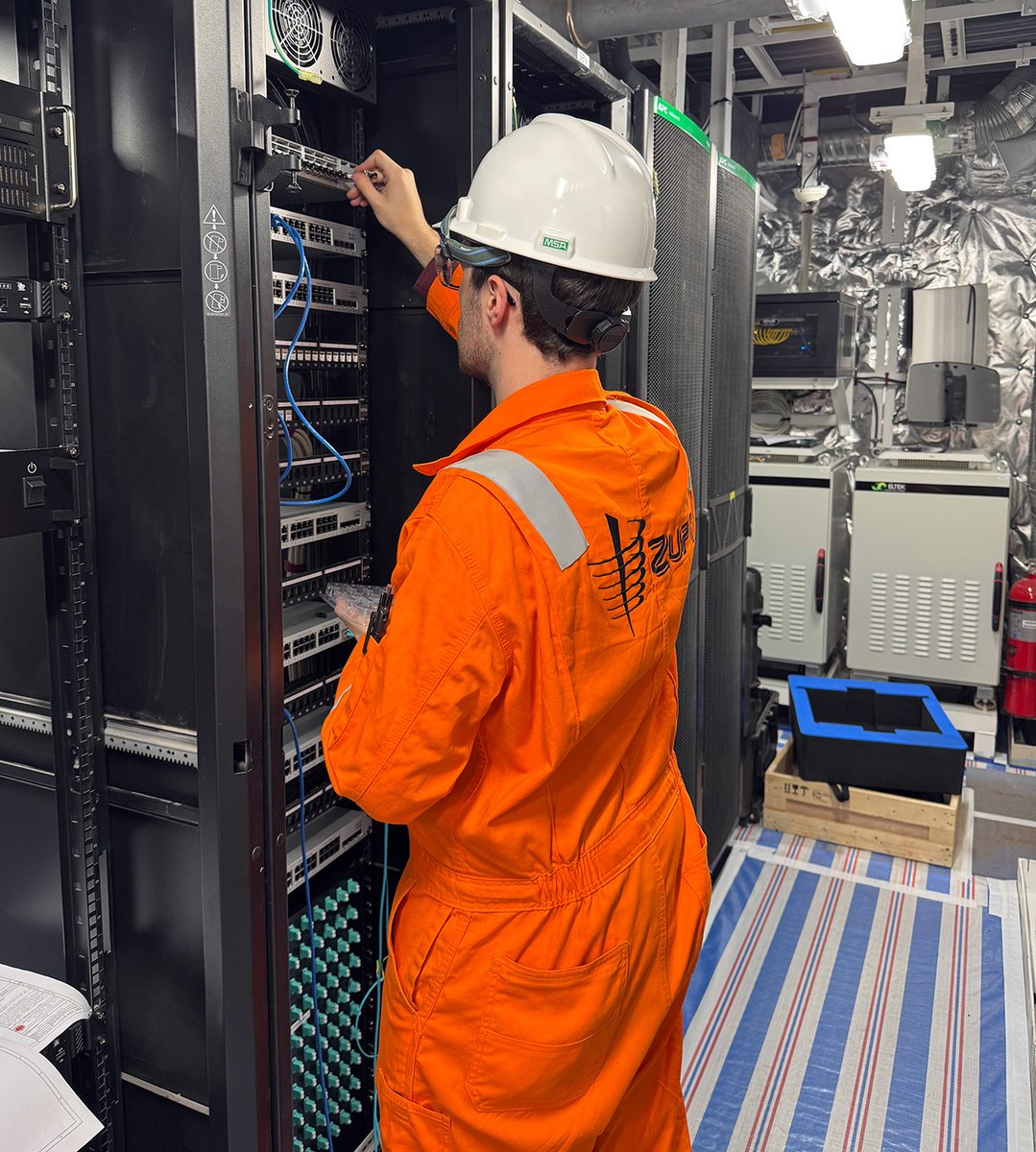
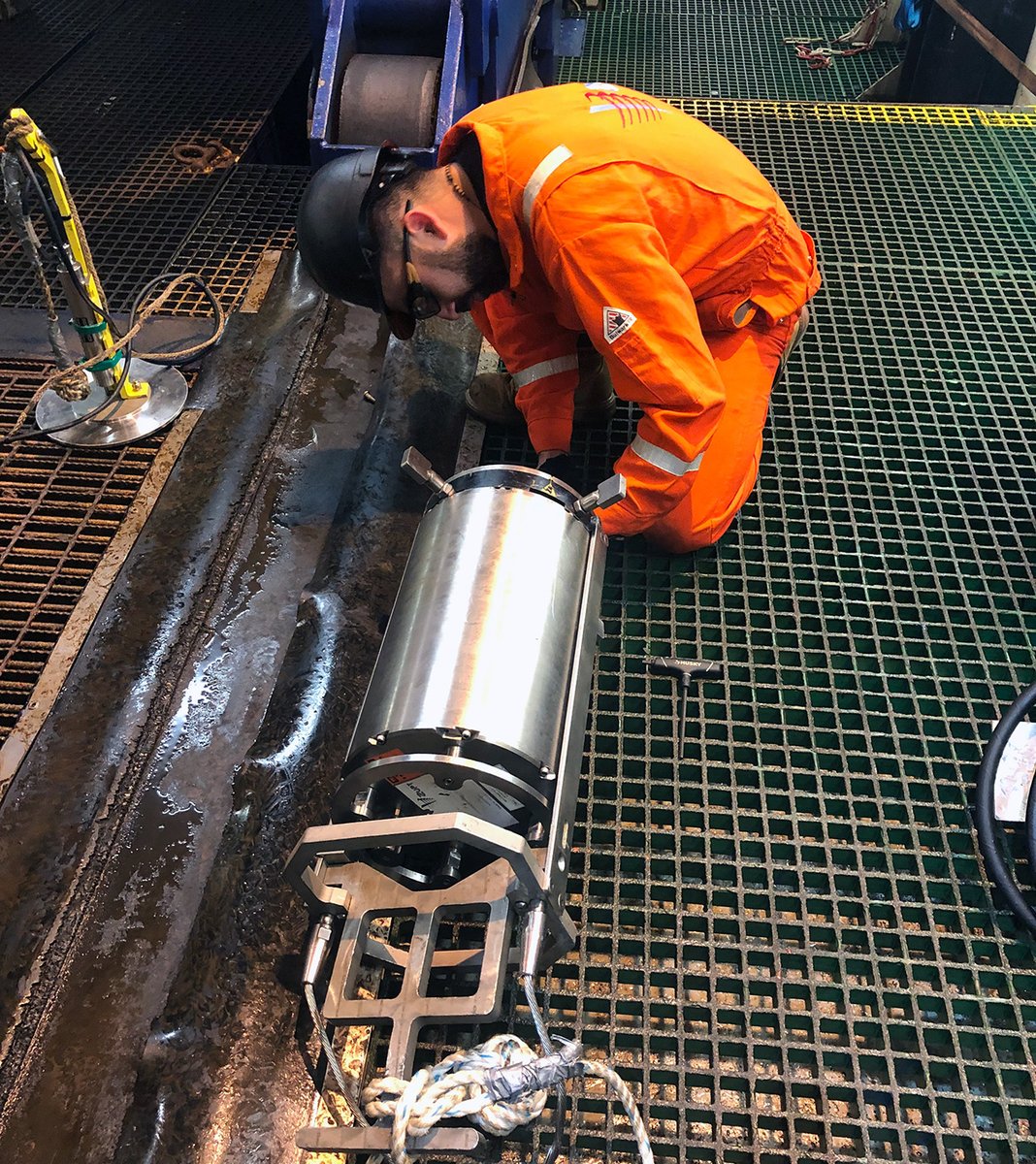
At Zupt, our surveyors are engineers, and our engineers are surveyors.
That overlap connects offshore experience with in-house engineering, bringing practical knowledge into how we develop, test, and operate our technology.
Here, the team is sharing technical knowledge through hands-on collaboration, strengthening the skills used to develop, test, and deploy our systems.
Lessons from offshore inform work in the workshop, while engineering knowledge helps our surveyors understand the systems they deploy and solve problems in the field.
Whether around a workbench, at a desk, or on deck, that shared understanding is a big part of Zupt’s success.
#TeamZupt #OffshoreEngineering #Subsea #Teamwork
Please join us in welcoming @Garry Comb to Zupt as Senior Survey Project Manager!
Based in the UK, Garry’s addition marks another step in Zupt’s growth beyond the US, strengthening our ability to support clients across regions.
Garry brings extensive experience in subsea survey, underwater navigation, and autonomous systems, with a background spanning offshore operations, sensor integration, engineering, and technical leadership.
His work has included managing AUV operations, leading offshore survey teams, and taking underwater technologies from development through sea trials and operational deployment.
He also brings hands-on experience in subsea positioning, LBL metrology, and survey system integration, complemented by a master’s degree in Geographic Information Systems from Ulster University.
Garry’s depth of experience will strengthen Zupt’s survey project delivery and technical support for offshore teams, helping us better serve our clients.
Welcome to Zupt, Garry!
#Subsea #OffshoreSurvey #AUV #Zupt
Our latest C-PINS metrology campaign takes us offshore Nigeria, supporting a major international oil and gas operator.
The work focuses on obtaining the precise subsea measurements needed for jumper fabrication, where accuracy is critical to achieving the required fit between connection points.
Using Zupt’s C-PINS inertial metrology system, our team can collect these measurements with real-time quality control and a compact setup requiring just one subsea connection to the ROV.
There is no acoustic metrology array to deploy, calibrate or recover. That simplifies the offshore workflow and reduces the vessel time needed to complete the survey.
With more than 400 inertial metrologies completed worldwide, this campaign builds on Zupt’s established experience supporting subsea construction.
Explore Zupt’s inertial metrology capabilities: https://t.co/tOnrv39Dan
#SubseaMetrology #InertialMetrology #SubseaSurvey #C-PINS
How does C-PINS inertial metrology save vessel time?
Zupt’s C-PINS does not require an acoustic metrology array. There is no array to deploy, calibrate or recover.
The self-contained system also uses a single subsea connection to the ROV for power and communication, simplifying setup.
These differences reduce the offshore work surrounding the measurements needed for jumper fabrication. Zupt reports average vessel time savings of approximately 50% compared with traditional LBL acoustic metrology, with individual timings depending on project requirements and operating conditions.
Explore where the time savings come from: https://t.co/ZKo5jeGVCl
#InertialMetrology #SubseaSurvey #Subsea
The installation team needs to track a monopile’s descent all the way to its target elevation. But GNSS visibility at the hammer can become restricted as the pile moves lower.
Cranes, slings, spreader bars, and other deck equipment can obstruct satellite signals. On a floating vessel, the measurements also need to account for vessel motion.
The team still needs to know: how quickly is the pile descending, and how close is it to the intended elevation?
Zupt’s iRTS keeps the GNSS positioning reference high on the vessel and uses robotic total stations to track prisms on the hammer or gripper. An integrated inertial measurement unit accounts for vessel motion.
This provides real-time elevation and penetration-rate data without relying on GNSS reception at the hammer, helping the team monitor for pile run and follow the approach to final elevation.
Read more about the measurement approach and offshore results: https://t.co/xNK070RQKb
#OffshoreWind #MonopileInstallation #iRTS
We are pleased to spotlight Will Brooks, Equipment Coordinator and one of Zupt’s offshore Party Chiefs. Will has been with Zupt for almost four years, working both on equipment preparation and in the field.
Will’s work spans equipment preparation onshore and survey operations offshore. He keeps survey equipment ready for the next job, handling quality control, maintenance, and mobilization. Offshore, he collects and processes field data to help keep survey operations running smoothly.
During his time at Zupt, Will has supported projects for Chevron, Shell, OXY, and Saipem, with assignments taking him across North and South America, Europe, and West Africa.
Thanks, Will, for the work you put in onshore and offshore.
#EmployeeSpotlight #OffshoreSurvey #Zupt
Before you can retrofit insulation to a subsea spool, you need to understand its installed geometry.
Bends, diameter changes, supporting structures, and seabed clearance all matter when planning work around existing pipework.
For a 30-inch export spool offshore Australia, Zupt used ROV-mounted 3D Recon to capture that geometry and provide dimensional data for an insulation subcontractor.
Completed in October 2022, the survey involved modeling the spool, associated structures, and a separate pipeline field joint.
Our offshore team divided the spool into four survey sections, repositioning targets as work progressed while retaining shared reference points to connect the datasets.
The resulting 3D models allowed Zupt to extract bend angles and measure field-joint clearance to the seabed. High-resolution images and pseudo video accompanied the model deliverables.
What that means for your project:
• Installed geometry captured in a model that engineers can measure to the millimeter.
• Pipework, supports, and surrounding clearances viewed together.
• Dimensional information to support retrofit planning.
3D Recon provided the modeling capability. Our survey team planned the acquisition and turned the data into measurements relevant to the work.
Read the case study: https://t.co/fBpXMjuBxM
#SpoolMetrology #SubseaEngineering #3DModeling
We're hiring an Engineering Project Manager at Zupt in Houston.
This full-time, primarily office-based position manages engineering and product development projects for offshore and subsea operations, from initial concept through manufacturing, testing, and delivery.
The role includes keeping projects on schedule, controlling costs, coordinating suppliers, managing client communications, and working across mechanical, electrical, and software engineering teams.
Experience areas include:
• Engineering project and product development management
• Project scheduling, budgeting, and resource tracking
• Procurement and vendor coordination
• Technical documentation and client deliverables
• Factory and Site Acceptance Testing (FAT/SAT)
Candidates should have at least two years of engineering project management experience.
More info and apply: https://t.co/fq1lOqmhiO
We're also hiring an Offshore Party Chief, Offshore Survey Engineer, and Offshore Survey Technician. View these openings: https://t.co/L5klcSwnWO
#EngineeringJobs #ProjectManagement #OffshoreJobs
The right technology and the right people can change how much time, equipment, and personnel an offshore survey requires.
Zupt combines survey systems developed in-house with the field experience to put them to work.
What that means for your project:
🟧 Technology built for the task: C-PINS inertial metrology, 3D Recon subsea inspection and modeling, and iRTS monopile positioning address specific offshore measurement challenges.
🟧 Engineering and operations working together: We design, build, and operate our systems, giving projects direct access to the people who understand the technology.
🟧 Field experience that counts: More than 400 inertial metrologies, 600+ structures inspected, and over 20 years supporting offshore projects.
🟧 Support shaped around your project: An experienced, responsive team, with remote survey options that can reduce offshore personnel requirements.
Together, these help operators reduce vessel time, manage risk, and get accurate data for critical offshore decisions. Find out more: https://t.co/HDHrXXlWLV
Zupt has signed an agreement with Mitang to serve as our local partner in Brazil.
The agreement brings together our subsea metrology and 3D imaging capabilities with Mitang’s offshore survey experience and local commercial and operational support.
As part of this agreement, C-PINS equipment for offshore and remote metrology, along with 3D Recon for subsea imaging and 3D modeling, will be available in Brazil.
Having equipment available in-country is intended to reduce repeated international shipping and give our teams more flexibility when preparing for upcoming projects.
We look forward to working with the Mitang team to support operators and contractors offshore Brazil.
Read the full announcement: https://t.co/aNRYT5Fh3O
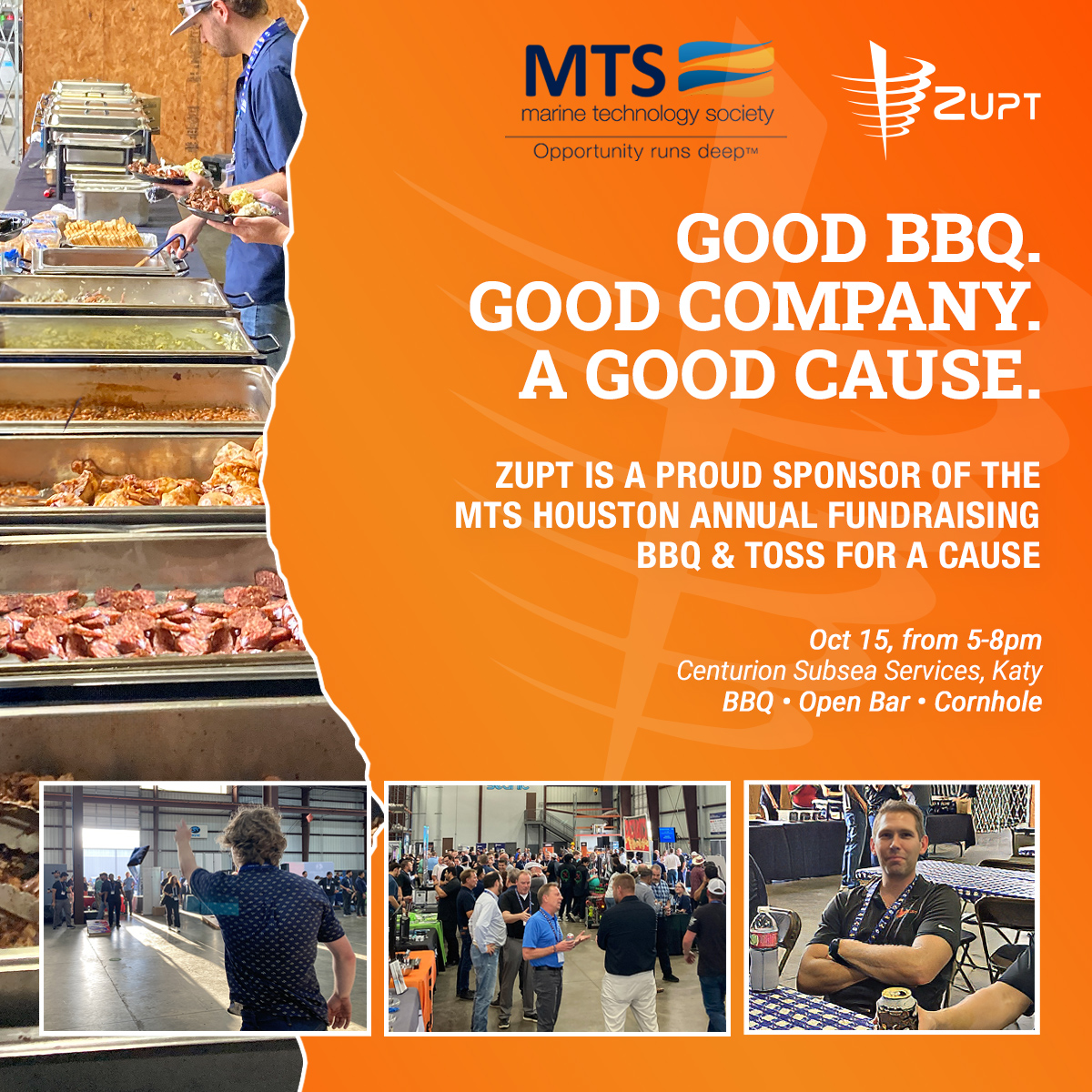
Good BBQ. A chance to catch up. And support for students entering our industry.
The MTS Houston Annual Fundraising BBQ & Toss for a Cause returns on October 15 at Centurion Subsea Services in Katy.
The evening includes BBQ, an open bar, tabletop exhibits, a silent auction, and a cornhole tournament, with proceeds benefiting MTS Houston’s student scholarship programs.
It’s a chance to reconnect with industry colleagues, meet students interested in marine technology, and help support their next steps into the field.
Zupt will be at exhibitor table 30. Stop by and say hello to our team!
Thursday, October 15, 2026, 5–8 p.m.
Centurion Subsea Services, 25310 Clay Rd., Katy, TX
Student registration is free. Advance attendee registration closes October 14 at noon.
Details and registration: https://t.co/ioznyQo0FH
#MTSHouston #MarineTechnology #OffshoreIndustry
Monitoring a subsea structure during installation does not have to mean mounting a sensor directly to it.
Zupt’s HaloCAM combines inertial navigation and machine vision to provide contactless, real-time positioning and attitude data for conductor casings, monopiles, and suction piles.
Mounted on an ROV, HaloCAM observes fiducial targets installed on the structure. Camera and inertial data are processed within a single subsea housing, giving the installation crew continuous information about orientation and position.
The active sensor stays on the ROV, reducing the need to install and recover expensive sensors on the structure.
HaloCAM provides:
🟧 Pitch and roll accuracy of ±0.1°
🟧 Heading accuracy of ±0.15° secant latitude
🟧 Absolute positioning at the same accuracy as the supporting USBL/LBL solution
Clear target visibility and dimensional control between the targets and structure are required. The ROV can maintain a 2–4-meter standoff, with updates unaffected by vibration, hammering, or jetting during installation.
Read how HaloCAM works and where it can support subsea installation: https://t.co/u44gF841gb
#SubseaPositioning #SubseaTechnology #OffshoreWind #HaloCAM
Before an ROV leaves a subsea structure during an inspection, the offshore team needs to know whether the required coverage has been captured.
The engineers reviewing that inspection also need data they can measure and use to assess asset condition.
Zupt’s 3D Recon V2 connects those stages. Real-time dense reconstruction allows operators to assess coverage during acquisition. Offline processing produces detailed 3D models for contactless measurement and engineering review, alongside still images and conventional video.
Within Fast Digital Inspection, that imaging capability can be combined with other inspection technologies to provide a broader assessment.
A case study published by Zupt in July 2025 documents a campaign combining 3D Recon with Ocean Floor Geophysics’ iCP system. More than 400 subsea structures were inspected across three deep-water developments. The integrated campaign reported a 40% reduction in vessel days compared with traditional inspection methods.
That result reflects the combined planning, technologies and offshore workflows used in that campaign.
Read how 3D Recon V2 supports coverage checks and detailed inspection review: https://t.co/57wjGNCRpa
Read the Fast Digital Inspection case study: https://t.co/Drx6rPio5w
#SubseaInspection #IntegrityManagement #3DRecon #Zupt
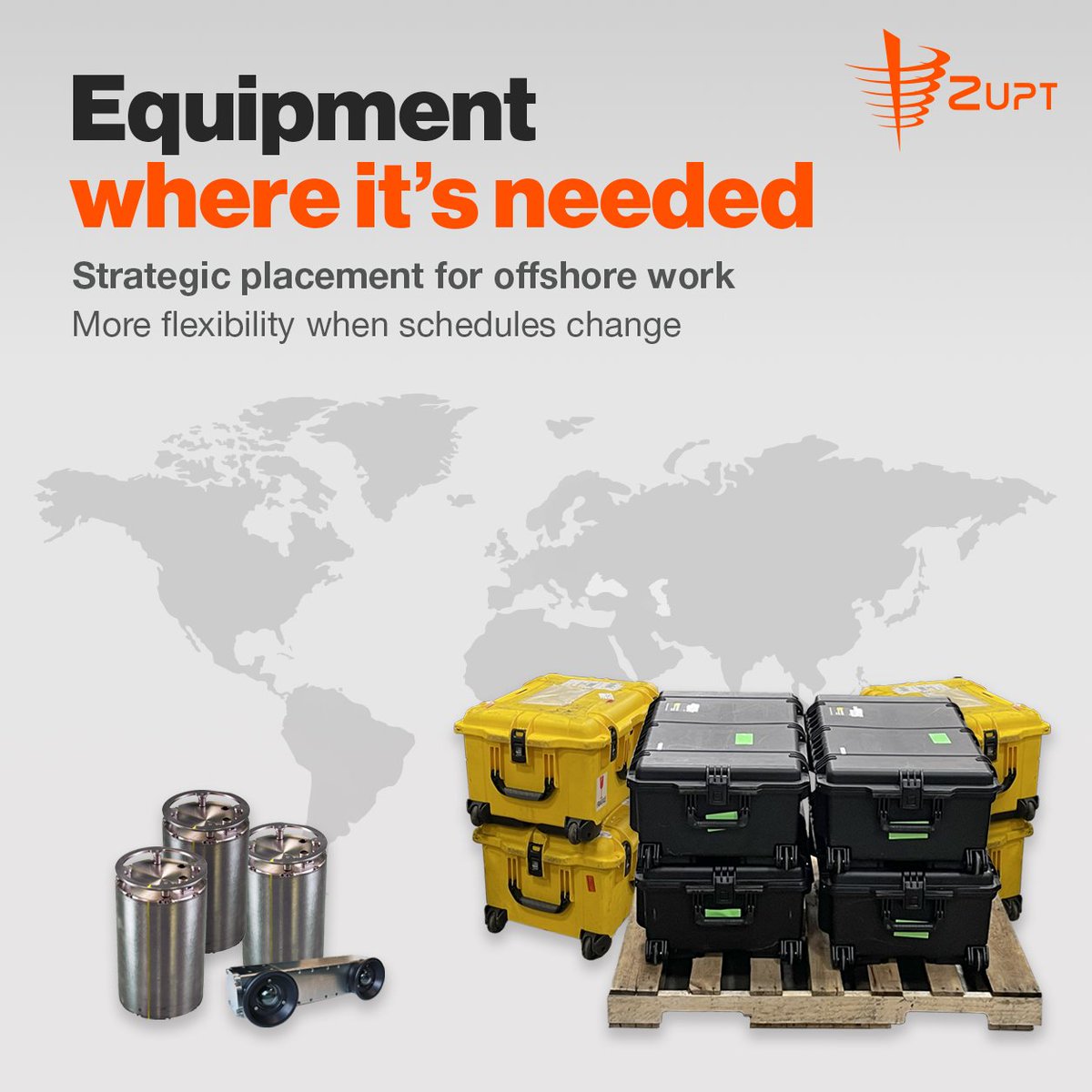
Getting a survey team to an offshore project is only part of mobilization. The equipment has to be there too.
Zupt keeps equipment strategically placed in select markets to support client work when it arises. That means a new scope does not always have to begin with shipping an entire spread across borders.
We’ve seen the value of this approach during back-to-back campaigns for different operators, where equipment already in-country could be used for the next project.
Strategic placement reduces repeated logistics and preparation work, giving our team more flexibility when clients have a short lead time or project schedules change. More info: https://t.co/MPpcsZXf0P
#OffshoreSurvey #OffshoreOperations #OffshoreLogistics
What Makes a Good Offshore Surveyor?
Offshore surveyors play a critical role in subsea operations, and the position requires a rare balance of technical knowledge and practical capability.
🟧 Mathematical expertise:
A strong foundation in mathematics is essential for datum transformations, traverses, and the precision required in subsea measurements.
🟧 Attention to detail:
Accuracy is vital; surveyors must carefully review and verify every step of the process.
🟧 Hands-on capability:
Beyond software and data analysis, surveyors must be prepared to work directly on ROV skids and equipment, often in harsh offshore environments.
🟧 Adaptability:
The role demands resilience in rain, heat, and challenging offshore conditions where operations must continue without pause.
🟧 Willingness to travel:
Projects frequently take place around the world, including remote regions such as West Africa. This makes family support and personal commitment an important consideration.
Though demanding, the role is also highly rewarding. Offshore surveyors work with advanced technology and gain experiences in places and situations few others ever will.
Watch Zupt’s Vice President of Operations, Alex Spriggs, explain more:
https://t.co/KdXxMaagrs
#Surveyor #OffshoreTechnology
This week, Zupt's Aidan Thirsk and Dave Ross are in Rio de Janeiro for ROG.e 2026. If you're attending and want to talk subsea metrology, positioning, 3D imaging and inspection, or some of the challenges you're dealing with offshore, connect with Aidan or Dave while you're there.
#ROGe2026 #SubseaTechnology #OffshoreEnergy
Another remote metrology project is underway this week in the US Gulf.
Zupt is currently supporting a C-PINS inertial metrology scope for two major players in the industry, with our equipment offshore and our survey team working remotely from our Houston headquarters.
With the equipment already offshore, our team can support data acquisition when the offshore team is ready for metrology, without requiring the full survey team to remain offshore waiting for the metrology window.
Once data acquisition is complete, the Zupt team processes and QCs the data before preparing the metrology deliverables and final report. The project scope includes delivery of the initial metrology deliverable within 24 hours of the conclusion of data acquisition.
Explore Zupt’s remote metrology: https://t.co/Oq66k0IVnv
What does remote metrology look like from the client's perspective?
Offshore schedules can change, and metrology doesn't always happen exactly when originally planned. Mobilize survey personnel too early and they may spend days offshore waiting. Mobilize too late and the vessel may be waiting for them.
Remote metrology provides another approach.
Zupt's remote metrology equipment can be mobilized ahead of time, while Zupt personnel remain onshore and ready to support the operation. When the offshore team is ready for metrology, Zupt's survey team can begin the work remotely.
The goal is simple: fit metrology into the offshore schedule rather than having the offshore schedule wait on metrology.
That means less uncertainty around personnel mobilization and an approach designed with the client's operational efficiency in mind.
That's remote metrology through the client's eyes.
#RemoteMetrology #OffshoreSurvey