Announcing OpenWorker! An open-source agent that doesn't just chat with you, but delivers finished work -- like hand you a polished document, send a slack message, or update a calendar entry.
Ask it to prepare a customer brief, untangle your calendar, draft a report, or triage a Slack alert. It works across your files and everyday tools, produces the deliverable, and checks in before doing anything consequential.
OpenWorker runs on your Mac, with Windows support coming soon. It does not lock you into any one model. Bring your own API key and run it with GPT 5.6 Sol, Claude Fable, Gemini 3.6, an open weight model (like Kimi, GLM, DeepSeek, Inkling), or Ollama to keep your data local. Your data does not leave your machine except through an LLM provider and integrations that you choose.
@rohitcprasad and I are building OpenWorker because AI coworkers are an important way to get work done, and we want there to be an open, privacy-preserving, model-independent option. Check it out and let us know what you think!
Try it out: https://t.co/P0mGnI1o31 (requires your own API key)
Source code: https://t.co/NYCiTD6hSq
So let me get this straight: a car maker taking apart a rival's car to develop their new model is fine (Ford did this with Tesla and Chinese EVs)
But an AI company inspecting another AI company's model via prompting and inspecting outputs is a "distillation attack" and not fine?
The best engineers I've met all shared one trait:
They knew a little about a lot of things.
Not experts in everything, but they had working mental models of databases, protocols, design choices, and how different systems solve problems.
This kind of breadth didn't come from their day job. They were always interested in new things, so they read articles, watched talks, and looked into interesting topics when it wasn't related to their current work.
The payoff is huge. When you've seen how a lot of different systems solve their problems, you start drawing parallels and connecting dots other people can't. That's where out-of-the-box solutions actually come from.
And it doesn't take all your weekends. 30 minutes every weekday, on something you genuinely find interesting, is enough to become a much better engineer.
The hard part isn't the time. It's the consistency. But once it becomes a habit, complex topics stop feeling intimidating, and you find yourself navigating the whole landscape with ease.
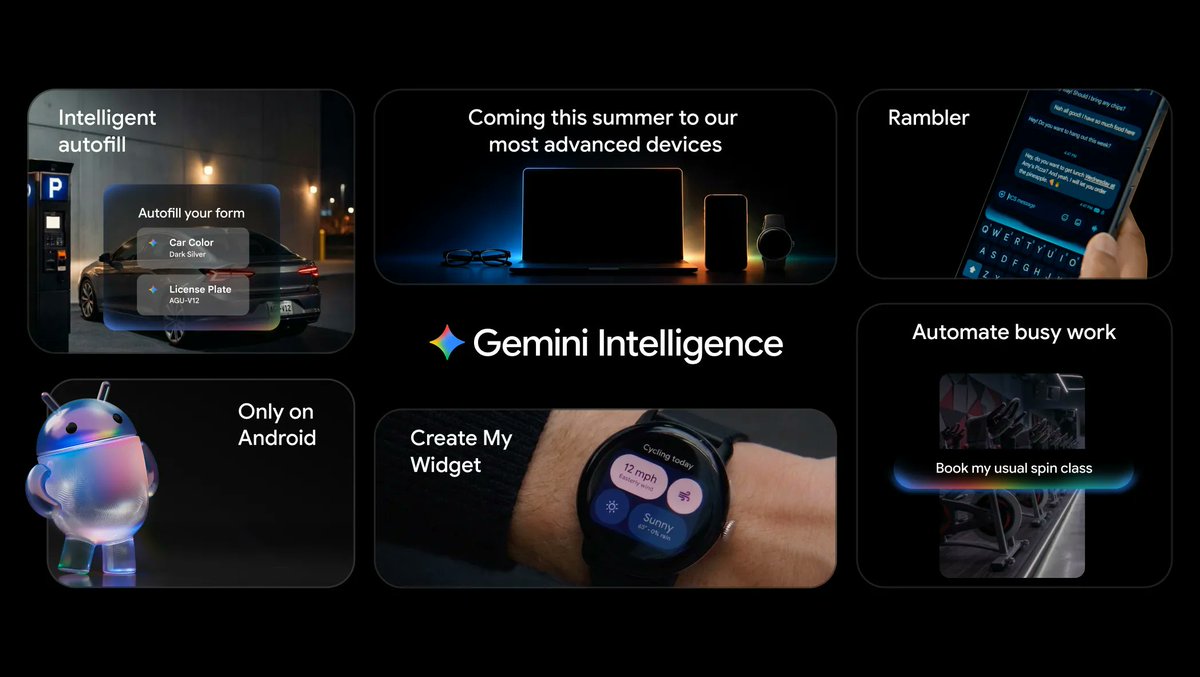
Today at the @Android Show (I/O edition) we announced Gemini Intelligence - bringing the best of Gemini to our most advanced devices.
Automate multi-step tasks across apps and Chrome, fill out forms in a single tap, turn spoken thoughts into polished text with Rambler, build custom widgets & loads more.
There will be no AI jobpocalypse.
The story that AI will lead to massive unemployment is stoking unnecessary fear. AI — like any other technology — does affect jobs, but telling overblown stories of large-scale unemployment is irresponsible and damaging. Let’s put a stop to it.
I’ve expressed skepticism about the jobpocalypse in previous posts. I’m glad to see that the popular press is now pushing back on this narrative. The image below features some recent headlines.
Software engineering is the sector most affected by AI tools, as coding agents race ahead. Yet hiring of software engineers remains strong! So while there are examples of AI taking away jobs, the trends strongly suggest the net job creation is vastly greater than the job destruction — just like earlier waves of technology. Further, despite all the exciting progress in AI, the U.S. unemployment rate remains a healthy 4.3%.
Why is the AI jobpocalypse narrative so popular? For one thing, frontier AI labs have a strong incentive to tell stories that make AI technology sound more powerful. At their most extreme, they promote science-fiction scenarios of AI “taking over” and causing human extinction. If a technology can replace many employees, surely that technology must be very valuable!
Also, a lot of SaaS software companies charge around $100-$1000 per user/year. But if an AI company can replace an employee who makes $100,000 — or make them 50% more productive — then charging even $10,000 starts to look reasonable. By anchoring not to typical SaaS prices but to salaries of employees, AI companies can charge a lot more.
Additionally, businesses have a strong incentive to talk about layoffs as if they were caused by AI. After all, talking about how they’re using AI to be far more productive with fewer staff makes them look smart. This is a better message than admitting they overhired during the pandemic when capital was abundant due to low interest rates and a massive government financial stimulus.
To be clear, I recognize that AI is causing a lot of people’s work to change. This is hard. This is stressful. (And to some, it can be fun.) I empathize with everyone affected. At the same time, this is very different from predicting a collapse of the job market.
Societies are capable of telling themselves stories for years that have little basis in reality and lead to poor society-wide decision making. For example, fears over nuclear plant safety led to under-investment in nuclear power. Fears of the “population bomb” in the 1960s led countries to implement harsh policies to reduce their populations. And worries about dietary fat led governments to promote unhealthy high-sugar diets for decades.
Now that mainstream media is openly skeptical about the jobpocalypse, I hope these stories will start to lose their teeth (much like fears of AI-driven human extinction have).
Contrary to the predictions of an AI jobpocalypse, I predict the opposite: There will be an AI jobapalooza! AI will lead to a lot more good AI engineering jobs, and I’m also optimistic about the future of the overall job market. What AI engineers do will be different from traditional software engineering, and many of these jobs will be in businesses other than traditional large employers of developers. In non-AI roles, too, the skills needed will change because of AI. That makes this a good time to encourage more people to become proficient in AI, and make sure they’re ready for the different but plentiful jobs of the future!
[Original text in The Batch newsletter.]
Stop forcing your agents to guess the unwritten rules of your business. Build the context once, then unleash your agents to do the rest—with Knowledge Catalog.
Knowledge Catalog serves as the universal context engine for your enterprise. Learn more → https://t.co/5QnokN8H6E
@levelsio@brian_lovin Always use VPS! Maybe it is difficult at first for people who never manage a server but you'll figure it out on the way, plus now you have LLM to ask! And do not forget to put Cloudflare on the front of the server!
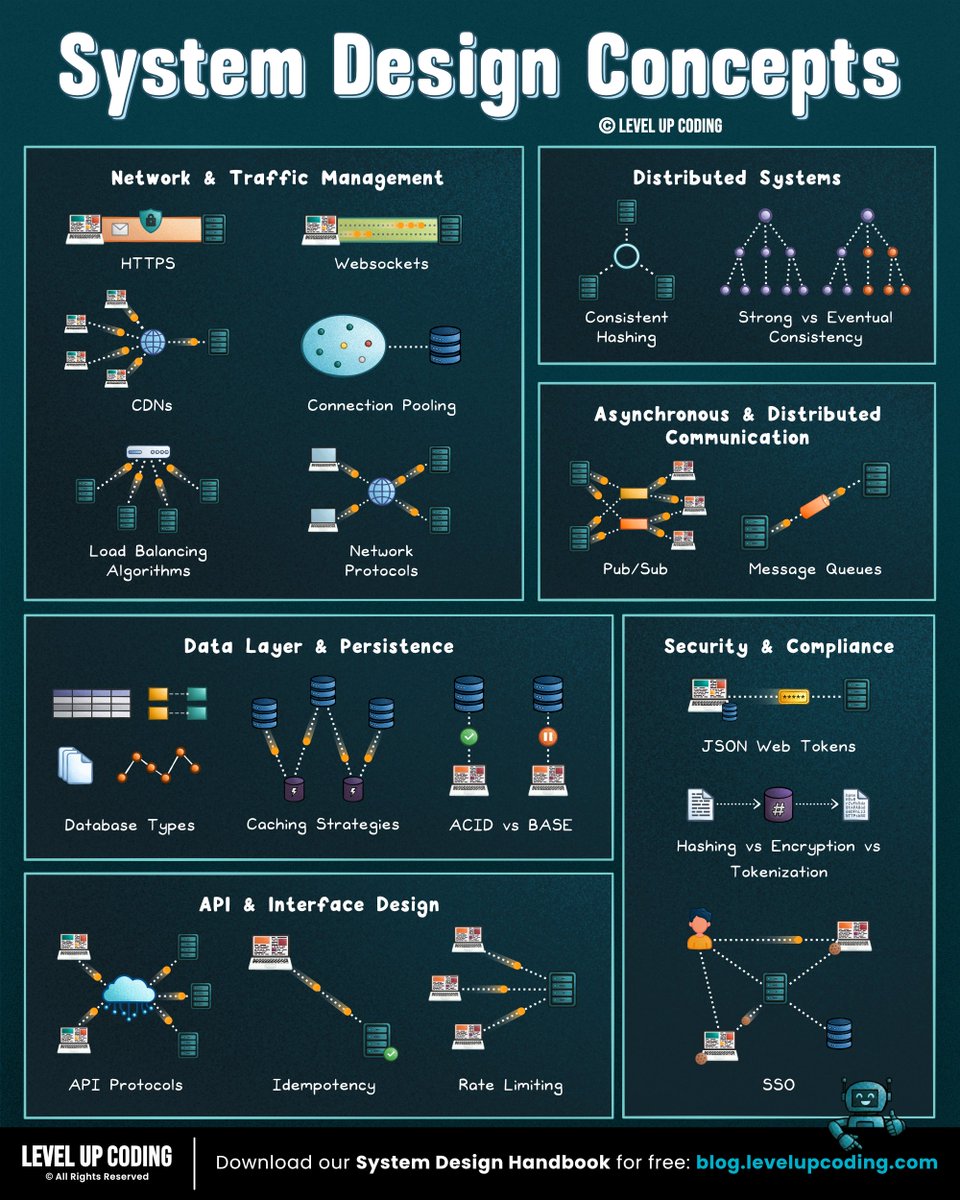
35 System design concepts clearly explained:
1. Event-driven architecture: https://t.co/QNUuf1JOy7
2. gRPC: https://t.co/QwgTXr1N9z
3. Database types: https://t.co/T0tUF1xYPI
4. CAP theorem: https://t.co/ydy88IKtGs
5. Microservices: https://t.co/1CpY04nNxb
6. Sync vs Async: https://t.co/K6ed7VWBtH
PS - if you want a structured path, get our FREE 142-page System Design Handbook when you join our free weekly newsletter → https://t.co/cjSsAXhnsG
7. ACID vs BASE: https://t.co/a7nOyylUxk
8. Rate limiting: https://t.co/wr0UAh4sJm
9. JWT: https://t.co/Kuv7DAj6B9
10. Hashing vs encryption vs tokenization: https://t.co/IuGpKc9nOK
11. Idempotency: https://t.co/2sItwlz1oe
12. Network protocols: https://t.co/tx7MlZQIwE
13. Observability: https://t.co/VjfECfyB9d
14. SSO (single sign-on): https://t.co/T1RcmX7sg4
15. Change Data Capture (CDC): https://t.co/tgwwoTitCA
16. REST APIs: https://t.co/7r5396WqFt
17. CI/CD pipelines: https://t.co/SM2YvhioIX
18. System design quality attributes: https://t.co/v9WJoUPevt
19. Bloom Filters: https://t.co/5kegJzVOBw
20. Health checks vs heartbeats: https://t.co/r5SalP6CCh
21. API gateway vs load balancer vs reverse proxy: https://t.co/Tg3EhT60tU
22. HTTPS: https://t.co/wc3CQOsmPS
23. Load balancing algorithms: https://t.co/VCLCKOZzni
24. Database caching: https://t.co/23QdZATj2o
25. API protocols: https://t.co/2CEu4Wnhsv
26. CDN: https://t.co/MbaSzBnZPQ
27. API Gateway: https://t.co/4QkLOtziCB
28. Message Queues: https://t.co/7Tz5sevNA8
29. Password storage & hashing: https://t.co/3KV1u46XJK
30. Service Discovery: https://t.co/rcKkXkWWcX
31. Pub/Sub: https://t.co/HF0Zr5R4SK
32. Connection pooling: https://t.co/39SsEo4kk3
33. Forward proxy vs reverse proxy: https://t.co/0P6NM8kh8u
34. Consistent hashing: https://t.co/8d8o74EsaS
35. SQL vs NoSQL:https://t.co/oDTRpsnQUn
What else should be on the list?
What concepts would you like me to cover?
——
👋 PS: Get my free 142-page System Design Handbook when you join my free weekly newsletter.
Join 32,000+ engineers → https://t.co/LybPLdor9s
——
♻️ Repost to help others learn system design.
➕ Follow me ( Nikki Siapno ) to become good at system design.
RIP Vercel bills.
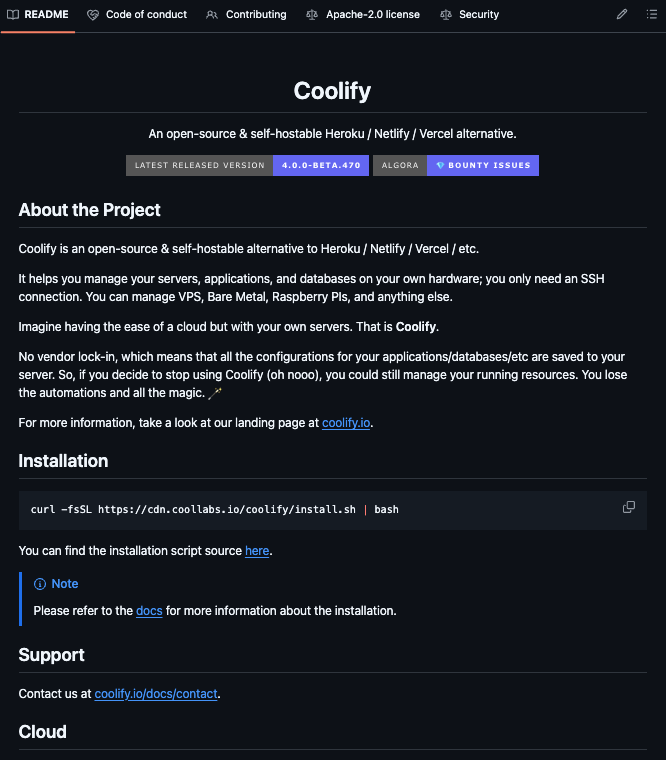
Coolify is a free, open source PaaS that kinda gives you most of what Heroku, Netlify, and Vercel do, but it runs entirely on your own server.
- One command install with curl
- 280+ one-click services you can deploy
- Postgres, Redis, MySQL, MariaDB built-in
- Auto SSL, custom domains, reverse proxy stuff
- Works on basically any VPS, bare metal, or even a Raspberry Pi
- No vendor lock-in, your configs stays on your server
51K stars. Apache 2.0. 100% open source.
https://t.co/56AX1yq2zw
Microsoft did it again!
Building with AI agents almost never works on the first try.
A dev has to spend days tweaking prompts, adding examples, hoping it gets better.
This is exactly what Microsoft's Agent Lightning solves.
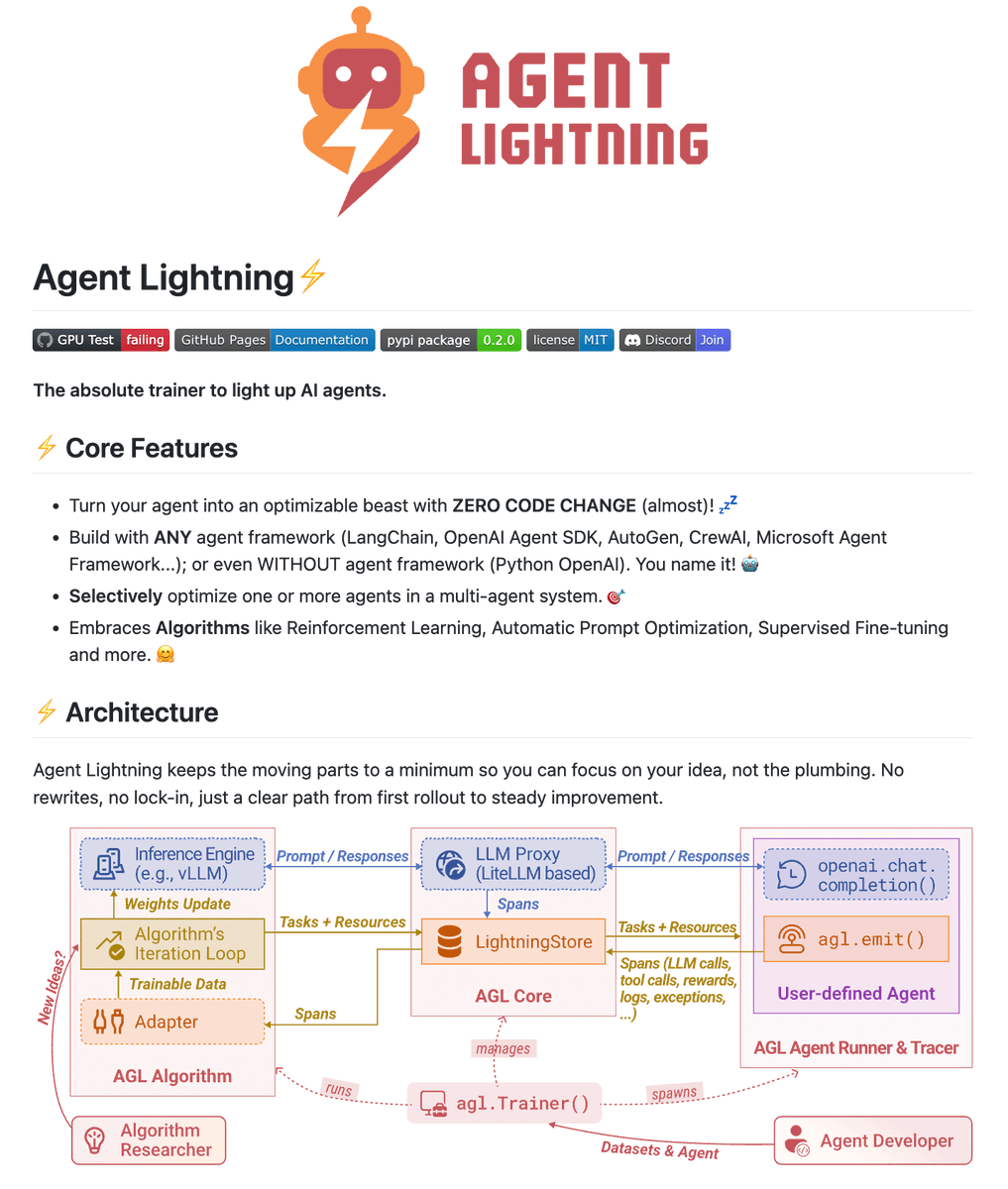
It's an open-source framework that trains ANY AI agent with reinforcement learning. Works with LangChain, AutoGen, CrewAI, OpenAI SDK, or plain Python.
Here's how it works:
> Your agent runs normally with whatever framework you're using. Just add a lightweight agl.emit() helper or let the tracer auto-collect everything.
> Agent Lightning captures every prompt, tool call, and reward. Stores them as structured events.
> You pick an algorithm (RL, prompt optimization, fine-tuning). It reads the events, learns patterns, and generates improved prompts or policy weights.
> The Trainer pushes updates back to your agent. Your agent gets better without you rewriting anything.
In fact, you can also optimize individual agents in a multi-agent system.
I have shared the link to the GitHub repo in the replies!
Native Android apps in Swift 🤯
Swift 6.3 introduces official Android support. You can now:
– build native Android apps in Swift
– integrate with Kotlin/Java
Swift goes cross-platform. That’s a big deal


![AndrewYNg's tweet photo. There will be no AI jobpocalypse.
The story that AI will lead to massive unemployment is stoking unnecessary fear. AI — like any other technology — does affect jobs, but telling overblown stories of large-scale unemployment is irresponsible and damaging. Let’s put a stop to it.
I’ve expressed skepticism about the jobpocalypse in previous posts. I’m glad to see that the popular press is now pushing back on this narrative. The image below features some recent headlines.
Software engineering is the sector most affected by AI tools, as coding agents race ahead. Yet hiring of software engineers remains strong! So while there are examples of AI taking away jobs, the trends strongly suggest the net job creation is vastly greater than the job destruction — just like earlier waves of technology. Further, despite all the exciting progress in AI, the U.S. unemployment rate remains a healthy 4.3%.
Why is the AI jobpocalypse narrative so popular? For one thing, frontier AI labs have a strong incentive to tell stories that make AI technology sound more powerful. At their most extreme, they promote science-fiction scenarios of AI “taking over” and causing human extinction. If a technology can replace many employees, surely that technology must be very valuable!
Also, a lot of SaaS software companies charge around $100-$1000 per user/year. But if an AI company can replace an employee who makes $100,000 — or make them 50% more productive — then charging even $10,000 starts to look reasonable. By anchoring not to typical SaaS prices but to salaries of employees, AI companies can charge a lot more.
Additionally, businesses have a strong incentive to talk about layoffs as if they were caused by AI. After all, talking about how they’re using AI to be far more productive with fewer staff makes them look smart. This is a better message than admitting they overhired during the pandemic when capital was abundant due to low interest rates and a massive government financial stimulus.
To be clear, I recognize that AI is causing a lot of people’s work to change. This is hard. This is stressful. (And to some, it can be fun.) I empathize with everyone affected. At the same time, this is very different from predicting a collapse of the job market.
Societies are capable of telling themselves stories for years that have little basis in reality and lead to poor society-wide decision making. For example, fears over nuclear plant safety led to under-investment in nuclear power. Fears of the “population bomb” in the 1960s led countries to implement harsh policies to reduce their populations. And worries about dietary fat led governments to promote unhealthy high-sugar diets for decades.
Now that mainstream media is openly skeptical about the jobpocalypse, I hope these stories will start to lose their teeth (much like fears of AI-driven human extinction have).
Contrary to the predictions of an AI jobpocalypse, I predict the opposite: There will be an AI jobapalooza! AI will lead to a lot more good AI engineering jobs, and I’m also optimistic about the future of the overall job market. What AI engineers do will be different from traditional software engineering, and many of these jobs will be in businesses other than traditional large employers of developers. In non-AI roles, too, the skills needed will change because of AI. That makes this a good time to encourage more people to become proficient in AI, and make sure they’re ready for the different but plentiful jobs of the future!
[Original text in The Batch newsletter.]](https://pbs.twimg.com/media/HIIb1VGaUAAZoAB.jpg)