SWARM (Single-molecule Workflow for Analysing RNA Modifications) detects pseudouridine, m6A, and m5C on individual molecules from direct RNA nanopore signals (in both chemistries RNA002 and RNA004) https://t.co/iMg2TWDKAO see more on poster P2-396 at #rna2025#RNA25#RNAmods
We describe the temporal organisation of central pre-mRNA processing events, including splicing, m6A modification and 3' end formation, during mRNA synthesis. Check out the preprint here!
dFORCE is directly applicable to mammalian tissue samples, and produces results consistent with cell culture, unlocking analysis of mRNA synthesis kinetics in vivo:
Ask ChatGPT
“based on what you know about me. draw a picture of what you think my current life looks like”
past your responses below.
thanks again @mreflow & @danshipper
R2Dtool https://t.co/czxyDjWT94 for handling, integrating, and viualising isoform-resolved RNA feature data - led by @_AJSethi#bioinformatics#RNA#isoforms
https://t.co/wPGGZxHarv
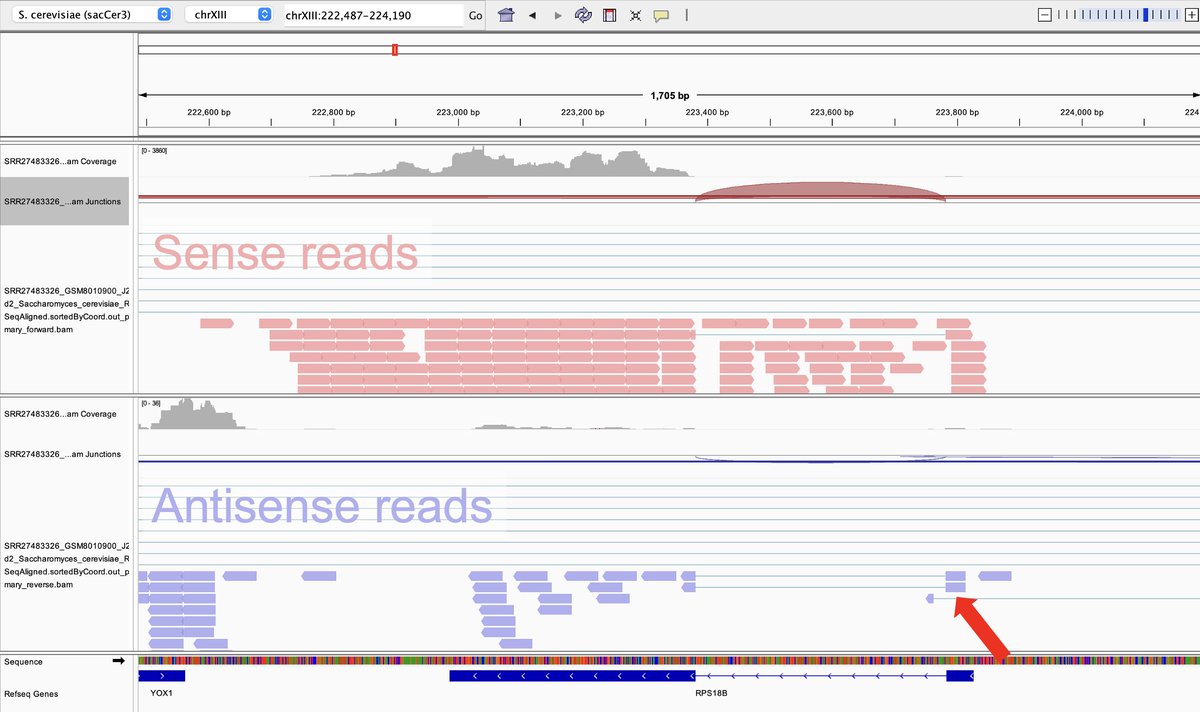
@ribonucleicacid The spliced AS transcripts could also be RT artefacts. I don't see almost any antisense mRNA reads in cerevisiae nanopore RNA libraries.
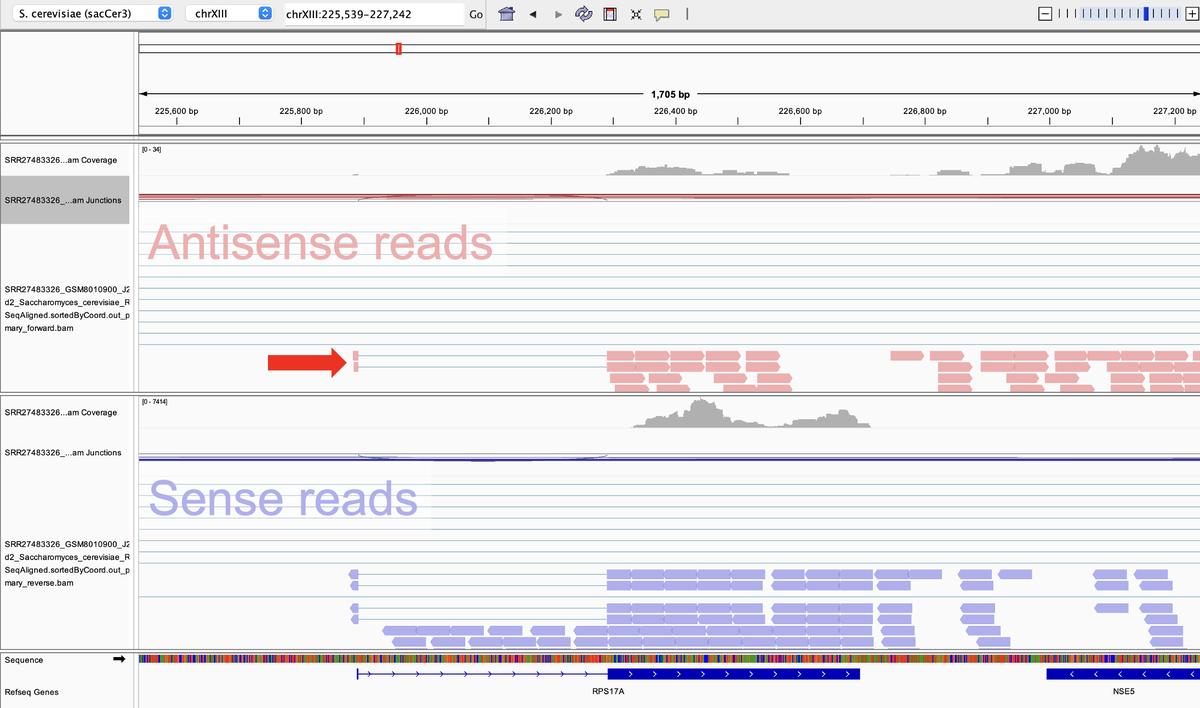
@ribonucleicacid I'm seeing splicing of sense introns on the antisense transcripts, which isn't possible if these transcripts arise from genomic transcription. Could the AS transcripts come from RNA-dependant RNA polymerase transcription of processed mRNA?
RPS17A in SRR27483326 shown:
It's finally published. This one took a long time to get through reviewers: Prediction of m6A and m5C at single-molecule resolution reveals a transcriptome-wide co-occurrence of RNA modifications https://t.co/pE7u1lQo3V