Arctic King is a premier logistics provider, specializing in dispatching carriers with temperature controlled equipment - reefers.
#trucking#dispatch#reefer
Rates out of Miami increased for 7th week in a row, this time by $0.21/mile and are now at $2.15/mi on average, with a 41% increase in spot volume compared to the previous week.
Read more here: https://t.co/ucAjboQnch
According to the USDA, watermelons top the charts as the most shipped refrigerated commodity in refrigerated trucks from the Southeast region between April and July!
Read more here: https://t.co/ok1pmYu79y
Broker weighted average gross margin update for March 2024. Loads >=250 miles. Sequential change in parentheses.
Dry Van: 13.21% (+46bps) $257.30/load (+$6.74)
Reefer: 14.38% (+49bps) $427.65/load (+$13.90)
Flatbed: 13.80% (-86bps) $303.36/load (-$14.88)
Not much change from February to March, which is what most would expect given the stagnation of rates.
Sample Stats:
Shipments=673,887
Unique Accounts = 447
Shipper Sell = $1.51m
Carrier Buy = $1.31m
Florida's produce season is kicking off from Lakeland, but it's not official until we see loads from Georgia and South Carolina. Spot rates are expected to surge in mid-April which should tighten the capacity in the South East and increase the rates.
@thefreightnerd Ships will be redirected to Norfolk, Philadelphia, or Elizabeth because there's a bridge blocking their access to the ports. This means fewer shipments coming from Baltimore and more from nearby ports. However, the main problem will be congestion on other ports.
In North Carolina, sweet potato production experiences two peaks. The main one occurs about a week before Thanksgiving, averaging around 21,000,000 lbs since 2018. The other peak typically falls around Easter with an average of about 18,000,000 lbs.
Read: https://t.co/0onbplImw3
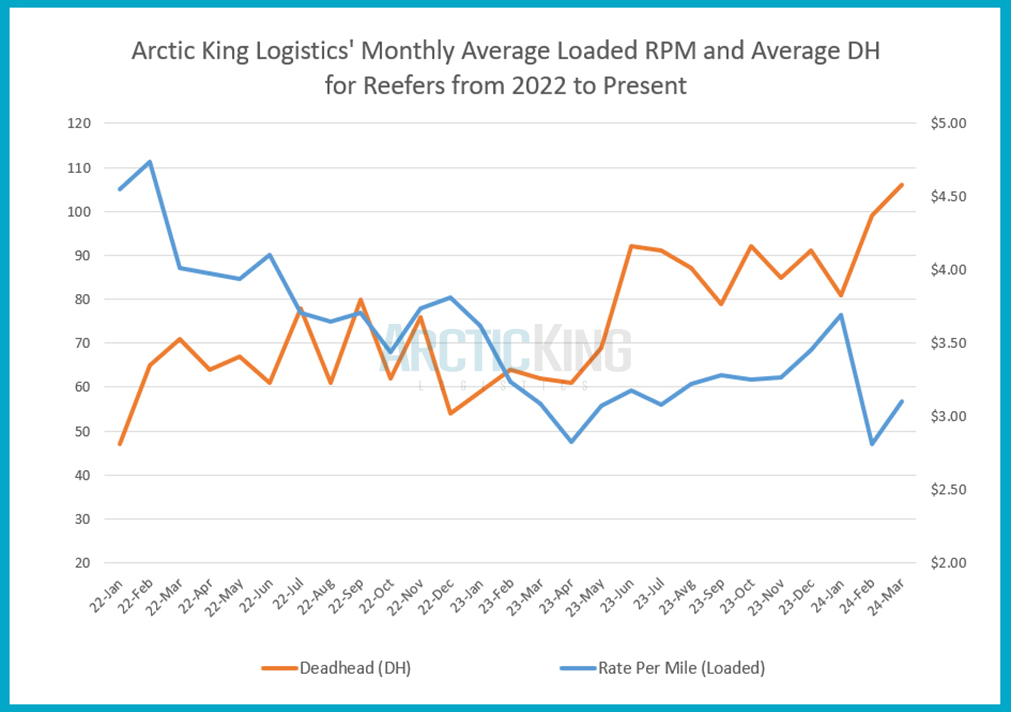
Compelling chart illustrating the correlation between deadhead and rate per mile using our company's data!
.
.
.
*Please note that this data is specific to our company, and may not reflect data from other companies.*
@kidfreight Never understood that pitch. Unless they're asset-based, claiming the best rates doesn't add up. Rates hinge on market conditions, and most use platforms like DAT, leading to similar pricing. Maybe offering solutions and knowing what you actually do might be more effective...
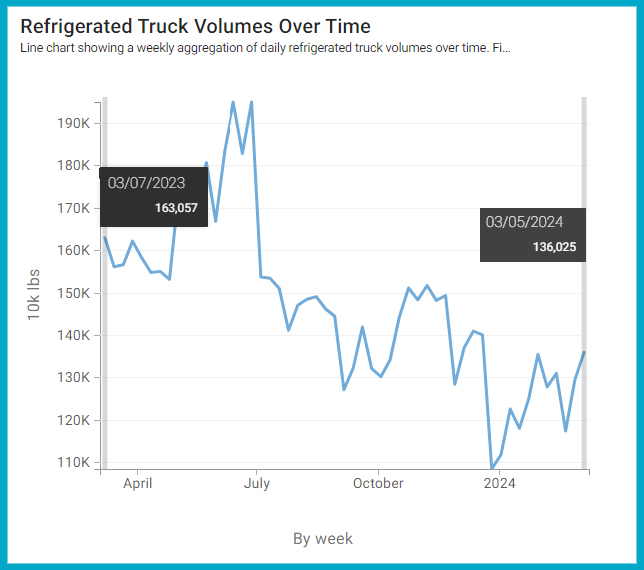
In March, market dynamics shift as seasonality takes hold. Northern states see lower volume and rates, while the South sees an increase. This marks the start of the new season for most refrigerated carriers, lasting until July.
Read more here: https://t.co/rGcz8nzcOa
@thefreightnerd Wow! 4 out of the bottom 5 are out of Florida!
Can you do that for the refrigerated side also, but include the volume factor in the equation?
@thefreightnerd If we keep seeing fewer losses each month, it means the market will stay bad. I'd feel better if losses were higher compared to last month or last year.
@thefreightnerd@freightcaviar Ken, one question. How does the subscription count affects DAT's L/T ratio? And are subscription levels fairly stable in the previous year?
I'm not feeling too optimistic about the Florida produce season.
Lettuce, Tomatoes, Cucumbers, Squash, Oranges, Eggplant, Beans, Corn, Peppers, Celery, Potatoes, Grapefruit and Tangerines were 21% down y/y in February. March is also down.
Read more here: https://t.co/8EHRvL2j0G