Excited to share my first publication from my PhD research exploring university policies for people with criminal records in the UK. https://t.co/tl6KaU1ZGm
Low-level offence, long-lasting impact
Research by @nicola_collett finds even fleeting brushes with the criminal justice system can have long-lasting negative impact.
https://t.co/JLWA9wmcCj
🧵 [1/5]
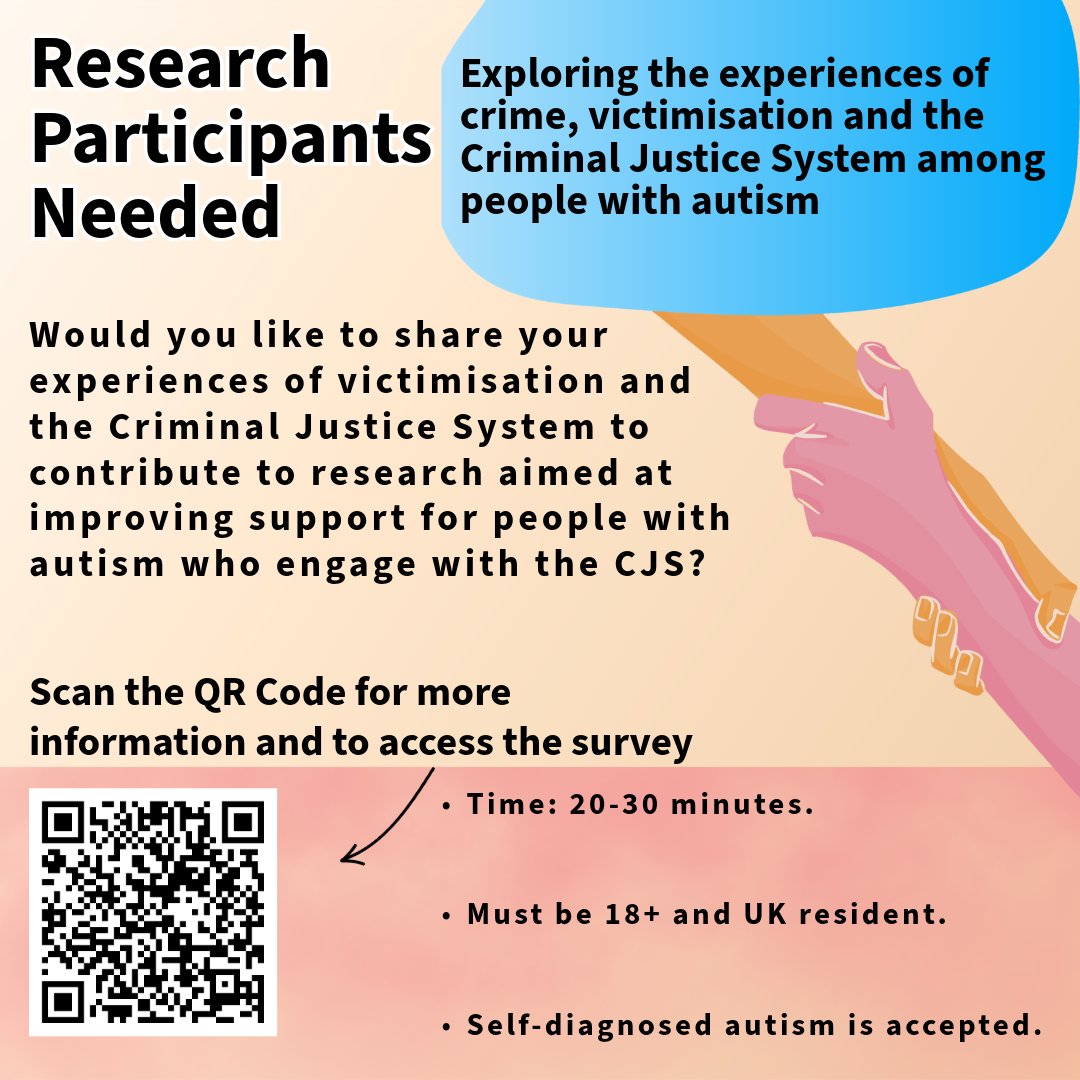
📢 I’m Josh, a PhD student at Sheffield Hallam University, researching how people with autism experience crime, victimisation, and the Criminal Justice System.
If you are interested in participating and want to share your experiences , click the link or scan the QR code for more information and access to the survey: https://t.co/u858EjQ7vX
Your input is valuable
#Autism #CriminalJustice #Research
🎂 Today is the 50th anniversary of the Rehabilitation of Offenders Act (ROA).
It has helped millions of people with criminal records move on positively, but is the legislation still fit for purpose today's world?
Find out more: https://t.co/7gZ54i34Ma
#ROAat50#ReformTheROA
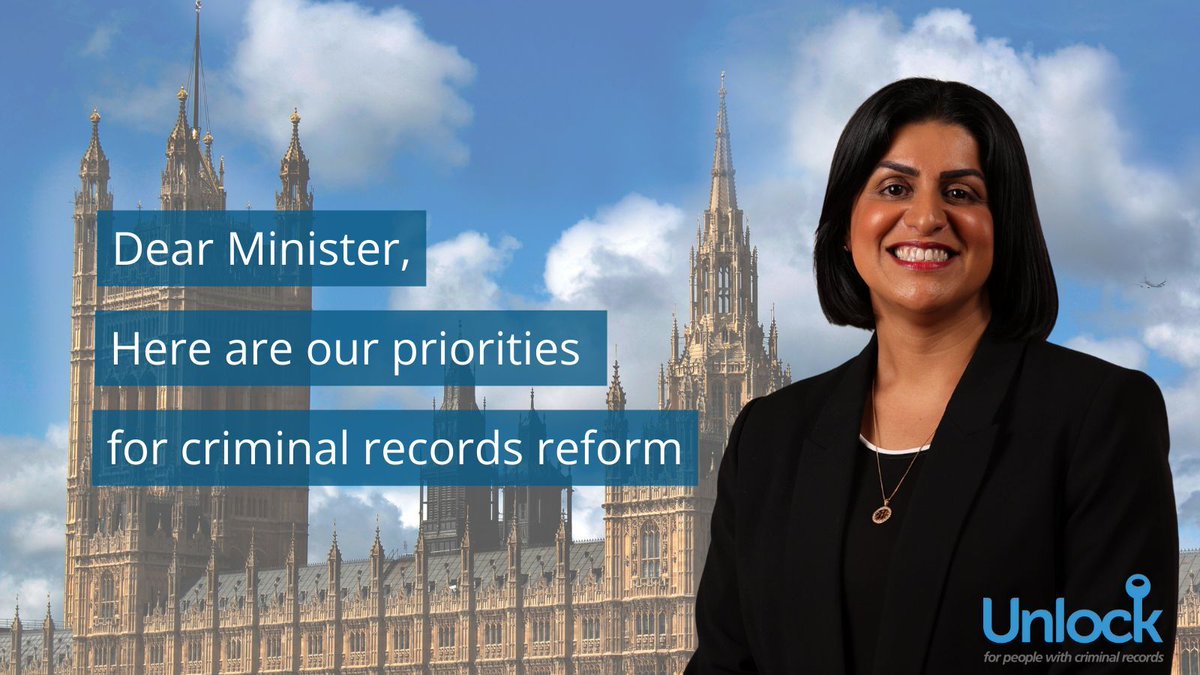
"Dear Minister, here are our priorities for criminal records reform."
Unlock calls on the new Lord Chancellor and Justice Secretary Shabana Mahmood to consider urgent criminal records reforms.
Read the letter: https://t.co/l8xzQgB5OP
"Too often people are locked in their cells when they should be in a classroom or workshop. This is a missed opportunity to make a positive difference to people’s lives."
Our CEO @jonbcollins in tomorrow's @guardian. https://t.co/4K97V5wbFV
Govt recommendations on social housing could disadvantage people with criminal records.
Under the proposals, someone with an unspent conviction and/or certain civil sanctions relating to anti-social behaviour could be disqualified from access to social housing.
🧵 [1/5]
A huge thank you to @_CPBrooks who gave a really interesting and informative talk to the @PrisonersEd staff team today on her research on access to higher education for people with criminal records.
You can read more about her research here ⬇️.
Excited to share some findings from my PhD research exploring university admissions policies for people with criminal records. Most universities continue to require applicants to disclose their conviction which can impact access to #highereducation.
NEW on Wonkhe: Charlotte Brooks presents research on the complex landscape of university admissions policies for those with criminal records @_CPBrooks https://t.co/0vtxIpWlGz
📢Call to action!
Shockingly, we know the exact number of Labradors registered in the UK, but not the number of children with a #parentinprison
We are inviting you to watch #invisiblechildren
for more info and to register your place https://t.co/x7d7UWv1Z0
@Andibrierley @Wonkhe@LeedsTrinity@curiousruth Thank you Andi and Ruth, I really enjoyed reading this and especially the important points about language.
The chancellor talked about getting people into work, but the #AutumnStatement included no mention of the 12 million people living with the stigma of a criminal record. (1)
Excited to share my first publication from my PhD research exploring university policies for people with criminal records in the UK. https://t.co/tl6KaU1ZGm
@KirkbrideHannah Thank you Hannah for the interest in the topic! Happy to chat more. This piece is all about universities requiring disclosures for degrees that don’t require enhanced checks (which most universities still do unfortunately).
Did you hear the news?
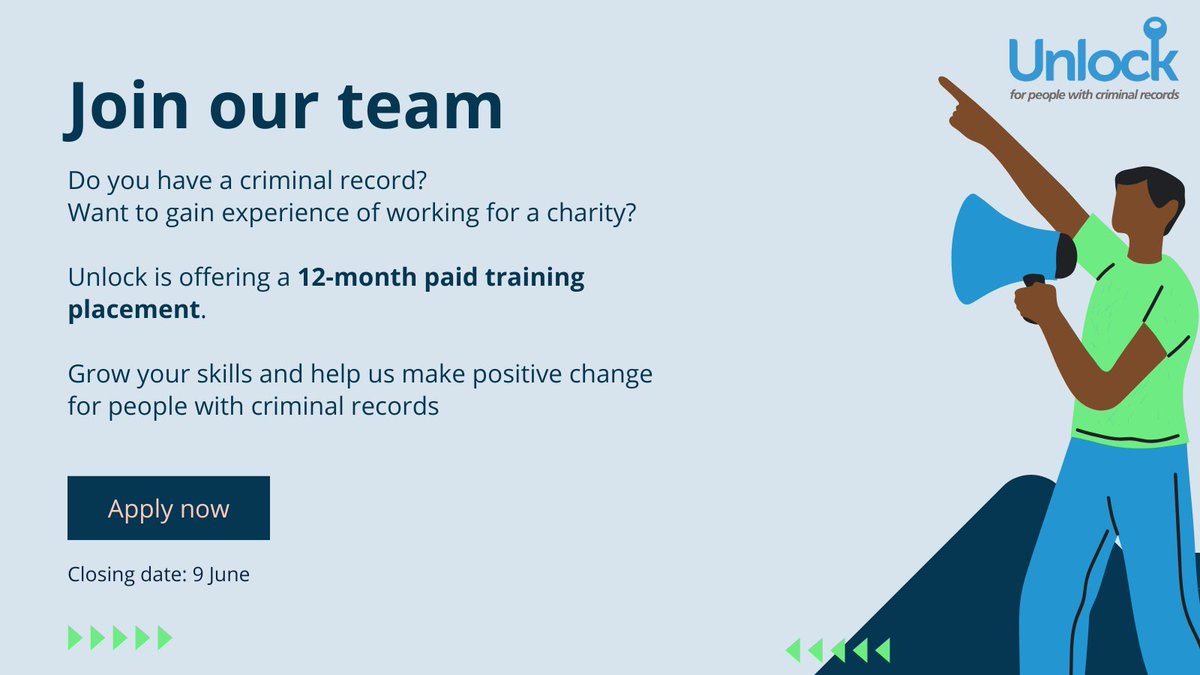
We've got a brand new paid training placement role at Unlock, open to anyone with a criminal record who wants to develop their skills and experience.
Find out more and apply by 9 June: https://t.co/ESN3ht9iHQ







![nicola_collett's tweet photo. I'm excited to be hosting the launch of a cross-sector Criminal Record Research and Reform network at a full day event, May 30th @dmuleicester [1/4] https://t.co/OdAIxCrINd](https://pbs.twimg.com/media/GNNEGVEX0AA8hHV.jpg)