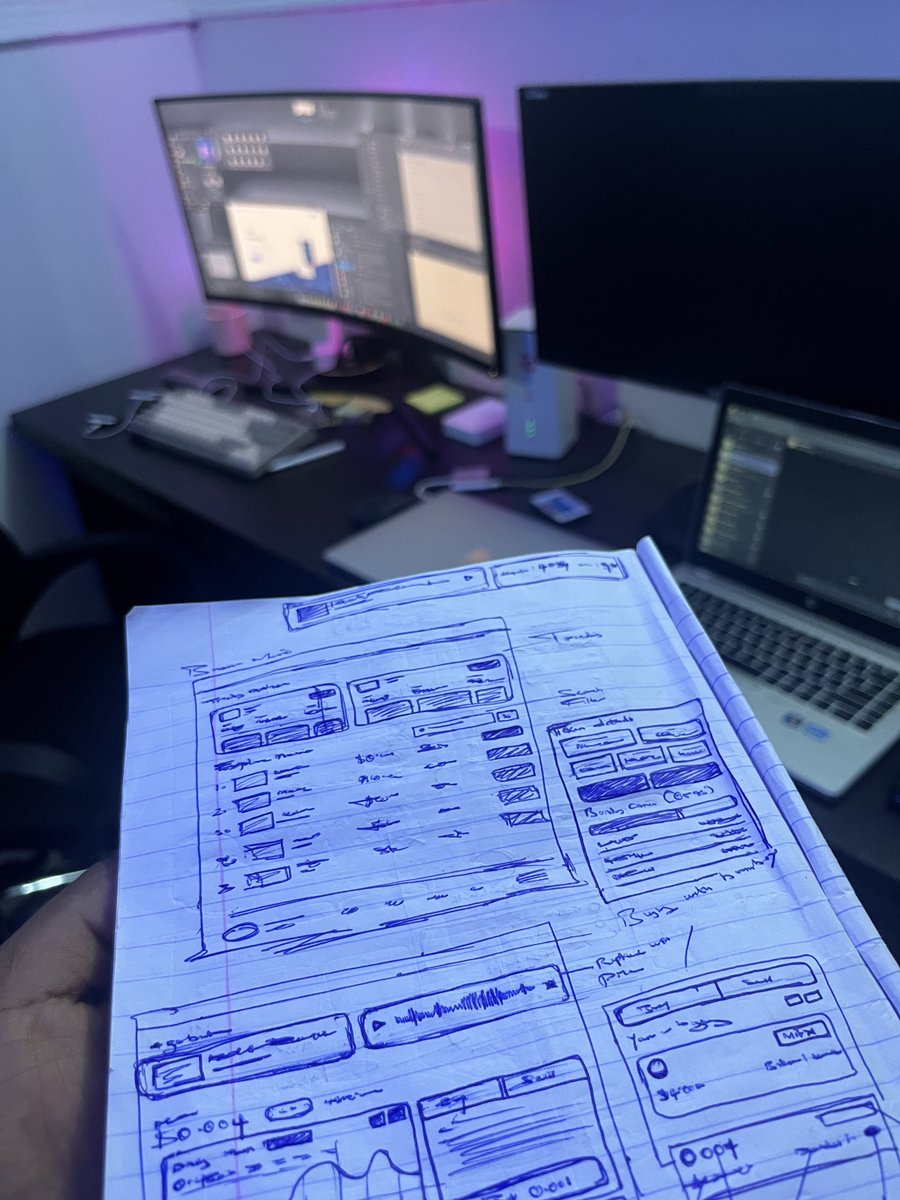
Been building a small internal tool for myself. It connects to my work email, scans for contracts, reminds me when there’s one to sign, and lets me sign and send it back to the client without leaving the tool.
Had to set up API keys on Google Cloud Console, Supabase and a bunch of other integrations. Omo, there’s a lot that goes into making these things work.
Focusing on functionality first, UI polish later.
It’s been fun ngl😂
The idea is to let you select the specific frames from your Figma file that you want included in the case study, then it takes it from there.
There could also be an option to scan the entire page and automatically select what to use, but I feel that might miss some context. I’d personally prefer having control over what goes into the case study.
I’ve had 5 of my projects featured on Contra, and I’m now trying to turn some of that experience into a skill.
The idea is to have it take your project brief, Figma link and outcome, understand what you actually built, and turn it into a well-written case study that has a shot at getting featured on Contra.
Been thinking about this for a while.
The tech world is moving so fast and it’s overwhelming. We all are trying to catch up daily and now it feels like a race.
Everyday, we have something new and you feel like you are behind.
My life this year btw!
Sometimes, the biggest obstacle to reaching people in power isn’t the people at the top, but the gatekeepers beneath them.
The people who control access to power can become more difficult to deal with than the people who actually wield it.
Don't ask AI to design for you. Ask it to build you a tool. Dive into our workflow for building custom design tools that help us design better and faster. My talk from @meetgranola Design Engineering Night is now live on YouTube.
Designed in Figma. Animated with Claude.
No regular motion workflow. Just a clear creative direction on Figma, good design decisions with clear prompts, and Claude AI helping bring the whole thing to life.
The way we're making things is changing. I'm having a lot of fun with it.
The design process is changing fast. If someone tells you they've stopped designing in Figma because they now design directly with Claude or Codex, believe them.
I watched my friend, who is a top design talent, build a beast of a tool (B2C btw) without touching Figma, all at the cost of $$$$
From my experience, not every product needs to be designed in Figma first. If you're experienced enough to turn the design in your head into clear instructions for Claude or Codex and guide it to build something clean, that works 100%.
I still use Figma a lot for collaboration and exploring visual layouts or different directions. It's faster for me because once I decide on a direction, I can send the link to that frame to Claude or Codex to keep building it.
When I work with engineers who need the designs for development, I design every state in Figma because I don't want them making assumptions. For motion, I try to recreate the components with the animation built directly into the code, or I create the motion in Figma using Motion.
Every team works differently, and design roles are changing. As a designer, my advice is simple: learn to adapt.
Figma is still an essential tool for many teams and designers. It all depends on how you work.