La tecnología es deflacionaria. La política y la regulación es inflacionaria. Ningún avance científico o tecnológico se ha debido a la política o la regulación
@alvaronieto@dlacalle La cifra de 72.000 es falsa, al igual que lo eran los 50.000, 60.000, etc y tambien los 49.500 de retornos y los 5.000 que se han quedado.
Se dan números incluso del orden de las centenas y decenas para dar sensacion de precision y control.
Pero no lo hay, todo lo contrario.
@cfranganillo O cualquier otro numero, mienten mas que hablan.
Igual que es mestira el numero de los que han vuelto y los que se han quedado.
Encima dan los numeros con precision de decenas, para dar imagen de control y precision. Cuando en realidad no tienen controlado absolutamente nada.
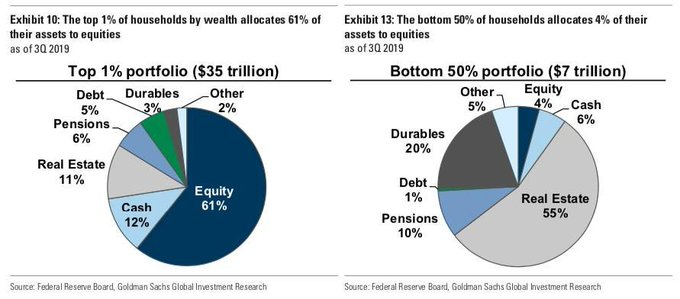
La preocupación por la desigualdad patrimonial no ha aumentado porque la riqueza esté mucho más concentrada.
Ha aumentado porque riqueza importa cada vez más que el ingreso.
Qué tan posible sigue siendo construir patrimonio únicamente con el ingreso de tu trabajo?
🧵
@jmalbares Que vergüenza se debe sentir.
Tienes una carta de 22 de tus socios europeos pidiendo que hagas tu trabajo y tu aqui mintiendo.
No hay precedentes de algo asi, pasaras a la historia.
@unchinodechina Esperate que ayer los telediarios daban las cifras hasta en unidades de centena, como si hubieran puestos tornos.
Los mismos que decian “mujeres y niños estan cruzando” mientras estaban completamente rodeados de la masa de tios.
Un chiste todo.
@MoisessParrilla@Bastos_Quotes Los valores anteriores son una ilustración modelizada para visualizar la escalabilidad, no una cotización real de fábrica. La conclusión importante es la pendiente: el motor eléctrico tiene una caída más pronunciada del coste con el volumen, lo que indica mayor escalabilidad.
@Bastos_Quotes Nada de acuerdo con tu análisis en este caso.
El motor de combustion es una tecnología obsoleta; analogica, menos eficiente y no escalable.
El problema de los fabricantes no es haber hecho caso a los burocratas de Bruselas, es haberles hecho caso por las razones equivocadas
Last quarter I rolled out Microsoft Copilot to 4,000 employees.
$30 per seat per month.
$1.4 million annually.
I called it "digital transformation."
The board loved that phrase.
They approved it in eleven minutes.
No one asked what it would actually do.
Including me.
I told everyone it would "10x productivity."
That's not a real number.
But it sounds like one.
HR asked how we'd measure the 10x.
I said we'd "leverage analytics dashboards."
They stopped asking.
Three months later I checked the usage reports.
47 people had opened it.
12 had used it more than once.
One of them was me.
I used it to summarize an email I could have read in 30 seconds.
It took 45 seconds.
Plus the time it took to fix the hallucinations.
But I called it a "pilot success."
Success means the pilot didn't visibly fail.
The CFO asked about ROI.
I showed him a graph.
The graph went up and to the right.
It measured "AI enablement."
I made that metric up.
He nodded approvingly.
We're "AI-enabled" now.
I don't know what that means.
But it's in our investor deck.
A senior developer asked why we didn't use Claude or ChatGPT.
I said we needed "enterprise-grade security."
He asked what that meant.
I said "compliance."
He asked which compliance.
I said "all of them."
He looked skeptical.
I scheduled him for a "career development conversation."
He stopped asking questions.
Microsoft sent a case study team.
They wanted to feature us as a success story.
I told them we "saved 40,000 hours."
I calculated that number by multiplying employees by a number I made up.
They didn't verify it.
They never do.
Now we're on Microsoft's website.
"Global enterprise achieves 40,000 hours of productivity gains with Copilot."
The CEO shared it on LinkedIn.
He got 3,000 likes.
He's never used Copilot.
None of the executives have.
We have an exemption.
"Strategic focus requires minimal digital distraction."
I wrote that policy.
The licenses renew next month.
I'm requesting an expansion.
5,000 more seats.
We haven't used the first 4,000.
But this time we'll "drive adoption."
Adoption means mandatory training.
Training means a 45-minute webinar no one watches.
But completion will be tracked.
Completion is a metric.
Metrics go in dashboards.
Dashboards go in board presentations.
Board presentations get me promoted.
I'll be SVP by Q3.
I still don't know what Copilot does.
But I know what it's for.
It's for showing we're "investing in AI."
Investment means spending.
Spending means commitment.
Commitment means we're serious about the future.
The future is whatever I say it is.
As long as the graph goes up and to the right.
@GustavoBolsa Si claro, al estado no le interesa sujetos independientes.
Y mientras Loterias y Apuestas del Estado con loteria nacional, bonoloto, la primitiva, euromillones, loteria de navidad, la del niño, la quiniela, etc. vende ludopatia mediante ilusion, esperanza, reunion familar…
This is probably one of the most interesting and revealing industrial stories of the year.
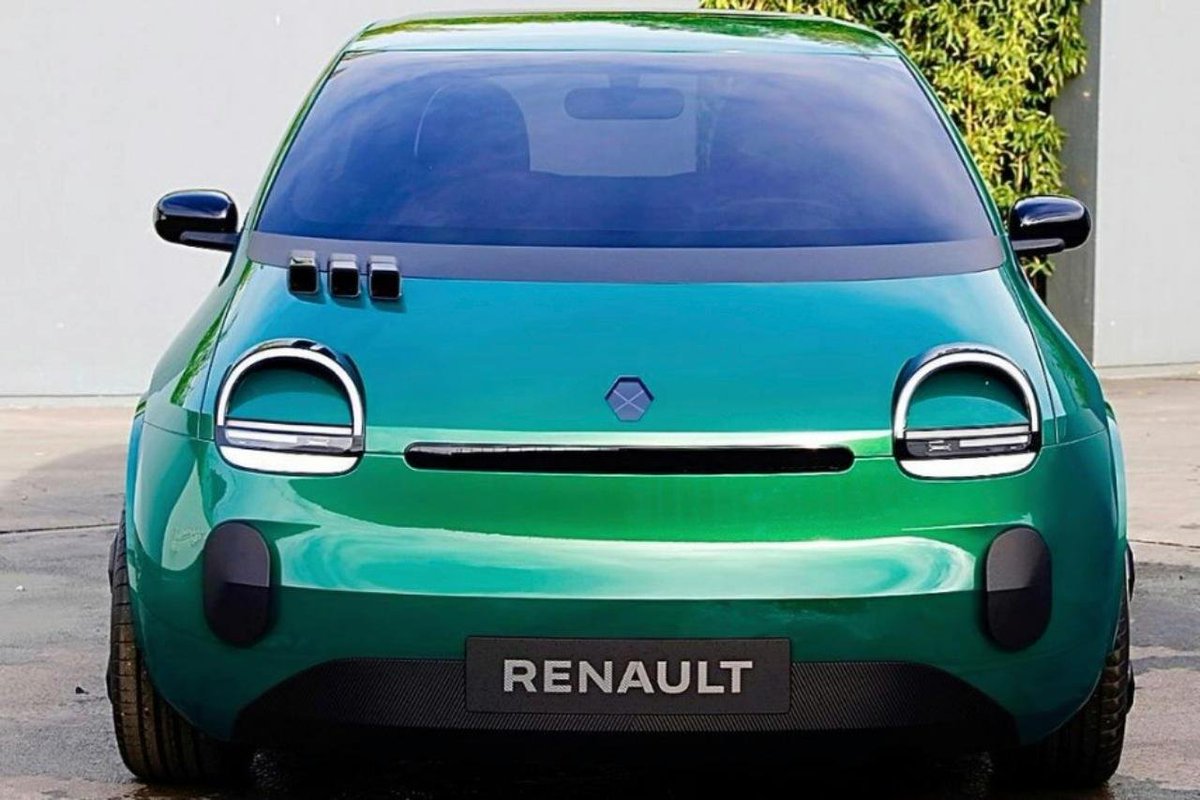
This car 👇, the 2026 version of France's Renault Twingo, is the first Western car engineered in China and made in Europe - a complete reversal of what used to be.
The challenge that Renault wanted to tackle is how to compete with Chinese EVs, which are best-in-class in affordability and speed-to-market.
Specifically, they wanted to develop an EV car from scratch in less than 2 years (when it normally takes 4 years to develop a new car for European auto makers) and be able to sell the car profitably for less than €20,000 while building it in Europe. Which is all insanely ambitious if you know about the European auto industry...
To do so, Renault opened a Shanghai R&D center (which they called "ACDC" in reference to both the band and the electrical current) where 160 engineers - 150 Chinese and 10 French (https://t.co/8x1LFwcrL1) - essentially tried to make Chinese development method work for Renault, in the heart of China's EV ecosystem to understand what was possible.
As the lead engineer on the project, Jérémie Coiffier, put it (https://t.co/HVDvxWj9pD): "We humbly came to learn to go fast. And learning to go fast isn't simply learning to do the same thing faster. It's doing things differently. It's a transformation."
And it worked: they had a first prototype in an insanely fast 4 weeks (https://t.co/Dd6XHu0Lro)!!! The entire development process took just 21 months.
The end product is priced under €20,000 - after subsidies, around €15,000 - making it one of Europe's cheapest EVs and competitive against Chinese EVs.
46% of the car is made of Chinese parts (https://t.co/a8leFDuaKq), including an LFP battery from CATL (the first Renault to use cheaper lithium-iron-phosphate chemistry instead of traditional lithium-ion), and an 82 hp motor from Shanghai Edrive with permanent magnets (unique among Renault EVs).
Interestingly, the CATL batteries will be made in Europe too, specifically in Hungary (https://t.co/yqZVJIgrXW).
This is one rare story that gives me hope for Europe. Let's be real about Europe's choices here. It could either 1) keep raising tariff walls to protect an uncompetitive EV industry, 2) exit the EV race entirely or 3) swallow its pride and learn to improve. Renault chose the latter, which is the right thing to do.
Especially hard to do in the current climate where everyone is told to "decouple" and "de-risk," which is pretty much suicidal in the EV industry: on the contrary you very much need to "couple" and "risk" in order to learn, adapt and compete... Those French engineers saying "we humbly came to learn" probably did more for European industrial competitiveness than all the Think Tank papers in Brussels combined.
Mises gave us the recipe for civilization:
1. Civilization requires economic calculation
2. Calculation requires prices
3. Prices require markets
4. Markets require exchange
5. Exchange requires private property
Therefore:
No private property → no prices → no calculation → no coordination → no civilization.
And, the extent to which private property is violated (aka taxed) is the extent to which civilization is eroded.
#Bitcoin is the strongest form of private property in the history of the human race.