🐷 🦗 Adding crickets to feed could be a 'promising strategy' to replacing traditional proteins in weaning pig diets, according to scientists in Thailand: https://t.co/1Y2g4C9rjq
#pigfarming#swine#insects#alternativeprotein
Poo and skin of black soldier flies can reduce the impact of cabbage root fly, a troublesome pest of brassica growers. Researchers at @WUR say the discovery could help reduce pesticide use and make use of waste products from the alternative feed industry: https://t.co/kcUr96D8Z4
Scientists have discovered a mechanism in plants that allows them to remember stress caused by insect attacks and prime themselves against future strikes - potentially paving the way for breeding crops that don't need pesticides:
https://t.co/lp1uDEyguv
#sustainableag#agtech
Consumer squeamishness coupled with EU rules means insects are off the plate for Europe's chickens - for now. But the poultry industry's large environmental footprint means more focus needs to be placed on alternative feed solutions, say scientists: https://t.co/r7VlMXcWhG
🐷 🦗 Adding crickets to feed could be a 'promising strategy' to replacing traditional proteins in weaning pig diets, according to scientists in Thailand: https://t.co/1Y2g4C9rjq
#pigfarming#swine#insects#alternativeprotein
Species of probiotic Bacillus bacteria have shown promise as a biological control against the pathogen that causes wheat blast - a fast-acting and highly destructive fungal disease that affects parts of South America, Asia and Africa: https://t.co/nMVcrgGOWb
Scientists at @WUR have developed a new approach to measuring soil carbon stocks - a development that could pave the way for more effective carbon farming: https://t.co/yfHCUWpPN6
#carbon#carbonfarming#sustainableagriculture
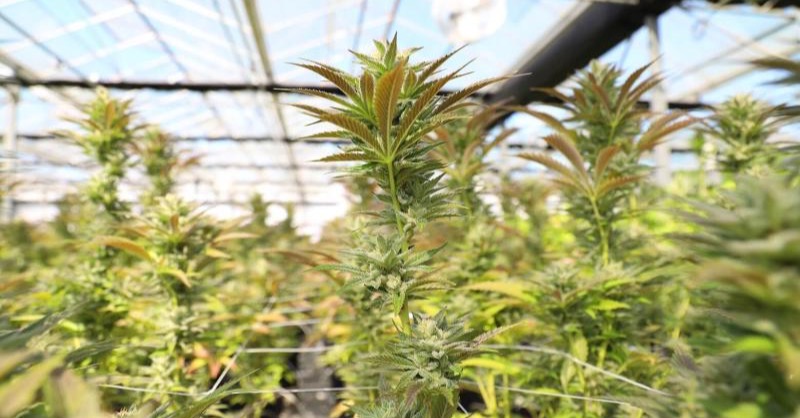
Scientists in Spain have discovered that essential oils from #hemp can be used against a variety of crop pests, as well as some insects that pose a health risk to humans and livestock:
https://t.co/GqqX1F1v4q
Soil texture may be more important than farm management techniques when it comes to how much organic carbon is stored in sequestration schemes, according to researchers from Austria's @BOKUvienna: https://t.co/6U2dfnP0bD
Scientists in Spain have discovered the parts of the genome linked to pigs' immune response, potentially paving the way for breeding animals that are more disease resistant: https://t.co/y8oXhx7oUA
#pigs#swine#pigproduction#genomics
Virtual fencing can help reduce the need for labour, but researchers at @up_poznan in Poland think the tech can go even further by helping livestock producers in 'high natural value' areas where traditional fencing can't be used: https://t.co/u4GMTrjA95
#agritech#agtech
Species of probiotic Bacillus bacteria have shown promise as a biological control against the pathogen that causes wheat blast - a fast-acting and highly destructive fungal disease that affects parts of South America, Asia and Africa: https://t.co/nMVcrgGh6D
The idea of introducing robots onto farms has so far focused on automating agricultural practises. But would the industry see faster and bigger improvements if farmers worked arm-in-arm with robots?
https://t.co/Gm9mQ1YRrZ
#agtech#agritech#robotics
Scientists at @WUR have developed a new approach to measuring soil carbon stocks - a development that could pave the way for more effective carbon farming: https://t.co/yfHCUWpPN6
#carbon#carbonfarming#sustainableagriculture
Scientists have discovered a mechanism in plants that allows them to remember stress caused by insect attacks and prime themselves against future strikes - potentially paving the way for breeding crops that don't need pesticides:
https://t.co/lp1uDEyOk3
#sustainableag#agtech
Scientists in Spain have discovered that essential oils from #hemp can be used against a variety of crop pests, as well as some insects that pose a health risk to humans and livestock:
https://t.co/GqqX1F1v4q
Consumer squeamishness coupled with EU rules means insects are off the plate for Europe's chickens for now. But the poultry industry's large environmental footprint means more focus needs to be placed on alternative feed solutions, say scientists: https://t.co/r7VlMXcWhG
Payments available for ‘carbon farming’ approaches in the US aren't high enough to incentivise farmers to get involved in quality sequestration projects, according to a report by The Center for Growth and Opportunity at @USUAggies: https://t.co/xbJaLr0hj3
#carbonfarming
Planting cover crops has a bigger impact on early-season pest damage than preventative or reactive pesticides, according to a 3-year experiment on a corn-soy rotation by researchers at @penn_state:
https://t.co/UvT6pWgBFj
Soil texture may be more important than farm management techniques when it comes to how much organic carbon is stored in sequestration schemes, according to researchers from Austria's @BOKUvienna: https://t.co/6U2dfnP0bD