🚨Do you enjoy nerding out on transmission cost allocation? Does adding another tab to your "reports to read" window warm your heart?
Well I have good news. ECA, with Grid Strategies and ACEG, is out with a new primer on transmission cost allocation and cost recovery. 🧵 1/
took everything in me not to add "if crude is all that is possible, it will have to suffice" (ICC2, and also me, right now) at the bottom of my energy law exam
44% of evening peak met by batteries. In California, world’s 4th largest economy. Not some tiny pilot project or a niche experiment, a global industrial powerhouse
If you’re still sitting in boardrooms or parliament banging on about baseload and the intermittency of renewables, you’re not just wrong, you’re a dinosaur
California's 44% isn't an anomaly. It's a preview of the 2027-2030 reality for every major grid overbuilding renewables
The "technical barriers" the fossil fuel lobby loves to cry about are gone. We are shifting solar and wind into the night at a massive, industrial scale. We don't need expensive, inflexible coal or gas to keep the lights on; we need more storage and we need it now - everywhere
https://t.co/geHZpe7hNA
SOMEONE BUILT A MAP THAT SHOWS EXACTLY WHERE EVERY POWER PLANT, TRANSMISSION LINE, SUBSTATION & DATA CENTER SITS ON THE US GRID
all on one interactive map. all free
you can see how the grid is laid out... where the datacenters cluster... which transmission corridors carry the load... where the high-capacity connection points are
https://t.co/bRWJj6OA5P
zoom into any region and the whole picture comes into focus why energy costs what it costs, why data centers go where they go, why some states are power exporters and others aren't
this is the kind of infrastructure visibility that used to require expensive industry reports
now it's one tab
Making a Substack felt like a rite of passage for being in the latter half of graduate school. I will be talking about energy. Here it is: https://t.co/vQSdozbtfR.
I'm digging into how data centers <> thermal energy networks can support tech companies and states in meeting clean energy targets. Think Google's Hamina project, ConEd's Chelsea UTEN pilot, and PG&E's San Jose Net-Zero Community.
If you're down to chat, please send a PM! ⚡️
"Thermal energy networks, grid-interactive storage, and load flexibility represent proven strategies to transform data centers into grid and community assets." 👏
https://t.co/6XzYVTqokL
We hear a lot about data centers, their cooling systems, and how much water it takes to keep servers from overheating.
Until finding this chart, however, I hadn't seen anything that spelled out how different data centers choose different cooling technologies.
Data centers that specialize in AI software, for example, are using a dramatically different mix than hyperscalers.
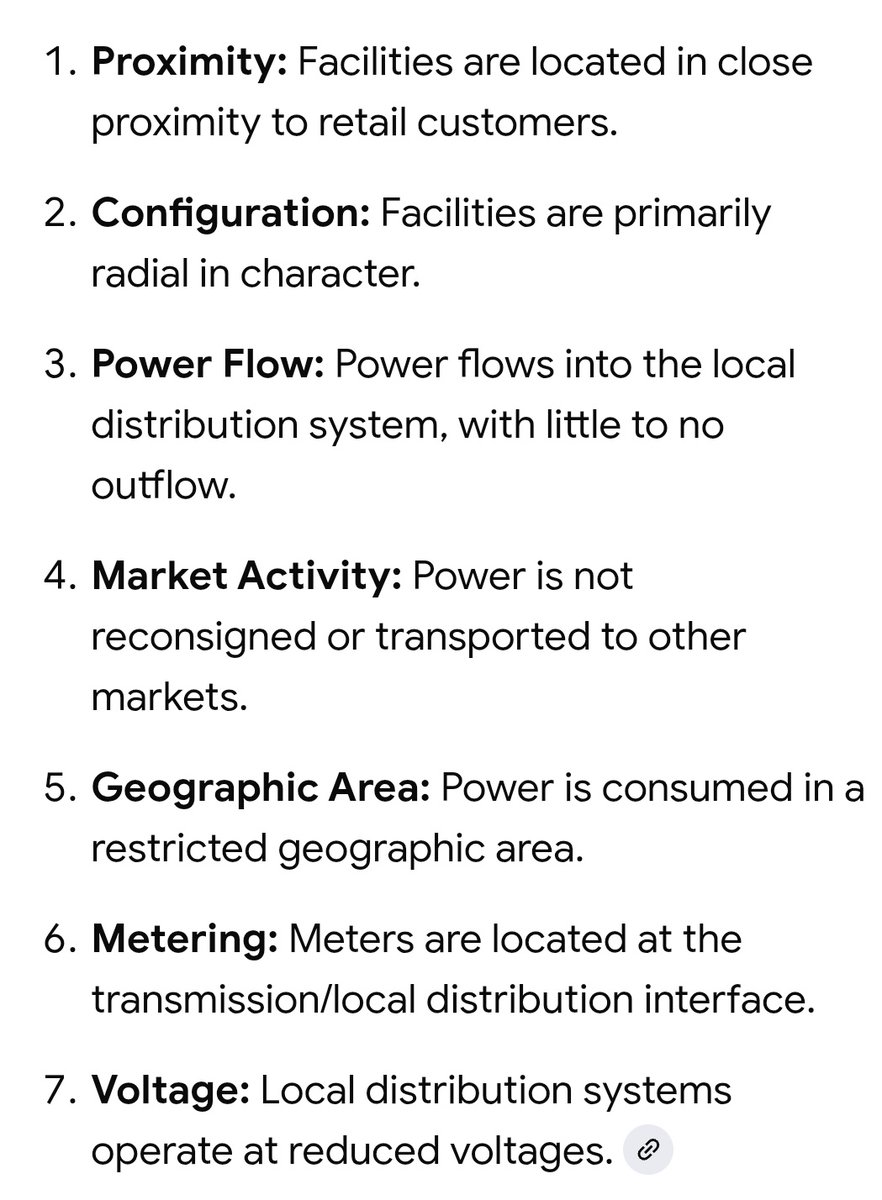
Sorry #energytwitter, but before anyone can definitively tell whether that pole Bad Bunny was dancing on is Transmission or Distribution, you will need to apply @FERC's Seven Factor Test -->
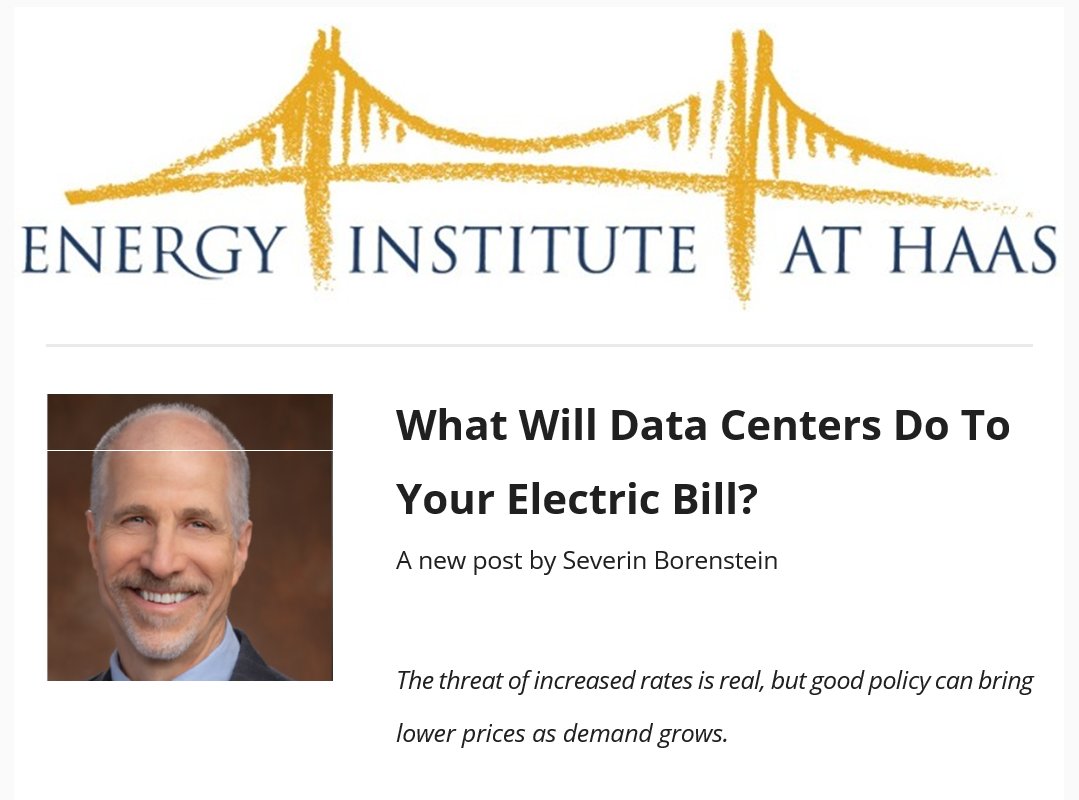
New from Severin Borenstein (Chair of CAISO & UC Berk Prof): "The key to making new data center electricity demand a benefit to other customers is to create incentives for these new loads to restrain their peak demand and to avoid discount pricing so the new loads significantly contribute to covering system fixed costs." https://t.co/MKgR0JsHxf
Trump's new tariffs appear equivalent to imposing a CO2 tax of $400/ton on US power sector emissions, in terms of revenue equivalent - more than 8X the Obama-era social cost of carbon and 4-5X the EU's emissions trading system.