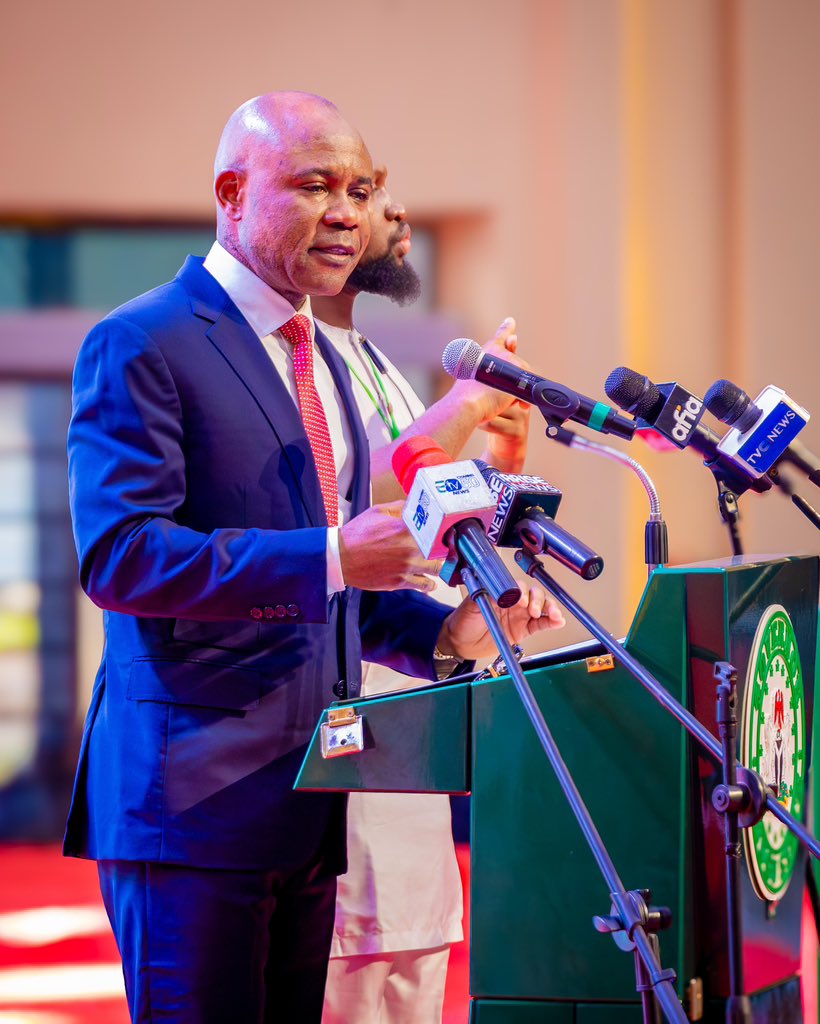
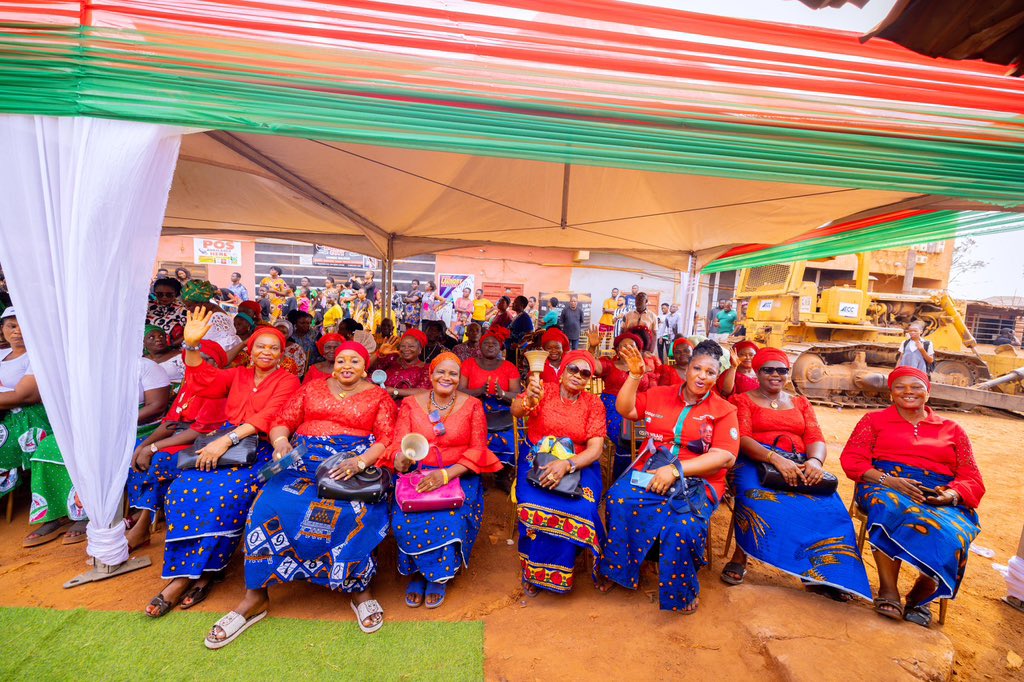
I am deeply honoured by the overwhelming support and confidence reposed in me by the faithful of our great party following my emergence as the APC gubernatorial candidate for the 2027 election. I accept this nomination with gratitude and a renewed commitment to deepen service and deliver greater value to Ndi Enugu.
From security to healthcare, education, transportation, agriculture, industrial revival, and infrastructure, we have shown that governance can be purposeful, measurable, and people-centred. What once seemed distant is now visible in the everyday lives of Ndi Enugu.
𝗧𝗼𝗺𝗼𝗿𝗿𝗼𝘄 𝗶𝘀 𝗵𝗲𝗿𝗲 is no longer slogan. It is now reflected in safer communities, smarter schools, modern healthcare centres, revived industries, improved roads, growing investments, and expanding opportunities for our people.
But we are not done yet. The journey continues, and together, we will build an Enugu that is more prosperous, more secure, and globally competitive.
𝗧𝗼𝗺𝗼𝗿𝗿𝗼𝘄 𝗶𝘀 𝗵𝗲𝗿𝗲.
Yesterday was more than a visit. It was a powerful reminder that the future already has a voice, and it is bold, united, and deeply invested in the progress of Enugu State.
I welcomed over 200 student leaders and stakeholders representing NANS, NAUS, NAPS, NFSAN, NACESS, NUNS, FEWS, FANS, NSLC, and other student bodies, whose endorsement and collective ₦100 million contribution towards my nomination reflected their high confidence in the journey we have begun together.
To the young people of our state, I hear you, I value you, and I remain committed to creating an Enugu where your ambitions can truly thrive.
𝗧𝗼𝗺𝗼𝗿𝗿𝗼𝘄 𝗶𝘀 𝗵𝗲𝗿𝗲
This is about more than relevance. It is about survival. It is about ensuring that in a rapidly changing Nigeria and a competitive world, the South East is not left managing decline, but building its prosperity. That responsibility sits with us. We carry on our shoulders the enormous weight of history. And history will not ask what we said in this room. It will ask what we did when we left it.
Thank you.
Second, we must begin with logistics and connectivity, because economies do not integrate on paper, they integrate through movement. The South East needs its first deliberately designed interstate logistics corridors, road, rail, inland hubs, and multi-modal systems that allow goods, people, and services to move seamlessly across state lines. These are not prestige projects. They are productivity infrastructure, and they must be planned and contracted as regional assets, not state trophies.
Third, security must be treated as regional infrastructure. Criminal networks do not respect state boundaries, and neither should our response.
Criminals in the zone should be ring-fenced, so they don’t simply find sanctuary elsewhere once dislodged from a neighbouring state. We must commit to enhanced cross regional security coordination, shared intelligence, interoperable communication, and a centralised information and response hub that allows state security architectures and federal agencies to act as one system. Safety is not just a social good; it is a precondition for investment and everyday economic life.
Fourth, we must align the rules of engagement, investment processes, regulatory expectations, and dispute resolution, so that the South East presents a coherent face to capital, enterprise, and its own citizens. Complexity discourages participation. Predictability enables growth.
These are the first moves. They are achievable if we decide, collectively, to treat the region as the unit of execution.
Initially, the true cost will be revealed in our inability to embrace a different mindset. We must be willing to engage honestly with the dialogue around change. We must balance personal priorities with a systems thinking approach.
For too long, collaboration has been treated as a courtesy rather than a necessity. Regional thinking has been aspirational rather than operational. We agree in principle, but retreat into familiar silos when decisions become difficult. A region that remains busy, talented, culturally alive, but increasingly peripheral to where value is created. A region that exports people instead of products, dreams instead of industries. A region whose children learn to measure success by distance travelled, not value built at home. That region is not offering a future worthy of its people. So, this forum must mark a shift from conversation to commitment.
There will be obstacles: Old habits; Political friction; Personal differences; Impatience for quick wins; Scepticism born of past disappointment. We should not underestimate these challenges. But we should also be clear-eyed about the alternative. Nothing we will encounter by trying to change this system will be more damaging than leaving it as it is.
So, the question before us is not whether this is difficult. It is whether we are prepared to do what difficulty demands. Before we leave this hall, we must be able to say, practically, what comes next. How coordination will work. How priorities will be sequenced. How accountability will be shared. How momentum will be protected. Because the future of the South East will not be shaped by the quality of our language today, but by the discipline of our actions tomorrow.
Let me end where I began. This region has never lacked energy. It has never lacked ambition. It has never lacked talent. What it has lacked, until now, is a shared system strong enough to hold those strengths together. Vision 2050 is our chance to build that system as a framework for action, not for someday, but starting now.
So, let us leave this forum with clear commitments to fund and begin regional feasibility work immediately, to prioritise interstate logistics as the backbone of integration, to coordinate security as a shared regional responsibility, and to align our institutions around execution, not rivalry.
This region has a long memory. Long before modern borders, our people understood cooperation not as sentiment, but as logic. Trade moved across communities. Skills travelled. Markets connected producers and buyers across distances. Identity was common and our purpose was shared. No one waited for permission to collaborate, because collaboration was how life worked. That instinct did not disappear. But it was interrupted by the creation of separate administrative states. Today, we feel the consequences.
We are culturally aligned, but structurally fragmented. Energetic, but under-scaled. Ambitious, but often operating below our collective potential.
That fragmentation is no longer a historical footnote. It has become a present-day constraint.
The world we are operating in now is unforgiving of disconnection and lack of unity. The global economy does not reward isolated effort. It rewards regions that can act as systems, regions that can coordinate infrastructure, align skills with industry, move goods efficiently, mobilise capital at scale, and present a clear, credible proposition to investors and their own people.
Nigeria itself is under pressure to make this transition. Youth unemployment, security challenges, and fiscal constraints are forcing a reckoning. And within that national system, every region must now answer a hard question: how do we contribute to growth, stability, and opportunity at scale? The South East cannot answer that question by acting as five parallel actors.
We see the cost already, even if it arrives quietly. Our young people are not leaving because they lack pride. They are leaving because they lack systems that can hold their ambition. Businesses grow, but struggle to scale beyond narrow limits. Investors circle, but hesitate. Inefficiency fills the gaps that coordination should have closed.
Imagine the South East teeming with unicorn businesses. Imagine the South East with several companies listed on the Nigerian Stock Exchange. Imagine the South East with its own stock exchange. This is not an overnight failure, and it is not always obvious. Some may not feel the pinch while others starve. But make no mistake; it is quiet stagnation through fragmentation. Left unchecked, it becomes the death bell of a region and its culture.
The South East Vision 2050 is not another layer of democracy. It is not a replacement for state leadership. It is an instrument to help us solve problems that no single state can solve alone.
Systems thinking teaches us something important. Strength does not come from conformity. It comes from intelligent connection. The human body does not work because every organ is the same. It works because different organs are coordinated through a common nervous system. When those connections fail, even the strongest parts are weakened.
The South East does not need to erase its differences. It needs to organise them. And the SEDC help us co-exist and make this region function as a coherent economic space.
So, how do we step from vision to execution? If this forum is to mean anything, it must mark the transition from agreement in principle to action in sequence. Not everything can be built at once. But the direction must be set clearly, and the first steps must begin immediately.
First, we must commit, by the time we leave this event, to a region-wide feasibility and project preparation phase, jointly funded and jointly governed. From the day we leave this hall, resources should be allocated to research and develop an initial set of bankable, cross-state projects, beginning with studies that answer hard questions around cost, sequencing, financing, governance, and delivery.
MY SPEECH AT THE SOUTH EAST DEVELOPMENT COMMISSION’S VISION 2050 REGIONAL STAKEHOLDER FORUM
Reimagining the South East as a Unified Economic Bloc
By Peter Mbah
I am honoured to host you here for the South East Vision 2050 Regional Stakeholder Forum. Indeed, coming barely one week after the signing of the concession agreement for the Akanu Ibiam International Airport, this is a particularly significant moment for us.
I commend the South East Development Commission (SEDC) for the intellectual rigour and institutional foresight behind this initiative; I appreciate the collaboration of the Ministry of Regional Development, and the Office of the Vice President, whose involvement firmly situates this conversation within Nigeria’s national development framework.
I warmly acknowledge His Excellency, Senator Kashim Shettima, GCON, whose presence reinforces the principle that regional development thrives best when it is nationally enabled and institutionally supported.
Sustainable regional development does not occur in isolation. It requires a national leadership that understands diversity, equity, and long-term planning. In this regard, I must recognise the leadership of His Excellency, President Bola Ahmed Tinubu, GCFR, under whose watch Nigeria is witnessing a renewed emphasis on structural reform and regional balance.
The creation and strengthening of regional development commissions is a strategic signal that development must be territorially-inclusive and economically rational. For the South East, this is significant. It reflects a federal posture that recognises the region not merely as a political constituency, but as a critical economic and human capital asset to Nigeria.
The President’s approach provides the policy space and institutional backing for the South East to plan long-term, invest smartly, and integrate effectively into national growth priorities.
Let me say from the start: this gathering here is not to decorate a document, and we also did not gather here to produce another communiqué that looks impressive – but changes nothing. I am here to invite you to a bold re-imagining of the South East as a single economic bloc.
For too long, we have looked at our five states as individual islands, but the era of the solitary path is over. Today, I propose the birth of the South East Common Market – a bold, borderless unification of our commerce, our talent, and our industrial grit. By fusing our five distinct economies into one powerhouse, we are no longer just negotiating for a seat at the table; we are building the table ourselves.
This is more than a policy shift; it is the awakening of an economic giant, transforming the South East into a unified, seamless theatre of enterprise where our shared heritage fuels our collective prosperity.
Across the world, the rules of prosperity are changing. The global economy is being reorganised by technology, by climate pressures, by supply chain realignments, by capital that now moves faster than politics, and by competition that punishes delay.
The world is entering a new era where those who can organise themselves, integrate their markets, and build systems at scale will rise. Those who cannot will remain consumers of other people’s added value.
So, today I want to propose a simple premise. If we want a different future, we must build a different system. And a different system begins with a change in how we think. That begins with one decision, here in this hall: A decision to change our thinking and undertake a total re-imagining of what is possible for the South East.
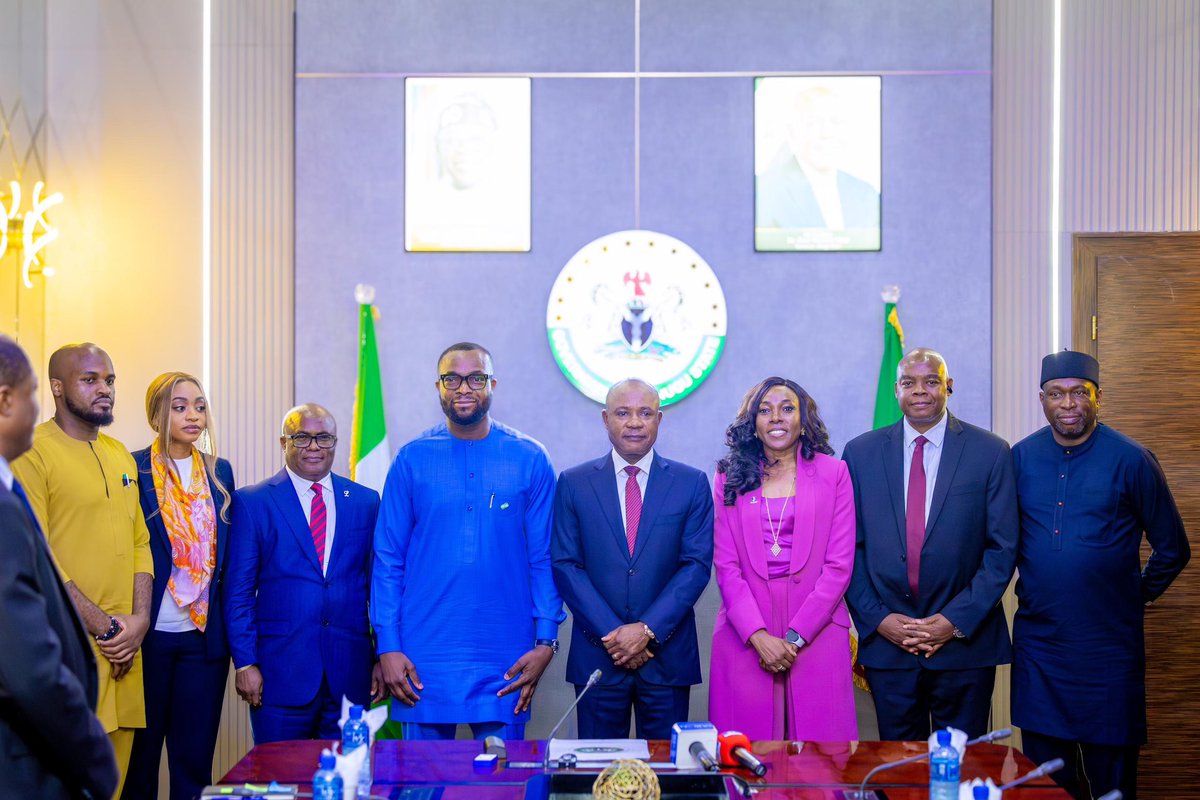
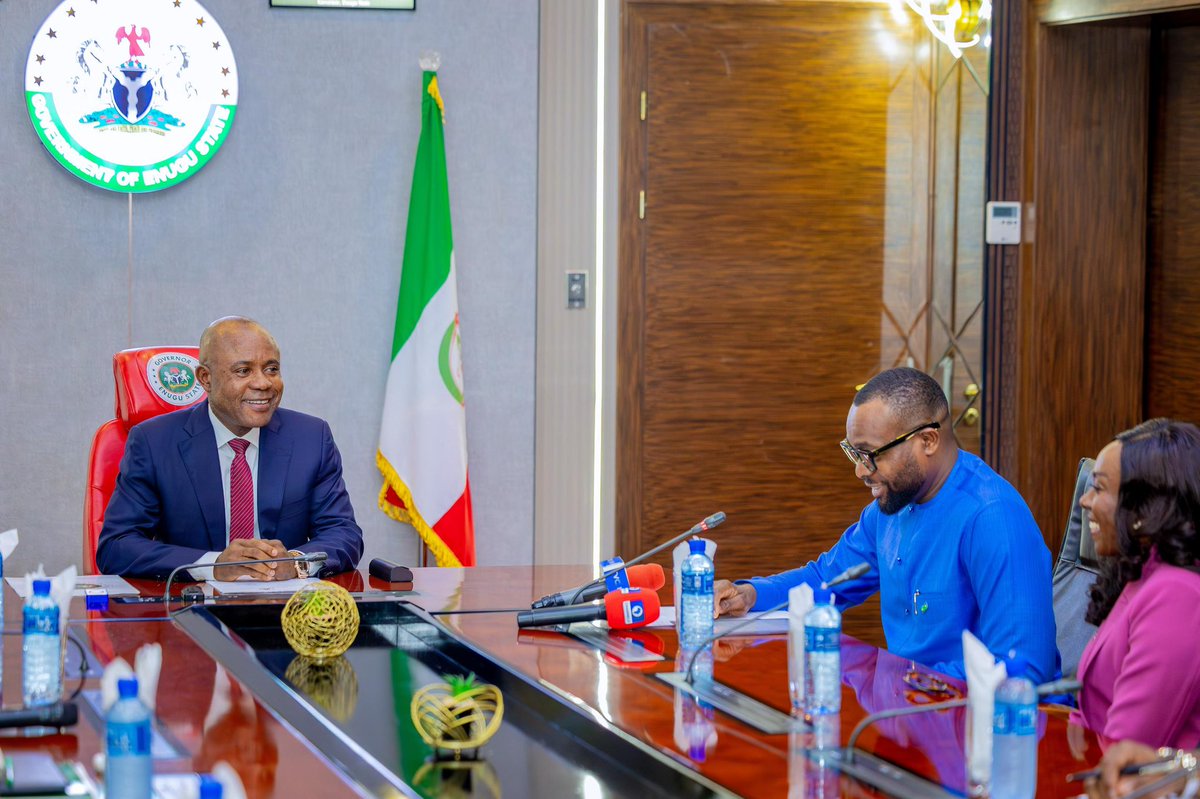
Pleased to receive the Honourable Minister of Communications, Innovation, and Digital Economy, Dr Bosun Tijani, today. He was in Enugu to strengthen collaboration between the Federal Government and our administration on several digital initiatives aimed at accelerating our state’s transition into a tech-driven economy.
His commendation of Enugu's rapid digital transformation is a testament to our commitment to building a thriving, technology-powered economy. Our administration is leveraging the digital economy to diversify revenue streams and achieve our vision of a $30 billion economy. From Smart Green Schools that equip our children with future-ready skills to our full transition to an e-governance platform that enhances efficiency and transparency, we are driving innovation across sectors.
Through our Command and Control Centre, we have deployed round-the-clock surveillance to strengthen security across Enugu. We are also finalising the integration of this system with the NCC Emergency Communication Centre to operationalise the Distress Response Squad, ensuring real-time emergency coordination via the national 112 emergency number.
We welcome the Federal Government’s support through Project 774 Connectivity, which will provide internet access to all 17 local government secretariats in Enugu. The planned Digital Innovation Complex, powered by Galaxy Backbone, will further accelerate our progress by hosting a Tier Three Data Centre, a co-working space for entrepreneurs, an incubation hub, and a digital skills training centre.
Additionally, over 200 state-owned institutions, including our Smart Green Schools, Primary Healthcare Centres, and the State Secretariat, will benefit from internet connectivity. The Federal Government’s commitment to establishing an Artificial Intelligence Regional Centre at the University of Nigeria Nsukka, launching the South East Zonal Office of NITDA in Enugu, and training 100 individuals in cybersecurity and infrastructure defence will strengthen our digital ecosystem.
We are also excited about NITDA’s Digital Literacy for All programme, which aims to train 1,555,000 Enugu residents in essential digital skills before 2027. This aligns with our vision to equip our people with the tools and knowledge needed to thrive in the modern economy.
Enugu is open for partnerships, and we will continue to collaborate with the Federal Government and private sector to consolidate our digital gains.
Tomorrow is here!
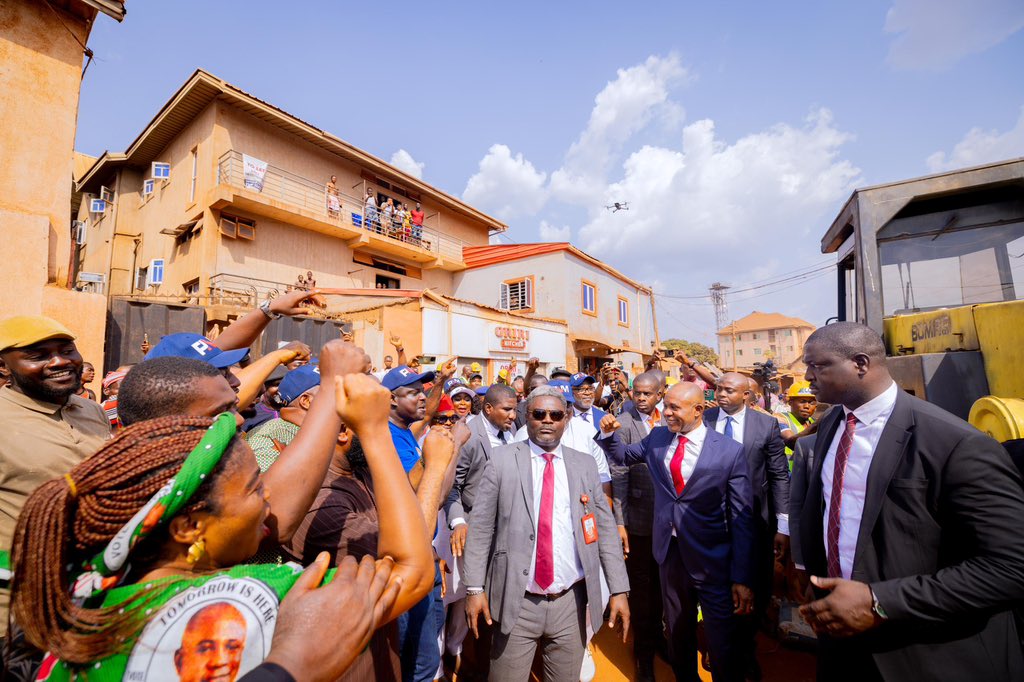
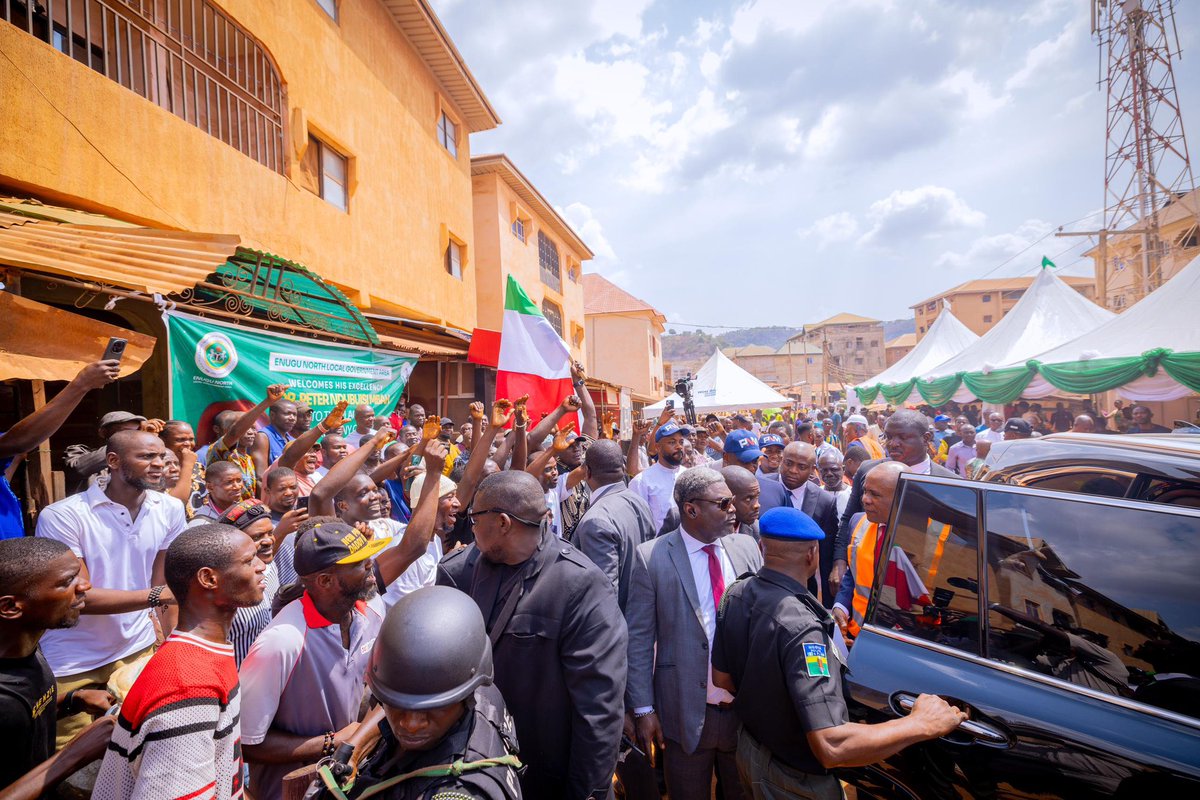
Today in Enugu, we flagged off the construction of 141 urban roads across 13 zones of our state capital, starting from Ologo under the Coal Camp Zone and Monaque Avenue in the Awkunanaw Zone. This reinforces our commitment to making Enugu a premier destination for investment, business, tourism, and quality living.
This flag-off strengthens our commitment to empowering our people and creating opportunities for wealth generation. Our mission to eradicate poverty is a deliberate effort backed by strategic action. We understand that critical infrastructure like roads plays a key role in driving economic growth, reducing transportation costs, and improving the overall quality of life for our people. When businesses have better access to their customers and residents spend less on transport, we are effectively putting more disposable income in their hands and pushing poverty further away from our communities.
The roads have been carefully organised into 17 lots to ensure their completion within the next three months. We have made the necessary financial provisions and conducted due diligence to engage only competent contractors who will deliver quality work within the stipulated time.
Today’s flag-off in Ologo under the Coal Camp Zone and Monaque Avenue in the Awkunanaw Zone was particularly significant. These communities have been neglected for over forty years, with residents struggling to even construct drainage through personal contributions. That era of neglect is over. We are here to ensure that no community in Enugu is left behind in our development agenda.
I appreciate the heartfelt words from the people of Ologo and Monaque Avenue, particularly Chief Chris Okaka and Chief Ifeanyi Nnaji, who acknowledged the impact of our intervention. Their trust in our government reinforces our resolve to continue delivering results that directly improve lives.
I also commend the Council Chairmen of Enugu North and Enugu South, Hon. Ibenaku Onoh @IbenakuO and Hon. Caleb Ani, for their dedication to grassroots development. Their commitment to prioritising the needs of the people aligns with our vision for a thriving and prosperous Enugu.
Happy 53 birthday your Excellency, Dr. Peter Ndubuisi Mbah.
A disruptive leader turning the jangling discords of Enugu State into a beautiful symphony of development. Wishing you nothing but the very best 🙏🎂🎁🎉
Today, we received a generous donation of four vehicles from Innoson Vehicle Manufacturing to the Enugu State Security Trust Fund, further strengthening our capacity to fight crime and secure our investment climate. I deeply appreciate Chief Innocent Chukwuma and the entire Innoson team for their commitment to our shared vision of a prosperous Enugu.
It is encouraging to see manufacturers thriving and contributing to our collective progress. As Chief Chukwuma noted, businesses in Enugu are now happy, with improved security and better infrastructure making the state more conducive for investment. We are sustaining this momentum by enhancing security, expanding infrastructure, and providing critical support such as gas for industries to address power challenges.
The recent fundraising dinner, which raised over N3 billion for the Security Trust Fund, and today’s donation from Innoson reaffirm that partnerships work. Our commitment remains to make Enugu the premier destination for investment and economic opportunities, where businesses flourish and our people prosper. These vehicles will be put to good use in keeping our state safe, and we will not relent in driving the progress we have envisioned.
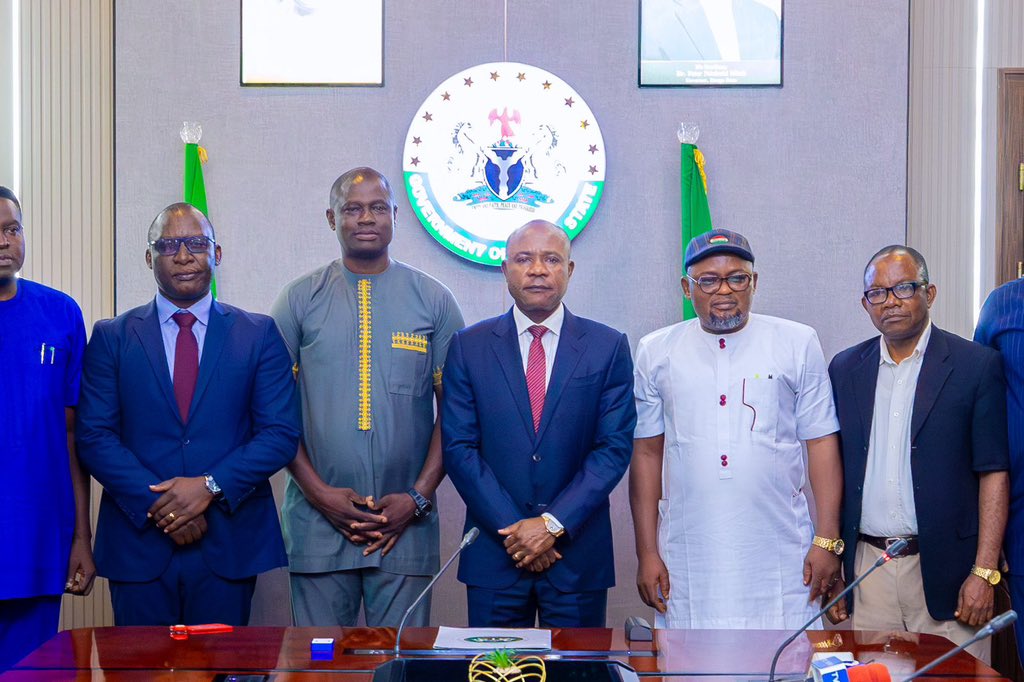
I was pleased to receive the Inspector-General of Police, Kayode Egbetokun, PhD, today at the Government House, ahead of President Bola Ahmed Tinubu's state visit tomorrow. The IGP was delighted by our administration's prioritisation of the security of lives and properties, and driving Enugu’s development through innovative initiatives.
His kind words and recognition of our modest efforts, including the establishment of the state-of-the-art Command and Control Centre and the deployment of 150 patrol vehicles fitted with AI-embedded cameras for the Distress Response Squad, underscores the progress we’ve made in creating a safer, smarter Enugu.
Security remains at the core of our strategy to grow Enugu’s economy from $4.4 billion to $30 billion. As I noted during our discussion, businesses can manage financial and commercial risks, but security risks are a dealbreaker.
Thanks for coming!
During the recent signing of a $100 million agreement between the Enugu State Government and an Austrian firm at the Government House, the Austrian Ambassador to Nigeria, Thomas Schlesinger, expressed his home government’s support for the last-mile water connection to homes and offices in Enugu city. I would like to once again thank Ambassador Schlesinger for his commitment to ensuring our people have reliable access to clean and safe water. Thank you for coming. Together, we are building a more prosperous and sustainable future for Enugu.
1/
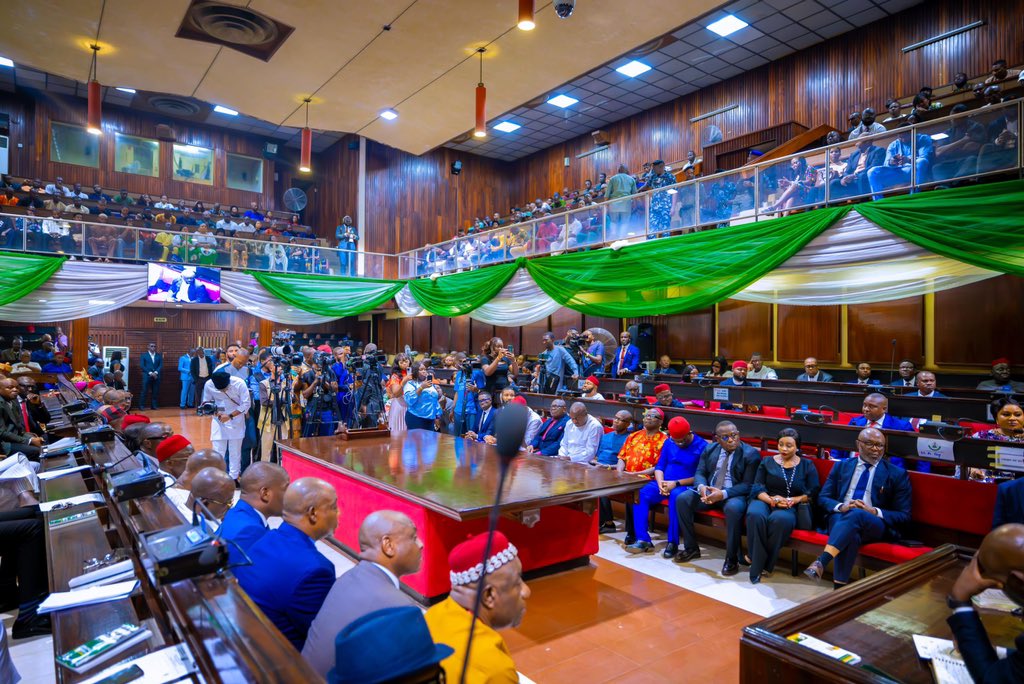
Today, I presented the 2025 budget proposal titled Budget of Exponential Growth and Inclusive Prosperity to the Enugu State House of Assembly. This N971 billion budget represents our commitment to transforming Enugu into one of the top three states in Nigeria by GDP while eradicating poverty in our communities. It is a bold and deliberate step towards achieving exponential growth and inclusive prosperity for Ndi Enugu.
The proposed budget is structured to prioritise capital expenditure at N837.9 billion, constituting 86% of the total budget, while recurrent expenditure stands at N133.1 billion, representing only 14%. This marks an 86.4% increase from the 2024 budget and underscores our determination to sustain and amplify our development agenda.
Education remains at the forefront of our priorities, as it forms the bedrock of a knowledge-based economy and a tool to eradicate poverty. To this end, we have allocated N320.6 billion, which accounts for 33.2% of the total budget. Beyond education, healthcare will receive N45.8 billion to ensure quality service delivery, while N213.1 billion has been earmarked for infrastructure development, with a focus on upgrading roads and public works.
We recognise the critical role of agriculture in curbing food inflation. That is why we have set aside N82.3 billion to boost food production and agro-industrialisation. Additionally, N41.1 billion will be deployed to transform our transportation sector, including the expansion of Enugu Air with four new aircraft, the concessioning of Akanu Ibiam International Airport, and the development of an international cargo terminal.
@onyeka_maduka@PNMbah The roads are getting massive attention. Recently he flagged off about 200KM roads in the rural area. He has plans to construct 10,000km roads before the end of 8 years. Every sector is getting massive attention not just road infrastructure.
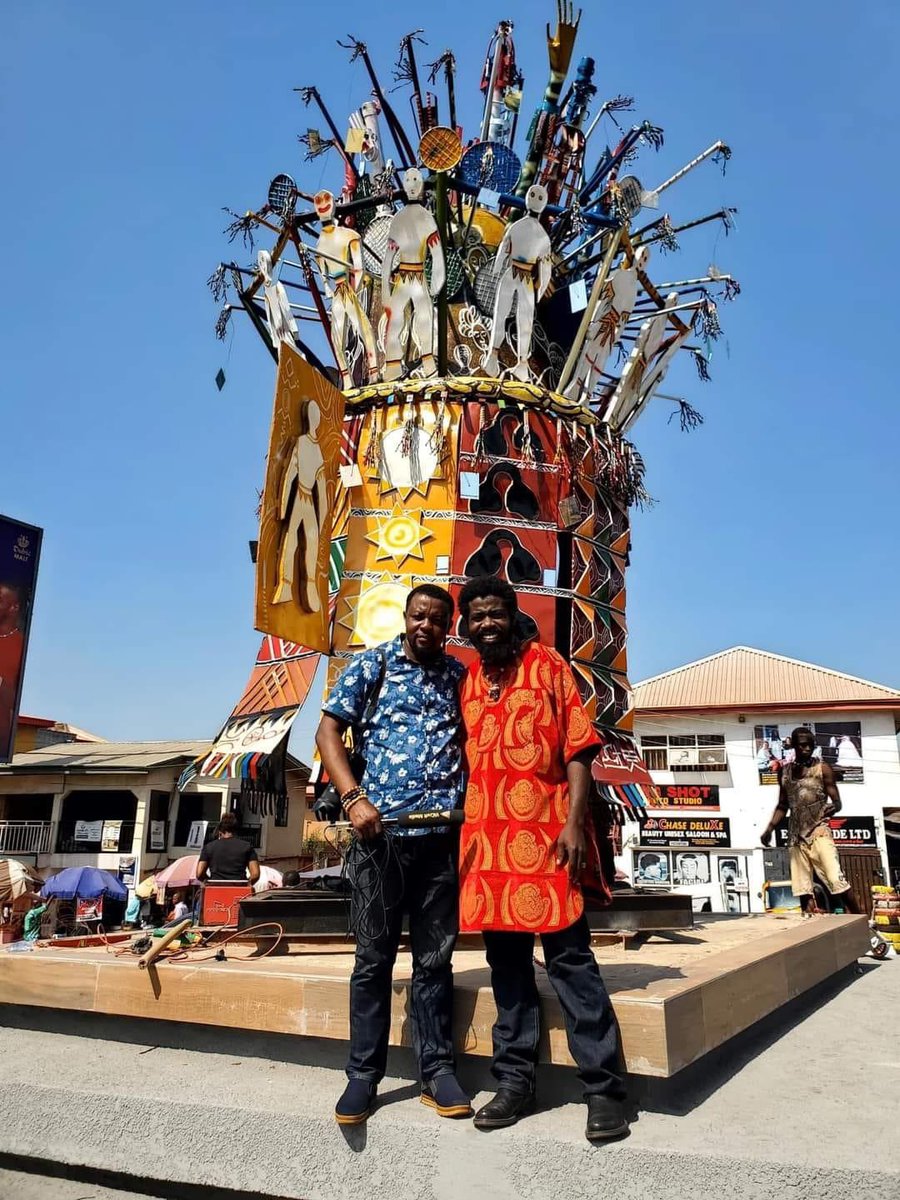
This is Obiagu/Onu-Asata Roundabout…
OUR MISSION
To deliver quality people focused governance by making Enugu the preferred destination for investment, business, tourism and living.
Dr. Peter Ndubuisi Mbah
Governor, Enugu State
As part of our commitment to opening up rural communities, easing urban congestion, and delivering impactful development across Enugu State, today, we once again flagged off a series of transformative road projects in Nkanu East and Nkanu West Local Government Areas. These projects are a testament to our administration’s dedication to connecting Enugu and creating lasting economic growth for all.
The scope of these road projects includes the 9.3km Amodu-Akpugo road, the 5km Amagu - Attakwu - Akegbe - Ugwu - Akpasha road, and the 3.12km Obuofia - Obeaghu - Akegbe - Ugwu road in Nkanu West. In Nkanu East, we’re constructing the 12.96km Nara-Mburubu-Nomeh road, complete with 2- and 3-span bridges, the 9km Nara-Nkerefi road, the 8.67km Akpawfu-Amagunze road with a spur to Onicha Agu, the 7km Nomeh-Oduma road, the 9.7km Amagunze-Ihuokpara-Ugbawka road, the 6.9 km Isiogbo Nara-Isu road, and the 7.2km Mburubu-Nkerefi road.
By enhancing access to these rural areas, we are not only addressing the challenges our farmers face in getting their produce to market but also significantly cutting travel time between communities. Strengthening infrastructure is key to a prosperous Enugu, and with these projects, we are taking yet another step towards delivering development that reaches every citizen.
It bears restating that the minimum wage of N80,000, approved by our administration for both state and local government workers, reflects our commitment to leaving behind lasting legacies of improved living conditions.
Our dedication to workers' welfare is driven by a firm belief that a motivated workforce is essential for driving economic progress. There's an undeniable link between an inspired workforce and the bold economic targets we have set for our beloved state.
That is why we are committed to ensuring our workforce remains highly motivated, laying the groundwork for reducing poverty and achieving unprecedented economic growth in Enugu. For us, the best way to recognise that labour creates wealth is by ensuring that those who generate this wealth - the workforce - are well rewarded.
We consistently showed this commitment through the timely payment of wage awards, a practice we committed to sustaining until a new wage structure was in place as we have done today.
Indeed, our sights are firmly set on a prosperous Enugu, where growth and progress are not just goals but the very heartbeat of our journey. Let's keep doing more.