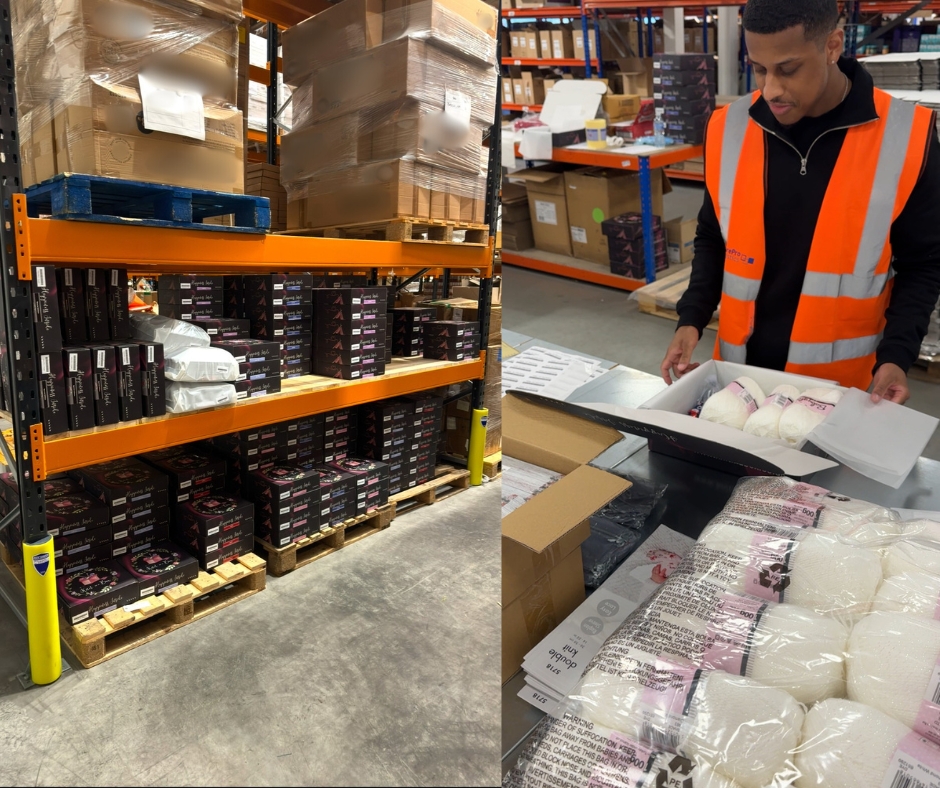
EXCITING NEWS! 🎉
I’m thrilled to announce that ClickSlice has officially acquired its first eCommerce brand - Knit In A Box!
Knit In A Box is the UK’s No.1 knitting subscription box brand, boasting nearly 4,000 5-star reviews and a community that’s stronger than Johnny Bravo.
For years, legends like James Sinclair and James Burton have asked, “If marketing companies are so great at what they do, why don’t they acquire brands and scale them themselves?”
It’s a very fair and valid point.
Well, we decided to take the leap. Three months ago, we took ownership of Knit In A Box, and in that short time, we’ve already made big waves.
Instead of just talking about how great we are at eCommerce marketing, we’re putting our money where our mouth is.
The best part?
We’re documenting the entire journey.
Check out our first YouTube video to see how much we’ve grown the brand’s revenue in just 90 days 👀
(Spoiler alert, it’s pretty crazy)
Link below 👇🏾
Meta ads are the most unpredictable part of running an ecommerce brand.
One quarter they're profitable. Next quarter CPCs double and everything breaks.
If Meta is your only growth channel, you're building on sand.
We talked about this on our latest Slice & Dice episode: what brand owners wish agencies understood, how volatile paid ads actually are, and why diversification matters.
Link in the comments for the full breakdown.
What's the biggest challenge you faced as an ecom brand owner?
Meta ads are the most unpredictable part of running an ecommerce brand.
One quarter they're profitable. Next quarter CPCs double and everything breaks.
If Meta is your only growth channel, you're building on sand.
We talked about this on our latest Slice & Dice episode: what brand owners wish agencies understood, how volatile paid ads actually are, and why diversification matters.
Link in the comments for the full breakdown.
What's the biggest challenge you faced as an ecom brand owner?
Your site search data is showing you exactly what keywords to target next.
And most brands completely ignore it.
When users search your site, they're telling you what they're looking for. What they need. What you're missing.
That's pure, unfiltered demand signal.
Every search query on your site is a customer telling you: "I want this, do you have it?"
If they don't find it, they leave.
But here's what smart brands do: pull your site search data and look for high-volume searches with zero or low results.
Those are content gaps. Product gaps. Ranking opportunities.
Your users did the keyword research for you. You just have to listen.
Your customers just told you what to build next.
Example: Furniture brand discovers users searching "compact sofa for small apartments" but they have no collection page for it.
They create one. Page 1 rankings almost immediately because the demand already exists internally.
Here's how to use it:
1. Export your site search logs
2. Filter for high-volume searches with zero or few results
3. Look for patterns in what users searched vs what you ranked
4. Create content targeting those gaps
5. Add these terms to your keyword strategy
The searches with zero results are gold. Users wanted something you don't have.
Build it and you've got built-in demand waiting.
This is free market research sitting in your analytics right now.
Your site search data is showing you exactly what keywords to target next.
And most brands completely ignore it.
When users search your site, they're telling you what they're looking for. What they need. What you're missing.
That's pure, unfiltered demand signal.
Every search query on your site is a customer telling you: "I want this, do you have it?"
If they don't find it, they leave.
But here's what smart brands do: pull your site search data and look for high-volume searches with zero or low results.
Those are content gaps. Product gaps. Ranking opportunities.
Your users did the keyword research for you. You just have to listen.
Your site search data is showing you exactly what keywords to target next.
And most brands completely ignore it.
When users search your site, they're telling you what they're looking for. What they need. What you're missing.
That's pure, unfiltered demand signal.
Every search query on your site is a customer telling you: "I want this, do you have it?"
If they don't find it, they leave.
But here's what smart brands do: pull your site search data and look for high-volume searches with zero or low results.
Those are content gaps. Product gaps. Ranking opportunities.
Your users did the keyword research for you. You just have to listen.
Becoming a father completely rewired how I think about success.
Used to measure winning by: money, status, climbing the ladder, proving something to everyone watching.
Now I measure it by: time with my kid, being present for moments that matter, not missing the small stuff while chasing big wins.
Two months in NICU taught me something no book ever could.
What matters is showing up. Being there. Not taking moments for granted.
My definition of success looks completely different now.
Still ambitious. Still building. But not at the cost of everything else.
Dad might be the most important title I'll ever have.
ChatGPT is your new competitor and most brands don't even realise it yet.
When customers ask "what should I buy?" they're not Googling anymore.
They're asking AI.
If your brand isn't being recommended when they do, you're losing sales to competitors you'll never see in your analytics.
Answer Engine Optimisation (AEO) gets you cited in AI responses.
Not ranked on Google. Recommended by ChatGPT, Perplexity, Gemini.
We've been running AEO campaigns since early 2025.
Clients are seeing:
- AI visibility scores climbing 40%+
- Citation share dominating competitors
- Actual referral traffic converting to revenue
The window to build AI authority is closing fast.
Early movers become embedded references AI returns to repeatedly.
—
👉 Want to see how we can do something similar for your brand?
Let's chat and explore how our AEO strategies can scale your ecom business.
Book a call here: https://t.co/MDVGID12pO
Or just find out more about us here: https://t.co/1crsB9bb16
lots of SEOs critizicing others because they don't rank for SEO agency style terms. Here's a secret:
Once you get past the small clients, big clients don't search for SEO agencies. They have procurement teams and issue RFPs. They find agencies through word of mouth, press mentions, conferences & events, and recommendations from trusted advisors.
The truly successful SEOs don't need to rank for SEO terms.
ChatGPT is your new competitor and most brands don't even realise it yet.
When customers ask "what should I buy?" they're not Googling anymore.
They're asking AI.
If your brand isn't being recommended when they do, you're losing sales to competitors you'll never see in your analytics.
Answer Engine Optimisation (AEO) gets you cited in AI responses.
Not ranked on Google. Recommended by ChatGPT, Perplexity, Gemini.
We've been running AEO campaigns since early 2025.
Clients are seeing:
- AI visibility scores climbing 40%+
- Citation share dominating competitors
- Actual referral traffic converting to revenue
The window to build AI authority is closing fast.
Early movers become embedded references AI returns to repeatedly.
—
👉 Want to see how we can do something similar for your brand?
Let's chat and explore how our AEO strategies can scale your ecom business.
Book a call here: https://t.co/MDVGID12pO
Or just find out more about us here: https://t.co/1crsB9bb16
Becoming a father completely rewired how I think about success.
Used to measure winning by: money, status, climbing the ladder, proving something to everyone watching.
Now I measure it by: time with my kid, being present for moments that matter, not missing the small stuff while chasing big wins.
Two months in NICU taught me something no book ever could.
What matters is showing up. Being there. Not taking moments for granted.
My definition of success looks completely different now.
Still ambitious. Still building. But not at the cost of everything else.
Dad might be the most important title I'll ever have.
Red flags your agency is stuck in the past:
- They still talk about "keyword density" or "exact-match anchor texts"
- Their content strategy is "write 50 blog posts and see what sticks"
- They measure success by rankings, not revenue
- They don't mention AI search or AEO at all
- Their case studies are older than 18 months
That last one is the biggest tell.
If they can only show you wins from 2022-2023, they're not winning today. They're living off old momentum.
SEO changes faster than most industries. Your agency needs to prove they're ahead of it, not behind it.
Ask them: "Show me three wins from the last 6 months."
Your SEO agency is bragging about 2017 case studies.
SEO isn't riding a bike. What worked 12 months ago might actively harm your rankings today.
Google makes thousands of algorithm updates yearly. Major shifts like helpful content, EEAT, and AI overviews fundamentally change the game.
Client came to us after working with an agency still obsessing over keyword density and exact-match anchor texts.
Strategies from 2017 don't just fail now. They trigger penalties.
What to look for: Case studies from the last 12-18 months. Recent wins prove they're adapting, not recycling outdated playbooks.
In SEO, you're only as good as your last result. Past glory doesn't rank your site today.
Stop optimising product pages before your collection pages are strong.
Product pages inherit authority from collections. If collections are weak, product pages struggle regardless of optimisation.
Most brands spread SEO budget across hundreds of product pages while their category pages sit underoptimised.
That's backwards.
One strong collection page can improve visibility across dozens of related product variations.
Product pages scale linearly. Collection pages scale exponentially.
Full breakdown of where your SEO effort should actually go in this article ⬇️
Stop optimising product pages before your collection pages are strong.
Product pages inherit authority from collections. If collections are weak, product pages struggle regardless of optimisation.
Most brands spread SEO budget across hundreds of product pages while their category pages sit underoptimised.
That's backwards.
One strong collection page can improve visibility across dozens of related product variations.
Product pages scale linearly. Collection pages scale exponentially.
Full breakdown of where your SEO effort should actually go in this article ⬇️
You're being scammed and don't even realise it yet.
Red flags your agency is playing you:
No clear team structure.
Monthly reports look impressive but don't tie to actual revenue.
Promises about timelines keep getting pushed back with new excuses.
Can't show specific work completed or strategy documentation when asked.
Most clients don't catch on until 12+ months in because agencies are experts at looking busy while delivering nothing.
Ask right now: "What specific work did you complete last month and what business impact should it have?"
🌟 Editor's Choice 🌟
"As search engines are now embracing generative AI for search queries, the search landscape has fundamentally changed."
Read more from @_JoshuaSEO, Founder of ClickSlice: https://t.co/0tIFHiU8yd
🌟 Editor's Choice 🌟
"As search engines are now embracing generative AI for search queries, the search landscape has fundamentally changed."
Read more from @_JoshuaSEO, Founder of ClickSlice: https://t.co/0tIFHiU8yd
@maksim_kotsar22 Agencies confident in their work will predict impact upfront and stand behind those numbers. The ones who dodge that conversation before signing are admitting they can't deliver measurable results
You're being scammed and don't even realise it yet.
Red flags your agency is playing you:
No clear team structure.
Monthly reports look impressive but don't tie to actual revenue.
Promises about timelines keep getting pushed back with new excuses.
Can't show specific work completed or strategy documentation when asked.
Most clients don't catch on until 12+ months in because agencies are experts at looking busy while delivering nothing.
Ask right now: "What specific work did you complete last month and what business impact should it have?"
Agencies are masters at managing expectations while underdelivering.
By month 12, you've paid massive retainers and have nothing but excuses.
How they get away with it:
Vague reporting hiding lack of progress ("impressions up 40%" while revenue stays flat).
Blaming external factors instead of execution (algorithm updates, competitors, your site).
Keeping you just hopeful enough to renew ("we're so close, would be shame to stop now").
If your agency can't explain what they did last month and why it should impact your business, you're funding their lifestyle, not your growth.