AI is scaling.
Its economics often aren’t.
On my way to the @DISummit2030.
Seeing the same pattern:
→ costs ↑ faster than value
→ data becomes the bottleneck
→ unit economics break at scale
Does your AI get cheaper or more expensive as you scale?
#AI#Infrastructure
🌐 Italy's Ministry of Infrastructure and Transport formally requests fast-track Tesla FSD Supervised approval
• Request forwarded directly to Transport Department and Italian Road Authority (Motorizzazione)
• Formal community petition channeled through government mechanism to accelerate timeline
• Italy would join Netherlands and Spain in active European FSD Supervised deployment
If approved, Italy becomes the 4th EU market with FSD Supervised - adding 60M population to Tesla's European autonomy footprint.
👏 Congratulations to @nscale and @Microsoft!
Here's to enabling the next generation of AI training and inference across Europe, together. #NVIDIARubin
Learn more ⤵️
Physical AI is transforming manufacturing, from design to the factory floor. 🦾
Hear how leaders from @ABBRobotics, @JLR_News, and @TulipInterfaces are using AI-powered simulation, synthetic data, and real-time video analytics to unlock new levels of efficiency across the entire product lifecycle.
Watch the full video ➡️ https://t.co/upn5TWsoE6
€180M to strengthen our digital sovereignty.
Four European cloud providers have been awarded a Commission tender for sovereign cloud services to help:
🔹reduce dependency on non-EU tech
🔹boost security & resilience
🔹support the EU cloud ecosystem
🔗https://t.co/jocWwO85Eo
⚡️Supporting Europe's digital transformation.
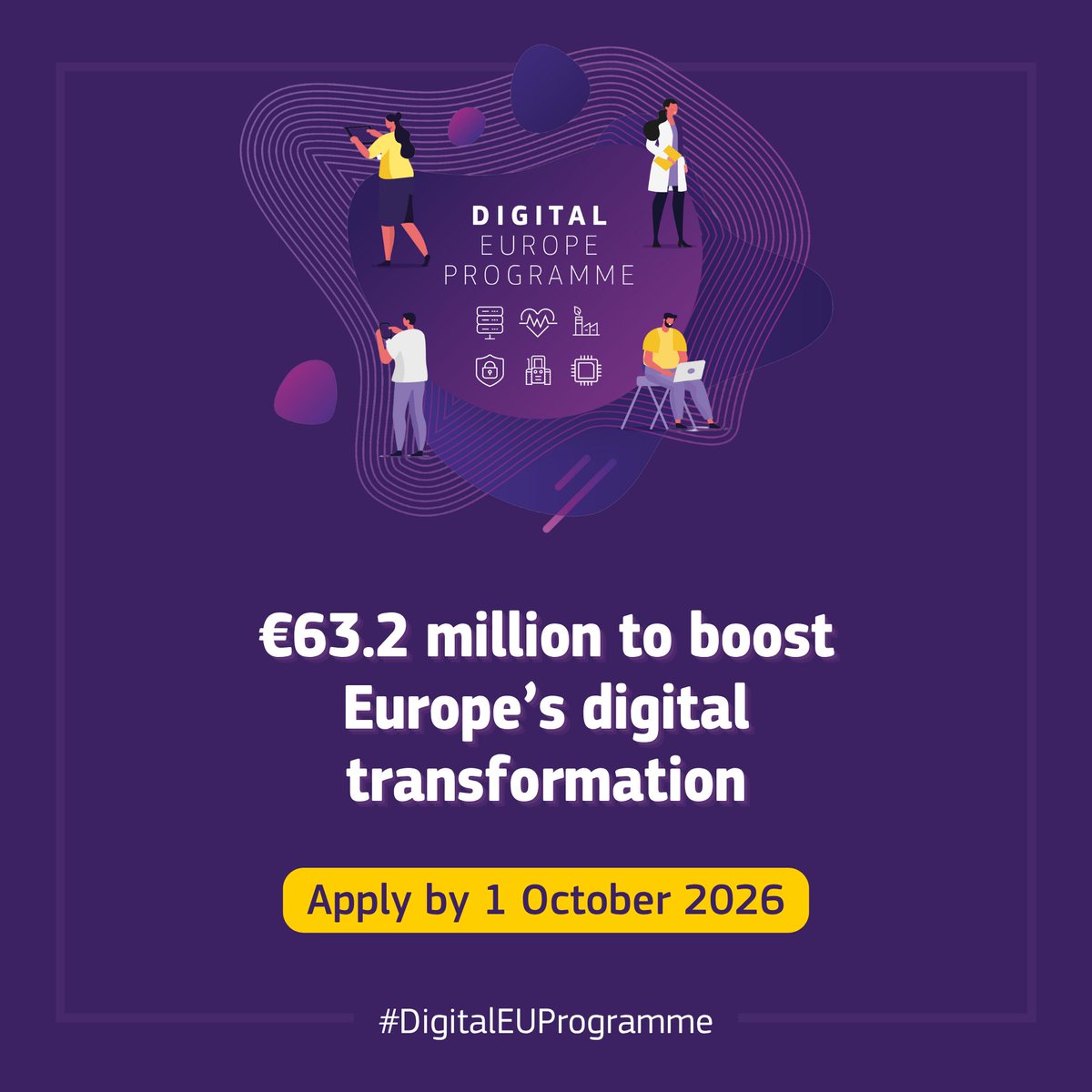
New calls under the Digital Europe Programme worth €63.2 million opened today in key areas, including:
🔹AI
🔹digital health
🔹online safety
🔹digital skills
& more.
Apply by 1 October.
🔗https://t.co/OsClF184Fn
Devin can manage a team of Devins.
Managed Devins run in parallel help break down complex tasks.
Each managed session is a full Devin, with its own VM, terminal, browser, and testing infrastructure. The main session coordinates, monitors, and compiles results.
Running #Databricks with data still on-prem? This upcoming webinar shows you exactly how to bridge that gap — seamlessly, securely, and without compromising data #sovereignty. Highly recommend registering.
https://t.co/5mgaSkcadW
#Data#AI#Infrastructure
devin review has gotten really good the last few weeks. the way it groups changes + explains big prs is super useful. consistent high-signal bug catches too.
JUST IN: Perplexity launched "Perplexity Computer" — and it might be the most complete AI agent system available right now.
Not a chatbot upgrade. Not a research tool with a new name.
A system that plans entire projects, delegates to specialist AI models, and runs autonomously for hours, days, or months (their words).
Here's what makes the architecture genuinely different:
→ Opus 4.6 handles core reasoning and orchestration
→ Gemini handles deep research (spawning its own sub-agents)
→ Grok handles lightweight speed tasks
→ Veo 3.1 handles video generation
→ Nano Banana handles image creation
→ ChatGPT 5.2 handles long-context recall and wide search
→ You can override model choices per subtask
19 models total. Each task runs in an isolated environment with a real filesystem, real browser, and real tool integrations.
You describe an outcome. It breaks it into tasks and subtasks, creates sub-agents for each, and coordinates them automatically. When a sub-agent hits a problem, it spawns more sub-agents to solve it.
And it connects to your existing stack — GitHub, Google Drive, Gmail, Slack, Jira, Linear, Notion, Confluence, Ahrefs, Airtable, and more.
Critically, it doesn't just run once. It can run on a schedule. Reading your docs, checking your project boards, pulling from your CRM, and acting on what it finds. Market monitoring. Competitor tracking. Weekly reports with charts. Content pipelines. CRON jobs that actually execute.
Not "AI that helps you once." AI that runs in the background for days or months.
Think of it as managed OpenClaw — similar autonomous capability (scheduled tasks, multi-step workflows, tool integrations) but fully managed. No Mac Mini. No security config. No infrastructure to maintain.
I tested it with a complex prompt — a full stock trading simulator with what-if scenarios, correlation heatmaps, sentiment analysis, and a Bloomberg Terminal aesthetic.
Two prompts later: deployed to Netlify via GitHub, with working CRON jobs updating live data. I've started using it to analyze my portfolio.
But coding is just one lane. This thing researches, writes reports, generates datasets, creates videos, processes documents, and connects to your existing tools — all in one coordinated workflow.
The real shift: you don't choose a model anymore. You describe what you need. The system routes each piece of work to whichever model does it best — and spawns new agents when it hits a wall.
19 models, dynamic sub-agents, scheduled tasks, and your entire tool stack connected.
Thoughts?
🚨 Perplexity just dropped their own OpenClaw version.
And the timing couldn't be more perfect.
OpenClaw got suspended by Google this week.
219,000 GitHub stars. Cut off. Just like that.
Then Perplexity launched Perplexity Computer.
Here's what Perplexity Computer actually is:
→ 19 AI models working in parallel.
→ Claude for reasoning. Gemini for research.
→ 17 other models handling everything else.
All in one browser. No local setup. No terms of service drama. No Google pulling the plug.
It can:
→ Research and analyze — NVIDIA earnings to market reports
→ Design, code and deploy web apps end to end
→ Connect to Google Workspace, Slack and GitHub
→ Handle files with persistent memory across sessions
→ Run autonomously in the cloud while you do something else
OpenClaw ran locally on your machine.
Perplexity Computer runs in the cloud on 19 models simultaneously.
OpenClaw got suspended the same week Perplexity shipped its replacement.
Timing is everything.
Prompt engineering is dead.
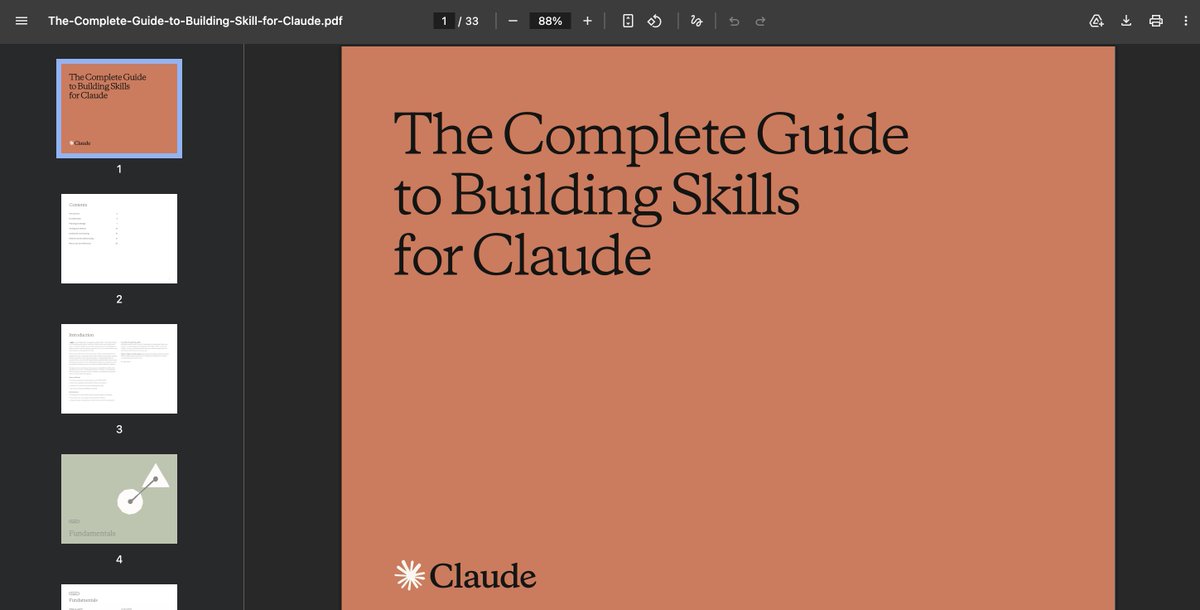
Anthropic recently released the real playbook for building AI agents that actually work.
It’s a 30+ page deep dive called The Complete Guide to Building Skills for Claude and it quietly shifts the conversation from “prompt engineering” to real execution design.
Here’s the big idea:
A Skill isn’t just a prompt.
It’s a structured system.
You package instructions inside a https://t.co/ayF9XmnQpU file, optionally add scripts, references, and assets, and teach Claude a repeatable workflow once instead of re-explaining it every chat.
But the real unlock is something they call progressive disclosure.
Instead of dumping everything into context:
• A lightweight YAML frontmatter tells Claude when to use the skill
• Full instructions load only when relevant
• Extra files are accessed only if needed
Less context bloat. More precision.
They also introduce a powerful analogy:
MCP gives Claude the kitchen.
Skills give it the recipe.
Without skills: users connect tools and don’t know what to do next.
With skills: workflows trigger automatically, best practices are embedded, API calls become consistent.
They outline 3 major patterns:
1) Document & asset creation
2) Workflow automation
3) MCP enhancement
And they emphasize something most builders ignore: testing.
Trigger accuracy.
Tool call efficiency.
Failure rate.
Token usage.
This isn’t about clever wording.
It’s about designing an execution layer on top of LLMs.
Skills work across https://t.co/pDY56kadwE, Claude Code, and the API. Build once, deploy everywhere.
The era of “just write a better prompt” is ending.
Anthropic just handed everyone a blueprint for turning chat into infrastructure.
Download the guide here: https://t.co/xEZ78RGkYu
Here's my conversation with Peter Steinberger (@steipete), creator of OpenClaw, an open-source AI agent that has taken the Internet by storm, with now over 180,000 stars on GitHub.
This was a truly mind-blowing, inspiring, and fun conversation!
It's here on X in full and is up everywhere else (see comment).
Timestamps:
0:00 - Episode highlight
1:30 - Introduction
5:36 - OpenClaw origin story
8:55 - Mind-blowing moment
18:22 - Why OpenClaw went viral
22:19 - Self-modifying AI agent
27:04 - Name-change drama
44:15 - Moltbook saga
52:34 - OpenClaw security concerns
1:01:14 - How to code with AI agents
1:32:09 - Programming setup
1:38:52 - GPT Codex 5.3 vs Claude Opus 4.6
1:47:59 - Best AI agent for programming
2:09:59 - Life story and career advice
2:13:56 - Money and happiness
2:17:49 - Acquisition offers from OpenAI and Meta
2:34:58 - How OpenClaw works
2:46:17 - AI slop
2:52:20 - AI agents will replace 80% of apps
3:00:57 - Will AI replace programmers?
3:12:57 - Future of OpenClaw community
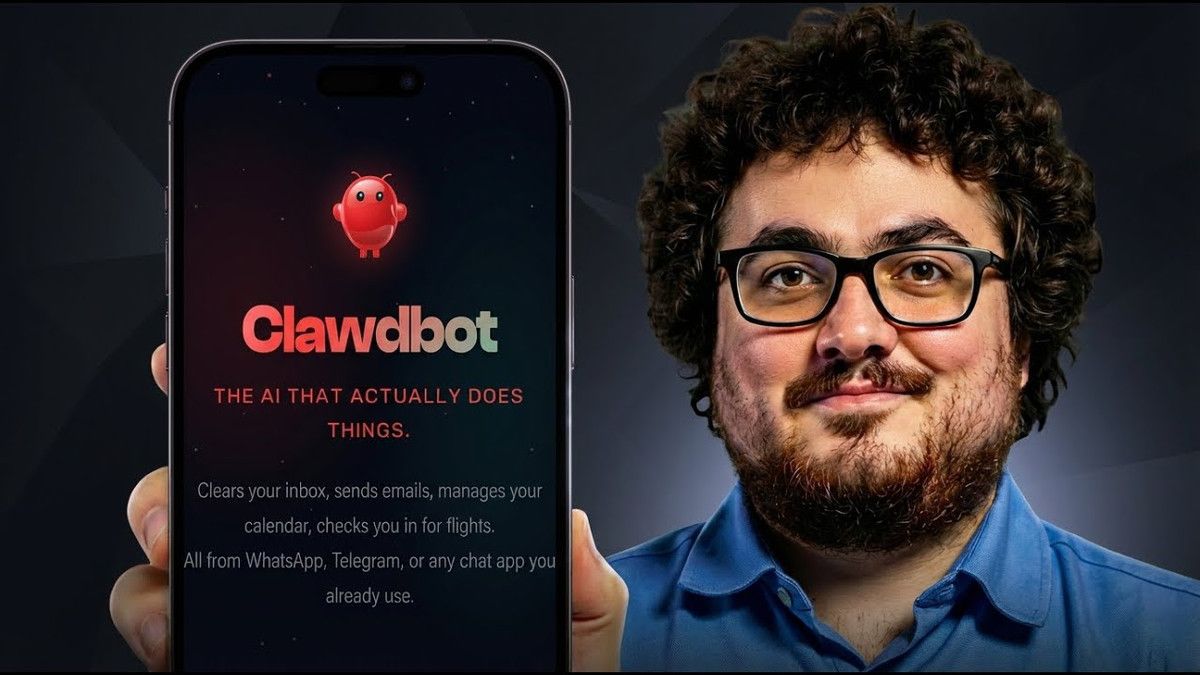
Everyone is super hyped about Clawdbot but 90% don't know how to actually use it to replace real work.
I spent 48 hours and created "The Ultimate Clawdbot Guide".
100% FREE for the next 24hrs only
Just:
* Like
* Follow
*Repost
* Reply "Free"
I'll DM you a link.
Join us in Amsterdam for an @openclaw builders event in the AI House next week Thu. https://t.co/Wkb8aZySJL
@steipete -- Vienna is relatively close to Amsterdam ;)
🏦 Europe’s leading financial institutions are investing in building sovereign AI factories to deploy AI applications at scale. In this #GTCParis session, BNP Paribas and Finanz Informatik share how they’re scaling secure, enterprise-grade AI with NVIDIA.
Register now ➡️ https://t.co/HzvG79dUHQ