Why Scale Impact?
This is a question I am asked a lot, especially amongst Development sector(Non Profits) professionals.
and my response is not as a technologist, because you can
but as a citizen - because we must.
To me - this question is like asking: why social change?
🧵
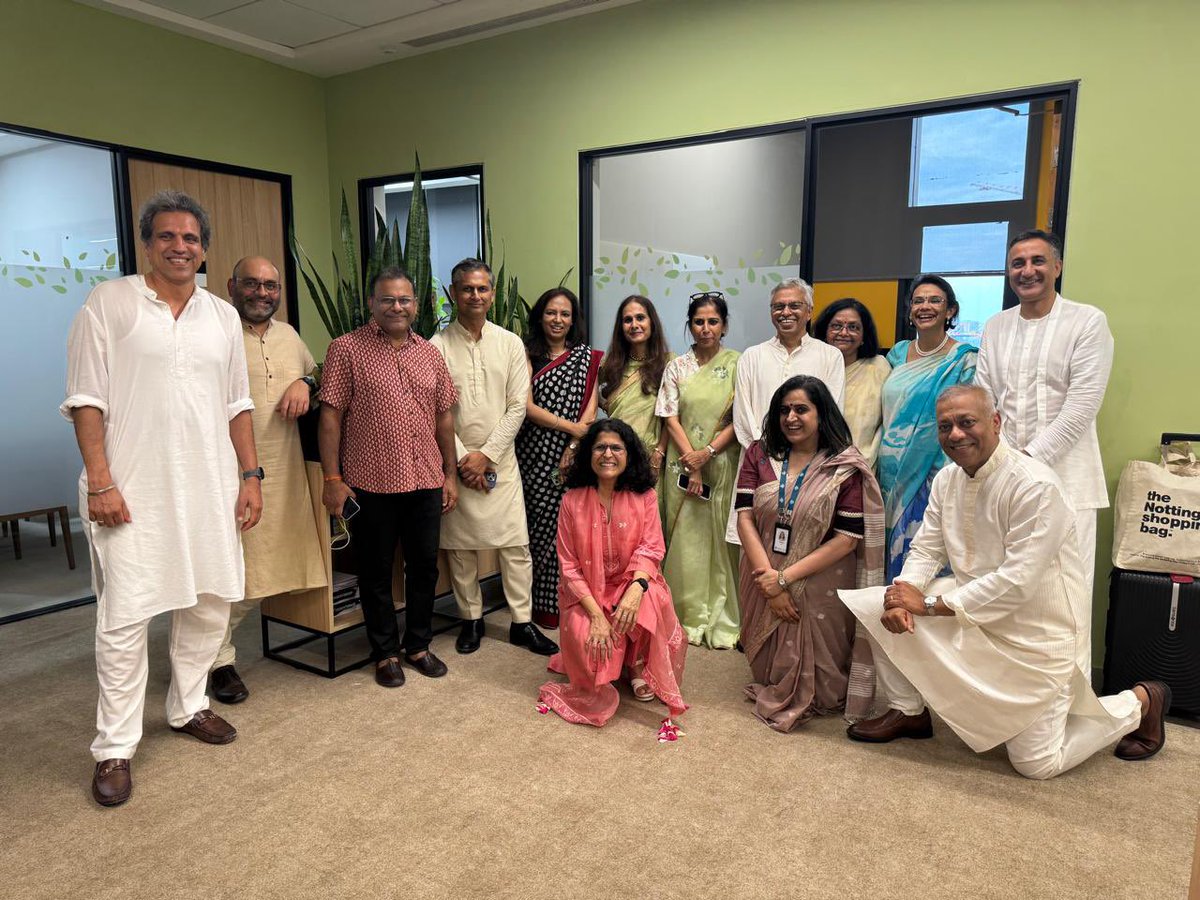
Pratham co-hosted the session "India's New Skilling Journey: Aspiration, Access, and Beyond" at #charcha2026. Meenakshi Ramesh, CEO, Pratham, opened the session by drawing focus on making skills training aspirational, gaps in the ecosystem, workforce readiness and accessibility.
Based on recent discussions: what does a 'progress mentality' for a young person look like?
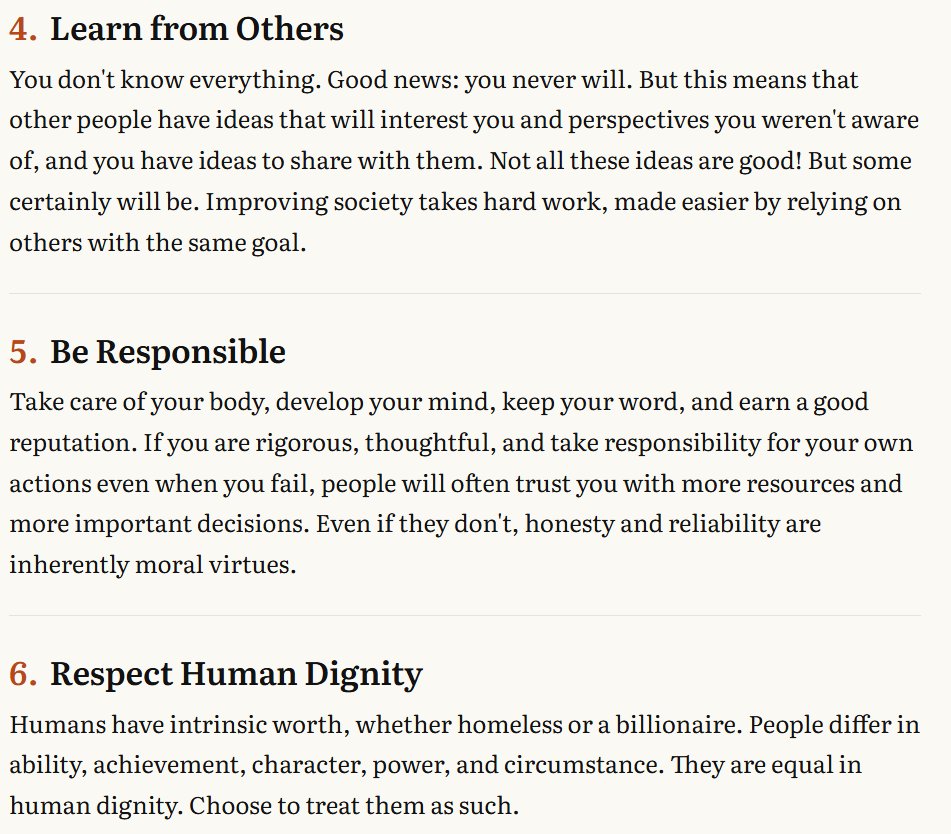
We need a push an optimistic, forward-looking cultural norm to replace "explore your true self", "get rich", "criticize injustice", "zero-sum resentment". Here's my eight-part catechism:
Tomorrow would mark 12 years since we launched the first beta version of @TeamPratilipi.
What a journey it has been.
On one hand, I am a bit disappointed with where we have gotten considering the 12 years.
On the other hand, I am so very proud of how we have gotten here.
🧵1. Attentionpocalypse
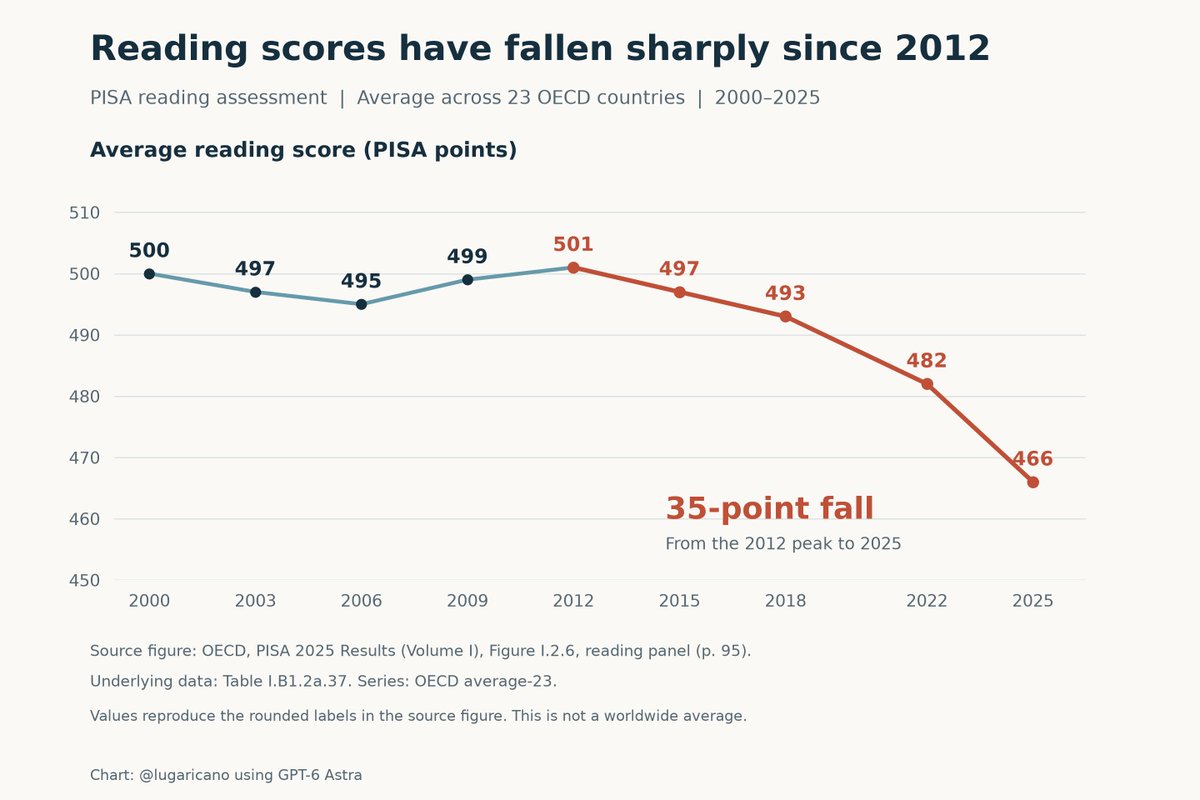
A thread on a process of worldwide illiteratization, with some evidence on the mechanism.
Today, the OECD produced evidence of an accelerating drop (by now equivalent to almost 2 years of schooling) in reading scores since 2012.
For years, doctors noticed something strange about vaccines in India.
Vaccines that worked well in Europe and America worked less well in Indian children. Same vaccine, same dose, weaker protection.
Most people accepted it. One scientist in Vellore spent 30 years asking why.
Her name is Gagandeep Kang.
She trained as a doctor at Christian Medical College in Vellore, in Tamil Nadu, and then did something unusual for a physician. She went into the laboratory and stayed there.
Her subject was the gut.
Specifically, the guts of children in poor households. She studied what repeated diarrhoeal infection does to a child's intestine over the first years of life.
What she found matters enormously. Those repeated infections do not just make a child ill. They damage the lining of the gut, stunt growth, and interfere with how the body responds to oral vaccines.
That is why a vaccine developed in a clean environment abroad underperforms in a child who has had 10 infections before the age of 2. The problem was never the vaccine. It was what the child's gut had already been through.
Then she went further than diagnosis.
Rotavirus is the leading cause of severe diarrhoea in small children and it kills a very large number of them. India had access to imported rotavirus vaccines, but they were expensive and often out of reach for the families who needed them most.
Kang led the clinical trials for Rotavac, India's first indigenous rotavirus vaccine, made by an Indian company. She was also central to the work behind a second one, Rotasiil.
Both are now approved by the World Health Organisation. Rotavac went into India's national immunisation programme, which means it reaches children whose parents pay nothing for it.
In 2019 she became the first Indian woman scientist working in India to be elected a Fellow of the Royal Society, the scientific body founded in London in 1660. It took 359 years.
She has served on the World Health Organisation's global advisory committee on vaccine safety, and she now leads global health work at one of the largest health foundations in the world.
She built her career on a question most people did not think was worth asking.
Not how do we get vaccines to poor children. But why do they not work as well when they get there.
*The Story of IDK!* Indiranagar-Domlur-Koramagala!
A 1hr Standup Talk by Arun Pai at BIC
About an area that I’ve lived in and loved for the last 25 years!!
https://t.co/r3JPXsVAFn
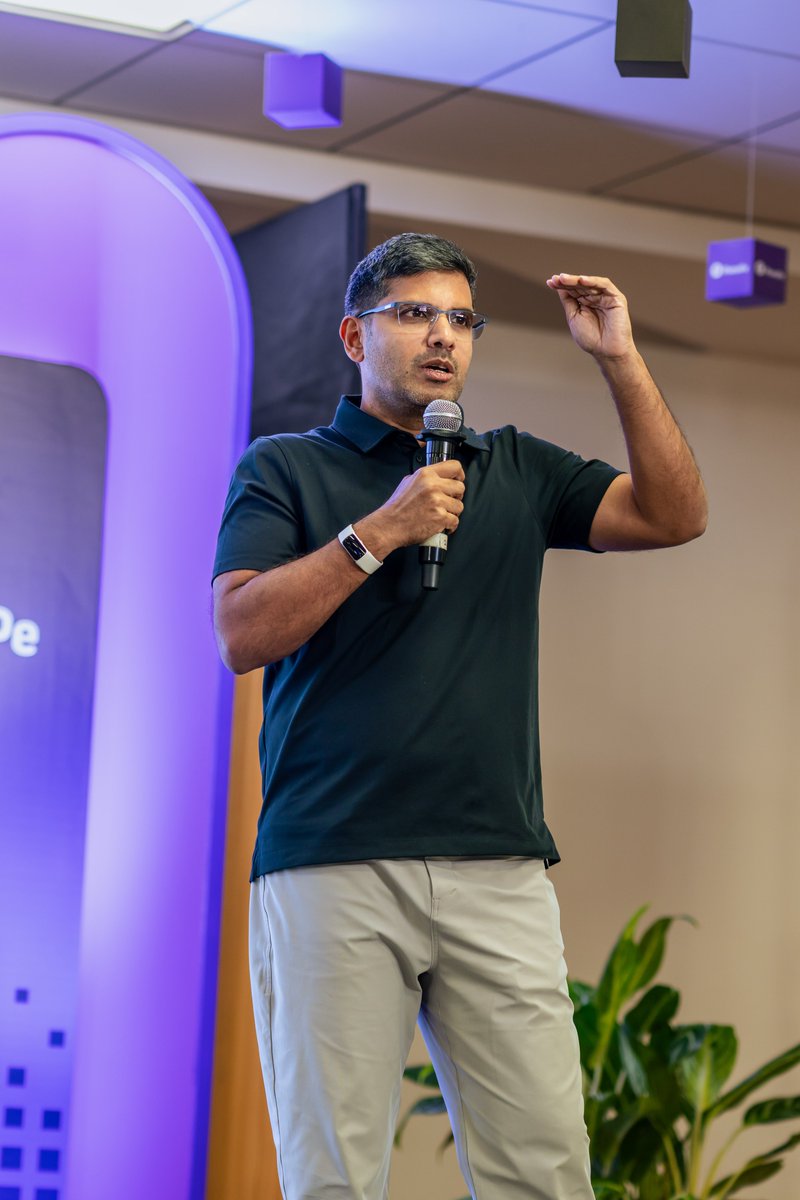
Before handling billions of transactions, @PhonePe was just an idea born to fix payment friction, tested through 7000 transactions of ₹1 each and sustained by a lot of faith. Looking back a decade later, the journey feels surreal. From agonizing over early Play Store reviews to defying standard playbooks by picking bold purple over traditional "blue", those early days were equal parts nerve-wracking and magical. Sameer and I still argue over our actual launch date: he claims August 29th, 2016 based on a tweet, while I maintain we launched on August 28th and he was just a day late to post.
Beyond the banter, this moment is a deeply humbling reminder of what truly built PhonePe. It was our original group of ‘musketeers’ who took a leap of faith, thousands of hours of relentless hard work, mentors and partners who opened doors, and millions of users who placed their trust in us. To every 'PhonePe-r' who added a brick to this foundation and to our users who trust us every day: thank you.
Building this alongside @_sameernigam, Burzin, and our incredibly talented team remains the honor of a lifetime.
Here’s to the next 10 years!
After India lost the 2023 World Cup final in Ahmedabad, our coach Rahul Dravid told me something that I will never forget.
The whole tournament, this team looked unbeatable until Ahmedabad happened. The dressing room was silent. The energy was very low. And people didn't know what to tell each other. The hearts were broken.
I walked Rahul sir to the press conference, and on the way, I told him, "Rahul sir, wouldn't it have been lovely if we had won the tournament?" And Rahul sir, at his classy best, told me, "In life, you won't always get what you want, but if you have given something your whole heart, remember the process, the people you met, the memories you created, and the work that you put in. Life is not always about the trophies." That stuck with me.
A year later, Rahul Dravid was back at the helm as coach of the Indian cricket team, and we won the World Cup in 2024, in Barbados. That's when I realised, and probably we all should too: life is never about the trophies that you win. It's about the memories that you create, and life will always find a way of giving back.
- Anand Subramaniam, former Media Manager of the Indian Cricket Team
Dolly Parton rose from poverty to stardom. She gave $500 to every student in her hometown who finished high school, she built hospitals and bald eagle preserves; her Imagination Library has gifted 300 million books to children. Roger Ebert once met her and came away thinking she was a literal angel. RIP.
Many years ago, my grandmother (who taught me how to be curious about the world and how to tell stories) did a Skype call with my brother in the US and it blew her mind that this was happening in real time. She still thought it was some kind of “TV recording” that he sent by post.
Her sense of wonder at the incredible rate of technological progress with zero tendency to glorify the past (I mean, a woman forced out of school at 13 to marry is rarely going to look at the past with fond memories) instilled in me the optimism that the science, despite short term disappointments, corporate greed and corruption, will, on the long run, make our lives better.
A few weeks ago, this beautiful essay https://t.co/dTfncsp6sC and I wanted to make a video inspired by that and my grabdmkther. Your own recent ancestors will find your ordinary day to day life to be PURE MAGIC
Bengaluru ka traffic, mere dil ke maafik, atka hi rehta hai 🙌
Only the maestro Vishal Bharadwaj can turn Bengaluru’s traffic into beautiful poetry 🎶
You bet Bangalore traffic never sounded this melodious, pure Jazz inspired magic!
#bengaluru#bangalore#bangaloretraffic #peakbengaluru
At a sports bar in Ohio, my friend offered me an "Atomic" chicken wing.
"You handle heat?"
A samurai does not decline a challenge on foreign soil.
"I welcome the spice," I said.
I took one bite.
My soul left my body. My eyesight blurred. My throat felt like it had been sliced with a heated blade.
I wiped my lips with a napkin, forced a calm smile, and said, "A refreshing kick."
My friend blinked. "Dude... that's Carolina Reaper. You didn't even sweat."
He called the bartender. The bartender called the cook.
"He ate the Atomic with a straight face! He’s a demon!"
The manager brought out a bright yellow t-shirt that said "ATOMIC SURVIVOR" and draped it over my shoulders.
I sat there, unable to move a single muscle, my stomach burning to ash while 50 strangers chanted my name.
I have never been prouder.
I have never needed an ambulance more.
The biggest opportunities right now:
1. build for solving loneliness (the more AI floods everything, the more people crave real human connection, IRL and small social)
2. build for agents that need to spend money (they're getting virtual cards and budgets, someone builds the spend controls, fraud protection, receipts)
3. build for people drowning in AI output (everyone generates infinite drafts now, the bottleneck moved to reviewing and choosing, build the judgment layer)
4. build for the burnout economy (everyone is expected to always be on and always optimizing, and the backlash toward rest, slowness, and enough is building)
5. build for verifying humans (deepfakes broke trust, every dating app, marketplace, and video call needs proof-of-human within 2 years)
6. build for the physical world (the trades, hardware, robots that AI is finally reaching)
7. build for the agent that answers the phone (every local business misses calls after 5pm, a voice agent that books the job is worth thousands a month)
8. build for the aging (70M+ boomers who want to stay healthy, sharp, and connected)
9. build for the LLM-search land grab (being the cited answer is the new SEO)
10. build for the newly automated (the paralegal, the analyst, the marketer whose job just changed and needs to reskill fast)
11. build for the seat-pricing collapse (software repricing from $50/seat to per-outcome, whoever nails outcome billing wins a category)
12. build for AI enablement (95% of businesses use nothing beyond ChatGPT, someone has to onboard the other 95%)
13. build for the agency everyone resents (businesses pay $1k/mo to agencies they hate, an agent that does 80% of it undercuts the model)
14. build for verticals on 2011 software (dentists, HOAs, contractors, all overdue for an AI-native rebuild)
15. build for reviving dead software (thousands of abandoned apps with real users, agents can maintain what a team couldn't, buy and revive)
16. build for markets too small to matter before (500 lobster fishermen was never worth a team, now it's a weekend and a real business)
17. build for agents hiring agents (a shadow economy is forming, it needs escrow, reputation, and dispute resolution for machines)
18. build for the anti-AI premium (as everything gets generated, human-made and analog become status symbols people pay up for)
19. build for distribution-first (anyone can build the product now, so the audience is the moat, media company first, product second)
20. build for the reinvention of college (what does an MBA even mean anymore)
21. build for a world with more free time than it knows what to do with (if AI takes the busywork, the question becomes what people do with the hours, and that's a civilization sized market)
note: more trends/ideas @ideabrowser (free to sign up)
22. build for the return to the physical (screens fill with slop, people crave the real world, the hands-on, the local, the analog)
23. build for the caregiving wave. The population is aging fast, tens of millions are caring for parents, and the whole burden is landing on families with no support.
24. build for the longevity shift (people want to live to 100 healthy, and a whole industry is forming around actively managing your own biology)
25. build for the housing and rootlessness problem (people can't afford to settle down, and the whole idea of a stable home base is up for grabs)
26. build for spiritual hunger (as institutions hollow out, the need for meaning, ritual, and belonging is exploding into new forms)
KEEP BUILDING
A BBC interviewer asked a Nobel physicist the simplest question in the world: why do two magnets push each other apart. He refused to answer it. What he did instead is the best seven minutes on thinking ever filmed.
The man is Richard Feynman, at home in 1983, no blackboard, no notes, sitting in an armchair.
He does not dodge because he cannot answer. He dodges because he wants you to see what the question is actually asking. So he takes an ordinary sentence, that a woman slipped on the ice and broke her hip, and starts asking why, and every answer opens another why, until the ground gives way.
Then he turns it around on the interviewer with a question about ice that sounds trivial and is not.
The point he arrives at is the uncomfortable one. Every explanation is only a translation into something you already accept without explanation. Magnets have no such translation. There is nothing more familiar than magnetism to reduce magnetism to, which is why every answer you were given at school was a picture, not a reason.
It matters more now than it did in 1983. Any tool will hand you a fluent answer in a second. Knowing which questions actually have a bottom is the part that is still yours.
One question. Seven minutes. It is in the video.
To come in as captain when the last time your team batted, they scored 36. To then score a century and lead your team to the most improbable series win in sports history, with half your team on the injury list and practice bowlers making debuts has to be the most incredible turnaround in Indian sport.
Go well @ajinkyarahane88, you will be missed, and celebrated!
A big day for Plaksha yesterday. 2nd convocation. Launch of the 1 year Masters in AI and ML. Inauguration of the Harish and Bina Shah School of AI and CS.