Why Scale Impact?
This is a question I am asked a lot, especially amongst Development sector(Non Profits) professionals.
and my response is not as a technologist, because you can
but as a citizen - because we must.
To me - this question is like asking: why social change?
🧵
The evening of Jan 20th, 1991. Steve Waugh was dismissed for 60 on the 2nd day of a Sheffield Shield match against South Australia. It was, he felt, the final straw. That evening, he was at his fiancee, Lynette's place when the Australian coach Bobby Simpson called. He had been dropped for the next test against England.
Steve immediately drove over to his parent's place at Panania. When his mother Beverly opened the door, she immediately sensed something was wrong. She asked him what the matter was & he said he had been dropped.
She was in tears when Steve said it was all right, he wasn't too concerned. When his ma asked about his replacement, he said, 'he's right here' & pointed to his twin Mark, chatting with their dad Rodger.
Mark got 138 on debut & they went on to play 108 tests together.
Happy B'day Steve & Mark Waugh!
A British biologist looked at 200,000 years of human history and found that the entire reason humans broke out of poverty was not intelligence, not language, not even agriculture, but one mechanism so simple a 6-year-old could explain it.
His name is Matt Ridley.
He is a zoologist by training, an evolutionary biologist by career, and in 2010 he wrote a book called The Rational Optimist that quietly argued the most important fact about human progress had been hiding in plain sight for the entire history of economics.
Naval Ravikant has been telling people to read everything Ridley has ever written for the last 15 years. The reason is the argument inside this one book.
For 200,000 years, anatomically modern humans walked around with the same brain you have right now. Same skull size. Same neural architecture. Same raw capacity for language, planning, and abstract thought.
For roughly 190,000 of those years, almost nothing happened. Generation after generation lived and died inside the same Stone Age toolkit their great-great-grandparents had used. Then somewhere around 50,000 years ago, the line on the chart of human progress started to tick upward. Then it bent. Then it exploded.
The question Ridley spent years on was the only question that mattered. What changed.
It was not the brain. The brain had been the same for 190,000 years. It was not language, which had existed long before the takeoff. It was not even agriculture, which arrived only 10,000 years ago and was actually preceded by the upward bend, not the cause of it.
What changed was that humans started trading with strangers.
This sounds too small to be the answer. Ridley argues that it is the answer to almost everything. The moment one human exchanged a useful object with another human from a different group, something happened that no other species on earth had ever done.
Two ideas that had developed in isolation came into contact. The flint knapper learned what the spear maker had figured out. The fisherman from the coast learned what the hunter from the forest had figured out. The two pieces of knowledge fused into something neither side could have produced alone.
Ridley calls this ideas having sex. The phrase sounds frivolous and it is meant to. The point is that ideas, like genes, get better when they combine with other ideas from different lineages.
An idea sitting inside one head, no matter how brilliant the head, eventually hits a ceiling. The same idea exposed to ten thousand other ideas does something genes do under sexual reproduction. It mixes. It recombines. It produces offspring nobody planned.
The cleanest proof of this argument is the most uncomfortable case study in the book. Tasmania.
Around 10,000 years ago, rising sea levels cut Tasmania off from mainland Australia. A population of roughly 4,000 humans was now isolated on an island, with no possibility of contact with the rest of humanity. They had the same brains. The same language. The same starting toolkit as their cousins 150 kilometers north. The natural experiment was now running.
What happened next is something no economist or geneticist had ever predicted.
The mainland Australians kept inventing. Boomerangs. Spear-throwers. Fishing nets. Bone needles for sewing fitted clothes. Watercraft with paddles. Their technology compounded slowly across the centuries.
The Tasmanians went the other way. They did not just fail to invent the new tools their cousins were developing. They started losing the tools they already had. Fishing was abandoned within a few thousand years. Bone tools disappeared. Fitted clothing disappeared. They forgot how to make fire from scratch and started carrying lit firebrands from camp to camp instead, relighting their fires from a neighbor's whenever their own went out.
By the time European explorers arrived in the 17th century, the Tasmanians had the simplest toolkit of any human society ever recorded. Their material culture had gone backward for 8,000 years.
The archaeologist Rhys Jones called it a slow strangulation of the mind.
Joseph Henrich at Harvard later proved with formal mathematical models that there was nothing wrong with Tasmanian brains. There was something wrong with their network. A toolkit requires a critical mass of people exchanging skills to maintain itself.
The act of teaching a skill is imperfect. Every generation loses a small percentage of what the last generation knew. If your population is large enough and trading widely enough, those losses get caught and corrected by someone else who still remembers.
If your population shrinks below a certain threshold and stops mixing with outsiders, the small losses compound until entire technologies disappear.
This is the part that should haunt anyone reading this in 2026.
Intelligence is not a property of the individual brain. Intelligence is a property of the network the brain is connected to. A genius in isolation will produce less than a mediocre thinker inside a dense exchange of other mediocre thinkers.
The thing your ancestors needed in order to break out of 190,000 years of stagnation was not better brains. It was better connections between brains they already had.
The implication for any individual is direct and uncomfortable. If you are smart and isolated, you will be outproduced by people half as smart who are connected.
The most successful people in any field are almost never the smartest people in it. They are the ones positioned at the intersection of the most idea flows. They are reading more authors than their competitors. They are talking to more people from more disciplines. They are in the rooms where ideas from different lineages bump into each other.
Ridley ends the book on the line that sounds optimistic but is actually a warning its this "The future will be invented by people who connect ideas, not by people who guard them."
Anyone who has travelled on a weak passport will celebrate investigative reporting into VFS global, the near monopoly intermediary that handles visa applications for 71 countries. https://t.co/ALB7KQM9e3
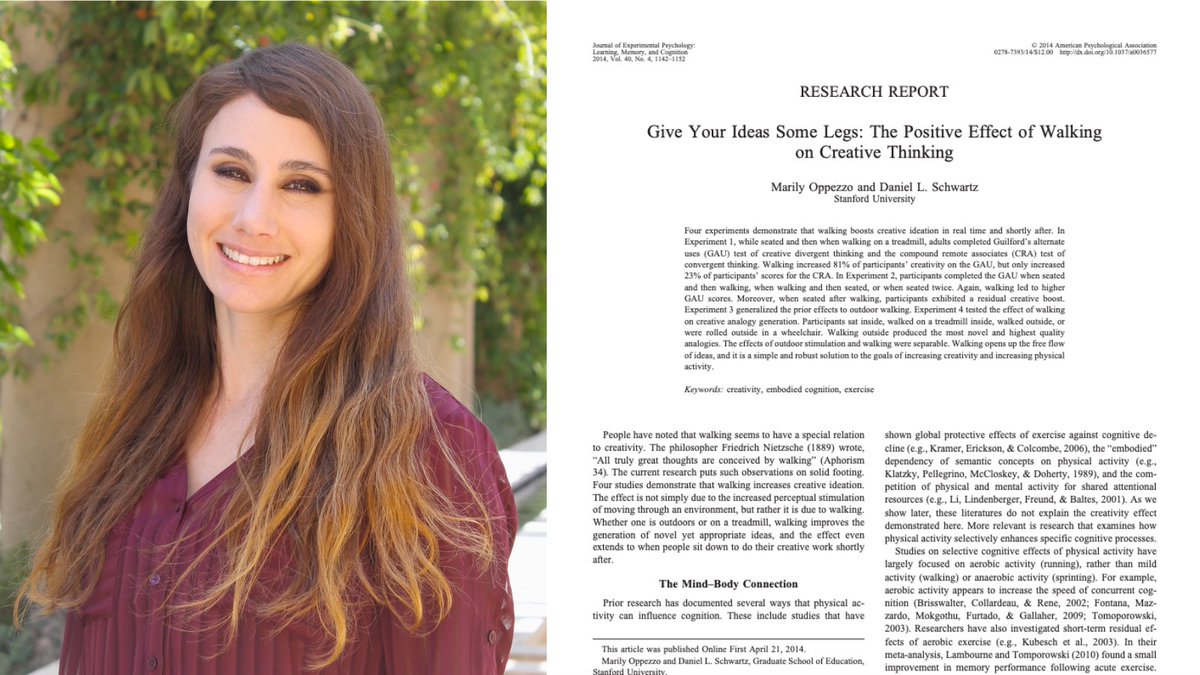
A Stanford psychologist spent 4 years proving that the simple act of walking generates 60% more creative ideas than sitting, and the experiment she designed to kill every alternative explanation is one of the most decisive findings in modern psychology.
Her name is Marily Oppezzo.
She got the idea for the study while walking with her advisor at Stanford to discuss her thesis topic, and the paper she eventually published in the Journal of Experimental Psychology in 2014 is sharp enough that it should have ended the seated meeting on the day it came out.
She ran 4 experiments on 176 people. Same person tested twice. Once sitting, once walking. The creativity tasks were the standard ones psychologists have used for decades to measure how good a brain is at generating novel useful ideas.
The result was almost too clean to publish.
81% of participants in the first experiment produced more creative ideas while walking than while sitting. In the second experiment, 88%. In the third, 100%. Every single person walked into a more creative version of themselves.
On average, people generated 60% more novel useful ideas the moment their legs started moving.
The skeptical question is the obvious one. Maybe it was the fresh air. Maybe it was the scenery passing by. Maybe it was the change of environment doing the work, not the walking itself.
Oppezzo killed every one of those explanations with one experimental decision.
She put people on a treadmill facing a blank wall. No scenery. No fresh air. No environmental change. Just legs moving in place while staring at white drywall. The 60% boost held.
Then she ran the experiment that closed the case completely. She took participants outside in two conditions. Half of them walked through a Stanford courtyard. The other half were pushed through the exact same courtyard in a wheelchair. Same outdoor stimulation. Same scenery passing at the same speed. The only difference was whether the legs were moving.
The walkers produced dramatically more novel high-quality ideas than the wheelchair group. The outdoors did almost nothing on its own. The walking did everything.
This is the part of the study that hit hardest when I read it the first time.
She also tested the opposite kind of thinking. Convergent thinking. The kind where there is one right answer and you have to narrow down to it.
Word puzzles where 3 words share a hidden fourth word that connects them. The seated participants did slightly better on these. Walkers got slightly worse.
Walking is not a general intelligence enhancer. It does one specific thing. It opens up the divergent search inside your brain. The part that generates options. The part that produces unexpected connections. The part that takes a problem and finds five ways into it instead of one.
When you need to converge on the single right answer, sit down. When you need to find the answer in the first place, get up.
The mechanism is now well understood. Walking selectively activates what neuroscientists call the default mode network, the system inside your brain that runs when you are not consciously focused on anything. The DMN is where mind-wandering happens. Where memories cross-reference each other. Where ideas that have been sitting in separate folders inside your head finally bump into each other.
When you sit at a desk and force yourself to concentrate, you suppress the DMN. When you walk at a natural pace, the executive part of your brain gets just busy enough handling the walking that the DMN comes online and starts doing the work that focus was blocking.
The most useful finding in the entire paper is the one almost nobody quotes.
The boost did not turn off the moment people stopped walking. Participants who walked first and then sat back down stayed elevated. Their next round of seated creativity work was still significantly better than people who had been sitting the whole time. The rest lingered for at least several minutes after the legs stopped moving.
You do not need to do creative work while walking. You need to walk before the creative work. The brain holds the state.
The history of this is the part that should haunt anyone who still does meetings in chairs.
Charles Darwin built a gravel loop behind his house in Kent called the Sandwalk and walked it 3 times a day for the rest of his life. The theory of evolution was developed one lap at a time on that path.
Nietzsche walked up to 10 hours a day during the years he wrote his most important books and openly said the work was conceived on his feet.
Beethoven composed for the morning and walked for 5 hours every afternoon with a pencil in his pocket for when something landed.
Kahneman said the best thinking of his Nobel Prize-winning career happened on leisurely walks with Amos Tversky. Steve Jobs refused to take important conversations sitting down. He held them on foot.
Every one of them was using the system Oppezzo would not measure until 2014. They just did not know what to call it.
The question worth sitting with is the one almost nobody asks.
Every meeting you have ever attended sitting around a table was a meeting held at a fraction of the brain power that was actually available to the people in the room. Every brainstorm that got stuck inside a conference room. Every problem you tried to solve at a desk and gave up on. Every idea you could not quite get to.
The intervention is the easiest one in modern science. No supplement. No app. No subscription. No training program. Just a pair of legs and 15 minutes.
The Stanford lab proved it. The philosophers knew it. The neuroscience explains it.
And almost everyone reading this is still trying to think their way out of problems sitting completely still.
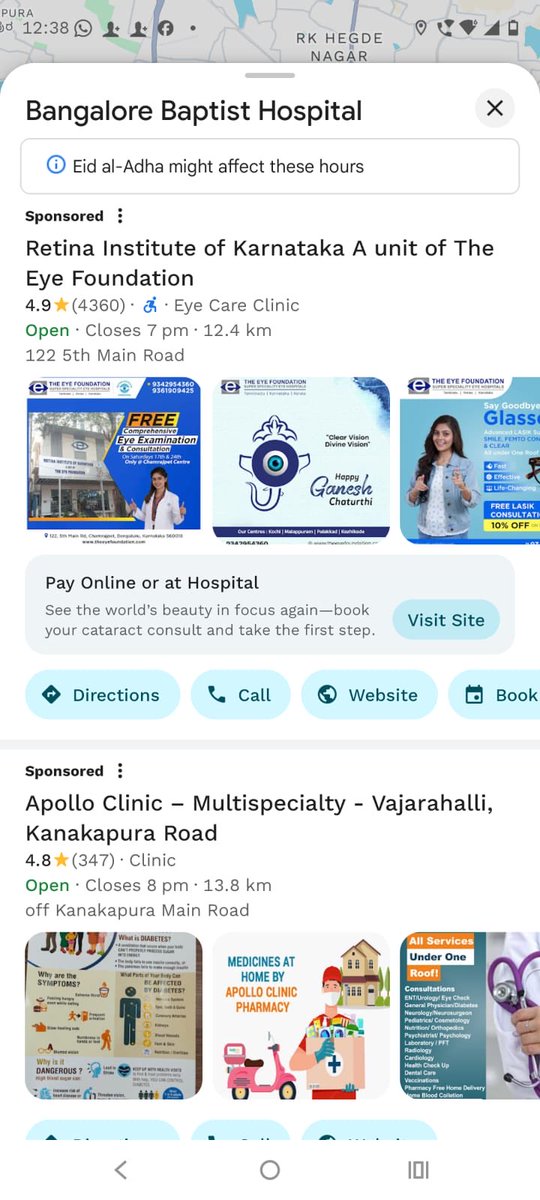
@googlemaps my 76 year old dad can’t see that the first two results are ads. So he keeps clicking on the first result and getting directions to random other hospitals instead of where he really wants to go.
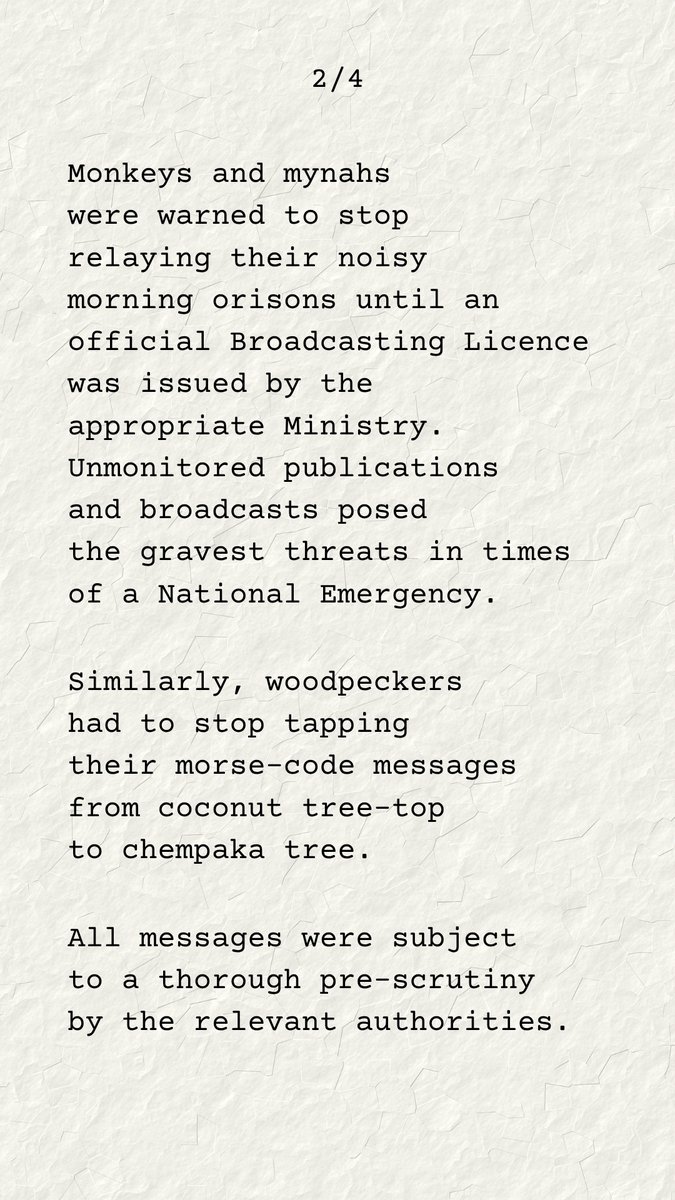
Even by the standards of a country ranking 157 of 180 nations in the World Press Freedom Index, the reaction of the authorities to the ‘Cockroach Janata Party’ is beyond extraordinary. The public response to that imaginative prank should have signalled to them a deep discontent, even distress, among young people. Instead, as The Indian Express reported, it was framed as jeopardising the country’s ‘national security’ and ‘posing a threat to the sovereignty of India.’ Decades ago, the Malaysian lawyer and poet Cecil Rajendra wrote this brilliant poem that captures the idiocy of it better than any pompous editorialising could (not that our ‘mainstream’ media would dare do even that much).
The previous Srilanka post of mine reached a good number of people and I was asked a lot about the itnearay. Here are three options for a perfect road trip across Srilanka :
1. For Beach & Surfing Lovers : If you want a super chilled, relaxed holiday focused entirely on beaches, surfing, great food, and good vibes (and don’t mind a bit of crowd), go for this Pure South Coast itinerary:
Colombo (1N) → Galle (1N) → Tangalle/Hiriketiya (2N) → Matara/Mirissa (2N) → Weligama/Ahangama (1N) → Colombo
2. Hills and Beaches : If you want that perfect mix of cool misty mountains, tea plantations, and stunning beaches all in one trip without feeling rushed this is the itinerary I would personally choose :
Colombo (1N) ➔ Nuwara Eliya (2N) ➔ Ella (1N) ➔ Hiriketiya/Tangalle (2N) ➔ Mirissa (2N) ➔ Galle (1N) ➔ Colombo
3. For Adventure + Wildlife + Surf Lovers :perfect balance of nature, adventure, and beach time. You get cool highlands, world-class surf breaks at Arugam Bay, thrilling leopard & elephant safaris at Yala, and finally aesthetic café vibe of the South
Colombo (1N) → Nuwara Eliya (2N) → Ella (1N) → Arugam Bay (1N) → Yala National Park (2N) → Hiriketiya/Tangalle (2N) → Mirissa (1-2N) → Colombo
Man, Deepseek is so backkkkkk 🤯
They just made the 75% off pricing on v4 pro permanent. This is no longer a discount. It's the new price.
$0.435 per million input tokens. $0.87 per million output. $0.003625 for cache hits, basically free.
For context, gpt-5.5 and claude opus 4.7 are roughly 35x to 100x more expensive per token for the same class of model.
IIT Delhi to IIM Bangalore to IAS. I got the best education my country had to offer. It taught me how to crack tough exams and manage big responsibilities. But it never taught me how to quiet my own mind or handle loneliness. We spend many years learning how to achieve, but not a single day learning how to be happy.
My thoughts on what is missing in school education.
Emotional Regulation:
We memorized the periodic table, but no one explained the chemistry of a broken heart. School demanded we stay quiet, confusing silence with peace. Now, we don't know how to host our own storms without drowning in them. We feel lost because we were taught to suppress, not to process.
Deep Communication:
We were taught to write perfect essays, but not how to say "I’m hurting" or "No." While there is a strong emphasis on communication, we are not taught the vocabulary of the adult life. There is no course on how to stand our ground in face of bullying by a boss or how to protect our work boundaries by saying 'No'
Critical Thinking:
In school, the person with the most answers won. In life, the person with the most questions survives. This is the reason many adults can repeat opinions confidently without ever questioning where those opinions came from. We are told everything as the gospel truth. So we end up just following blindly
Financial Literacy:
We spent years learning maths and solving for x, but never learned how to keep ourselves from falling in a debt trap. Money isn't just about math; it’s about the dignity of choice. We do not learn how to use debt effectively without it controlling our freedom. How impulsive spending compounds over time, or how money affects stress, relationships, and mental peace. Financial literacy is missing because education often focuses on earning money someday, not managing it wisely once it arrives.
Self-Discipline
School is a world of bells and schedules. Someone else always tells you what to do and when. But adulthood is a world of total silence. We feel stuck because we were never taught how to push ourselves without a teacher watching. Discipline is simply the habit of keeping promises to yourself. This is a habit many of us are lacking
Handling Loneliness
In school, you are always shrouded by people. You never realize how loud the silence of adulthood can be until you’re in it. We feel lonely because we weren't taught how to be our own best friends. Peace is learning that being alone doesn't mean being lonely. It is a sacred space, not a sign of being unwanted.
Reading People
School is a time of innocence where friendships are often given to you. But as we go along, not everyone retains that purity. We feel cheated because we weren't taught to see the hidden intentions or the masks people wear. Reading people is the quiet wisdom of seeing the truth behind the words.
Mental Health Maintenance
We have gym class for our bodies, but nothing for our souls. We are taught to push through exhaustion to finish a project, which is exactly how we end up in burnout. Honoring your nervous system is the only way to make sure the light inside you doesn't go out. We should know when we are dealing with a stressor and unable to handle it anymore. We should know when to reach out for help if we feel that we are drowning in that distress
Knowing Yourself
We spend years trying to be the "best" student, only to realize we don't know who we are without a gold medal. We are left inadequate because we studied every subject except our own souls. The ultimate education is discovering what truly matters to you before the world tells you what to want.
My piece on : What young graduates should know …
- Keep learning,
- Take ownership,
- Take Initiative,
- Be reliable &
- Back yourself!
https://t.co/GU1fclfnh4
Lakshya Sen is quite frustrating to watch.
Plays so well, gives the best in the world a run for their money, makes them sweat. But when it comes to give the finishing blow, somehow chokes, makes unforced errors and loses close matches. 😢
Every year Udaipur adds multiple magical stay experiences to its world class list. In 2025, Taj Lalit Bagh made to the Condé Nast best new hotels hot list.
Visited this property recently and was blown away by the asthetics. Its an stunning property but it might not be for everyone !
Just 10 kms from Udaipur (Dabok) Airport, Lalit Bagh is stunning and gives you absolute royal experience.
Pros:
Taj ! and....
True Royal Experience: The architecture and interiors are gorgeous and the property itself is brand new.
Perfect Destination Wedding Venue: With 155+ rooms and massive courtyards, it’s built for grand events. Destination wedding in Udaipur has a new option.
Transit: It’s very close to the airport.
Service: Unmatched Mewari hospitality
Cons:
1. From airport, this is located on the opposite side of Udaipur.
2. As a tourist, 40-45 min drive back to this property might feel tiring.
3. It is actually in middle of nowhere, You are neither close to udaipur, nor close to any interesting attraction. No walkability... cafes.. restaurants nearby.
If you want a luxury staycation, a relaxed weekend inside a resort, or you're planning a destination wedding? 10/10.
But if you are a tourist wanting to experience the classic charm and lakes of Udaipur? May be you would want to stay closer to the city.
#udaipur #TajHotels #destinationwedding #incredibleindia #RajasthanTourism #CondéNastTraveler #IndianLuxury #ResortLife #tajlalitbagh
Thread of Pics n Videos
It’s seems like My coaching career comes to an end after 1.5 years, during which we played 5 tournaments and secured 5 podium finishes, including a Junior World Cup bronze medal.
I have heard about coaches getting fired after bad performances.
But this is the first time I am experiencing being removed to make way for a foreign coach.
The Hockey India President stated that the chief coach of the senior men’s team prefers a foreign head coach for the junior team, believing it will help develop Indian hockey from the junior level through to the senior level. Hence, the continued preference for foreign coaches —
Can’t Indian coaches develop Indian hockey?
On 07-03-2026, during a meeting with the Hon’ble Sports Minister Shri Mansukh Mandaviya, I was told, “Sreejesh, we need coaches like you to step up and lead our country as we prepare for 2036.”
However, Hockey India continues to place its trust in foreign coaches over Indian ones across all four teams.
@mansukhmandviya@PMOIndia@TheHockeyIndia@Media_SAI@WeAreTeamIndia@DGSAI@DilipTirkey
Nineteen seasons.
Nineteen summers.
Nineteen auctions.
Nineteen fresh squads.
Nineteen times people said, “maybe this year age catches up.”
Nineteen times bowlers made plans.
Nineteen times fans carried hope into another IPL.
And through all of it, one man remained.
Virat Kohli in red and gold.
We have seen entire IPL eras rise and disappear in front of our eyes. Legends changed teams. Captains changed cities. Generations changed. The league itself transformed from fearless cricket into data-driven cricket into power-hitting madness.
But one thing somehow stayed untouched.
A man walking out for RCB with impossible expectations on his shoulders.
And still delivering.
Not for 2 seasons.
Not for 5.
Not for a purple patch.
For nearly TWO DECADES.
People will talk about the numbers.
The thousands of runs.
The hundreds.
The chases.
The consistency.
The records.
And yes, they matter.
But statistics alone cannot explain what Virat Kohli has meant to this league.
Because numbers do not capture loyalty.
Numbers do not capture pressure.
Numbers do not capture what it means to carry the hopes of one franchise for 19 straight years in the loudest cricket tournament on earth.
Twelve different IPL seasons with 400+ runs.
Think about that for a second.
In a format designed for chaos…
in a league designed to expose weakness…
through injuries, form slumps, captaincy pressure, scrutiny, trolling, expectations and changing teammates…
he still found a way to show up.
Again.
And again.
And again.
Tonight was not just another innings.
It was another reminder.
That greatness is not only about peaks.
It is about returning.
Every single season.
Every single time people doubt.
Every single time the game evolves.
Every single time younger stars arrive.
And still being the standard.
There are players with bigger power.
Players with crazier strike rates.
Players with shorter bursts of brilliance.
But there has never been another Virat Kohli.
Because nobody has blended hunger, skill, fitness, passion, loyalty, pressure and longevity quite like this man.
For RCB fans, he is not just a player anymore.
He is memory.
He is childhood for one generation.
Adulthood for another.
And inspiration for the next.
Someday the IPL will continue without him.
RCB will continue without him.
New stars will come.
New heroes will rise.
But there will always be a silence when fans realize they once lived in an era where Virat Kohli opened the batting for RCB every summer.
And made it feel normal.
Love you @imVkohli to the moon and back.
This is it.
Everything learned spending millions on longevity.
From: Your Immortal Unc and Auntie.
To: Our Immortal nieces and nephews.
0. Sleep is the world's most powerful drug.
1. Be in your bed for 8 hours
2. Same bedtime every night, any time before midnight
3. Don’t eat right before bed
4. Calm foods for dinner
5. No screens 1 hour before bed
6. Avoid added sugar (be aware it’s in everything)
7. Avoid all things in an American convenience store
8. Avoid fried foods
9. Shoes off at the door
10. Eat whole foods, particularly veggies fruits nuts legumes berries
11. Walk a little after meals or air squats
12. Get your heart rate high routinely
13. Lift heavy things
14. Stretch daily
15. Water pik, floss, brush, tongue scrape, morning and night
16. Make an effort to drink water
17. Get sunlight when you wake up (UV is low)
18. Protect skin in midday sun
19. Stand up straight
20. See at least one friend once a week
21. Avoid plastic where you can (in all things)
22. Circulate air in rooms
23. When stressed, breathe, learn to calm your body
24. Go to the dentist
25. Avoid sitting for long times
26. Protect your hearing, the world is too loud
27. Alcohol is bad for you
28. Finish coffee before noon
29. Avoid bright lights after sunset
30. If obese, look into a GLP
31. Sleep in a cold room
32. Texting while driving is dangerous
33. Turn off all notifications
34. Limit social media use
35. Don’t smoke anything
36. If you struggle to sleep, read a physical book before bed
37. 1 hour before bed have a calm wind down routine: bath, read, light walk, listen to music
38. The body is a clock and loves routine. Have a daily morning and evening schedule.
39. Avoid long distance travel where you can
40. Baby steps first: incorporate new things slowly
41. Do less… most things don’t work.
Bonus points if you get your blood checked.
Start here, it will change your life.
On a Srilankan south coast trip, the thing that surprised us most are the beautiful Cafes.
Here is a list of few cafes that can be recommended easily
1. The Cliff - The Best Sundowner
2. Smokes and Bitters, Hiriketiya - The best place on south coast
3. Cactus, Weligama - Best Vibe
4. Shady Lane, Mirissa - Best Breakfast
5. The Bungalow, Galle - Best food in Galle
6. RAA, Hiriketiya - Amazing Sundowner experience
7. Betaz - Fantastic for all day dining
8. Ropeway, Galle - Best Cocktail Bar in Galle
9. Kai, Weligama - Fantastic Views, Average experience
10.Kai Beach Club, Weligama - Not so great
11. Zouk, Mirissa - Below Average and too crowded in the evenings
12. Pedlar's Inn, Galle - Decent
Each cafe we entered had its own charm and vibe. Can confidently say, walk into any Srilankan Cafe/Restaurant and you won’t go wrong, you will definitely end up loving the place. All these cafes feel so aesthetically thoughtful and calming. Every single dish is beautifully plated, full of colours and tastes even better. It all comes together magically, leaving a lasting experience.
A lot of these cafes also have ground seating with beanbags and mats, which makes the whole experience feel even more relaxing and cozy. This meeting is perfect for an amazing Sundowner experience.
#SriLanka #SouthCoastSriLanka #SriLankaTravel #CafeHopping #CafeCulture #TravelDiaries #SlowTravel
A photo thread:
There was a time when stardom was a fortress. In the 90s, Ruby Bhatia wasn't just a VJ; she was the electric pulse of a new, liberalised India, reportedly commanding Rs 1 lakh per show. Rahul Roy wasn't just an actor; he was the face of a generation’s collective heartbreak, the Aashiqui boy whose silhouette defined romance and whose haircut was the bestseller in every saloon. Govinda? He was—and is—the undisputed king of the masses, a comic genius who could make a cinema hall shake with a single pelvic thrust.
Fast forward three decades, and the fortress has been dismantled by the relentless, voyeuristic machinery of social media. Today, these icons find themselves under the harsh, unforgiving glare of a "content-hungry" digital mob that mistakes struggle for failure and evolution for desperation.
Recent headlines have taken a perverse pleasure in dissecting Ruby Bhatia’s career shift. Yes, the woman who once defined "cool" is now a life coach charging Rs 3,000 for a six-month program. To the keyboard warriors, this is a "fall from grace." To any sane mind, it is a woman finding meaning after a nervous breakdown, choosing to make mental health accessible to the masses rather than gatekeeping it for the elite.
Similarly, Rahul Roy has been subjected to the "cringe" treatment for appearing in social media reels with unknown creators. The internet, in its infinite cruelty, ignores the fact that this man is a brain stroke survivor. He is fighting aphasia, paying off legal debts that predated his illness, and trying to "stay active" and work for as long as he is alive. When he asks his trolls to find him "decent work" instead of mocking his reels, he isn't showing desperation; he is showing a spine of steel that most "influencers" couldn't dream of possessing.
Then there is Govinda, the man who once gave the Khans a run for their money, now frequently seen performing at school annual days and weddings. The "dark shadow" of social media brands these "small shows," as if the size of the stage dictates the stature of the legend. Govinda’s response is a masterclass in humility: "I never let my ego influence my work." Whether it’s a Chief Minister’s event or a local school function, the man dances because he is a performer. There is more dignity in one of his "wedding steps" than in the entire collective output of a thousand anonymous trolls.
Social media has birthed a generation of spectators who believe that unless you are at the absolute zenith of your power, you should vanish into the shadows. We have become a culture that feeds on the "tragedy" of the legacy act.
But here is the truth: There is nothing sad about a veteran getting up and going to work. There is nothing "cringe" about an icon refusing to be defeated by a health crisis or a shifting industry. The desperation doesn't belong to Ruby, Rahul, or Govinda. The desperation belongs to the social media ecosystem that needs to tear down giants just to feel tall.