One of the biggest differences between average players and elite players is processing speed. Most elite level offenses are built around the “0.5 rule” ... within half a second of catching the ball, you either shoot, drive, pass, or create another action. The defense is too athletic and too connected to hold the ball and overthink.
The game at high levels is less about who can dribble the most and more about who can recognize advantages the fastest. Slow decisions shrink spacing, kill driving gaps, and allow defenses to reset. Basketball IQ is not just knowledge... it’s speed of recognition under pressure.
Players are off-ball about 80% of the time on offense.
Yet many struggle to create opportunities.
@TigerLacrosse offensive coordinator Jim Mitchell lays out why the most room for improvement is 𝙤𝙛𝙛-𝙗𝙖𝙡𝙡 and how to watch film to upgrade these skills.
Full podcast 🎙️👇
Two coaches.
Two completely different styles.
One championship stage.
Dan Hurley and Dusty May couldn’t appear more different.
Hurley is loud, fiery, and unapologetically intense. He coaches with passion on full display—every possession, every call, every moment.
May is calm, measured, and composed. He leads with poise—steady, deliberate, and rarely rattled.
One is expressive and animated.
The other is reserved and calculated.
And yet… both are elite.
Both are brilliant tacticians.
Both are masterful recruiters.
Both have built championship cultures.
And most importantly—both LOVE their players… and their players love them right back.
That’s the lesson.
There is no ONE way to lead.
Not in basketball.
Not in business.
Not in life.
Leadership isn’t about copying someone else’s style. It’s about owning your style.
Your personality.
Your strengths.
Your voice.
Because authenticity builds trust.
And trust builds teams that win.
Don’t try to lead like Hurley.
Don’t try to lead like May.
Lead like you.
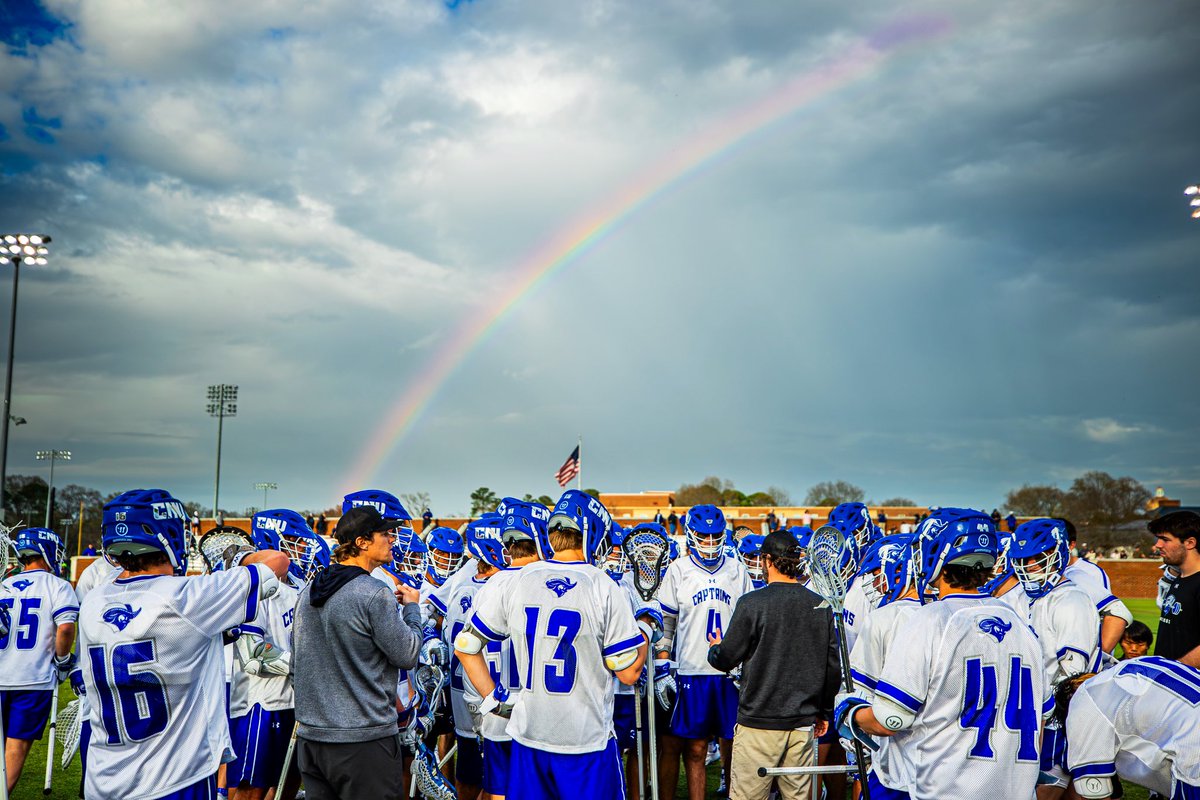
The entire Christopher Newport squad is in the building for the Carolina/Denver game tonight. So far they have:
- Absolutely owned the Flex Cam
- Cheered like crazy for the kids taking half field shots at half time
- Booed PLL players telling weak dad jokes on the jumbotron
🚨 ‼️ We finally got it right! This spring in DIII 🥍 all student-athletes can be dressed on the sideline for @ncaalax tournament games! 🙌
Thanks to countless coaches, administrators, and student-athletes who have tirelessly advocated for this change over the years!
Transactional vs. Transformational Coaching
Dan Hurley shared a story about asking Geno Auriemma for advice after a rough start last season.
Geno didn’t mince words:
“Listen, if the only gratification and the only part of coaching that excites you is winning the national championship, then you’ve lost your way, buddy! Where’s the joy in the things that you’ve always been about as a coach before you went on the championship run, like relationships with your players, like helping people get better, like making your team the best it can be.
Be a coach, man. This is when you really need to be a leader. This team isn’t as good as last year’s, so what the hell are you going to do about it? Are you going home? Are you going to let this thing unravel?”
That’s the tension every coach feels: Transactional vs. Transformational.
Transactional coaching is outcome-obsessed. It’s about the wins, the losses, the trophies. The problem? When results don’t come, your purpose crumbles with them.
Transformational coaching is different. It’s about people. It’s about growth. It’s about building something that lasts whether the scoreboard agrees with you or not.
And this is why mentorship matters so much in coaching. Left on our own, it’s easy to drift into a transactional mode without even realizing it. A trusted mentor can pull us back to center, and remind us why we started coaching in the first place.
To build relationships.
To develop players as people.
To make teams the best they can be.
Wins matter. But they’re not the why. The why is impact. The why is growth. The why is leaving your players better than you found them.
The process is the prize.
Stay grounded. Stay on the path. Always remember your why.
Coaching News: Penn State assistant Andy Meyers will join the @HarvardMLax staff as defensive coordinator, multiple sources tell @Inside_Lacrosse.
Meyers’ path is incredible. A Kansas City native, he played at Carthage (Wisc.), was an asst at Otterbein & CNU before joining PSU.
“Imagine your stick’s a giant paintbrush” 🗣️🎨
@CNULacrosse head coach @_mikeythompson sharing some advice at our D3 Showcase on “painting the pipe” as a shooter to make sure you’re getting the ball on cage from a close range 🎯
Check out a new episode of the Ecological Lacrosse Podcast with @CNULacrosse Head Coach @_MikeyThompson! One of my favorite people! I hope you enjoy!
https://t.co/pqEV4UFGGX
Boo 👻
A surprise episode of the D3 pod is out NOW
-Salisbury opener recap🪿
-Notable teams outside the top 20 who could break out 💥
-@_MikeyThompson joins the pod and talks everything CNU lax 🥍
https://t.co/SjImhwIr7V
Canada has a fraction of the lacrosse participation compared to the USA, and they spend a fraction of the cost in programming.
In spite of the much smaller player pool, Canada has won multiple field lacrosse World Championships recently and they have produced many of the most skilled goal scorers ever.
They also produced the best field defenseman of all time and a recent PLL defenseman of the year.
They generate field lacrosse greatness per capita at a rate that puts the US to shame.
Do you think their youth development model is centered around playing in 10-20 field lacrosse tournaments per year?