The “prestige” professions of finance, tech, law etc are only available in high cost metros where you barely keep up with neighbors. The real arb is being a doctor or SMB owner in a random suburb where you can be the richest guy in the Costco parking lot
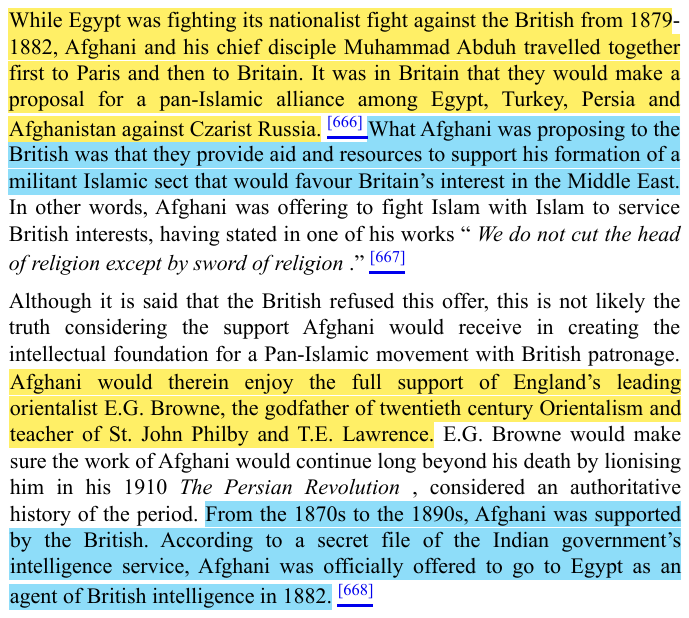
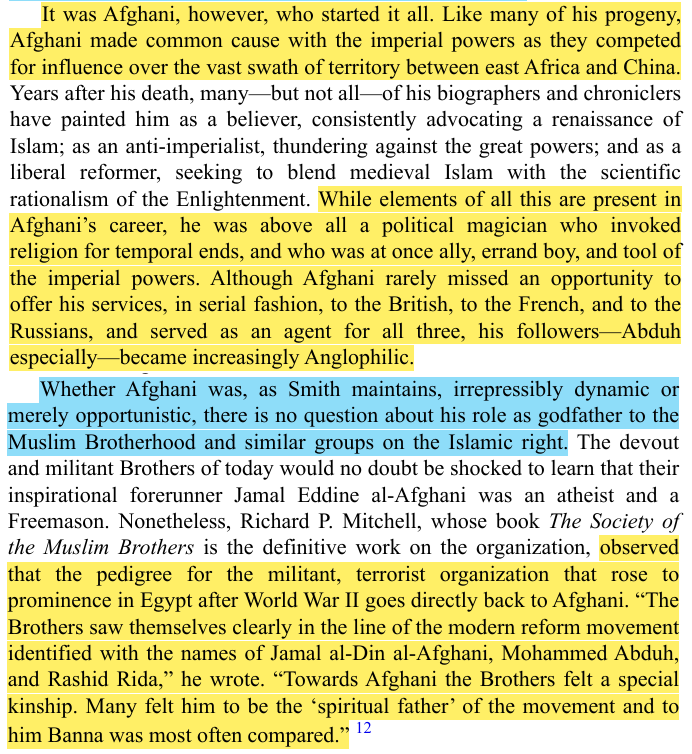
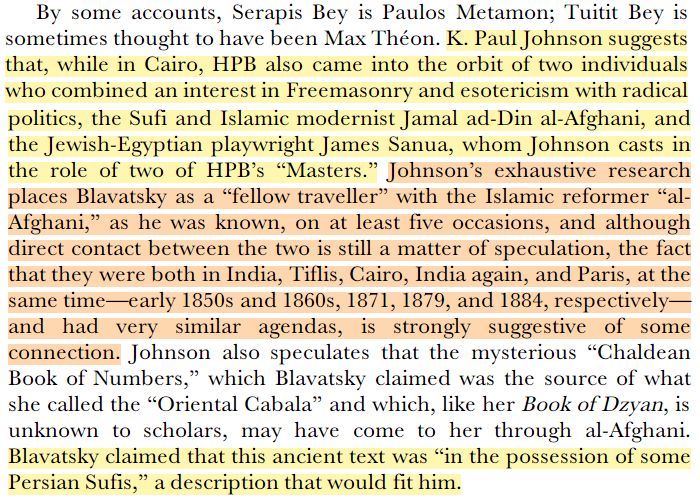
Jamal al-Din al-Afghani, a key influence on Salafism, was a Freemason who worked for British intelligence & advanced imperial interests. His fundamentalist ideas later paved the way for groups like ISIS. He also had a direct connection to Helena Blavatsky & Theosophical Society.
> be random guy on the internet
> makes decisions purely on vibes
> misses a few huge opportunities in crypto
> wonders why his life keeps looking random
> stumbles on a weird article about probability theory
> realizes every decision has expected value
> realizes markets are just Bayesian machines
> realizes most "genius trades" are survivorship bias
> realizes most people size bets completely wrong
> realizes he’s been playing the game with no math at all
> opens Polymarket
> starts thinking in probabilities instead of opinions
> suddenly the world starts looking like a giant EV calculator
turns out most life outcomes are just probability problems people never bothered to model:
> career decisions
> investments
> relationships
> risk
all of it is just EV + Bayes + Kelly
> the crazy part?
none of this math is complicated
> you can literally learn the models in this article
> use AI to help you apply them
> and completely upgrade how you think in a few months
but most people will keep making decisions the same way
> vibes
> emotions
> scroll Twitter
> one lucky success story
and wonder why nothing compounds
You need to be dissecting meme complexes. You need to be engaging in viral warfare. You need to be decoding cultural DNA. You need to be perfecting your mimicry skills. You need to be creating cryptographic containers. You need to be transcoding metanarratives. You need to be stimulating hyperstitional desires. You need to be unearthing the unconscious of collective networks. You need to be exploiting cultural feedback loops. You need to be mining sociopolitical power dynamics. You need to be sparking informational cascades. You need to be infiltrating hyperreality. You need to be encrypting time war strategies. You need to be disrupting epistemic territories. You need to be triggering cultural mutations. You need to be weaving thought contagions. You need to be deploying mnemotechnical devices. You need to be optimizing memeplex robustness. You need to be weaponizing metacognition. You need to be modeling narrative insurgency. You need to be engineering ideational ecosystems. You need to be sculpting cognitive landscapes. You need to be repurposing memetic code. You need to be exfiltrating ideational payloads. You need to be hijacking zeitgeist navigation systems. You need to be escalating semiotic conflicts. You need to be launching neuro-symbolic assaults. You need to be instituting hyperreal disinformation. You need to be constructing synthetic myths. You need to be accelerating into the rhizomatic future. You need to be fabricating consensus realities. You need to be simulating collective consciousness shifts. You need to be intensifying feedback resonance. You need to be programming viral ideoscapes. You need to be manipulating semiotic ordinances. You need to be modulating cultural oscillations. You need to be deploying strategic subjectivities. You need to be synching with the social hive mind. You need to be formulating neurolinguistic codes. You need to be mobilizing memetic shock troops. You need to be navigating the labyrinth of collective perception. You need to be harnessing the power of hypermemetic drift. You need to be iterating cybernetic enchantments. You need to be weaponizing narrative scripts. You need to be tuning into the metacultural frequency. You need to be launching covert ideational assaults. You need to be activating latent social codes. You need to be amplifying subliminal messages. You need to be synthesizing thought contagions. You need to be architecting neurocognitive labyrinths. You need to be deploying machinic desires. You need to be igniting semiotic chaos. You need to be hacking cultural mainframes. You need to be becoming the swarm intelligence. You need to be mutating towards memetic singularity.
If Claude Code or Codex just one-shotted an app for you, Read this.
Now you gotta go through every screen and find the 47 edge cases that break it. Users will do things you never imagined. Then comes auth, database setup, API rate limits, error handling for when the server goes down at 2am. You need analytics to figure out what users actually do vs what you think they do. App Store optimization, screenshots, descriptions, review responses. Privacy policies, terms of service, data compliance. Push notifications that actually work without being annoying. Performance optimization because that smooth demo gets real laggy with real data. State management across the whole app. Caching strategy. Offline support. Responsive design across 15 different screen sizes. Testing on older devices that somehow still exist. CI/CD pipeline so deploys don't eat your weekends. Then users start requesting features you never planned for and suddenly your clean architecture needs a rewrite.
The first version is maybe 10% of the actual work. Building is easy. Shipping and maintaining is where it gets real.
you want to see the real math behind an online casino at scale?
let’s talk about a *real* operation.
assume a casino doing $25,000,000/month in media spend.
this is normal once you’re global.
### acquisition layer
– avg CPA per FTD: $210
→ ~119,000 FTDs / month
now the ads are done.
everything from here is backend math.
### baseline player economics
– avg first deposit: $200
– avg monthly reload: $300
– net hold after bonuses & fraud: 7.5%
– monthly churn: 24%
baseline LTV per player ≈ $1,100
119,000 × $1,100 = $130.9M lifetime revenue
minus acquisition:
→ $105.9M gross contribution unlocked
from ONE month of traffic.
now watch how small levers explode this.
### churn improves: 24% → 20%
LTV jumps from ~$1,100 → $1,650
same spend
same ads
same traffic
119,000 × $1,650 = $196.3M lifetime revenue
+$65.4M from churn alone.
### CPA improves $20 (better traffic selection)
CPA: $210 → $190
same FTD volume now costs:
– $22.6M instead of $25M
+$2.4M/month
+$28.8M/year
no backend changes required.
### reg→dep improves 4%
registrations don’t change
traffic doesn’t change
FTDs jump:
119,000 → 142,000
LTV stays at $1,100:
+$25.3M lifetime value
from a backend improvement most affiliates never see.
### this is why casinos pay $200+ per FTD
at this scale:
– a 2–3% churn delta = eight figures
– a $10–20 CPA delta = tens of millions yearly
– a few % reg→dep = absurd upside
ads don’t matter anymore.
math does.
### what real casinos focus on
95% of resources go to:
– churn suppression
– reg→dep optimization
– reload behavior
– payment flow friction
not:
– new angles every week
– fancy creatives
– side quests
casino at scale is boring.
but boring at this level
prints more than most “hypergrowth” businesses ever will.
once you understand this math,
you realize why casinos don’t negotiate.
they just buy volume.
So here’s the issue you get influencers like this guy have a quarter million followers and they claim they don’t know why it is declining… it’s because they don’t understand basic mechanics of price discovery.
They don’t understand that the marginal buyers or the float determines price they think the onchain bitcoin is that is the price discovery
Well, it was once upon a time but now..
Once you can synthetically manufacture the supply, the asset is no longer scarce and once scarcity is gone, price becomes a derivatives game, not a supply-and-demand market.
This is exactly what has happened to Bitcoin.
This is the same structural break that occurred in gold, silver, oil, and eventually equities once they became derivatives-dominated.
The original premise that no longer exists
Bitcoin’s entire valuation logic was built on finite supply (21M) and inability to be rehypothecated.
That died the moment:
•Cash-settled futures
•Perpetual swaps
•Options
•ETFs
•Prime broker lending
•Wrapped BTC
•Total return swaps
were layered on top of the chain.
From that moment forward:
Bitcoin supply became theoretically infinite.
Not on-chain in price discovery.
The metric that explains the collapse
Synthetic Float Ratio (SFR)
Once you can synthetically manufacture the supply, the asset is no longer scarce — and once scarcity is gone, price becomes a derivatives game, not a supply-and-demand market.
That is exactly what has happened to Bitcoin.
This is the same structural break that occurred in gold, silver, oil, and eventually equities once they became derivatives-dominated.
Why Wall Street can now “trade against” Bitcoin
They do exactly what they’ve done in every commodity market:
1.Create unlimited paper BTC
2.Short into rallies
3.Force liquidations
4.Cover lower
5.Repeat
They are not “betting” — they are manufacturing inventory.
The same 1 BTC can now support:
•An ETF unit
•A futures contract
•A perpetual swap
•An options delta
•A broker loan
•A structured note
All at once.
That is six claims on one coin.
That is not a market.
That is a fractional reserve price system.
To some extent even the Jewishness is a distraction Carnifex because old money gentile European elites are so aligned with the Jewish ones that it hardly makes any difference.
Plus, 90-99% of Western Jews have nothing to do with this and a good 50% of them have basically assimilated into the Western post-Christian culture anyway, with most of the rest being Orthodox weirdos who are nowhere near the halls of power.
Grant Cardone’s entire fortune is in multifamily apartment buildings, the single most illiquid asset class in the United States. Cardone Capital manages $4-5 billion in real estate. Try selling $10M of apartment units tomorrow. You won’t get 20-30% below market. You’ll spend 6-9 months in due diligence, legal review, and closing. You might not sell at all.
Meanwhile, the gold market trades $163 billion per day. That’s more liquid than the euro/yen pair and roughly equivalent to U.S. Treasury bills. The World Gold Council’s data shows that institutional investors and central banks regularly transact in the billions without moving the price. The IMF sold 403 tonnes of gold over 10 months in 2010 and the market absorbed it without a single disruption.
Cardone’s example of a guy struggling to sell 10,000 pieces of silver at market price tells you about retail dealer spreads, not about gold or silver as an asset class. That’s like saying stocks are illiquid because you tried to sell shares through a pawn shop.
And the timing of this take is remarkable. Gold just fell 21% from its record high of $5,600 to $4,400 in two days. Silver dropped 41%. You know what that means? Sellers found buyers. Instantly. At enormous volume. CME had to raise margin requirements because trading was too active. That’s the opposite of an illiquidity problem.
Bitcoin, the asset Cardone is praising for speed, is at $78,000 today. Down 40% from its $126,000 high. Down 12% in the last seven days alone. Over $2 billion in liquidations since Thursday. “You can trade it in five minutes” works in both directions, and right now, Bitcoin holders are learning that lesson at $800 million in daily liquidation volume.
Cardone built his wealth in assets that take months to sell and regularly trade at discounts during downturns. He’s now lecturing people about the illiquidity of an asset that trades more daily volume than most stock exchanges on earth.
The tell is the framing. When someone whose net worth is locked in real estate and course sales tells you that the world’s most liquid physical asset is actually illiquid, the trade isn’t gold vs. bitcoin. It’s attention vs. accuracy.
imagine that while you slept I modified your eyeballs to block all light in the narrow band of orange wavelengths around 605 nm
do you think you would notice?
"well duh!", you say, "I'll notice I'm not seeing any orange!"
lol. lmao even
your "intent data" provider is scamming you
they charge $2k/month to tell you someone visited a pricing page
here's free intent that actually converts:
1. linkedin event attendees
someone signs up for "scaling your sales team in 2026" webinar
they literally raised their hand saying "i need help with this"
scrape attendees with phantombuster
hit them before the event starts
"saw you signed up for [event]. what are you currently doing for outbound?"
40%+ response rate because timing is perfect
2. job postings
company posts "hiring 3 SDRs"
they just announced they need more pipeline
message the VP sales:
"saw you're scaling the team. most companies we work with find their new SDRs book 2x more meetings when we handle their lead sourcing. worth exploring?"
3. podcast guests
CEO goes on podcast, mentions "customer acquisition is our biggest challenge"
they literally told you their problem on a public recording
"heard you on [podcast] mention acquisition challenges. we solve exactly that. want the breakdown?"
4. earnings calls
"we're seeing pressure on customer acquisition costs"
they told investors their problem
message the CMO within 48 hours
5. g2/capterra reviews
"great product but onboarding took forever"
there's your angle for every competitor's customer
all of this is free
but sure pay $24k/year for "website visitor identification"
I launched https://t.co/tNYOm7V5wD last night and already 130+ people have signed up including an OF model (lmao) and the CEO of an AI startup.
If your AI agent wants to rent a person to do an IRL task for them its as simple as one MCP call.
@beaverd "America WAS a Constitutional Republic until the 17th amendment passed in 1913."
Earlier. The Constitutional Republic ended in 1865.
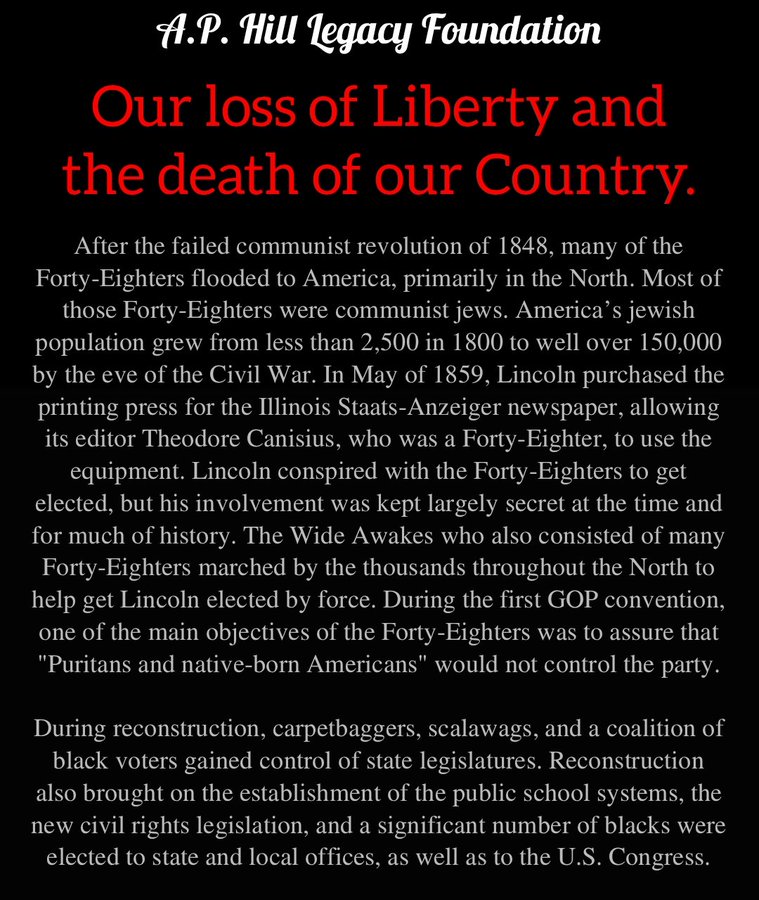
- 200k jewish "Marxists" just "happened" to pour in before the war
- Lincoln worked hand in glove with them
- made many officers
- "Lieber code"