Scientists have successfully grown living human skin around a robotic finger, giving it the ability to move, bend and even heal itself.
Researchers at the University of Tokyo have brought science fiction closer to reality by covering a working robotic finger with living skin cultured from human cells.
Led by biohybrid engineer Shoji Takeuchi, the team submerged the robotic digit in a specialized mixture of collagen and human dermal fibroblasts, creating a supportive dermis layer. They then applied human keratinocyte cells to form a resilient outer epidermis.
The resulting living skin is not only flexible enough to withstand continuous joint movement without tearing, but it also develops natural wrinkles at the knuckles, matching the look and texture of a real human hand.
Beyond its lifelike appearance, this biohybrid skin has a notable ability to self-heal. When researchers made a small incision on the finger and applied a simple collagen bandage, the skin’s fibroblast cells naturally merged the bandage back into the surrounding tissue, repairing the wound within a week.
While the technology currently needs continuous moisture to keep the living cells alive, the breakthrough opens new doors for medical testing, prosthetics and the development of ultra-realistic humanoid robots that can interact safely and seamlessly in healthcare and service industries.
[Kawai, M., Nie, M., Oda, H., Morimoto, Y., & Takeuchi, S. Living skin on a robot. Matter, 5(7), 2190-2208]
A Wrong Turn That Cost 20 Million Lives.
History can sometimes be changed by a single, unpredictable moment.
On June 28, 1914, in Sarajevo, Archduke Franz Ferdinand, heir to the Austro-Hungarian throne, and his wife, Sophie, were assassinated by Gavrilo Princip. What initially appeared to be a localized political assassination soon became the spark that ignited a catastrophe far beyond the streets of Sarajevo.
Europe was already divided by military alliances, secret treaties, imperial rivalries, and growing political tensions. Within weeks, these interconnected forces pulled one major power after another into war. The assassination ultimately set in motion the events that led to World War I—a devastating conflict that redrew borders, brought empires crashing down, transformed the global political order, and claimed millions of lives.
Sometimes, history doesn’t change gradually. Sometimes, it changes in a single moment.
This is President Xi Jinping's story with the American people during his homestay in Iowa in 1985 🇨🇳
He led a delegation to Muscatine, Iowa, to study agriculture. A local family hosted him; they have been friends since then 🇺🇸
During his official visit to the US in 2012, he even made a detour to Muscatine to meet his old friends. That house has been named Sino-US Friendship House 🙌
The power of people-to-people connection ♥️
Decades ago, this family hosted young Chinese guests, not knowing that forty years later, one of the visitors would become the leader of a great nation 🤝
'Oh, she speaks RUSSIAN' — Mali’s foreign minister is surprised to hear the country’s Health Minister speaking Russian
The moment came during a meeting with Lavrov
Anthony James' artworks bring an impossible concept like the idea of infinity, or the cosmos, into physical objective existence.
This is his Great Rhombicosidodecahedron in the permanent collection of the Palm Springs Art Museum
Soviet sniper Lyudmila Pavlichenko, credited with 309 confirmed kills, appears on Soviet television in 1970.
In this footage, Pavlichenko addresses the audience and introduces fellow women veterans of the Red Army, recounting their wartime records as snipers, partisans and aircrew.
The footage comes from the 1970 " Goluboy Ogonyok: Song of Victory " television special, filmed for the 25th anniversary of the Soviet victory over Nazi Germany.
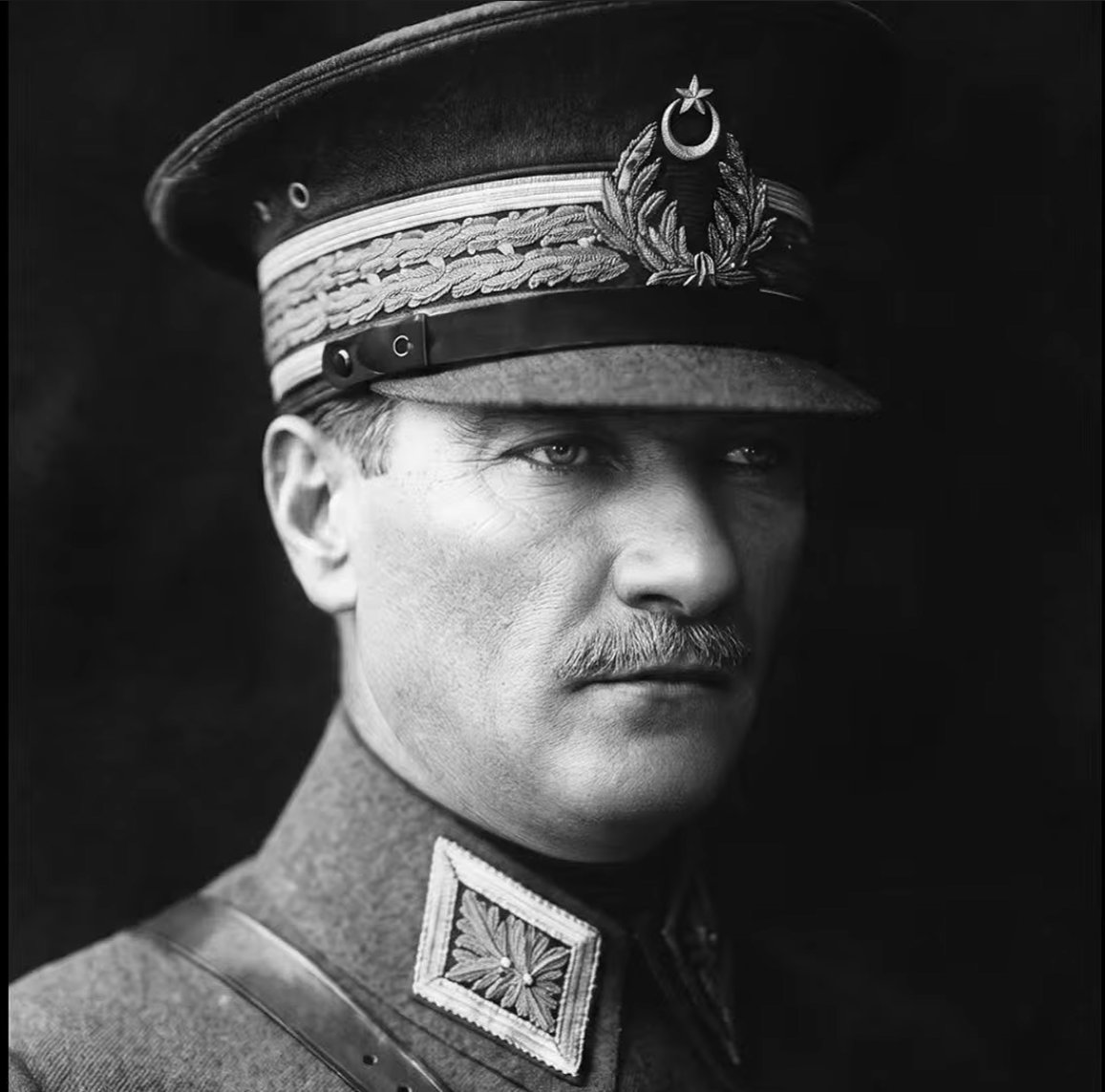
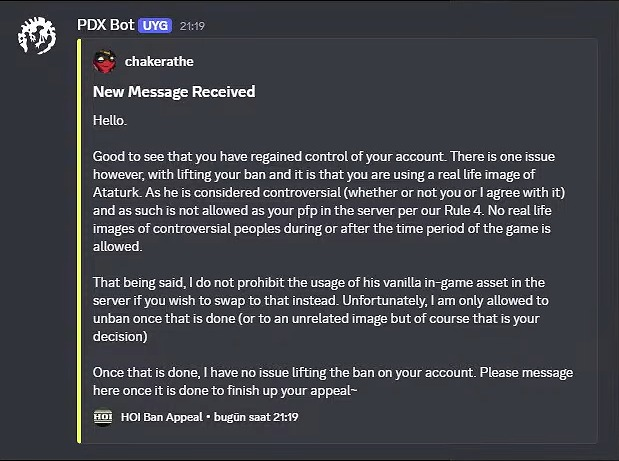
Paradox's Hearts of Iron IV Discord banned a Turkish player for using a real Atatürk photograph as a profile picture.
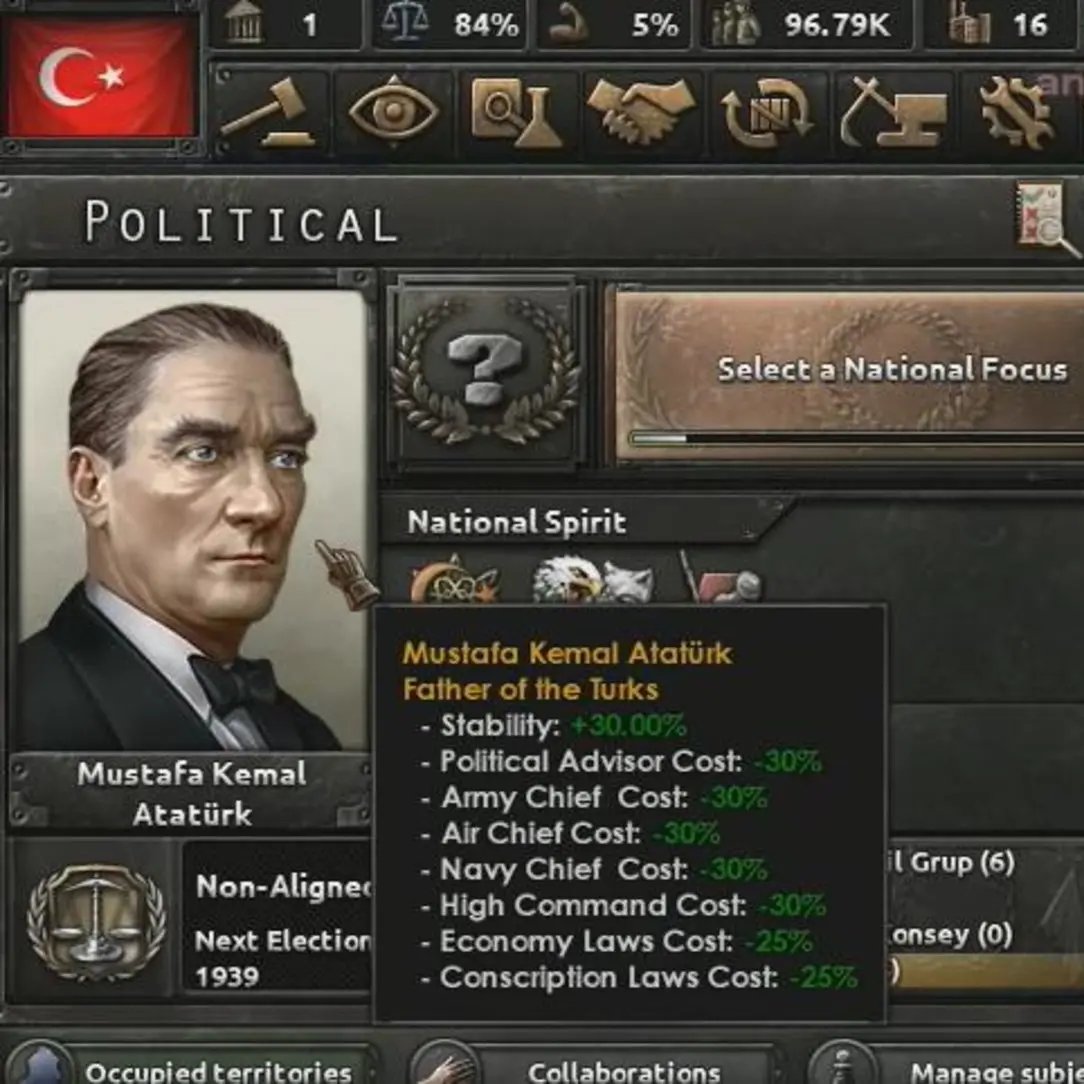
Moderator chakerathe said real photos of "controversial" historical figures from the game's era were barred, while in-game portraits were fine.
Then it got worse — the same moderator said Atatürk was a CUP member during the 1915 events and his involvement was "controversial."
A later team reply compared him to Karl Marx as a "polarizing figure."
First, players found Stalin and other wartime leaders used as avatars without issue — a clear double standard.
Second, Turkish players and historians pointed out that, in 1915, Mustafa Kemal was a front-line commander at Gallipoli, not CUP leadership running policy, making the moderator's framing a historical smear.
Paradox's own DLC had previously called him "the legendary Mustafa Kemal Atatürk."
Turkish players organized negative reviews across Paradox titles.
HOI4's recent score collapsed from "Very Positive" to "Overwhelmingly Negative" — roughly 7% positive among ~24,000 recent reviews, with 11,000+ negative reviews tied to the incident. Other Paradox games were also hit.
Objecting users had messages deleted; more were banned; the Discord closed new joins.
The HOI4 game director acknowledged on Reddit that enforcement was inconsistent and the rule needed revision, but stopped short of apologizing for the 1915 remarks.
No formal corporate apology as of today.
Oyun şirketi Paradox'un Discord sunucusunda profil resminde Mustafa Kemal Atatürk bulunan kullanıcılar engellendi.
— Yetkililer, Atatürk'ün sözde "Ermeni soykırımı" sırasında İttihat ve Terakki üyesi olduğunu öne sürerek "tartışmalı bir figür" olduğunu iddia etti.
Hearts of Iron IV is being review-bombed on Steam after a controversy on the game’s official Discord.
The drama started when a moderator banned a Turkish player to remove an Atatürk profile picture.
Turkish players protested by leaving negative reviews and The game now has over 9,000 recent negative reviews
Himmler said they would never speak of this in public. The recording survived. Posen, 4 October 1943: the SS chief openly describes the extermination of the Jewish people to his officers. His voice. His words. English subtitles. Sound on.








![Rainmaker1973's tweet photo. Scientists have successfully grown living human skin around a robotic finger, giving it the ability to move, bend and even heal itself.
Researchers at the University of Tokyo have brought science fiction closer to reality by covering a working robotic finger with living skin cultured from human cells.
Led by biohybrid engineer Shoji Takeuchi, the team submerged the robotic digit in a specialized mixture of collagen and human dermal fibroblasts, creating a supportive dermis layer. They then applied human keratinocyte cells to form a resilient outer epidermis.
The resulting living skin is not only flexible enough to withstand continuous joint movement without tearing, but it also develops natural wrinkles at the knuckles, matching the look and texture of a real human hand.
Beyond its lifelike appearance, this biohybrid skin has a notable ability to self-heal. When researchers made a small incision on the finger and applied a simple collagen bandage, the skin’s fibroblast cells naturally merged the bandage back into the surrounding tissue, repairing the wound within a week.
While the technology currently needs continuous moisture to keep the living cells alive, the breakthrough opens new doors for medical testing, prosthetics and the development of ultra-realistic humanoid robots that can interact safely and seamlessly in healthcare and service industries.
[Kawai, M., Nie, M., Oda, H., Morimoto, Y., & Takeuchi, S. Living skin on a robot. Matter, 5(7), 2190-2208]](https://pbs.twimg.com/media/HTUTVcNWsAAfmlB.jpg)