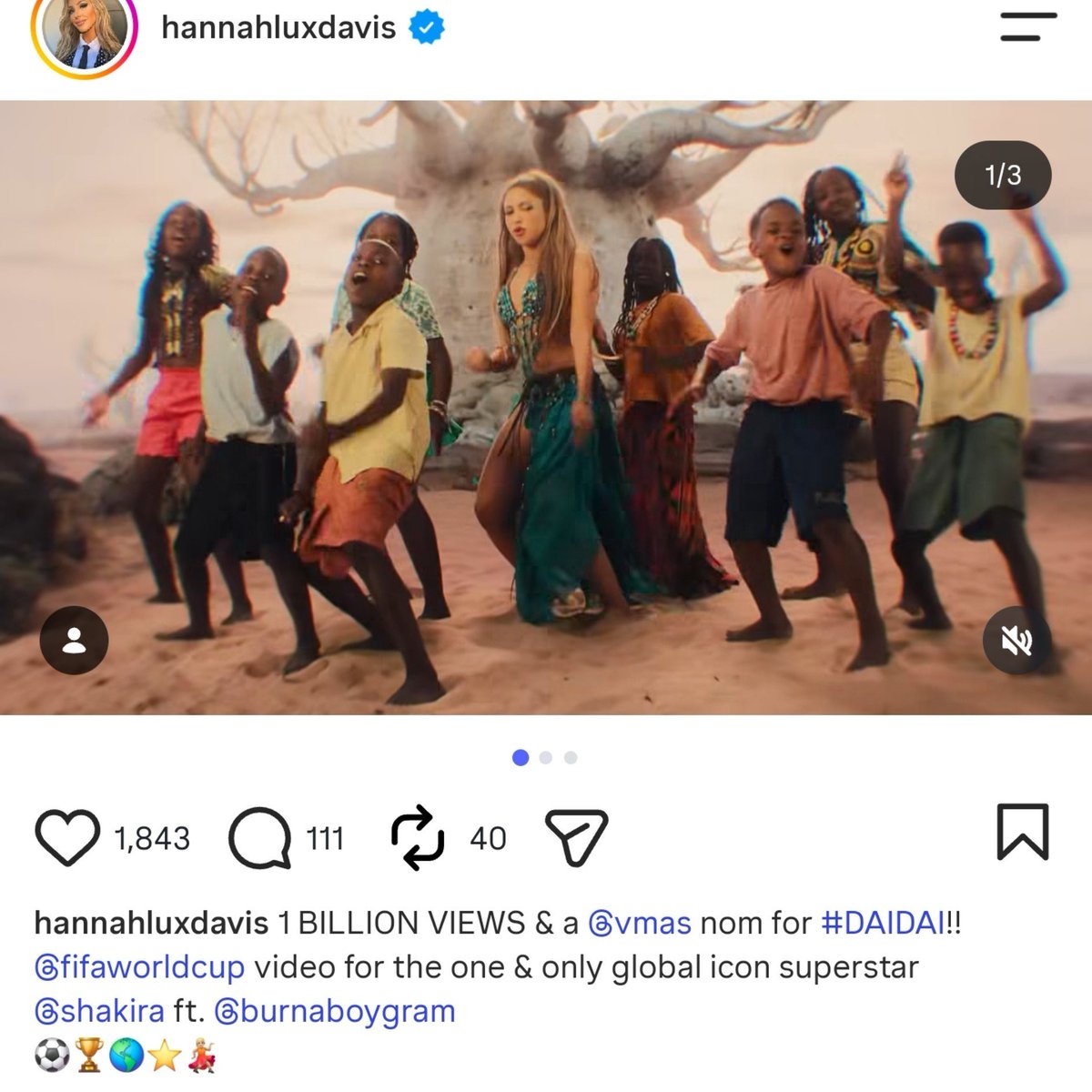
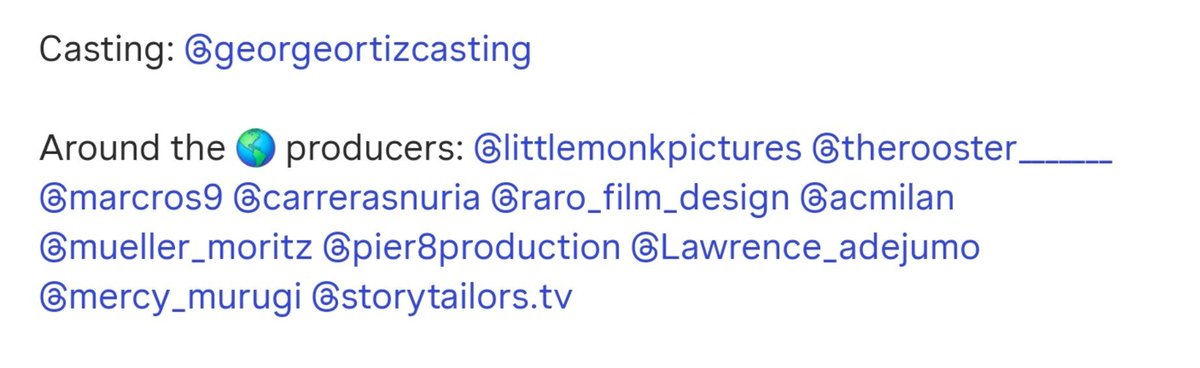
I worked on a music video that has hit one billion views. One billion people have seen work that I helped put together. And I get to add on to my portfolio that I worked on Shakira / Burna Boy's Dai Dai World Cup music video
💥💥💥
I don’t buy the sudden “Uhuru is sponsoring everyone against Ruto” story, because Ruto has always done his best politics when there is a giant enemy standing somewhere in front of him, preferably a wealthy dynasty he can blame for trying to block him from State House.
That formula worked beautifully for him in 2022, when he sold himself as the outsider fighting Uhuru, Raila, the so called deep state and powerful families, then turned every attack against him into proof that the system was terrified of a hustler taking over.
Now the same movie appears to be coming back, only this time the man asking Kenyans to believe he is fighting the establishment is actually sitting inside State House, controlling the government, commanding the security machinery and still pointing at Uhuru as though Uhuru is the one holding the keys.
My problem with this story is simple, because I keep asking what exactly the Kenyatta family gains from throwing everything behind removing Ruto, when Ruto may actually be one of the safest political arrangements available to them after more than a decade of knowing each other inside government.
These people governed together for ten years, 'fought' bitterly afterwards, know each other’s circles, know each other’s interests, know each other’s pressure points and probably understand each other far better than either side would understand a completely new president arriving with fresh people and fresh grudges.
Then there is the Gen Z episode, where Raila himself said Uhuru asked him to speak to Ruto when the country was under enormous pressure after the protests, saying Uhuru feared the country could collapse and wanted a political solution found.
That is the part that keeps bothering me, because if Uhuru was truly consumed by the desire to finish Ruto politically, why would he be asking Raila to speak to the same man at the moment Ruto was facing probably the most dangerous political pressure of his presidency?
So I keep wondering whether this endless “Uhuru the sponsor” storyline is useful theatre for both sides, with Ruto getting the giant dynasty enemy he needs for his campaign story and Uhuru remaining politically important without necessarily needing Ruto gone tomorrow morning.
Ruto has already beaten the dynasty narrative once at presidential level, after 'defeating' the candidate openly backed by Uhuru in 2022, and he may now believe he can simply reload the same emotional weapon and fire it again in 2027.
The problem is that voters can see the obvious contradiction this time, because the man claiming to fight the system is now the system himself, meaning blaming Uhuru for every political headache starts sounding less like rebellion and more like an incumbent desperately searching for the old villain who once made his campaign story work.
I have followed Abel Mutua's stories for a long time, and there is no question that he understands how to hold an audience. He knows how to build suspense, introduce humour and keep people listening until the end.
That is precisely why his recent entry into political conversations deserves scrutiny. When someone understands storytelling as well as Abel Mutua does, we should pay attention not only to what he says, but to how he says it.
After watching his interview with Oga Obinna and Chris the Bass, one thing stood out. Abel appeared to advance the idea that there may be moments when a President needs to put the Constitution aside for a few minutes in order to get things done. But who keeps time? If the Constitution is put aside for five minutes, who decides when the five minutes are over?
This is the danger of presenting constitutional safeguards as obstacles to progress. Every leader seeking exceptional power has a reason why the circumstances are exceptional. The Constitution suddenly becomes bureaucracy, accountability becomes obstruction and democracy is blamed for slowing development.
But the Constitution exists precisely because those in power cannot be trusted to decide for themselves when the rules should no longer apply. Once leaders can suspend constitutional safeguards whenever they become inconvenient, those safeguards cease to mean anything.
What was equally striking was the way stories were delivered. Names were wrong. Timelines were questionable. Details did not always add up. Yet the inaccuracies did not stop the story from reaching its political conclusion.
This is where the tactic becomes important. He kept saying, "I don't know if this is true.", "Correct me in the comments if I am wrong." "I will verify it later." "Let me tell you the story first."
These disclaimers appear harmless, even responsible. But they can also allow a claim to enter the public conversation without the speaker taking full responsibility for its accuracy. One thing needs to be clear if you do not know what you are saying, you should not be saying it in the first place.
The story travels first. The correction comes later, if it comes at all.
And because a skilled storyteller understands how to make a message memorable, audiences are more likely to remember the conclusion than the disclaimer that came before it.
The same pattern can be seen in how Kenyan protests are increasingly being reframed. Complex grievances are reduced to simplistic conclusions.
"You rejected an airport."
"You rejected development."
But that was never the argument.
Kenyans did not reject the need to improve JKIA. The questions were about the process, the cost, the terms and accountability. A country can need infrastructure while rejecting an exploitative or opaque deal.
But once you remove the nuance, citizens become easier to dismiss. Instead of addressing concerns about corruption or process, the argument shifts to whether people support development. The real issue disappears.
This is a familiar political tactic: focus on the outcome and avoid the process.
Do you want an airport or not? Do you want development or not? Do you want security or not?
But democracy requires more difficult questions. At what cost? Through what process? Who benefits? Who is accountable?
Another dangerous narrative is the attempt to portray Kenyan protesters as people who did not understand why they were in the streets, that they lacked agency or were being controlled by foreign actors.
But Kenyans knew why they protested. They had experienced economic pressure, watched corruption and impunity and raised legitimate questions about taxation, governance and accountability.
To reduce their grievances to foreign programming is to deny them political agency. It replaces the story of citizens demanding accountability with one of a confused population being manipulated by outsiders.
And then there was yesterday's podcast.
While discussing Edwin Sifuna, Abel said that he had spoken to Kambas who admitted that Sifuna is a political force but said they would not vote for him if there was no Kamba on his line-up.
That statement is tactical.
First, it introduces ethnic arithmetic into a conversation about the political potential of Edwin Sifuna. Instead of asking whether Sifuna can build a national movement based on ideas, leadership or policy, the conversation is redirected towards tribe.
The message becomes: he may be capable, he may be popular, but politics ultimately comes down to ethnic representation.
But there is an even more interesting tactic in how the claim is framed.
"I spoke to Kambas, and they told me."
The speaker does not directly make the ethnic argument himself. He places it in the mouths of unnamed people. That creates distance while still introducing the message into the public conversation.
It is the same architecture as saying, "I don't know if this is true, but..."
The speaker is protected, but the idea has been planted.
The audience is left to believe that ethnic communities will only support leaders who bring their tribe into the political equation. And once that idea enters the conversation, attention shifts from leadership and policy to ethnic bargaining.
That is how tribal politics can be reinforced without anyone making an openly tribal statement.
There is also a psychological dimension to claiming private conversations with unnamed groups. It creates the impression of insider knowledge.
"I spoke to them."
"They told me."
"This is what they really think."
But the audience has no way of independently testing the claim. Yet an influential speaker can introduce it into the national conversation and shape how people perceive an entire community.
This matters because ethnicity has always been one of the easiest ways to redirect political frustration in Kenya. When citizens begin asking difficult questions about corruption and governance, tribal narratives can quickly divide them into competing camps.
Instead of asking what leaders are doing, people begin asking who is represented. Instead of demanding accountability, they begin negotiating ethnic interests.
That is why we need to scrutinise political messaging more carefully, particularly when it comes from influential people with large and trusting audiences.
Political messaging does not always need direct coordination to serve power. When protesters are portrayed as ignorant, power benefits.
When constitutional safeguards are portrayed as obstacles, those seeking more power benefit.
When citizens questioning corruption are portrayed as enemies of development, those avoiding accountability benefit.
When tribal arithmetic replaces conversations about national leadership, the political establishment benefits.
The modern political message does not always come from a politician standing behind a podium. It can come through a podcast, an entertainer, a comedian or a beloved storyteller.
And that is precisely what makes it powerful.
We should be able to admire Abel Mutua's talent and still interrogate his political messaging. We should be able to enjoy his stories without surrendering our critical thinking.
Because the most important question is not simply what he said.
It is what the audience is being encouraged to believe after the story is over.
That the Constitution is an obstacle? That protesters were confused? That Kenyans reject development? That citizens need outsiders to explain their own anger? That tribal arithmetic remains the only language of political leadership?
These ideas shape how people understand power, democracy and one another.
Dear Good People Of Homa Bay
Today, your youth were paid to block young political leader Sifuna from peaceably entering Homa Bay town. In so blocking him, the world was exposed to your roads that resembled those of Yemen. Immediately, you were led by your leaders to blame President Uhuru Kenyatta for your state of roads. Blaming President Uhuru is intellectual laziness.
Since independence in 1963, Homa Bay unlike the rest of Luo Nyanza has always been with the Government of the day. Whilst rest of Luo was against President Jomo Kenyatta, Tom Mboya from Homa Bay was our first Economy Minister that came up with our development policy still in use until today. For entirety of President Daniel Arap Moi rule, Homa Bay provided KANU with its powerful leaders. History therefore shows that Homa Bay stood out in Luo Nyanza as it always produced powerful Ministers in every regime. Now we have Mbadi as our Finance Minister!
2010 Constitution took away national development from sole control of the President to Parliament. Budgetary allocation, financial appropriations & development projects are now the exclusive role of MPs. If you have no development in your County, blame your MP. Your MP can only exonerate himself by showing Hansard Report to his contribution during the BUDGET PROCESS.
Finally, since 2012, all Counties receive Billions for own development. Since 2012, Homa Bay has received over Kshs. 140Billion. Can it be seen on the ground? Homa Bay cannot blame any President for its problems. They should look at the mirror & ask themselves why it has always had powerful Ministers yet no development.
2027 gives Homa Bay another chance to elect leaders that serve the people & not themselves. Maybe a start will be electing Raymond Omolo as your Governor. Raymond has proven himself. Give him a chance. He may turn Homa Bay from Yemen to Little Monaco or Montego Bay.
Don’t blame others. Fix your leadership.
Ol Kalau is a POC exercise in preparation for next year.........How much violence to unleash and how to go about it, going prices for IDs, who to send where as campaign agents, IEBC seriousness (or lack thereof), etc etc
So proud of this man, hes a born leader and his attention to detail on and off the park is something that will set him apart. His work ethic is incredible. Congratulations Mikel and @Arsenal ❤⚽️💙